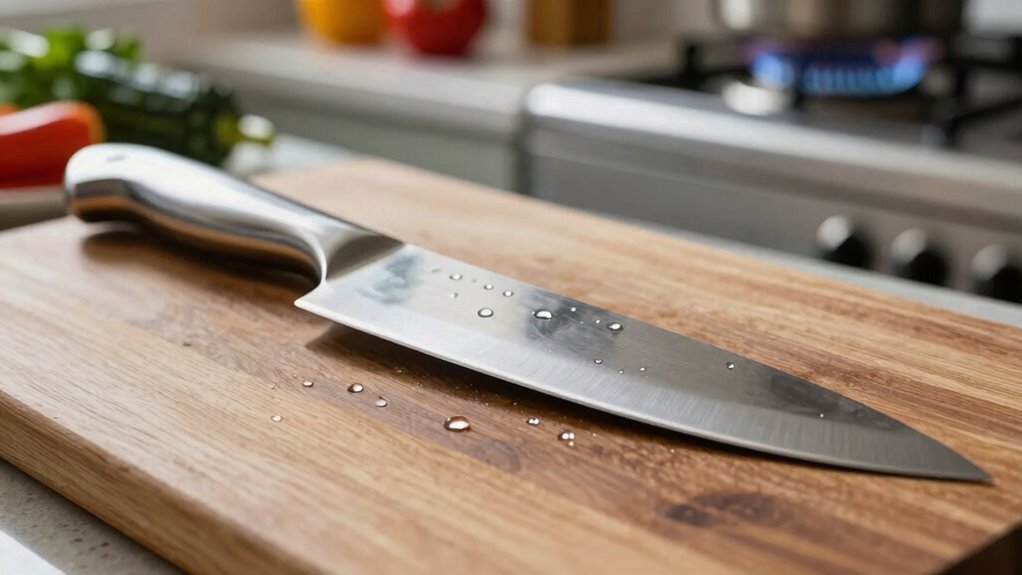
Proper maintenance and care can reduce reactivity, but discovering additional tips will help you keep your knives safe and effective in your kitchen.
Browsing Category
Troubleshooting & Repair
174 posts
Why a Knife Feels Great on Onions but Bad on Meat
A sharp knife glides easily through onions because they are firm, allowing…
How to Recover From Minor Edge Damage Before It Grows
How to recover from minor edge damage before it grows and protects your tools—discover essential tips to restore and maintain their sharpness effectively.
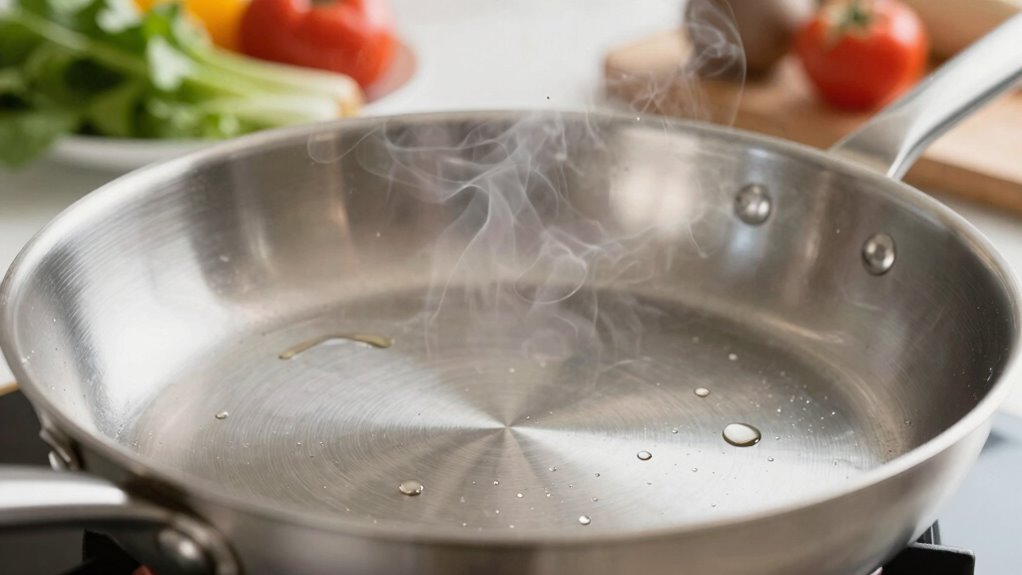
How to Diagnose Poor Food Release Without Guessing
Only by observing sticking patterns and surface conditions can you accurately diagnose poor food release and improve your cooking outcomes.
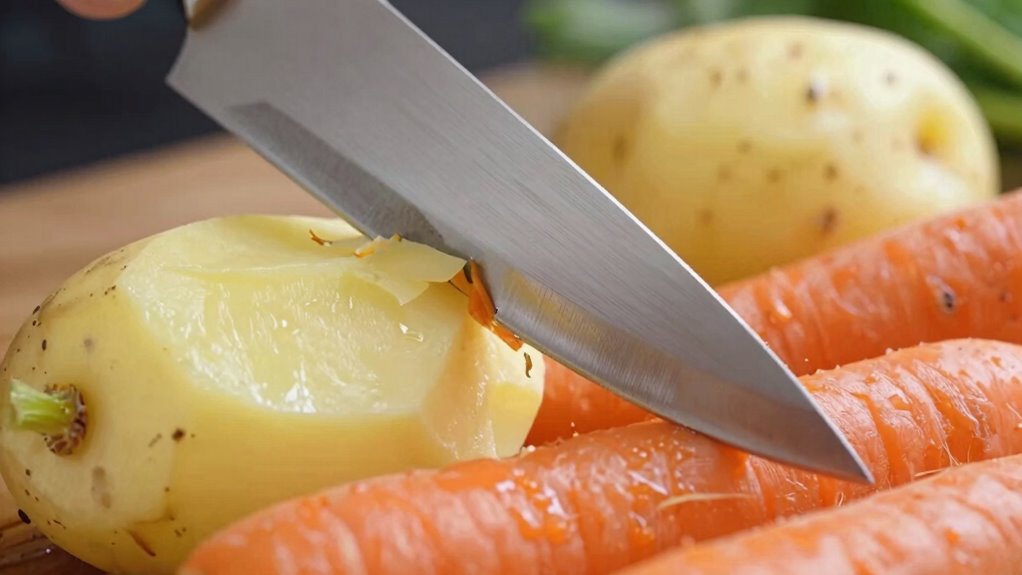
Why Your Knife Keeps Wedging in Potatoes and Carrots
Optimizing your knife skills can prevent wedging issues, but the key to smooth cuts lies in understanding what causes it—continue reading to find out.
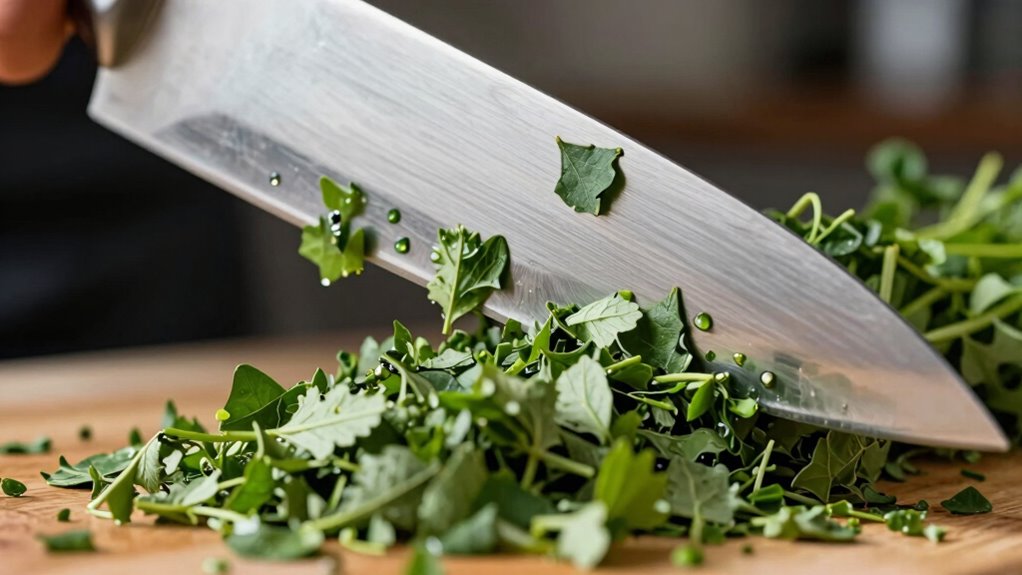
Why Your Knife Grabs, Tears, or Cracks Delicate Herbs
Discover why your knife damages delicate herbs and how proper technique can save your leaves from tearing and cracking.
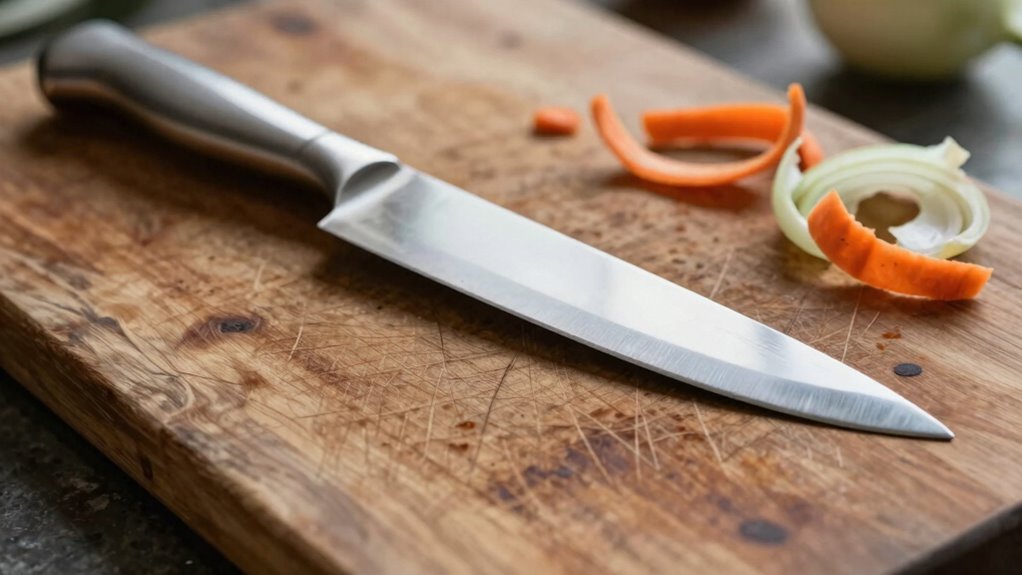
How to Tell Whether the Board or the Knife Is the Problem
To figure out whether the issue is your knife or cutting board,…
How to Identify a Warped or Uneven Cutting Board Surface
Learn how to identify a warped or uneven cutting board surface and discover what signs might be hiding beneath the surface.
What Causes a Rough or Scratchy Cutting Feel?
Cause of rough or scratchy cuts often lies in blade alignment, dullness, or incorrect selection—discover how to prevent this frustrating issue.
What to Do When a Knife Feels Too Reactive in Your Kitchen
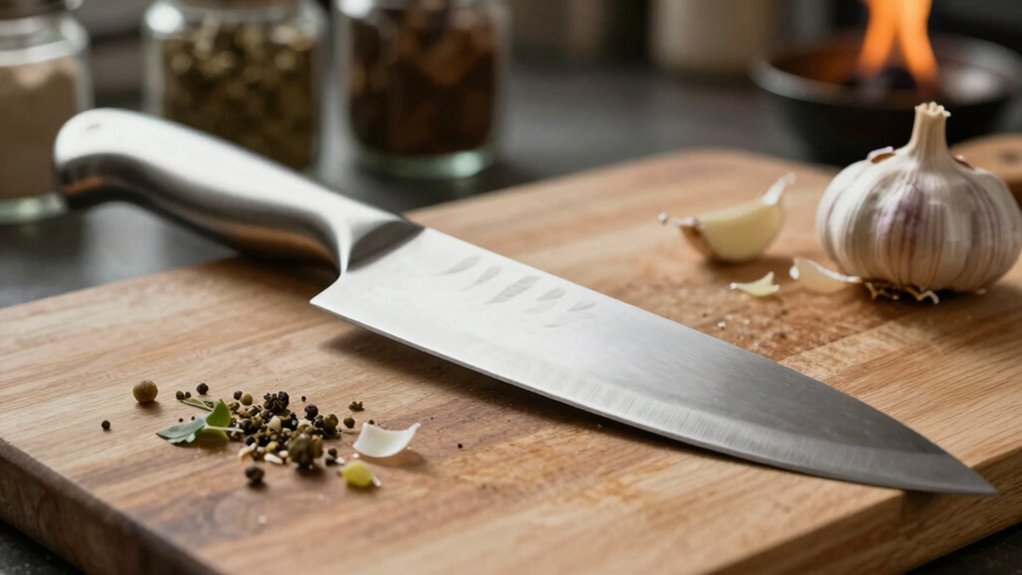
Learn how to address a reactive knife and discover essential tips to keep your kitchen tools in top condition.