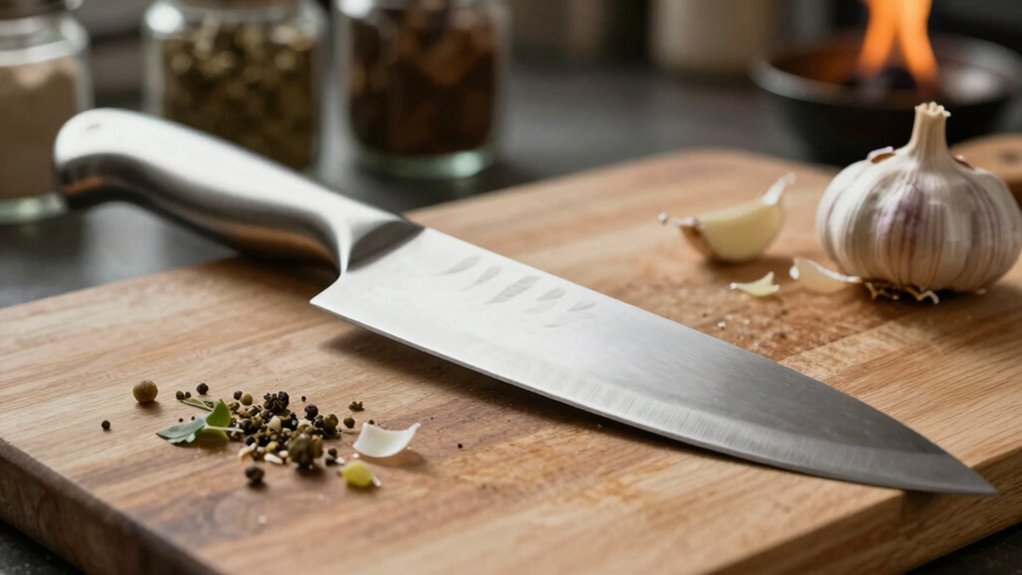
If your knife feels too reactive, start by cleaning it thoroughly with warm water and mild soap to remove any residues. Regularly sharpen and hone the blade to keep the edge aligned, reducing surface area that encourages corrosion. Store it properly in a knife block or magnetic strip to prevent dulling. Avoid acidic ingredients if your blade is reactive, or consider switching to non-reactive or coated options for safer, longer-lasting performance. Keep going to discover more tips for managing reactivity.
Key Takeaways
- Clean and dry the knife thoroughly after each use, especially when cutting acidic foods.
- Sharpen or hone the blade regularly to reduce surface reactivity and improve cutting performance.
- Avoid cutting acidic ingredients with reactive blades; consider switching to non-reactive or coated knives.
- Store knives properly in knife blocks or magnetic strips to prevent dulling and corrosion.
- Inspect the blade for dullness or damage; replace or professionally sharpen if reactivity persists.

When a knife feels overly reactive in your kitchen, it can be both frustrating and concerning. You might notice it reacting strongly to acids like lemon juice or vinegar, causing discoloration or a metallic taste in your food. This reactivity often stems from the material the blade is made of and how well it’s been maintained. To address this, start with blade maintenance—regular sharpening, cleaning, and proper storage can significantly reduce reactivity. A dull or uneven edge can increase the blade’s tendency to react because it doesn’t cut smoothly, which exposes more surface area and accelerates corrosion. Using a honing steel regularly keeps the edge aligned, reducing unnecessary reactivity. Proper cleaning after each use, especially when cutting acidic ingredients, helps prevent buildup that could lead to increased reactivity. Additionally, understanding the metal composition of your knife can help you make better choices for your culinary needs. Recognizing how different metals react with various ingredients can guide you toward more non-reactive options for your kitchen tools. Being aware of the metal’s properties can further inform your choices and care routines, helping to prevent unwanted reactions. Selecting knives with a corrosion-resistant coating can provide an extra layer of protection against reactivity, especially in a busy kitchen environment. Material selection plays a crucial role in how reactive your knife might be. High-carbon steels, for example, are known for their excellent edge retention but tend to be more reactive, especially if not properly maintained. If you’re constantly battling reactivity, consider switching to stainless steel blades, which contain chromium. Chromium forms a passive oxide layer, shielding the metal from reacting with acids and moisture in your food. While stainless steel knives may require less frequent blade maintenance than high-carbon steels, they still benefit from regular sharpening and cleaning to stay in top condition.
Regular sharpening and cleaning reduce knife reactivity, ensuring safer, more reliable performance in your kitchen.
If your current knife is reactive due to its material, you might want to evaluate whether it’s the right fit for your culinary needs. Investing in a high-quality, non-reactive blade can make cooking safer and more enjoyable. Keep in mind, proper blade maintenance is key regardless of the material. Regular honing keeps the edge sharp, while gentle hand washing and drying prevent corrosion. Avoid leaving knives soaking in water or using abrasive cleaners, as these habits can accelerate reactivity. When storing your knives, opt for a knife block or magnetic strip instead of loose drawers to prevent nicks and dulling. In addition, using appropriate cleaning techniques can further help maintain your knife’s integrity and prevent reactivity, especially after cutting acidic foods. Ultimately, reducing a reactive blade isn’t just about choosing the right material; it’s about consistent blade maintenance and understanding how your knife’s material reacts with different ingredients. By sharpening regularly, cleaning properly, and selecting blades made from less reactive materials, you’ll enjoy sharper, safer knives that perform reliably in your kitchen. With a little care and informed choices, you can minimize reactivity and keep your knives in excellent condition for years to come.
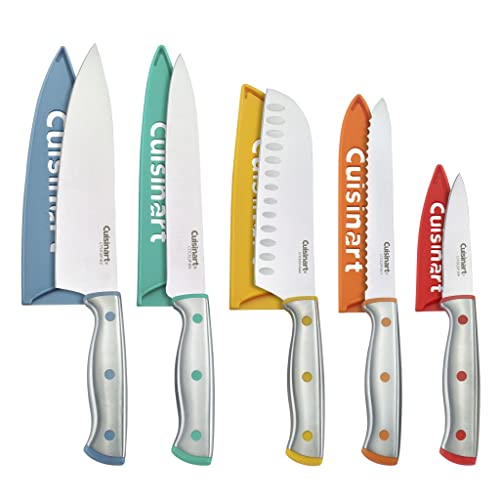
Cuisinart C77CR-10P 10pc Stainless Steel ColorCore™ Color Rivet Set with Blade Guards
- Stainless Steel Blades: Durable, high-quality blades
- Ergonomic Handle: Comfortable grip for easy use
- Lifetime Warranty: Guaranteed for life
As an affiliate, we earn on qualifying purchases.
As an affiliate, we earn on qualifying purchases.
Frequently Asked Questions
Can Reactive Knives Be Safely Used for All Types of Food?
Reactive knives can be used for most foods, but they may cause undesirable reactions with acidic or alkaline ingredients, altering flavors and discoloring the food. To prevent this, you can opt for knives with non-reactive coatings or those treated with special chemical treatments designed to reduce reactivity. These options help guarantee your knives stay safe and effective across various ingredients, making your cooking experience more enjoyable and worry-free.
How Often Should I Rehone or Sharpen a Reactive Knife?
Did you know that sharpening reactive knives every 4-6 months keeps them at peak performance? You should rehone or sharpen your reactive knife more often if you notice dullness or reduced responsiveness. Follow maintenance tips like hand washing and proper storage to prolong sharpness. Regular honing maintains the edge, while sharpening restores it fully. Adjust the frequency based on your usage to guarantee your knife stays safe and effective for all your kitchen tasks.
Are There Specific Cleaning Methods for Reactive Knives?
Yes, there are specific cleaning methods for reactive knives. You should use gentle cleaning solutions with a neutral pH balance to prevent corrosion. Avoid harsh chemicals or abrasive sponges, as they can damage the blade’s surface. Instead, hand wash with mild soap and warm water right after use, dry thoroughly, and occasionally apply a light coat of mineral oil. This helps maintain the knife’s condition and reduces reactivity.
What Are the Long-Term Effects of Using a Reactive Knife?
Using a reactive knife long-term can lead to corrosion, which damages the blade and reduces its material longevity. You might notice staining, pitting, or rust if you don’t practice proper corrosion prevention. Over time, this weakens the knife’s edge and compromises its performance. To extend its lifespan, make certain you clean and dry it thoroughly after each use, and consider treating it with protective oils to minimize reactivity and preserve its quality.
Can Reactive Knives Be Restored to Non-Reactive Status?
About 75% of reactive knives can be restored. You can often do this through chemical treatment, which removes rust and corrosion, or by applying protective coatings that prevent further reactivity. These methods help neutralize the reactive surface, making your knife safer and more durable. Regular maintenance, including cleaning and oiling, also prolongs the non-reactive state, ensuring your knife stays in top condition longer.

Intelitopia Complete Knife Sharpening Stone Set – Dual Grit Whetstone 400/1000 3000/8000 Knife Sharpener with Leather Strop, Flattening Stone, Bamboo Base, 3 Non-slip Rubber Bases & Angle Guide
- Complete Knife Sharpening Kit: Includes all essential sharpening tools
- Dual Grit Whetstone: 400/1000 and 3000/8000 grit for versatile sharpening
- Durable Corundum Material: High-quality aluminum oxide for longevity
As an affiliate, we earn on qualifying purchases.
As an affiliate, we earn on qualifying purchases.
Conclusion
When your knife feels too reactive, don’t let frustration carve into your cooking experience. Instead, think of it as a gentle nudge to improve your skills and understanding of your tools. With patience and proper care, your knife will become a trusty partner, not a wild stallion. Remember, even the sharpest blades need tending—like a delicate dance where harmony transforms chaos into art. Trust the process, and soon your kitchen will sing in perfect harmony.

Modern Innovations 16 Inch Stainless Steel Magnetic Knife Bar with Multi-Purpose Functionality as a Knife Holder, Knife Strip, Magnetic Tool Organizer, Art Supply Organizer & Home Organizer
- Magnetic Knife Bar Material: High-grade stainless steel with strong magnets
- Design & Finish: Elegant satin finish for modern decor
- Magnetic Strength: Fully magnetic surface securely holds knives
As an affiliate, we earn on qualifying purchases.
As an affiliate, we earn on qualifying purchases.
As an affiliate, we earn on qualifying purchases.