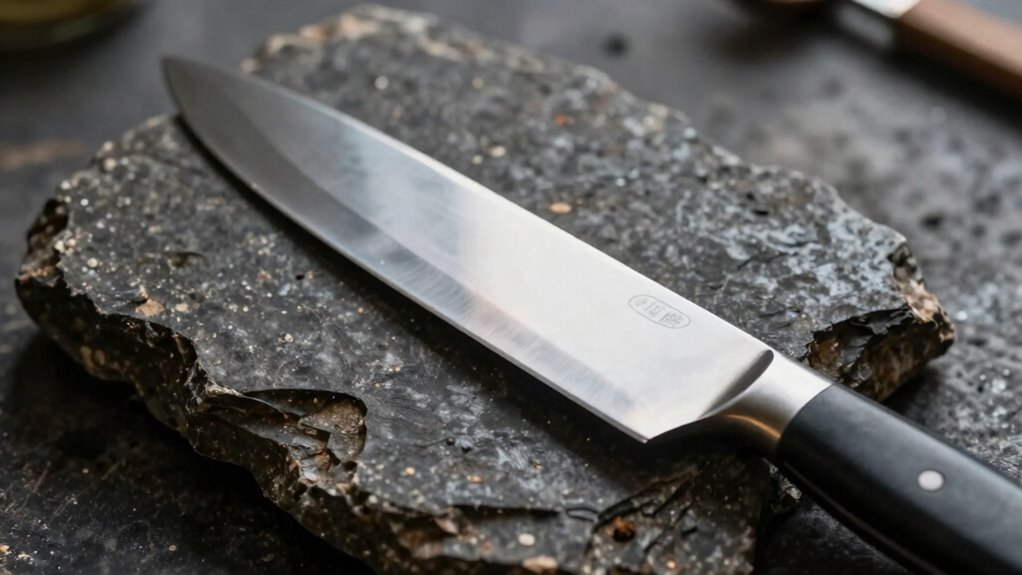
If your sharpening stone feels rough, shows scratches, or the surface isn’t even, it’s likely causing more harm than good. You’ll notice your knife becoming duller or developing uneven edges despite sharpening. Debris buildup or glazing on the stone can also reduce its effectiveness, increasing safety risks. Regularly inspect and maintain your stone to prevent these issues. Keep going, and you’ll discover essential tips to keep your sharpening tools in top shape.
Listen free for 30 days with Audible
Thousands of audiobooks and originals — cancel anytime.
As an affiliate, we earn on qualifying purchases.
Key Takeaways
- The stone has visible scratches, uneven surfaces, or jagged areas, leading to inconsistent sharpening results.
- The knife feels dull or develops rough edges despite regular sharpening attempts.
- Debris or glaze buildup on the stone reduces its effectiveness and causes uneven blade edges.
- Frequent need for excessive pressure or multiple passes indicates the stone’s abrasive quality has diminished.
- Signs of damage or rough surface on the stone suggest it is harming your knife more than helping.

When you’re sharpening your knife, it’s easy to assume that a rough stone is always helping improve the blade. But if your stone isn’t properly maintained, it can end up doing more harm than good. Recognizing when your stone is causing problems is crucial not just for your knife’s performance but also for your safety. A poorly maintained stone can create uneven edges, dull your blade faster, or even lead to accidents if the surface is too rough or inconsistent.
First, pay attention to how your knife feels after sharpening. If you notice that the edge isn’t as sharp or smooth as it used to be, your stone might be the culprit. This could be a sign that the stone’s surface has become glazed or clogged with debris, reducing its effectiveness. Regular stone maintenance, like cleaning and flattening the surface, helps keep it in optimal condition. Without proper care, the stone’s abrasive qualities diminish, making it less effective and increasing the risk of creating jagged or uneven edges that compromise both your knife’s integrity and your safety.
A dull or uneven edge may indicate your stone needs cleaning or flattening for safer, more effective sharpening.
Another sign that your stone might be causing more problems than solutions is if you see visible scratches or inconsistent sharpening patterns on the blade. These often indicate that the stone’s surface has become uneven or rough in an uncontrolled way. When this happens, you’re more likely to push the blade improperly or apply uneven pressure, which can damage your knife or lead to slips and cuts. Maintaining your stone not only preserves its ability to sharpen evenly but also promotes better knife safety by reducing the chance of accidental slips during use. Proper stone maintenance helps ensure a smoother sharpening process and reduces the risk of damage or injury. Additionally, understanding the importance of abrasive qualities can guide you in selecting and maintaining your sharpening tools effectively. Also, keeping your sharpening stone properly flattened is essential for maintaining a consistent abrasive surface and avoiding uneven sharpening. Regular inspection and cleaning of the stone are crucial steps in preventing buildup of debris that can impair its function.
sharpening stone cleaning and flattening kit
As an affiliate, we earn on qualifying purchases.
As an affiliate, we earn on qualifying purchases.
Frequently Asked Questions
Can a Stone Cause Damage Without Visible Signs?
Yes, a stone can cause damage without visible signs. Over time, mineral stability issues can weaken its structure, leading to internal stress. Surface erosion may not be immediately obvious but can still compromise the stone’s integrity. You might not see damage at first, but the underlying effects can cause cracks or breakage later. Regularly inspect your stone and be cautious of subtle changes that signal internal deterioration.
How Often Should I Inspect My Stone?
You should inspect your stone regularly, ideally after every few uses, to stay on top of potential issues. Consistent stone maintenance and inspection frequency help prevent damage or dullness from worsening. Look for signs of chipping, cracks, or uneven surfaces. By actively monitoring your stone’s condition, you guarantee it remains effective and safe, avoiding surprises that could affect your work or compromise your safety.
What Tools Are Best for Examining Stones?
You’ll want a good magnifying glass or jeweler’s loupe for examining stones—ironically, simple tools reveal complex secrets. For stone polishing and mineral identification, a handheld microscope offers detailed views, helping you spot cracks or inclusions. A streak plate and acid test can further aid in identification. These tools turn a mundane inspection into a fascinating detective work, ensuring your stones are healthy, not hiding hidden problems.
Are There Specific Stones More Prone to Causing Problems?
Certain stones are more prone to causing problems due to their gemstone durability and mineral composition. Soft stones like calcite or turquoise tend to chip or scratch easily, making them less suitable for daily wear. In contrast, harder stones like sapphires or diamonds have better durability, reducing potential issues. Knowing a stone’s mineral composition helps you understand its resilience, so you can choose the right gemstone for your needs and avoid unnecessary problems.
How Long Can a Problematic Stone Remain Unnoticed?
Like waiting for your floppy disk to load, a problematic stone can stay hidden for months or even years. Depending on the stone type and detection techniques, symptoms might be subtle or absent altogether. You might not notice issues until the stone causes pain or blockages. Regular check-ups, imaging tests, and listening to your body help catch problems early, preventing complications from sneaky stones that remain unnoticed far too long.
diamond sharpening stone with abrasive surface
As an affiliate, we earn on qualifying purchases.
As an affiliate, we earn on qualifying purchases.
Conclusion
When your stone begins to cast a shadow over your blade’s sharpness, it’s time to reconsider your approach. A worn or misaligned stone can quietly whisper its displeasure, subtly dulling your cutting edge and causing more harm than good. Remember, sometimes the gentle river’s flow is disturbed not by the rock itself, but by how it’s placed. Trust your instincts, and don’t hesitate to give your tools a little extra care — your craftsmanship deserves it.
whetstone repair and flattening tools
As an affiliate, we earn on qualifying purchases.
As an affiliate, we earn on qualifying purchases.
best sharpening stone for kitchen knives
As an affiliate, we earn on qualifying purchases.
As an affiliate, we earn on qualifying purchases.
Flea & tick season Picks
flea and tick prevention
As an affiliate, we earn on qualifying purchases.