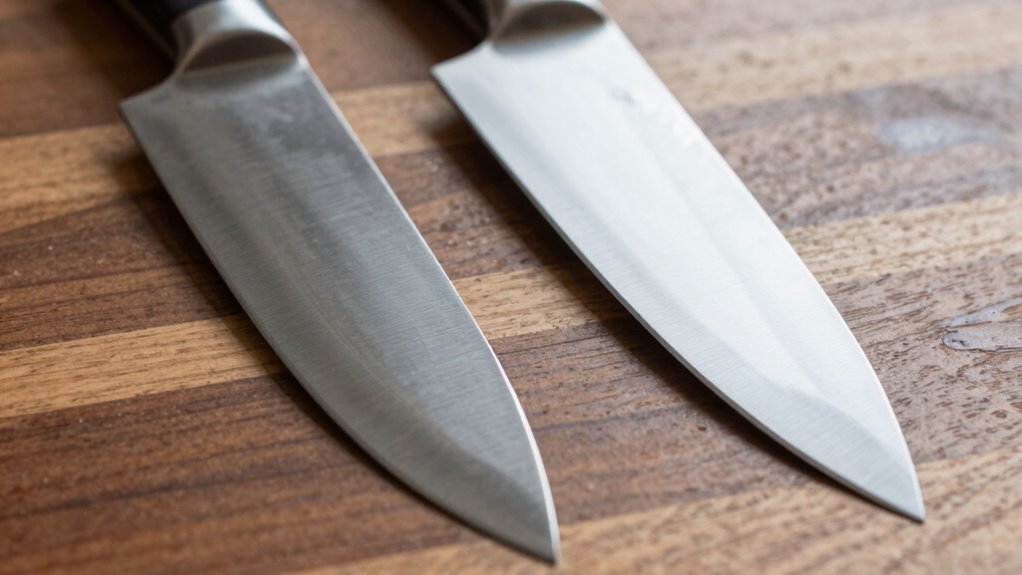
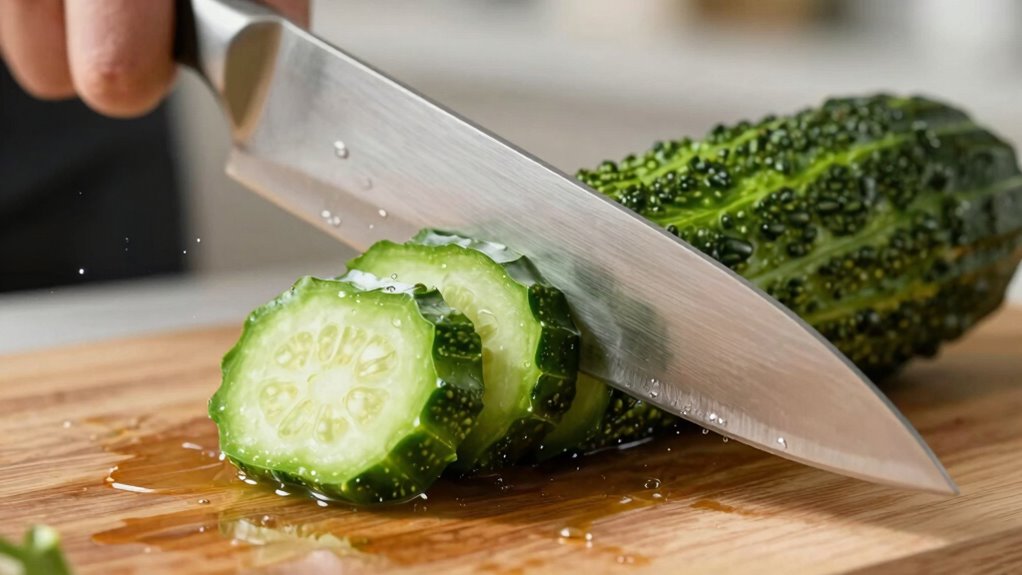
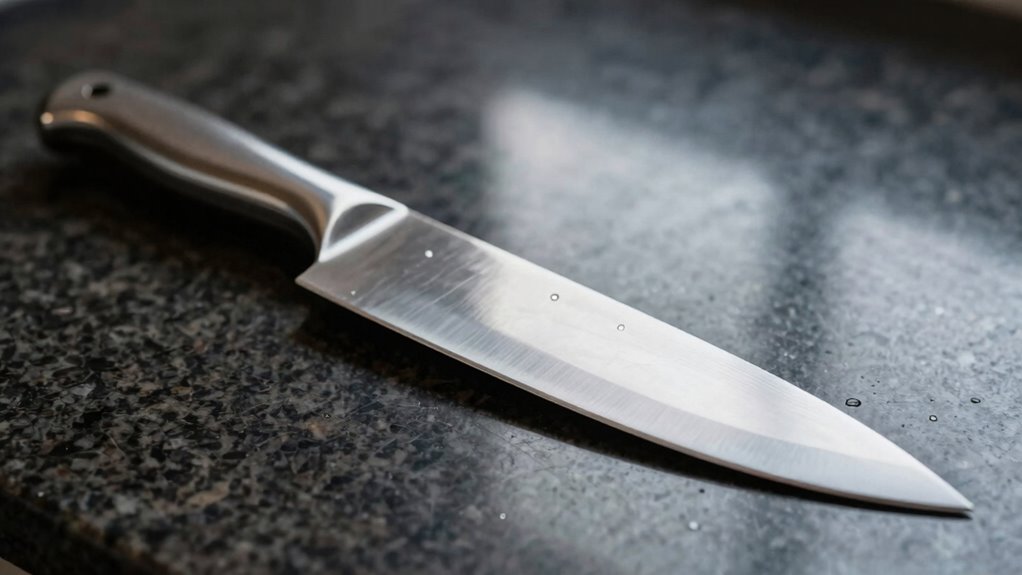
For evaluating steel claims on knife pages, focus on specific details that reveal performance and quality—continue reading to make an informed choice.
Browsing Category
Materials & Edge Science
40 posts
What ‘Cladding’ Does in Kitchen Knives (And Why It Matters)
What ‘Cladding’ does in kitchen knives influences durability and performance, revealing why understanding its layers can elevate your culinary skills.
How Cutting Board Material Interacts With Edge Wear (Simple Version)
Inefficient cutting board materials can quickly dull your knives, so understanding their impact is essential to keep your blades sharp.
Why Knives Lose Sharpness: Wear, Deformation, and Micro-Damage
Discover why knives lose sharpness due to wear, deformation, and micro-damage, and learn how proper care can prevent this decline.
Bevel Width: The Visual Cue That Tells You About Your Edge Angle
Keen to master bevel angles? Discover how bevel width reveals crucial insights about your edge’s sharpness and purpose.
The Science of ‘Toothy’ Edges: Why They Bite Into Tomato Skin
Crucial molecular and cellular factors shape the jagged edges that help tomatoes bite into skin, revealing fascinating insights into their natural design.
Why Some Handles Swell or Shrink (Wood Movement Explained)
Puzzled by handle swelling or shrinking? Discover how wood’s natural response to moisture can impact your handles and what you can do about it.
Food Acids and Patina: What Changes, What Doesn’t
While food acids can alter metal surfaces in fascinating ways, understanding what changes occur and what remains intact is essential for safe patina creation.
Why Thin Knives Can ‘steer’ in Tall Foods (The Geometry Explanation)
Understanding how the geometry of thin knives enables precise steering in tall foods reveals the fascinating way design influences cutting control.
Heat and Knives: Why Hot Water Can Be Hard on Edges and Handles
Warm water can weaken your knives over time, potentially damaging edges and handles—discover how to protect your tools before it’s too late.