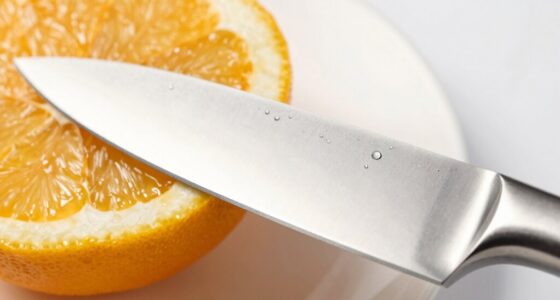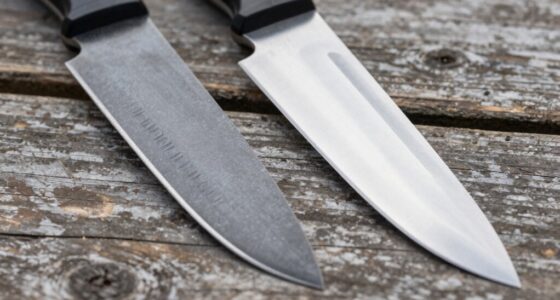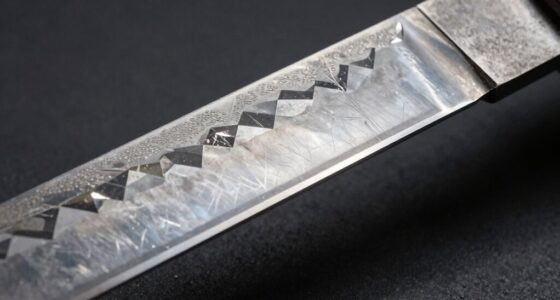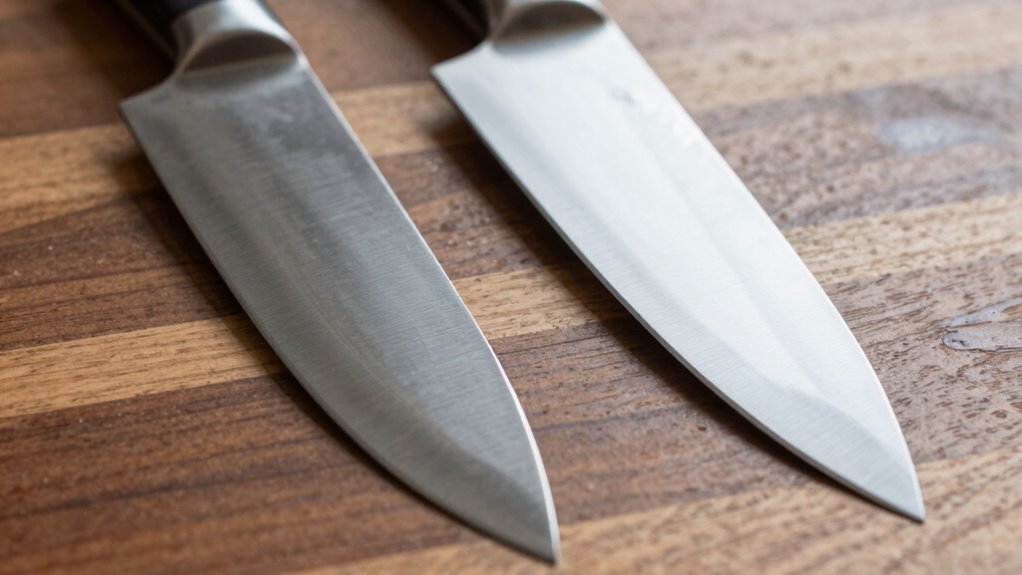
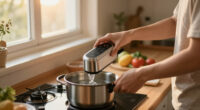
Stiff kitchen blades are rigid and great for forceful tasks like chopping dense vegetables or slicing large meats, providing stability and durability. Flexible blades, on the other hand, are designed to bend and conform to ingredients, offering better control for delicate work like fish filleting or thin slicing. Your choice depends on the task at hand. If you want to understand how to choose the right blade for your needs, keep exploring the details that follow.

Get kitchen gear delivered free with Prime
- Fast, free delivery on millions of items
- Prime Video, Amazon Music and more included
- Member-only deals all year
Key Takeaways
- Stiff blades are rigid and sturdy, ideal for heavy-duty tasks like chopping dense vegetables or slicing large meats.
- Flexible blades can bend and conform, making them suitable for delicate tasks such as fish filleting and thin slicing.
- Stiff blades maintain their edge longer and require less frequent sharpening, while flexible blades need more careful maintenance.
- Material influences performance: high-carbon stainless steel for stiff blades, softer alloys for flexible blades.
- Choosing the right blade depends on the task; stiff for forceful cuts, flexible for precision and finesse.
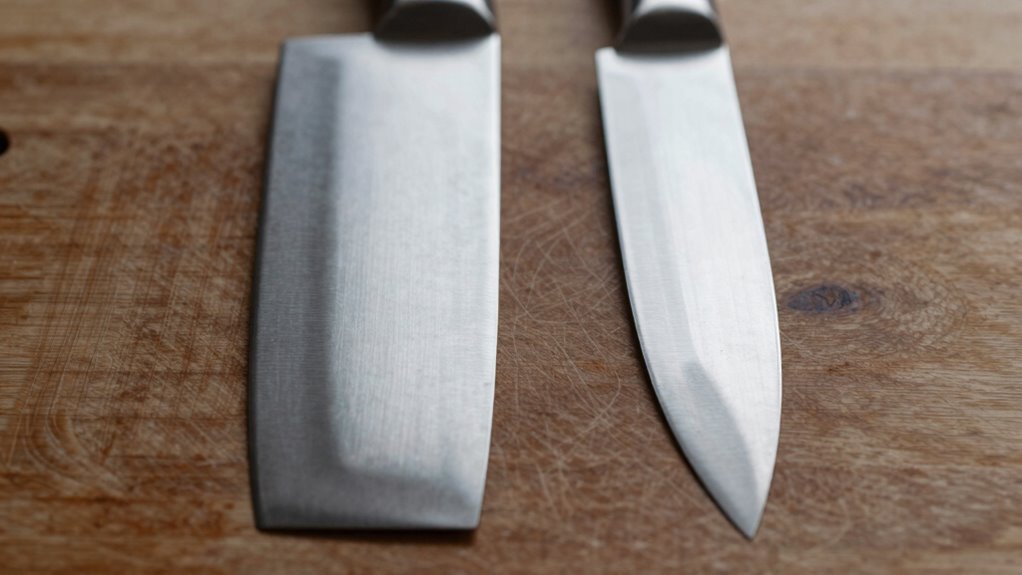
Choosing the right kitchen blade can make all the difference in your cooking experience, especially when it comes to understanding the key difference between stiff and flexible blades. The type of blade you select influences how you handle different ingredients and how efficiently you work. To make an informed choice, you need to consider both knife maintenance and blade material, as these factors directly impact performance and longevity.
Stiff blades are rigid and sturdy, making them ideal for tasks requiring force or precision, such as chopping through dense vegetables or slicing large cuts of meat. Their rigidity provides stability, allowing you to apply pressure without the blade bending or flexing. When it comes to knife maintenance, stiff blades generally require less frequent sharpening because their sturdy construction helps maintain a sharp edge longer. The blade material plays a significant role here—high-carbon stainless steel, for example, is a popular choice because it combines durability with corrosion resistance. These materials help the stiff blade retain its edge and perform consistently over time, making them a practical option for everyday use.
On the other hand, flexible blades are designed to bend and conform to the shape of what you’re cutting. You’ll often find them used for delicate tasks like filleting fish, thinly slicing vegetables, or shaping pâtés. Their flexibility allows for more precision and control, especially around curves or intricate cuts. However, because they bend, flexible blades tend to require more attentive knife maintenance. They may dull faster due to the thinner, more delicate edge, which makes choosing the right blade material essential. For flexible blades, softer steel alloys are common because they allow for easier sharpening and more flexibility in the edge. But you should be aware that softer blade materials can also be more prone to dulling, so regular honing and proper storage are vital to keep the blade performing at its best. Additionally, understanding the blade material properties can help you select the right tool for your specific needs. Proper care and selecting the appropriate blade type can extend the lifespan and effectiveness of your knives. Being aware of blade flexibility and its impact on performance can further help you tailor your selection to your cooking style.
high-carbon stainless steel chef knife
As an affiliate, we earn on qualifying purchases.
As an affiliate, we earn on qualifying purchases.
Frequently Asked Questions
Which Blade Type Is Better for Delicate Slicing Tasks?
For delicate slicing tasks, a flexible blade works best because it offers better blade versatility and cutting precision. You can easily maneuver it around curves and delicate surfaces, ensuring clean, precise cuts without tearing or crushing. Stiff blades are less forgiving and might damage delicate items. By choosing a flexible blade, you gain the control needed for intricate work, making your slicing more accurate and efficient.
Can Flexible Blades Handle Heavy Chopping?
Flexible blades aren’t ideal for heavy chopping because their blade material and handle ergonomics prioritize delicate cuts over force. They bend easily under pressure, which can make chopping tough items difficult and unsafe. If you need a knife for heavy-duty tasks, look for a stiff blade with durable blade material and an ergonomic handle designed to provide the leverage and control necessary for chopping through dense ingredients.
How Do Stiff Blades Affect Food Presentation?
Stiff blades enhance food presentation by providing precise, clean cuts, especially on delicate or intricate items. Their rigid blade material, often high-quality steel, guarantees durability and sharpness. An ergonomic design also helps you control the blade better, reducing the risk of slipping or uneven cuts. This combination allows you to create visually appealing dishes with smooth, professional-looking edges, elevating your plating and overall presentation.
Are Flexible Blades More Durable Than Stiff Blades?
You get what you pay for, so flexible blades aren’t necessarily more durable than stiff blades. It depends on the blade material and ergonomic design. Flexible blades often bend without breaking, but if made from weaker materials, they’ll wear out faster. Stiff blades, especially those crafted from high-quality steel, tend to last longer. So, durability hinges on both material strength and how well the design supports long-term use.
What Maintenance Is Required for Each Blade Type?
You need to regularly sharpen both stiff and flexible blades to maintain their cutting performance, using a suitable sharpening stone or system. For stiff blades, focus on maintaining a sharp edge through careful honing, while flexible blades may require gentle sharpening to prevent damage. Also, check handle ergonomics to guarantee comfort and safety during use. Proper maintenance prolongs blade life and keeps your kitchen tasks efficient.
As an affiliate, we earn on qualifying purchases.
Conclusion
So, next time you’re chopping away in the kitchen, remember: choosing between stiff and flexible blades isn’t just a minor detail—it’s like picking between a lightning-fast cheetah and a gentle, graceful dancer. One slices through like a hot knife through butter, the other bends and dances with your ingredients. Your meals depend on it! Don’t settle for less—grab the perfect blade and turn your cooking into a symphony of precision and finesse.
As an affiliate, we earn on qualifying purchases.
As an affiliate, we earn on qualifying purchases.
Halloween Picks
halloween
As an affiliate, we earn on qualifying purchases.