
High-hardness steel gives you excellent wear resistance and strength, making it ideal for demanding applications like tooling and construction. It offers durability and longevity when properly processed through heat treatment, but it also comes with challenges. It can become brittle, crack under impact, or require complex manufacturing. Coatings boost corrosion resistance but may wear down over time. To get the most out of it, you need precise control and maintenance—discover how to optimize its performance below.

Get kitchen gear delivered free — and shop member deals
- Fast, free delivery on millions of items
- Access to Prime Big Deal Days deals on October 6–7
- Prime Video, Amazon Music and more included
Key Takeaways
- Provides excellent wear resistance and strength for demanding industrial applications.
- Achieves durability through heat treatment, but can become brittle and prone to cracking.
- Enhances surface performance with coatings that improve corrosion and oxidation resistance.
- Requires specialized manufacturing skills, increasing costs and complexity.
- Balancing hardness with toughness is essential to prevent material failure over time.
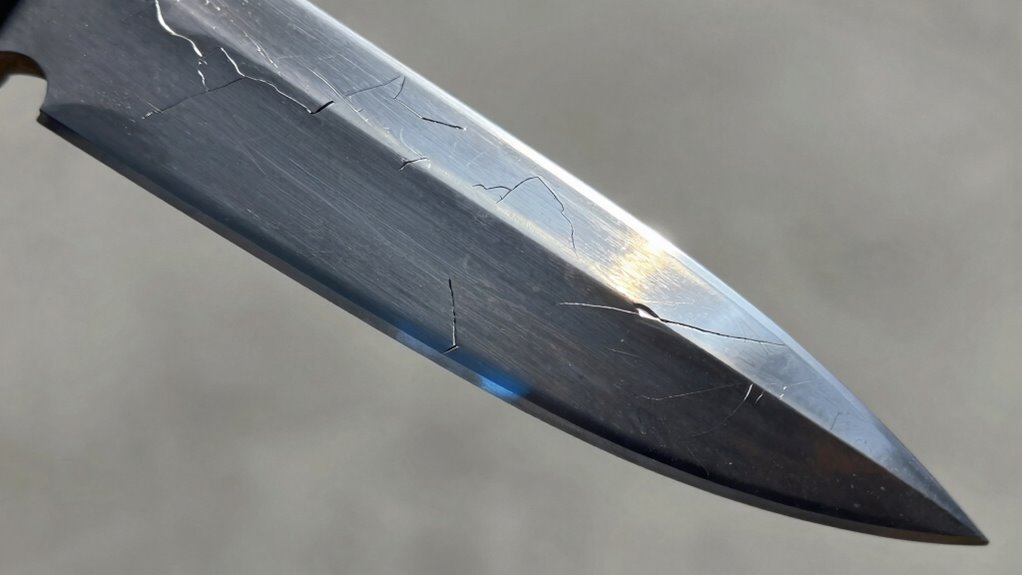
High-hardness steel offers considerable advantages, especially in applications requiring exceptional wear resistance and strength. When you choose this type of steel, you’re primarily aiming for durability and longevity, often in demanding environments like manufacturing, tooling, or construction. Achieving this high level of hardness typically involves specific heat treatment processes. Heat treatment allows you to manipulate the steel’s internal structure, increasing its hardness while maintaining enough toughness for practical use. Properly controlled processes like quenching and tempering help you optimize the balance between hardness and ductility, ensuring the material can withstand repeated stress without cracking or deforming.
Surface coatings also play an essential role in enhancing high-hardness steel’s performance. Applying coatings such as nitriding, carburizing, or physical vapor deposition (PVD) can markedly improve resistance to corrosion, oxidation, and surface wear. These coatings act as a barrier, protecting the steel from environmental factors and extending its service life. When combined with heat treatment, surface coatings boost the steel’s ability to handle harsh conditions, making it suitable for more aggressive applications. You might find that coated high-hardness steel performs better in abrasive environments, where surface erosion could otherwise shorten its lifespan.
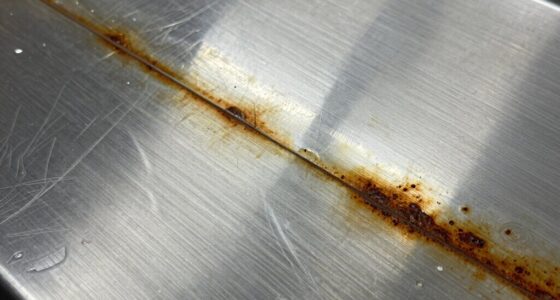
However, achieving and maintaining high hardness isn’t without its challenges. The increased hardness can make the steel more brittle, raising the risk of cracking under sudden impacts or shocks. If you’re not careful with heat treatment parameters, you might end up with a material that’s overly hard and prone to failure. Furthermore, surface coatings, while beneficial, add an extra step and cost to the manufacturing process. They require proper application techniques and maintenance to guarantee long-term effectiveness. Over time, coatings can wear off or degrade, which means you’ll need to monitor their condition and reapply as necessary.
Another factor to think about is that high-hardness steel often demands more precise machining and fabrication techniques. Its hardness can make cutting, drilling, or welding more difficult, requiring specialized tools and skills. This sometimes results in increased production costs and longer lead times. Additionally, some heat treatment methods can induce residual stresses within the steel, potentially leading to warping or distortion if not managed properly. It’s essential to carefully control the entire process, from heat treatment to surface coating application, to get the best performance out of high-hardness steel. Furthermore, understanding the microstructure of the steel is crucial for optimizing its hardness and toughness balance.
As an affiliate, we earn on qualifying purchases.
Frequently Asked Questions
How Is High-Hardness Steel Produced?
You produce high-hardness steel through a precise heat treatment process, which involves heating the steel to high temperatures, then rapidly quenching it to harden the material. You adjust the alloy composition, adding elements like carbon, chromium, or vanadium, to enhance hardness and durability. This combination of heat treatment and alloy tailoring results in steel with exceptional hardness, but it requires careful control to prevent brittleness or cracking.
What Industries Most Rely on High-Hardness Steel?
You’ll find industries like aerospace, automotive, and manufacturing heavily rely on high-hardness steel for its exceptional wear resistance and durability. Surface treatments enhance its performance further, protecting against abrasion and extending component life. These industries depend on high-hardness steel to produce cutting tools, gears, and structural parts that withstand tough conditions, ensuring safety and efficiency. Its ability to maintain strength under stress makes it indispensable for demanding applications.
How Does High-Hardness Steel Compare to Other Metals?
Think of high-hardness steel as a knight’s armor—stronger and more durable than many other metals. Unlike softer metals, it offers superior resistance to wear but sacrifices corrosion resistance and comes with higher costs. When you compare it to alternatives like aluminum or stainless steel, you see a trade-off: unmatched strength for increased investment and maintenance. You must decide if the durability outweighs the potential costs and corrosion concerns.
Can High-Hardness Steel Be Recycled Effectively?
Yes, high-hardness steel can be recycled effectively, but it faces recycling challenges due to its specialized properties. Its durability reduces environmental impact since it lasts longer, but the recycling process requires careful handling to maintain quality. You need to separate it properly and use specific techniques, which can be energy-intensive. Overall, recycling high-hardness steel is feasible and environmentally beneficial, but it demands more effort than recycling softer steels.
What Safety Considerations Exist When Handling High-Hardness Steel?
When handling high-hardness steel, safety is essential. Imagine you’re working without protective gear, and a sharp edge causes a cut—serious injury is likely. Always wear gloves, eye protection, and long sleeves. Follow handling protocols diligently to prevent accidents. High-hardness steel’s strength means injuries can be severe, so prioritize safety measures. Proper training and protective gear minimize risks, ensuring your safety during handling and machining.
As an affiliate, we earn on qualifying purchases.
Conclusion
Choosing high-hardness steel offers you unmatched durability and performance, but it’s a double-edged sword—you might find yourself sacrificing flexibility and ease of fabrication. Sometimes, the toughest materials reveal their limits just when you think you’ve mastered them, reminding you that strength and vulnerability often coexist in unexpected ways. In the end, it’s a reminder that every advantage comes with a hidden cost, shaping your approach just as much as the steel itself.
coated high-hardness steel sheets
As an affiliate, we earn on qualifying purchases.
As an affiliate, we earn on qualifying purchases.
As an affiliate, we earn on qualifying purchases.
Evergreen bestsellers Picks
bestsellers
As an affiliate, we earn on qualifying purchases.