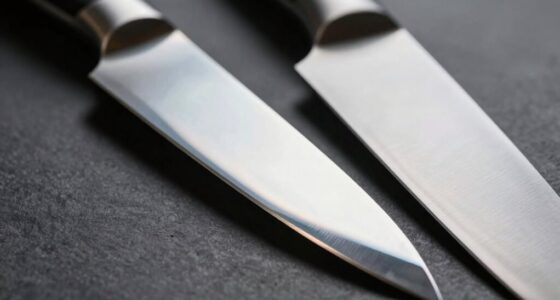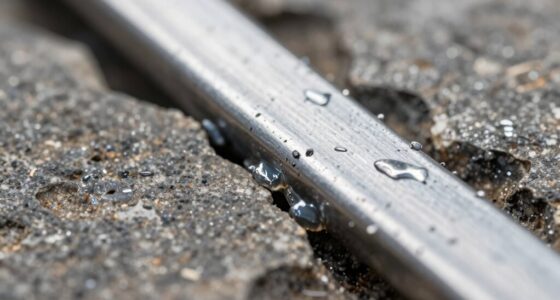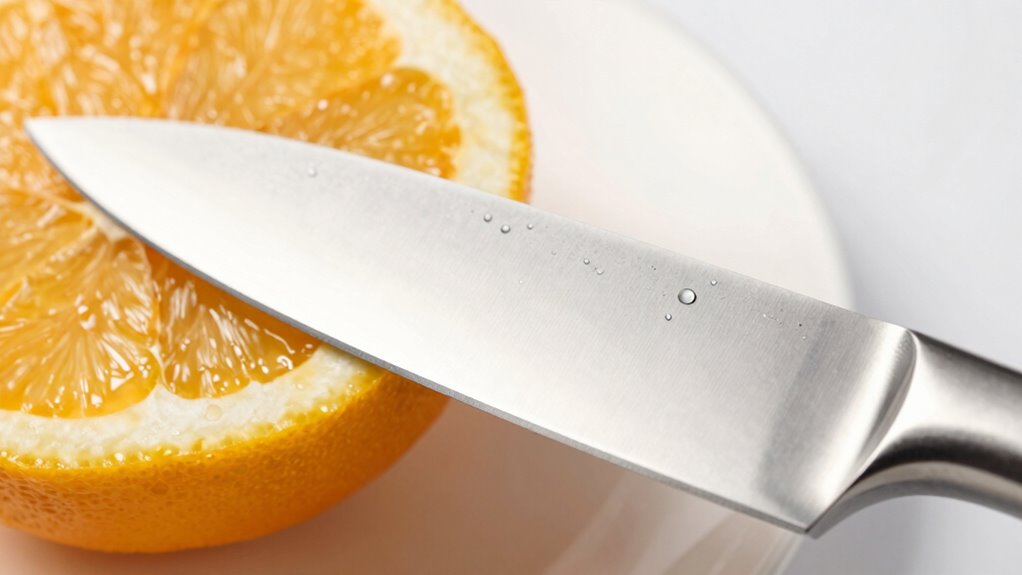
Your blade’s finish directly affects how much friction you experience when cutting or handling food. A smooth, polished surface reduces friction, so food slides off easily and cuts are cleaner. Rough or textured finishes increase resistance, causing food to cling or tear. Proper maintenance and different coatings can help maintain these benefits over time. If you want to understand how various finishes impact food release and cutting efficiency, keep exploring this topic further.

Get kitchen gear delivered free — and shop member deals
- Fast, free delivery on millions of items
- Access to Prime Big Deal Days deals on October 6–7
- Prime Video, Amazon Music and more included
Key Takeaways
- Smoother, polished finishes reduce friction, allowing food to slide off more easily.
- Rougher textures increase friction, causing food to cling and potentially tear during cutting.
- Finely finished blades minimize resistance, enabling cleaner and more efficient cuts.
- Surface texture influences how well food releases, impacting cleaning and maintenance.
- Coatings and polishing techniques help maintain low-friction surfaces for better food release.

The finish of a blade plays a essential role in how it interacts with food, directly affecting both friction and release. When you’re preparing ingredients, the surface texture of the blade determines how smoothly it cuts through or slides along the food. A finely finished edge minimizes resistance, allowing for cleaner cuts and less sticking. Conversely, a blade with a rougher surface texture increases friction, making food cling to it and possibly causing tearing or uneven slices. This is why understanding the finish is imperative to achieving the perfect cut and efficient food processing.
Manufacturing techniques are central to how a blade’s surface texture is developed. Traditional methods like grinding and polishing create smoother finishes, reducing surface imperfections that can trap food particles. Modern manufacturing might incorporate honing or even advanced coatings, which further refine the finish. For instance, some blades are polished to a mirror-like shine, drastically lowering friction and enabling effortless release of delicate items like fish or soft fruits. Others may have a matte or satin finish, which might be slightly more abrasive but can offer increased durability or resistance to corrosion. Manufacturing techniques are key in determining how these surface textures are achieved and their long-term performance. Additionally, advancements in coating technology can significantly extend the lifespan of a blade’s finish, maintaining optimal food release properties over time. Furthermore, consistent quality control during manufacturing ensures that the surface texture remains uniform across production batches, which is critical for predictable performance. It’s also important to recognize that the surface texture can influence how well a blade performs under different conditions, emphasizing the need for precise manufacturing.
Traditional and modern techniques shape blade finishes, influencing smoothness, durability, and food release properties in your kitchen tools.
The choice of manufacturing techniques directly impacts the blade’s performance in the kitchen. A polished blade, achieved through meticulous grinding and buffing, tends to have a slick surface that helps foods slide off easily, reducing sticking and making cleaning simpler. On the other hand, blades with textured finishes—perhaps from specific grinding patterns—can provide better grip for cutting tougher ingredients, but they may also trap food residues more easily. This can influence how you handle different types of food and determine how often you need to clean or re-sharpen your blade. Additionally, surface textures can change over time due to use, sharpening, or corrosion, which highlights the importance of proper maintenance to preserve the initial finish.
It’s also worth noting that the surface texture isn’t static; it can change over time due to use, sharpening, or corrosion. Manufacturing techniques set the initial finish, but proper maintenance preserves or enhances that surface. For example, honing can restore a smooth finish, reducing friction and improving food release. If you opt for blades with specialized coatings like ceramic or titanium, the manufacturing process ensures a consistent surface texture that resists wear and maintains ideal release properties longer. Understanding how blade finish is created through manufacturing techniques helps you select blades tailored to your needs, whether for effortless slicing, minimal sticking, or durability. Proper care and maintenance are essential to sustain these finishes and their beneficial effects on your kitchen experience. In addition, choosing blades with advanced coatings can provide extra protection against corrosion and wear, extending their effective lifespan.
In essence, understanding how manufacturing techniques influence surface texture helps you select blades tailored to your needs. Whether you prioritize effortless slicing, minimal sticking, or durability, knowing how these finishes are created empowers you to make smarter choices in your kitchen tools. The way your blades are finished ultimately shapes your cooking experience, making every cut more precise, efficient, and satisfying.
As an affiliate, we earn on qualifying purchases.
Frequently Asked Questions
Does Blade Finish Affect Food Taste or Aroma?
A blade finish doesn’t directly affect food taste or aroma, but it can influence flavor preservation and aroma enhancement. A smooth, well-finished blade reduces friction, preventing food from sticking, which helps retain natural flavors and aromas. When food releases easily, it’s less likely to pick up metallic or unwanted tastes. So, while not directly changing taste or aroma, a good blade finish supports maintaining the food’s authentic flavor and aroma quality.
How Long Does a Blade Finish Last Before Wearing Off?
Blade finish typically lasts between 20 to 50 uses, depending on your cutting frequency and maintenance. Over time, finish degradation occurs, making the blade more prone to friction and sticking. To extend blade longevity, clean and sharpen the blade regularly. Once the finish wears off, you’ll notice increased friction and decreased food release, prompting you to replace or re-coat the blade for peak performance.
Are There Safety Concerns With Certain Blade Finishes?
Yes, some blade finishes can pose safety concerns, especially if they lead to blade corrosion over time. Corroded blades may become brittle or break, increasing injury risk. To stay safe, you should follow safety precautions like inspecting blades regularly, avoiding use of damaged blades, and ensuring proper cleaning and drying after use. Using blades with non-corrosive finishes can also help prevent safety issues related to corrosion.
Can Different Blade Finishes Be Used Interchangeably?
Think of blade finishes as different melodies—each with its own rhythm. You can’t always swap them freely; blade material and finish compatibility act like keys in a song. Some finishes suit specific materials, ensuring smooth cuts and easy food release, while others may cause sticking or safety issues. So, you should match blade finishes carefully to their intended material, like fitting keys perfectly into their locks, to keep your cutting experience safe and efficient.
How Do Cleaning Methods Impact Blade Finish Durability?
Cleaning techniques greatly impact blade finish durability. If you use abrasive cleaners or scrubbing pads, you risk damaging the finish and reducing its effectiveness over time. To preserve the finish, opt for gentle cleaning methods like hand washing with soft cloths or sponges, and avoid harsh chemicals. Proper cleaning techniques help maintain the blade’s finish, ensuring consistent friction and food release, ultimately prolonging its lifespan and performance.
As an affiliate, we earn on qualifying purchases.
Conclusion
By understanding how blade finish influences friction and food release, you gain control over your cooking experience. You can optimize performance, enhance ease of use, and improve results with each cut. Whether you prefer a smooth, polished edge or a more textured finish, your choice impacts your efficiency, your safety, and your satisfaction. Embrace the knowledge, choose wisely, and enjoy the precision, the ease, and the confidence that come with a well-finished blade.
ceramic knife with low friction finish
As an affiliate, we earn on qualifying purchases.
As an affiliate, we earn on qualifying purchases.
professional sharpening stone for knives
As an affiliate, we earn on qualifying purchases.
As an affiliate, we earn on qualifying purchases.
Halloween Picks
halloween
As an affiliate, we earn on qualifying purchases.