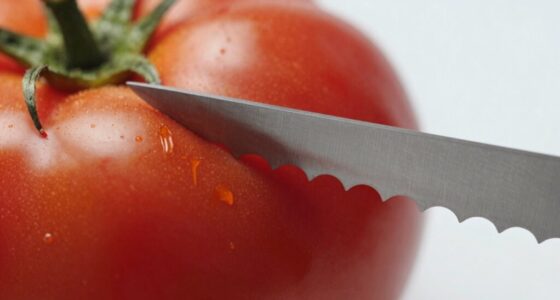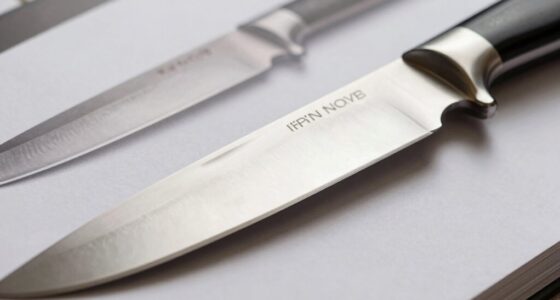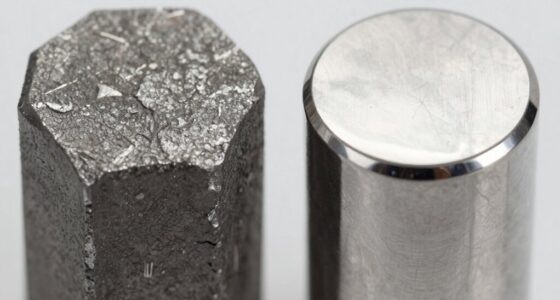
Your sharpening feel gives you valuable clues about the steel’s microstructure and behavior. When you notice a firm, resistant feel, it suggests good edge retention and a fine grain structure. If it’s slicker or softer, the steel may be coarser and prone to faster dulling. Pay attention to how burrs form and edges respond—these tactile cues can reveal if the steel has specific microstructure traits. Keep exploring, and you’ll uncover even more about your blade’s true nature.

Get kitchen gear delivered free — and shop member deals
- Fast, free delivery on millions of items
- Access to Prime Big Deal Days deals on October 6–7
- Prime Video, Amazon Music and more included
Key Takeaways
- Tactile feedback during sharpening reveals microstructure traits like grain size and toughness.
- Firm resistance indicates a fine-grained, hard microstructure, while a slick feel suggests softer steel.
- Changes in feel help identify edge micro-cutting behavior and potential microstructure issues.
- Different honing responses reflect how microstructure influences material removal and edge formation.
- Developing sharpening feel enhances understanding of steel properties, guiding better maintenance and technique.
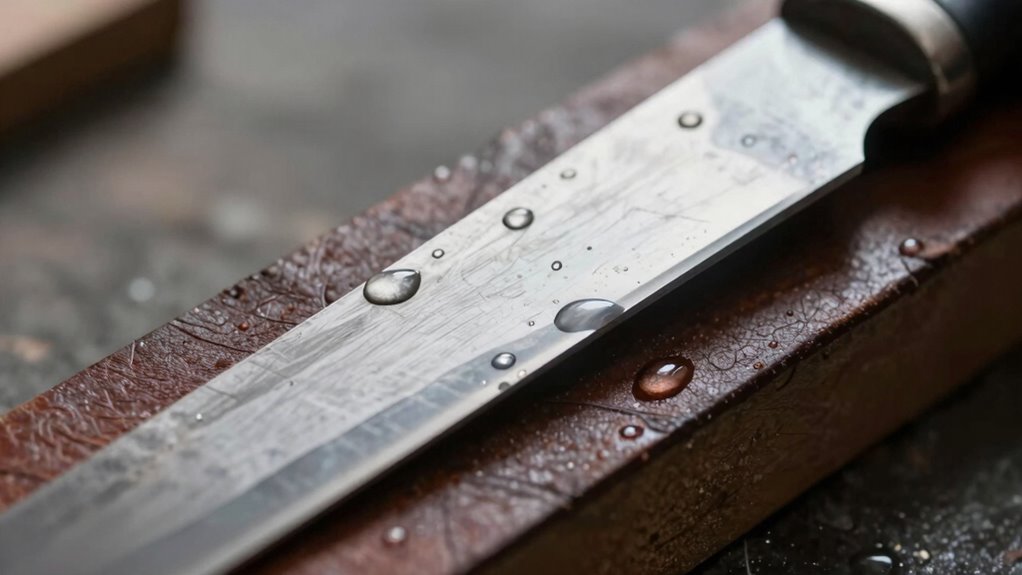
Understanding how your knife’s steel responds during sharpening is essential to improving your overall feel and control. When you sharpen, you’re not just honing the edge; you’re revealing how the steel’s microstructure influences its behavior. This microstructure analysis helps you interpret the subtle cues in your sharpening experience, providing insight into the steel’s composition and how well it retains its edge. Recognizing these signals allows you to adjust your technique for better results and longer-lasting blades.
Understanding steel response during sharpening enhances control, revealing microstructure influences for better edge retention and technique adjustments.
As you work on your knife, pay attention to how easily the steel responds to the sharpening process. A steel with good edge retention typically feels firmer and more resistant, which means it takes more effort to remove material. Conversely, softer steels tend to feel slicker and require less force, but they might dull faster. By assessing these tactile cues, you get a sense of the underlying microstructure—whether it’s fine-grained or coarse, tempered or untempered—and how that impacts the steel’s overall performance. Microstructure analysis can help you better understand these differences.
Your feel during sharpening also reveals how the steel’s microstructure influences the creation of micro-cutting edges. For example, a steel with a refined grain structure often produces a smoother, more consistent edge that holds its sharpness longer. When you notice that the edge develops clean, sharp burrs with relative ease and then maintains its sharpness across multiple uses, you’re witnessing the benefits of optimized microstructure analysis. On the other hand, if the edge chips or feels uneven, it could indicate that the steel’s microstructure isn’t ideal for maintaining a durable edge, prompting you to reconsider the sharpening angle or technique. Additionally, understanding steel composition can help you predict how different steels will behave during sharpening.
Understanding steel behavior during sharpening also involves recognizing how different steels respond to various honing methods. Some steels respond well to finer stones, which refine the microstructure for better edge retention, while others require more aggressive approaches. As you sharpen, you can gauge whether your technique is aligning with the steel’s natural tendencies, helping you achieve a sharper, more durable edge. This ongoing feedback loop enhances your skill and deepens your knowledge of how steel microstructure dictates performance. Recognizing the microstructure’s role in these processes can help you select the most effective sharpening techniques.
Ultimately, your sharpening feel acts as an intuitive guide that connects the physical act of honing to the microscopic properties of the steel. By cultivating this awareness, you can better select and maintain your knives, ensuring they perform at their best. Taking note of how the steel reacts during sharpening isn’t just about getting a sharper blade—it’s about understanding the core material behavior, especially edge retention, and using that knowledge to optimize every cut. Recognizing the role of microstructure in steel behavior can significantly improve your sharpening skills and the longevity of your blades.
As an affiliate, we earn on qualifying purchases.
Frequently Asked Questions
How Does Sharpening Feel Vary Between Different Steel Types?
You’ll notice sharpening feel varies across steel types through edge smoothness and sharpening resistance. Softer steels often feel smoother and easier to sharpen, with less resistance, while harder steels offer more resistance, making the edge feel rougher and requiring more effort. This difference helps you gauge the steel’s hardness and behavior during sharpening, allowing you to adjust your technique for *best* results. Understanding these cues improves your sharpening skills and knife maintenance.
Can Sharpening Feel Predict a Steel’s Durability?
Sharpening feel can hint at a steel’s durability by revealing its edge stability and hardness perception. If you notice consistent resistance and a steady feel during sharpening, it suggests the steel has good edge stability and hardness, which often correlates with durability. Conversely, a inconsistent or overly soft feel might indicate lower durability. Trust your senses; the sharpening experience directly reflects the steel’s ability to hold an edge over time.
Is There a Standard Way to Measure Sharpening Feel?
There isn’t a universal standard for measuring sharpening feel, but you can assess it by paying attention to edge consistency and blade flexibility. When you sharpen, notice how smoothly the edge responds—if it’s consistently cutting or feels uneven, that’s a clue. Using a light touch and focusing on how the steel reacts helps you gauge its behavior, making your sharpening more precise and tailored to the steel’s unique properties.
How Does Blade Age Affect Sharpening Sensation?
As your blade ages, you’ll notice changes in sharpening sensation due to edge retention and hardness variations. Over time, the steel may soften slightly or develop micro-chipping, making sharpening feel smoother or more challenging. You might feel less resistance or need more passes to restore the edge. These sensations indicate shifts in the steel’s hardness and its ability to hold a sharp edge, guiding you on when to re-sharpen or replace your blade.
Can Sharpening Feel Indicate a Steel’s Corrosion Resistance?
Sharpening feel can offer corrosion clues about a steel’s resistance. If you notice a gritty or uneven sensation during sharpening, it might indicate surface degradation or oxidation, suggesting lower corrosion resistance. Conversely, a smooth, consistent feel often points to better corrosion resistance, as the steel maintains a cleaner surface. Paying attention to these tactile cues helps you assess the steel’s condition and its ability to resist rust and corrosion over time.
professional sharpening stone set
As an affiliate, we earn on qualifying purchases.
As an affiliate, we earn on qualifying purchases.
Conclusion
Next time you sharpen your knife, pay close attention to the feel. Some experts believe that that tactile feedback reveals a lot about the steel’s behavior—like its hardness and how it responds under pressure. While it’s not a foolproof science, trusting your senses might just give you a better sense of your blade’s true nature. So, next time, trust that sharpened feel; it could reveal hidden secrets about your steel.
microstructure analysis knife sharpener
As an affiliate, we earn on qualifying purchases.
As an affiliate, we earn on qualifying purchases.
As an affiliate, we earn on qualifying purchases.
Halloween Picks
halloween
As an affiliate, we earn on qualifying purchases.