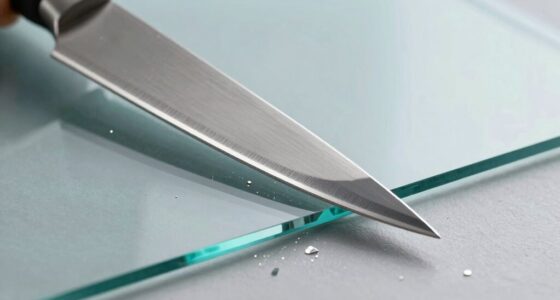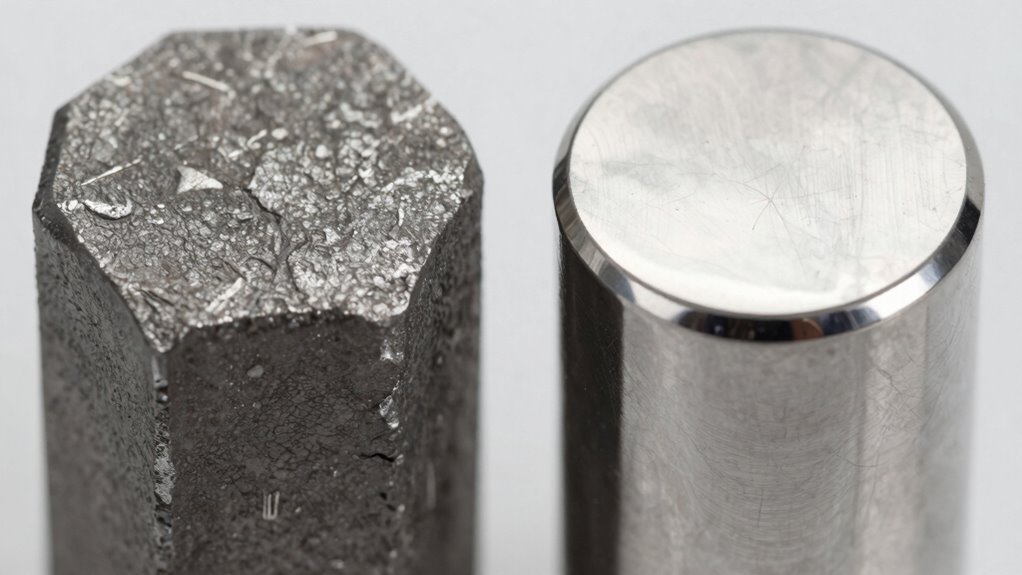

Heat treatment changes the same steel dramatically by altering its microstructure through heating and rapid cooling. You heat the steel to high temperatures, which transforms the crystalline structure from ferrite and pearlite to martensite, making it harder and more resistant. Quenching traps carbon atoms, increasing hardness, while tempering reheats it to reduce brittleness without losing strength. This process helps you customize steel’s properties for different applications, and if you keep exploring, you’ll discover even more about these powerful transformations.
Key Takeaways
- Heat treatment alters steel’s microstructure, transforming it from ferrite and pearlite to martensite or other phases.
- Rapid cooling (quenching) traps carbon, significantly increasing hardness and brittleness.
- Tempering reduces brittleness while maintaining increased hardness, modifying mechanical properties.
- Precise control of heating and cooling cycles dramatically changes steel’s strength, toughness, and wear resistance.
- Microstructure changes directly influence the steel’s suitability for specific applications and performance demands.
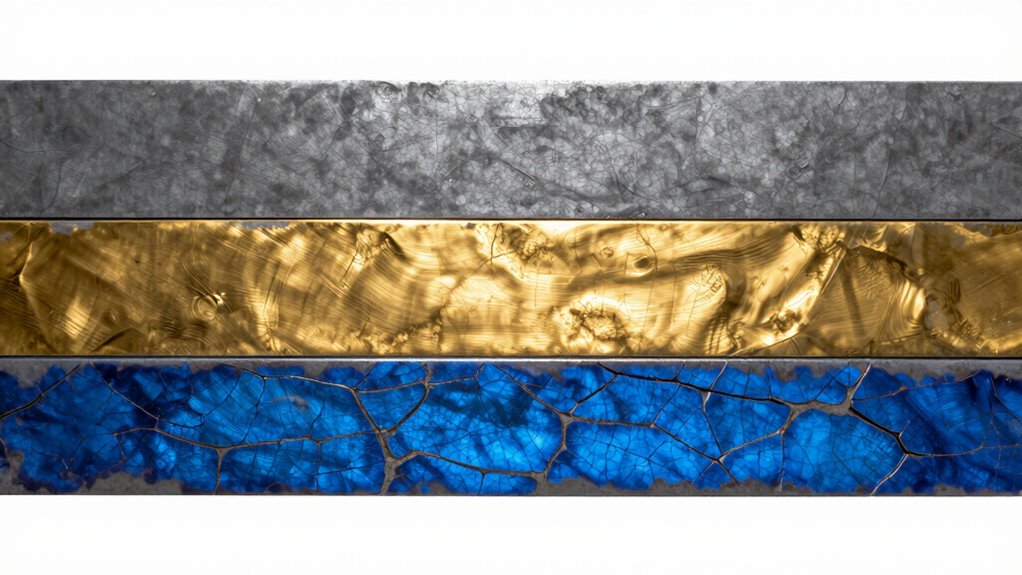
Have you ever wondered how steel achieves its strength and durability? The secret lies in heat treatment, a process that dramatically alters the steel’s internal structure. When you subject steel to specific heating and cooling cycles, you initiate a microstructure transformation that directly impacts its properties. This transformation rearranges the atoms within the steel, changing from one crystalline structure to another, such as from ferrite and pearlite to martensite. The result is a material that’s substantially harder and more resistant to wear, which is precisely what you want in tools, machinery, and structural components.
By carefully controlling the heating temperature and cooling rate, you can influence the microstructure transformation to suit your needs. For example, quenching involves rapidly cooling the steel from a high temperature, trapping the carbon atoms within the crystalline structure and creating martensite. This phase is extremely hard but also brittle. Conversely, tempering involves reheating the quenched steel to a lower temperature, which reduces brittleness while maintaining much of the hardness. This process allows you to fine-tune the steel’s properties, making it more suitable for different applications.
Heat treatment doesn’t just change the microstructure; it also enhances the hardness of the steel. Hardness enhancement occurs because the new microstructure formed through transformation resists deformation more effectively. When you increase a steel’s hardness, you improve its ability to resist scratching, indentation, and wear. This is vital for cutting tools, dies, and other components that face constant mechanical stress. The hardness achieved through heat treatment can be precisely controlled, giving you the flexibility to produce steels with specific strength and durability characteristics. Additionally, understanding the microstructure transformation process is key to optimizing steel performance for various uses, especially when combined with other sustainable manufacturing practices that reduce environmental impact. Recognizing the importance of microstructure control allows manufacturers to develop more efficient and environmentally friendly production techniques. Furthermore, advancements in heat treatment technology continue to improve the quality and performance of steel products in modern industries. Moreover, ongoing research into microstructure manipulation is helping to develop steels with tailored properties for specialized applications.

321 Stainless Steel Tool Wrap | Heat Treat Foil 20" x .002" x 10'
As an affiliate, we earn on qualifying purchases.
As an affiliate, we earn on qualifying purchases.
Frequently Asked Questions
How Does Heat Treatment Affect Steel’s Corrosion Resistance?
Heat treatment can improve steel’s corrosion resistance by enhancing surface hardness and promoting grain refinement. When you heat and cool steel properly, it creates a tougher, more uniform surface that resists rust and corrosion. Grain refinement reduces pathways for corrosive agents, making the steel more durable. So, through heat treatment, you effectively strengthen the steel, helping it withstand harsh environments and extend its lifespan.
What Are the Environmental Impacts of Heat Treating Steel?
Think of heat treating steel as a dance with the environment—careful steps matter. Your process can have significant impacts, especially in energy consumption and waste. To minimize environmental harm, you should adopt sustainable practices, like optimizing temperature controls and recycling waste heat. This approach reduces energy use and lowers emissions, making your steel production more eco-friendly. Being mindful guarantees your steel’s strength doesn’t come at the planet’s expense.
Can Heat Treatment Improve Steel’s Fatigue Life?
Yes, heat treatment can improve steel’s fatigue life by inducing grain refinement and microstructure alteration. When you heat and cool steel properly, you refine its grains, making the microstructure more uniform and tougher. This process helps distribute stress more evenly, reducing crack initiation and propagation under cyclic loads. As a result, the steel becomes more resistant to fatigue failure, enhancing its durability and lifespan in demanding applications.
How Does Heat Treatment Influence Steel’s Machinability?
Heat treatment improves steel’s machinability by altering its microstructure and adjusting hardness levels. When you heat and cool steel, you refine the grain structure, making it easier to cut and shape. Hardness modification ensures the steel isn’t too brittle or too soft, optimizing its machinability. This process allows you to attain smoother finishes, faster machining speeds, and reduced tool wear, ultimately enhancing production efficiency and component quality.
Are There Differences in Heat Treatment Effects on Alloy vs. Carbon Steels?
Yes, heat treatment affects alloy and carbon steels differently. With alloy steels, heat treatment promotes grain refinement and surface hardening, enhancing toughness and wear resistance. Carbon steels respond mainly with surface hardening, improving hardness on the surface while maintaining a softer core. These differences stem from alloying elements that influence how each steel type reacts to heat processes, so understanding these variations helps you optimize their properties for specific applications.

Knifemakers home heat treating recipes
As an affiliate, we earn on qualifying purchases.
As an affiliate, we earn on qualifying purchases.
Conclusion
So, next time you see a simple steel object, remember the hidden magic behind its transformation. Heat treatment isn’t just a process—it’s the secret that can turn ordinary steel into something extraordinary. But what if there’s more to discover? The true power lies in understanding how heat shapes steel’s destiny. Stay curious, because the next breakthrough might just be a heat away, waiting to reveal what’s possible when science meets metal.

Rocaris 12"x1.5"x0.12" 1095 Steel for Knife Making, 5 Pack
- Material: High carbon 1095 steel
- Durability: Hard, tough, easy to work with
- Application: Ideal for knives, hunting, survival
As an affiliate, we earn on qualifying purchases.
As an affiliate, we earn on qualifying purchases.
![Stainless Steel Test Kit for Differentiating 316/304 [Packaging Upgraded]](https://m.media-amazon.com/images/I/41OL-A57NGL._SL500_.jpg)
Stainless Steel Test Kit for Differentiating 316/304 [Packaging Upgraded]
- Easy Differentiation: Color change for 316, 304, 201 series
- High Testing Capacity: Over 100 tests per pack
- Complete Kit: Includes all components and manual
As an affiliate, we earn on qualifying purchases.
As an affiliate, we earn on qualifying purchases.