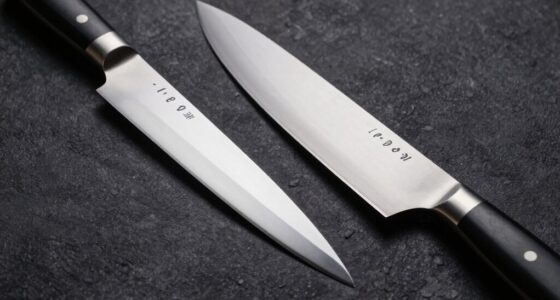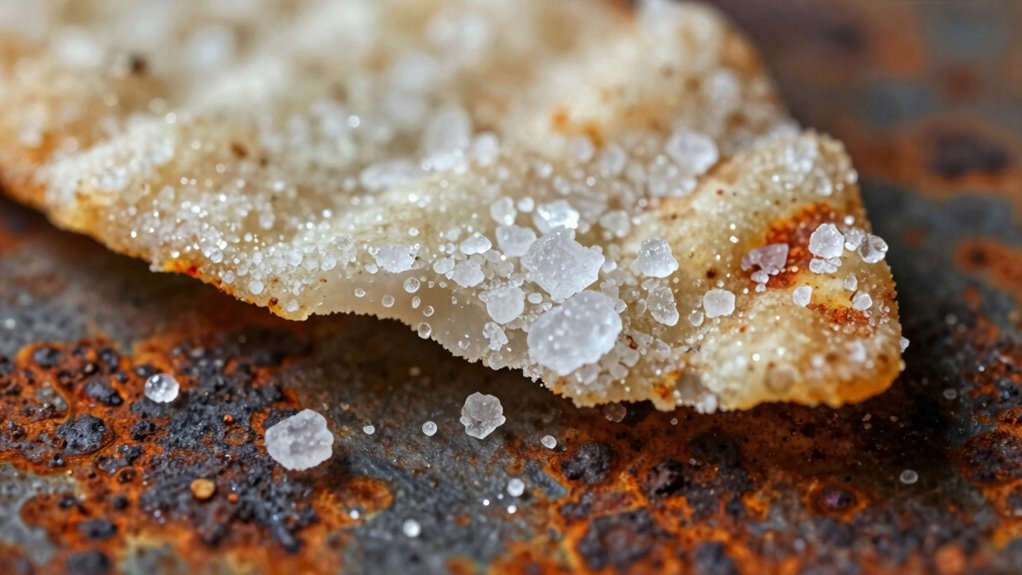

When you cut into salty foods, salt dissolves in the moisture, creating an electrolyte environment that speeds up corrosion on nearby metal surfaces. The saltwater helps electrons move more easily, accelerating rust and deterioration of utensils or tools. Over time, this can weaken metal integrity and cause damage. If you’re curious about how salt specifically affects different materials and ways to prevent corrosion, there’s more to uncover that can help protect your belongings.

Get kitchen gear delivered free — and shop member deals
- Fast, free delivery on millions of items
- Access to Prime Big Deal Days deals on October 6–7
- Prime Video, Amazon Music and more included
Key Takeaways
- Cutting salty foods releases salt onto metal surfaces, increasing electrolyte concentration and accelerating corrosion reactions.
- Salt from foods dissolves in moisture, forming an electrolyte that speeds up rust and oxidation on metal utensils.
- Prolonged contact with salty foods can cause pitting and structural damage to metal objects.
- Salt-enhanced electrochemical reactions weaken metal integrity over time, especially with repeated exposure.
- Proper cleaning and protective coatings can help prevent corrosion caused by cutting or handling salty foods.
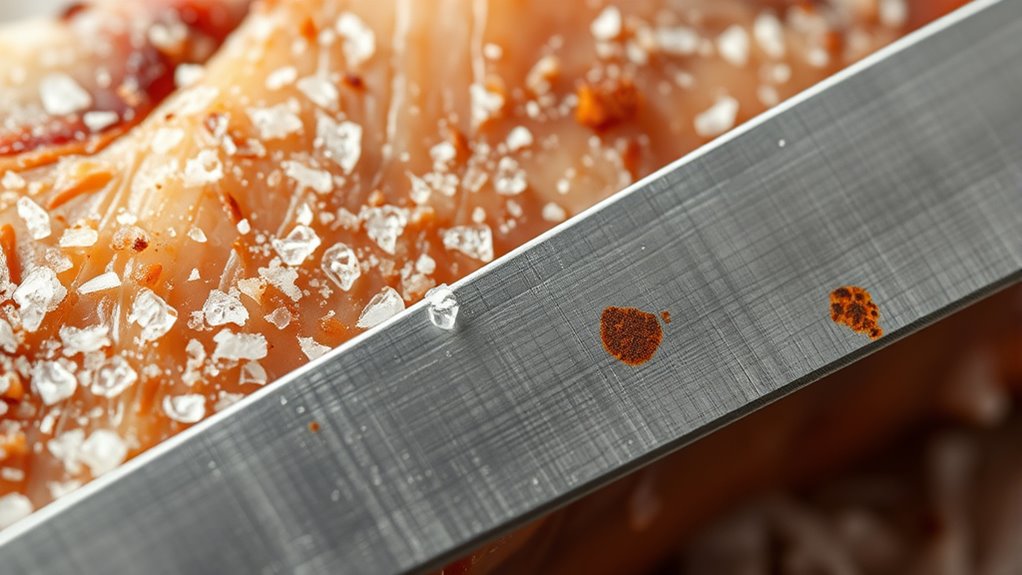
Salt substantially accelerates corrosion, especially on metal surfaces exposed to moisture. When you handle salty foods or come into contact with their juices, you might not realize that salt plays a notable role in corrosion processes. At the microscopic level, salt facilitates metal oxidation, which is the primary driver behind rust and other forms of corrosion. This process occurs because salt dissolves in water, creating an electrolyte solution that speeds up electrolyte reactions on metal surfaces. These reactions involve the transfer of electrons from the metal to the surrounding environment, leading to the deterioration of the metal over time.
When you cut into salty foods, such as cured meats or pickled vegetables, the salt on the surface dissolves in the moisture present, forming an electrolyte. This electrolyte acts as a conduit for electrical charges, allowing ions to move freely between the metal and the salt solution. As a result, the metal undergoes oxidation more rapidly. The metal loses electrons and forms metal ions, which then combine with oxygen and other elements in the environment to produce corrosion products like rust. The more salt present, the more intense these electrolyte reactions become, intensifying the rate of corrosion.
This process isn’t limited to your kitchen utensils or cookware; it can also affect any metal objects that come into contact with salty foods or brines. For instance, if you leave a knife or a spoon in a salty marinade, you may notice rust forming after some time. The salt’s role as an electrolyte enhances the electrochemical reactions that lead to metal oxidation, weakening the integrity of the metal. Over prolonged exposure, this can cause pitting and structural damage, making the metal more susceptible to further corrosion. Additionally, corrosion mechanisms are complex and can be influenced by environmental factors, which means that even small amounts of salt can contribute significantly over time.
Understanding these mechanisms helps you realize why keeping salty foods away from vulnerable metal surfaces is essential. It’s not just about taste or cleanliness but also about preventing damage caused by accelerated corrosion. Simple measures like thoroughly washing utensils after contact with salty foods, drying them properly, and avoiding prolonged contact can markedly reduce the risk. If you handle metals regularly in salty environments, consider protective coatings or stainless steel options, which resist corrosion better due to their composition. Recognizing how salt influences electrolyte reactions and promotes metal oxidation allows you to better protect your tools, appliances, and belongings from unnecessary damage caused by corrosion.
corrosion resistant kitchen utensils
As an affiliate, we earn on qualifying purchases.
As an affiliate, we earn on qualifying purchases.
Frequently Asked Questions
Does Salt Affect Metal Appliances in the Kitchen?
Yes, salt can affect your metal appliances in the kitchen. When you handle salty foods, the salt can cause metal rust over time, especially if moisture is present. This rusting can lead to appliance damage, making them less durable and potentially unsafe to use. To protect your appliances, clean and dry them thoroughly after exposure to salty foods, and avoid prolonged contact with salt to prevent corrosion.
Can Salt Cause Corrosion in Clothing or Fabrics?
Did you know that salt can cause fabric deterioration and dye fading? When you expose clothing or fabrics to salty water, it can break down fibers and fade colors over time. Salt’s hygroscopic nature draws moisture, accelerating deterioration. So, if you get salty water on your clothes, wash them promptly to prevent long-term damage, and avoid letting salty water sit on fabrics too long.
Is Salt Corrosion Harmful to Human Skin?
Salt corrosion isn’t harmful to your skin directly, but it can cause skin irritation if you have salt sensitivity. When you handle salty foods frequently, the salt can dry out your skin, leading to redness or irritation. If you notice discomfort, rinse the area with water and moisturize. People with sensitive skin should be especially cautious, as prolonged contact may worsen irritation or cause allergic reactions.
How Does Salt Impact Corrosion in Marine Environments?
You might think salt isn’t a big deal, but in marine environments, it markedly accelerates corrosion. Saltwater damage causes marine rust, weakening metal structures and equipment. Even if it seems harmless, salt actively promotes electrochemical reactions, making corrosion worse. Regular maintenance and protective coatings are essential to prevent salt from damaging your boat or marine gear. Don’t overlook salt’s role—it’s a key factor in marine rust and saltwater damage.
Are There Ways to Prevent Salt-Induced Corrosion?
You can prevent salt-induced corrosion by understanding salt chemistry and applying corrosion prevention techniques. Use protective coatings like paint or sealants that act as barriers against salt. Regularly clean and inspect metal surfaces to remove salt deposits. Consider using corrosion-resistant materials such as stainless steel or aluminum. Additionally, applying sacrificial anodes can protect critical parts. These methods help minimize salt’s corrosive effects and extend the lifespan of your equipment.
metal protective coating for cookware
As an affiliate, we earn on qualifying purchases.
As an affiliate, we earn on qualifying purchases.
Conclusion
When you cut into salty foods, you’re not just tasting flavor—you’re also exposing metal to corrosion. Did you know that salt accelerates rust formation by up to 10 times? That means your kitchen tools and appliances could be more vulnerable than you think. So next time you prepare a salty snack, remember the hidden impact of salt. Protect your tools, and keep your kitchen safe from unnecessary damage. Salt’s power is stronger than you realize.
rust prevention spray for metal tools
As an affiliate, we earn on qualifying purchases.
As an affiliate, we earn on qualifying purchases.
salt corrosion protection products
As an affiliate, we earn on qualifying purchases.
As an affiliate, we earn on qualifying purchases.
Fall Picks
fall essentials
As an affiliate, we earn on qualifying purchases.