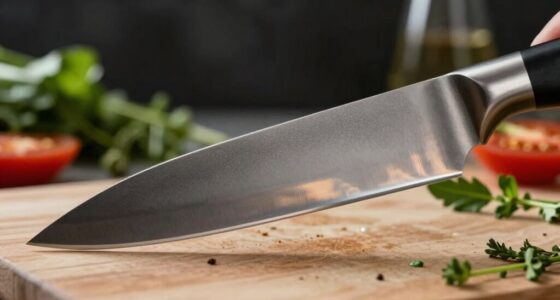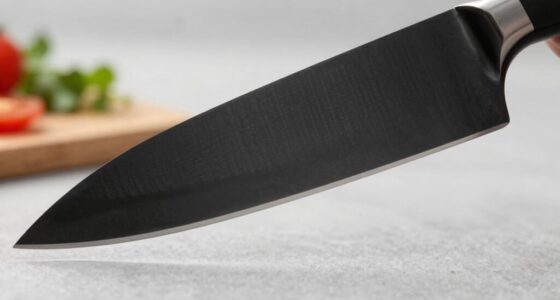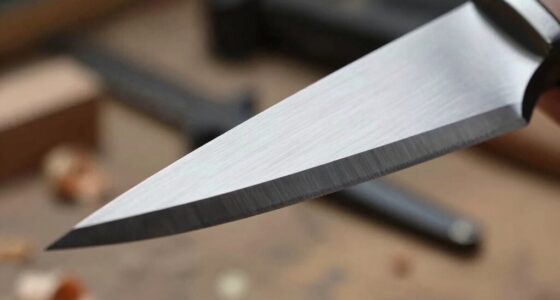
A thick heel on your knife increases resistance when cutting dense foods, making it harder to push through tough textures smoothly. It shifts the knife’s balance toward the handle, reducing control and precision. This extra effort can cause uneven slices and lead to fatigue over time. A thinner heel improves control, reduces effort, and helps you achieve cleaner, more consistent cuts. To discover how heel design impacts your slicing, keep exploring further.
Key Takeaways
- Thicker heels shift the knife’s center of gravity, reducing control and making it harder to apply consistent force on dense foods.
- A thick heel increases overall weight and resistance, requiring more effort to push through tough textures.
- Thicker heels can cause uneven pressure distribution, leading to less precise cuts in dense or hard foods.
- Excess heel thickness diminishes tactile feedback, making it difficult to gauge resistance during cutting.
- Reduced control from a thick heel can cause slippage or uneven slices when working with dense ingredients.
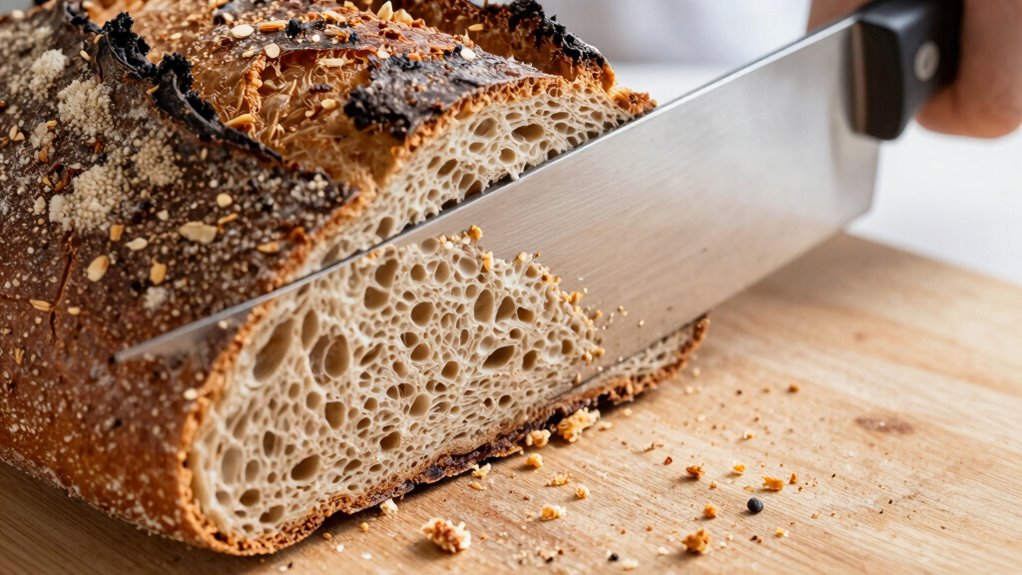
When you’re slicing dense foods like bread or roasted vegetables, the thickness of your knife’s heel can make a significant difference. The heel, the rear part of the blade closest to the handle, plays a pivotal role in your control and the effort needed to cut through tough textures. If the heel is too thick, it adds unnecessary resistance, making your slicing less efficient and more tiring. Conversely, a thinner heel promotes better knife ergonomics, allowing for smoother, more precise cuts with less force. This is especially important when you’re aiming for culinary precision, where consistency and presentation matter.
A thinner heel improves control and reduces effort when slicing dense foods like bread and roasted vegetables.
A thick heel can cause you to exert more pressure, which not only tires your hand faster but also risks uneven cuts. When slicing dense foods, you want to leverage the full length of your blade with minimal effort. A well-designed, thinner heel reduces the amount of effort needed to push through tough surfaces, helping you maintain control and accuracy. This control is essential for achieving uniform slices, whether you’re preparing ingredients for a professional dish or simply trying to make your home-cooked meal look appealing.
Furthermore, the heel’s thickness affects the overall balance of your knife. A heavier, thicker heel can shift the center of gravity closer to the handle, making the knife feel less agile and more cumbersome during detailed cuts. A thinner heel, on the other hand, can improve the balance and give you better finesse and reducing fatigue during prolonged use. Good knife design considers heel thickness as a key factor in creating a comfortable and efficient cutting experience. This balance directly impacts your ability to perform delicate tasks, such as julienning vegetables or slicing bread with precision.
In addition to affecting your grip and control, heel thickness influences the tactile feedback you get during cutting. When the heel is thinner, you can feel more of the cutting resistance, allowing you to adjust your pressure for cleaner cuts. This heightened awareness helps you develop better knife skills and enhances your overall culinary precision. If your goal is to work efficiently and comfortably, choosing a knife with an appropriately thin heel is essential.
Understanding how heel thickness impacts knife ergonomics and your ability to cut dense foods can transform your approach to slicing. It’s about selecting tools that align with your needs, reducing effort while increasing control, accuracy, and comfort. When you prioritize these aspects, you’ll notice how much easier and more satisfying it becomes to handle even the toughest ingredients.
Japanese chef knife with thin heel
As an affiliate, we earn on qualifying purchases.
As an affiliate, we earn on qualifying purchases.
Frequently Asked Questions
How Does Heel Thickness Influence Knife Durability?
Heavier heel thickness can affect your knife’s durability by reducing blade flexibility, which may lead to more stress during use. Thicker heels handle more force, making the knife sturdier but potentially harder to control, impacting handling precision. Over time, this increased stress can cause quicker wear or damage. So, selecting a heel thickness appropriate to your cutting tasks ensures better durability, easier handling, and consistent performance.
Can Heel Design Variations Improve Cutting Efficiency?
Imagine you’re wielding a knife with a sleek, modern heel design—yes, like a spaceship from a sci-fi flick. Variations in heel design can definitely boost cutting efficiency. An ergonomic grip guarantees comfort and control, reducing fatigue, while an innovative shape enhances leverage and precision. Plus, a stylish heel adds aesthetic appeal, making your kitchen tools not just functional but also a statement piece. Proper heel design genuinely elevates your cutting experience.
Does Heel Thickness Affect Food Texture After Cutting?
Heel thickness can influence food texture after cutting by impacting your cutting precision and control. A thicker heel provides better leverage, making it easier to apply consistent pressure, which results in cleaner cuts and less crushing of delicate textures. An ergonomic grip combined with ideal heel thickness ensures you maintain control and accuracy, preserving the original texture of the food. Thinner heels may reduce control, potentially damaging sensitive or dense foods.
Are There Specific Foods That Benefit From Thinner Heels?
Thinner heels work wonders for delicate foods like gelatin desserts and soft cheeses, where precision is key. Think of it as sharpening a blade—less bulk means cleaner, neater cuts. When you use a thinner heel, you minimize crushing and distortion, preserving the food’s fragile texture. So, for these tender treats, a slender heel makes slicing smoother and more refined, enhancing presentation and ease of serving.
How Does Heel Thickness Impact Safety During Cutting?
Heels that are too thick can compromise safety during cutting because they affect your knife grip and cutting angle. A thicker heel may cause you to grip the knife less securely, increasing the risk of slips. It also forces you into a less ideal cutting angle, making cuts less controlled. To stay safe, choose a knife with a heel thickness that allows a comfortable grip and proper control for precise, safe cuts.
professional bread slicing knife
As an affiliate, we earn on qualifying purchases.
As an affiliate, we earn on qualifying purchases.
Conclusion
So, when you’re handling dense foods, remember that a thicker heel can be like a gentle nudge, subtly guiding your knife through the challenge. It’s not about forcing your way but embracing the subtle art of balance and finesse. By understanding this delicate interplay, you can make your cutting experience smoother and more enjoyable. Sometimes, it’s the quiet adjustments that lead to the most satisfying results, turning hurdles into graceful victories.
ergonomic kitchen knives for dense foods
As an affiliate, we earn on qualifying purchases.
As an affiliate, we earn on qualifying purchases.
As an affiliate, we earn on qualifying purchases.