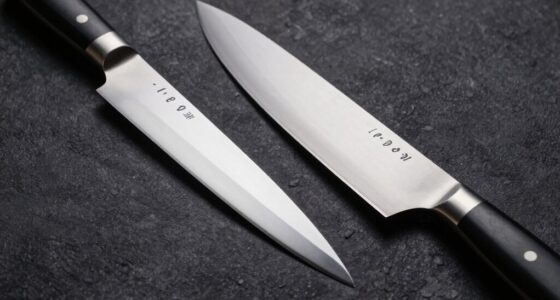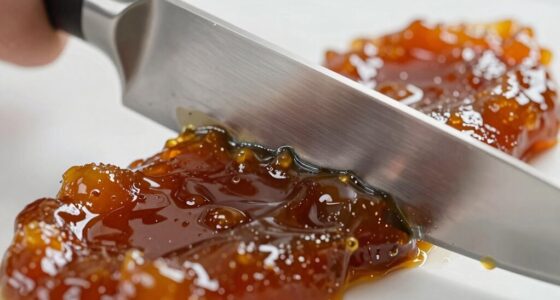

Toughness and hardness pull knife design in opposite directions because increasing one often reduces the other. Harder blades stay sharper longer but tend to be more brittle and prone to chipping or breaking under impact. Fireside, tougher blades resist damage but may dull faster. To optimize a knife, you need to balance these traits based on its intended use. If you want to understand how designers manage this trade-off, keep exploring the details ahead.

Get kitchen gear delivered free — and shop member deals
- Fast, free delivery on millions of items
- Access to Prime Big Deal Days deals on October 6–7
- Prime Video, Amazon Music and more included
Key Takeaways
- Increasing hardness improves edge retention but reduces toughness, making blades more prone to chipping or cracking.
- Enhancing toughness often involves reducing hardness, which can compromise edge sharpness and cutting performance.
- Thinner, sharper blades favor hardness for precision but are less resistant to impact, decreasing toughness.
- Thicker blades improve impact resistance but tend to be less sharp and have lower cutting precision.
- Microstructural adjustments via heat treatment balance the trade-off between toughness and hardness in knife design.
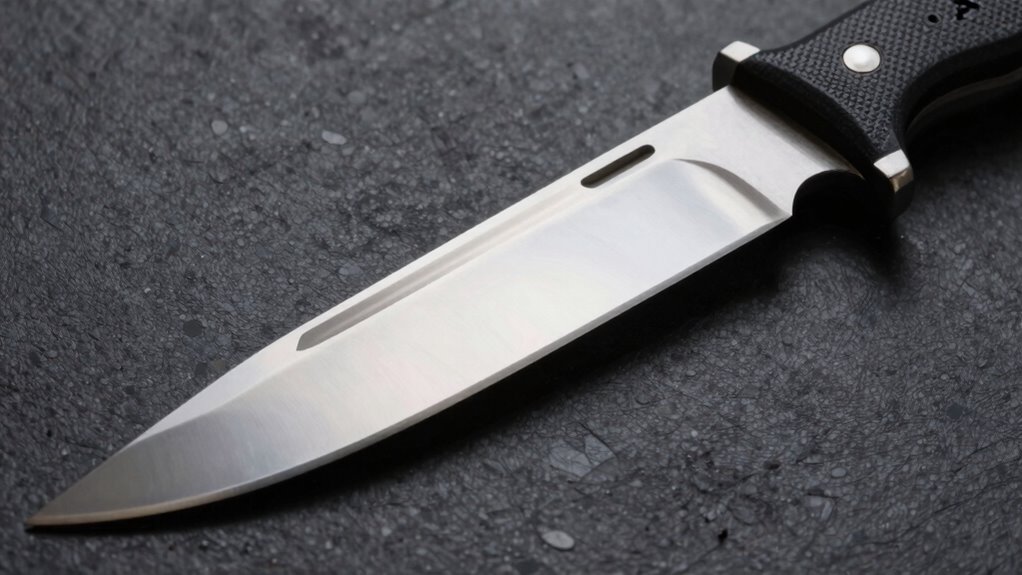
When designing a knife, understanding the balance between toughness and hardness is essential, because these properties directly influence the tool’s performance and durability. Your goal is to create a blade that withstands heavy use without chipping or bending, yet also maintains a sharp edge over time. Achieving this balance requires careful consideration of blade geometry and heat treatment processes, which are key factors that pull in opposite directions.
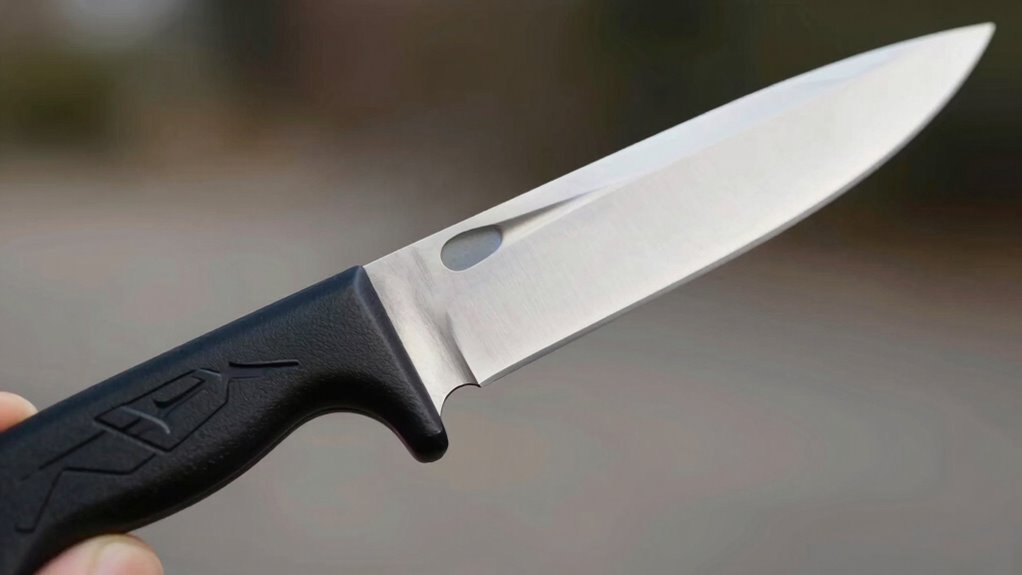
Blade geometry plays a significant role in how toughness and hardness interact. A thicker, more robust blade can absorb impacts better, increasing toughness, but often at the expense of edge retention. Conversely, a thinner, more refined edge can improve hardness, allowing it to cut more precisely and stay sharp longer. However, this same thinness makes the blade more susceptible to chipping or breaking under stress. Your task is to optimize the blade’s shape—considering factors like edge angle, bevel, and overall profile—to strike a workable compromise. A broader bevel might boost durability, but can dull faster, while a sharper angle enhances cutting ability but risks fragility. Blade geometry significantly influences how these properties interplay and is crucial for achieving optimal performance. Additionally, the selection of steel alloy can further impact these characteristics, making material choice an important consideration in the design process. Heat treatment techniques are vital in fine-tuning this balance, as they determine the final properties of the steel. Proper control of heat treatment parameters can help tailor the microstructure to meet specific toughness or hardness requirements.
Optimizing blade shape involves balancing edge angle, bevel, and profile for durability versus cutting precision.
The interplay between blade geometry and heat treatment processes means that you often have to make compromises based on the intended use of the knife. For example, a chef’s knife prioritizes hardness for precise cuts, but you still need enough toughness to resist chipping during routine use. On the other hand, a survival or tactical knife must be tough enough to withstand impacts, even if it sacrifices some edge retention. Your decision on how to shape the blade and how to heat treat it impacts the final product’s ability to perform reliably under different conditions. Ultimately, balancing toughness and hardness isn’t about maximizing one at the expense of the other but about understanding how each factor influences the overall performance of your knife. Proper material selection and heat treatment protocols are essential components that influence the final properties of the steel, ensuring the knife meets its specific functional requirements.
As an affiliate, we earn on qualifying purchases.
Frequently Asked Questions
How Does Alloy Selection Affect Toughness and Hardness Balance in Knives?
Your alloy selection directly impacts the balance of toughness and hardness through its microstructure influence and composition. A steel with a fine-grained microstructure enhances toughness, while alloying elements like carbon increase hardness. By choosing the right alloy composition, you control these properties, ensuring the knife resists chipping and breaking while maintaining a sharp edge. Adjusting microstructure and alloy elements lets you optimize the knife for specific tasks.
Can Manufacturing Processes Improve Both Toughness and Hardness Simultaneously?
You can improve both toughness and hardness simultaneously through microstructure optimization and surface treatments. By refining grain size, you enhance toughness, while heat treatments and surface coatings boost hardness. This dual approach creates a balanced microstructure that resists chipping and maintains cutting edge sharpness. When you carefully select manufacturing processes, you achieve a knife that’s tough enough to withstand impact yet hard enough to cut precisely, delivering superior performance and durability.
What Role Does Heat Treatment Play in Optimizing Knife Material Properties?
Heat treatment plays a vital role in optimizing your knife’s material properties by controlling its microstructure. Through processes like quenching and tempering, you can enhance hardness for cutting ability while improving toughness to resist chipping. By adjusting parameters, you tailor the microstructure to balance these qualities, ensuring your knife stays sharp, durable, and reliable in demanding tasks. Proper heat treatment is essential for achieving the ideal combination of toughness and hardness.
Are There Specific Blade Geometries That Influence Toughness and Hardness?
You can influence toughness and hardness through blade geometry choices like blade curvature and edge angle. A wider edge angle increases hardness but reduces toughness, making the blade more brittle. Conversely, a more pronounced blade curvature can enhance flexibility and toughness, helping prevent chipping. By balancing these factors, you design a knife that meets your specific needs, optimizing both durability and performance based on your intended use.
How Do User Applications Impact Optimal Toughness Versus Hardness Choices?
Think of your knife as a guardian, balancing edge durability and material resilience based on your needs. If you’re slicing through tough materials, prioritize toughness for flexibility and shock resistance. For precision cuts requiring longevity, hardness ensures edge retention. Your application acts as the compass, guiding the choice: rugged outdoor tasks lean toward resilience, while delicate crafts demand a sharper, harder edge. Tailoring toughness and hardness maximizes performance in every cut.
As an affiliate, we earn on qualifying purchases.
Conclusion
So, next time you’re choosing a knife, remember: tough and hard are two sides of the same coin. While hardness gives you that sharp, durable edge, toughness ensures the blade won’t chip or break under pressure. Believe it or not, some experts suggest you can’t optimize both at once—it’s a delicate balancing act. Ultimately, understanding this trade-off helps you pick the perfect knife for your needs, rather than falling for myths about one size fitting all.
heat treated steel kitchen knife
As an affiliate, we earn on qualifying purchases.
As an affiliate, we earn on qualifying purchases.
As an affiliate, we earn on qualifying purchases.
Halloween Picks
halloween
As an affiliate, we earn on qualifying purchases.