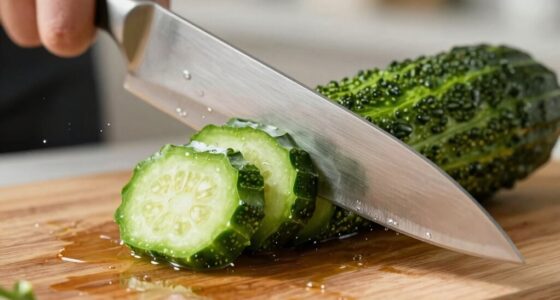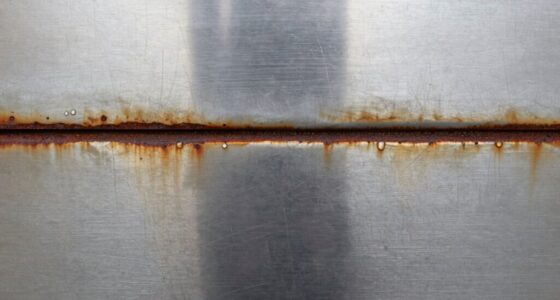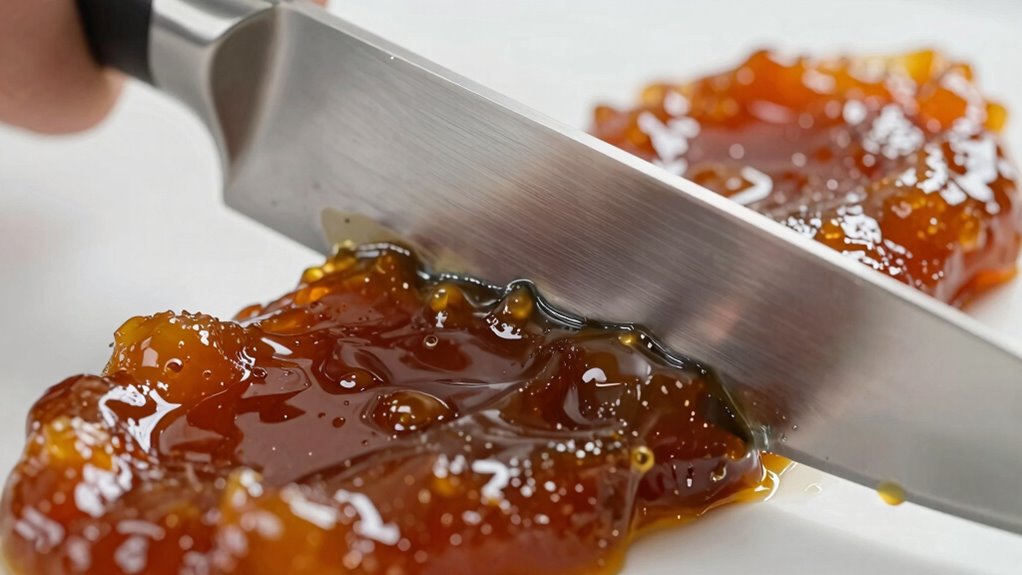
Food sticks to blades because the surface texture and material influence how ingredients interact with them. Rough or imperfect surfaces trap food particles, increasing adhesion, while smooth, polished blades reduce sticking. Food composition also matters—moist, fatty, or sugary foods tend to cling more. Proper maintenance, using non-stick coatings, and correct technique can help minimize this issue. If you want to understand why these factors matter and how to improve your results, there’s more to discover here.

Get kitchen gear delivered free — and shop member deals
- Fast, free delivery on millions of items
- Access to Prime Big Deal Days deals on October 6–7
- Prime Video, Amazon Music and more included
Key Takeaways
- Surface roughness and imperfections on blades trap food particles, increasing adhesion and sticking.
- Non-stick coatings and polished surfaces reduce food adherence by creating barriers.
- Foods high in moisture, fats, or sugars tend to stick more to blades during processing.
- Proper blade maintenance, sharpness, and cleanliness minimize residue buildup and sticking.
- Blade material and temperature influence food softness and adhesion, affecting how easily food releases.
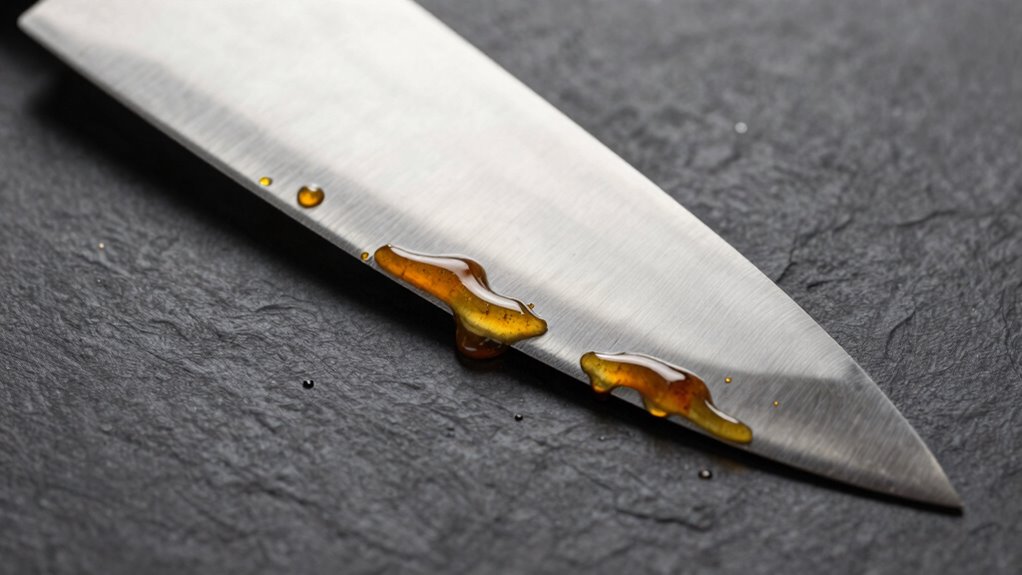
Have you ever wondered why food tends to stick to blades during chopping or blending? It’s a common frustration, and understanding the science behind it can help you improve your cooking experience. The way food interacts with blades largely depends on the properties of the cooking surface and the blade material itself. When you’re preparing ingredients, the surface of your blades and the material they’re made from play a vital role in whether food slides off easily or clings stubbornly.
The cooking surface, or more precisely, the blade’s contact area, influences how food sticks. Smooth, polished blades tend to cause less sticking because they reduce friction. When the surface is rough or has tiny imperfections, food particles can latch onto these irregularities, making it harder for the food to release. Additionally, the temperature of the blades affects food adhesion. Warm blades can cause some ingredients, like sugars or proteins, to become stickier because heat can soften or melt certain food components, increasing their tendency to cling. Increasing the blade temperature can sometimes exacerbate sticking issues, especially with sticky or sugary foods.
Blade material is another key factor. Different materials have distinct surface properties that impact food release. Stainless steel blades are popular because they’re durable and resistant to corrosion, but their polished surface also minimizes sticking. On the other hand, blades made from ceramic or coated metals often have non-stick properties. These coatings create a barrier that prevents food from adhering, especially when dealing with sticky ingredients like honey or dough. Conversely, blades made from rougher or less polished metals can increase food adhesion due to their textured surfaces, which trap particles more easily. Using advanced materials such as non-stick coatings can further enhance food release and reduce cleaning time. Proper maintenance of these surfaces is essential to sustain their non-stick qualities over time. Additionally, blade design can influence how food interacts with the surface, with some designs promoting better release than others. Regularly inspecting and replacing dull or damaged blades can also help maintain optimal food release.
The composition of the food itself also matters. Foods high in moisture, fats, or sugars tend to stick more readily, especially if the blade’s surface isn’t perfectly smooth or if the blade material interacts chemically with certain ingredients. For instance, acidic foods can corrode or dull metal blades over time, creating tiny pits where food can lodge. This not only increases sticking but also shortens the lifespan of your blades. Furthermore, moisture and other food properties can change during processing, influencing how much food adheres to the blades. Understanding food properties can help you better select and handle ingredients to minimize sticking. Using ingredients at the right temperature and moisture level can also help reduce adhesion.
To minimize food sticking, you can take several steps. Keep your blades clean and dry, as residue can build up and cause sticking. Use blades made from high-quality, polished materials, and consider applying a light coating of oil or non-stick spray if you’re working with particularly sticky ingredients. Also, avoid abrupt or overly forceful chopping, which can cause food to cling more tightly to irregular surfaces. Additionally, using techniques such as pre-coating ingredients with flour or oil can help reduce adhesion during processing. Ensuring your blades are sharp and well-maintained can also significantly reduce the tendency of food to stick. Experimenting with blade angle and orientation can sometimes improve the release of food during processing.
In essence, the interaction between the cooking surface and blade material determines how smoothly food moves across or stays attached to your blades. Recognizing these factors allows you to choose the right tools and techniques, making your cooking process more efficient and less frustrating.
As an affiliate, we earn on qualifying purchases.
Frequently Asked Questions
How Does Blade Material Affect Food Adhesion?
Blade material directly impacts food adhesion through its durability and compatibility with different foods. You’ll notice that stainless steel blades resist corrosion and stick less because of their smooth surface, while ceramic blades offer high durability and aren’t prone to rust, reducing food sticking. When choosing a blade, consider material compatibility with your typical ingredients, as some materials prevent food from bonding, making slicing cleaner and easier.
Can Food Sticking Be Completely Prevented With Coatings?
Food sticking can’t be completely prevented with coatings, but they considerably reduce the issue. Coatings alter the food texture, making it less likely to cling, and help maintain blade durability by minimizing wear and tear. However, some stubborn foods might still stick, especially if the coating wears off over time. Proper technique and regular maintenance complement coatings, ensuring safer, more efficient cutting.
Does Food Type Influence Sticking More Than Blade Temperature?
Food type substantially influences sticking more than blade temperature. You’ll find that fibrous, sticky, or moist foods cling tightly, regardless of temperature tweaks. Food texture plays a pivotal role, making some foods more prone to sticking than others. While a sharp blade helps minimize resistance, it’s the inherent nature of the food—its texture and moisture—that mainly determines sticking. So, focus on selecting the right tools for the specific food to prevent stubborn cling.
How Does Humidity Impact Food Sticking to Blades?
Humidity increases food moisture, making food stickier to blades. When humidity is high, the moisture on food surfaces creates a thin film that promotes adhesion. To counter this, you can adjust blade speed—slowing down slightly helps reduce sticking by giving food less chance to cling. Keep your blades clean and dry, and consider drying food slightly if humidity is high, to minimize sticking and guarantee smoother processing.
Are There Specific Cleaning Methods to Reduce Sticking?
You can reduce sticking by adopting proper cleaning methods after each use, especially if you’re blade sharpening regularly. Use warm, soapy water and a soft brush to remove residue, then dry thoroughly to prevent rust. Increasing cleaning frequency helps prevent buildup that causes sticking. Don’t skip these steps—consistent cleaning keeps your blades smooth and effective, making your food prep easier and extending the lifespan of your blades.
As an affiliate, we earn on qualifying purchases.
Conclusion
Understanding why food sticks to blades helps you choose better techniques and tools, improving your cooking experience. Did you know that stainless steel blades can develop a layer of oxidation over time, increasing surface roughness and food adherence? So, regular maintenance and proper cleaning aren’t just about hygiene—they also prevent sticking and keep your blades sharp. By paying attention to these details, you can guarantee smoother chopping and longer-lasting blades, making every meal prep more efficient.
As an affiliate, we earn on qualifying purchases.
blade sharpening and maintenance kit
As an affiliate, we earn on qualifying purchases.
As an affiliate, we earn on qualifying purchases.
Fall Picks
fall essentials
As an affiliate, we earn on qualifying purchases.