
Stainless steel isn’t completely immune to rust because its chromium oxide protective layer can be damaged or compromised. Exposure to harsh conditions like salty air, acid, or high humidity accelerates corrosion. Scratches or contamination also break this thin barrier, exposing steel to moisture and oxygen. Proper maintenance, such as cleaning and avoiding abrasive cleaners, helps preserve this layer. Want to discover how to keep your stainless steel looking its best and why it sometimes still rusts?

Get kitchen gear delivered free — and shop member deals
- Fast, free delivery on millions of items
- Access to Prime Big Deal Days deals on October 6–7
- Prime Video, Amazon Music and more included
Key Takeaways
- Stainless steel relies on a thin chromium oxide layer for corrosion resistance, which can be damaged or compromised.
- Environmental factors like salt, humidity, and acids can break down the protective layer, leading to rust.
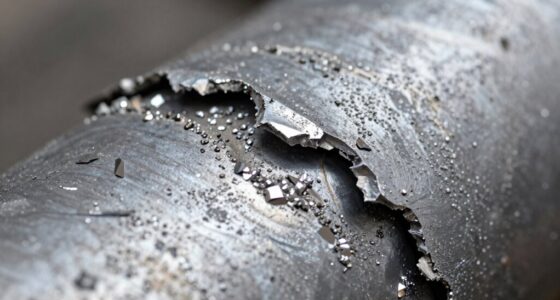
- Scratches or contamination remove the chromium oxide film, exposing steel to moisture and oxygen.
- Poor maintenance, such as using abrasive cleaners or neglecting cleaning, accelerates rust formation.
- Different stainless steel grades have varying resistance; not all are suitable for harsh or salty environments.
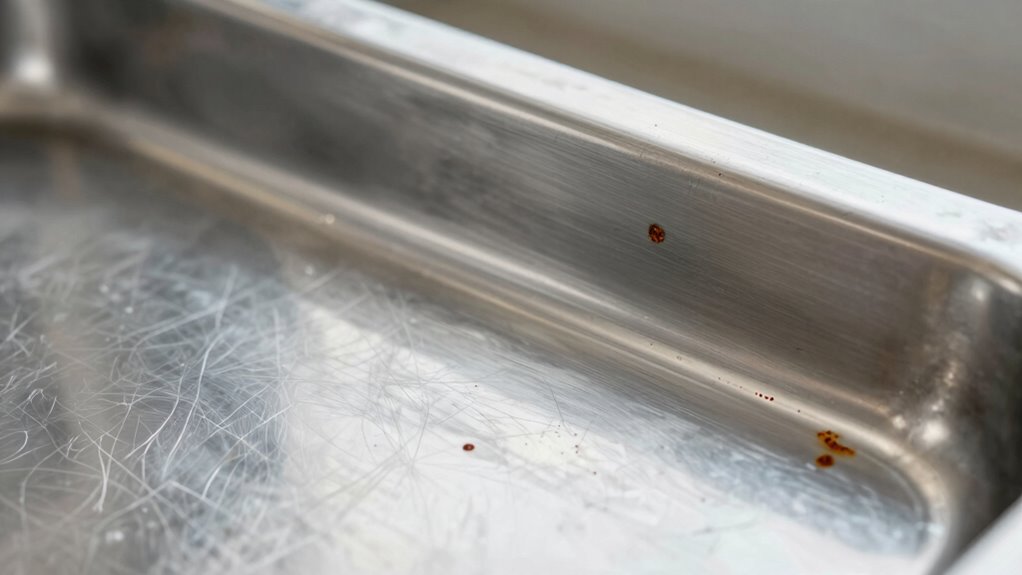
Stainless steel is prized for its resistance to rust and corrosion, but it’s not entirely immune. While its reputation for durability is well-earned, understanding why it can still rust helps you better protect your investments. The key lies in the alloy composition, which determines how well the steel resists environmental damage. Stainless steel is primarily an iron alloy containing at least 10.5% chromium. This chromium forms a thin, invisible layer of chromium oxide on the surface, which acts as a protective barrier against moisture and oxygen. This layer is what grants stainless steel its corrosion resistance, preventing it from rusting under normal conditions. However, this protective film isn’t invincible. If it gets damaged or compromised, the steel becomes vulnerable to corrosion. The alloy composition itself can influence how susceptible a particular stainless steel grade is to corrosion, especially in more aggressive environments. Environmental factors play a significant role in whether stainless steel will rust. Exposure to harsh conditions—like salty sea air, acidic substances, or high humidity—can challenge its corrosion resistance. Salt, in particular, accelerates rust formation because it breaks down the chromium oxide layer more quickly. When this protective film is compromised, the underlying steel reacts with oxygen and moisture, leading to rust. Additionally, the alloy composition itself can influence how susceptible a particular stainless steel grade is to corrosion. For example, 304 stainless steel offers good corrosion resistance for most household applications, but in more aggressive environments, 316 stainless steel, which contains molybdenum, provides enhanced protection. Understanding these factors helps you grasp why stainless steel can still rust, and taking proper precautions can significantly extend its lifespan. Recognizing alloy composition and environmental influences can help you select the right type of stainless steel for specific conditions.
Stainless steel resists rust thanks to a chromium oxide layer, but damage or contamination can still lead to corrosion.
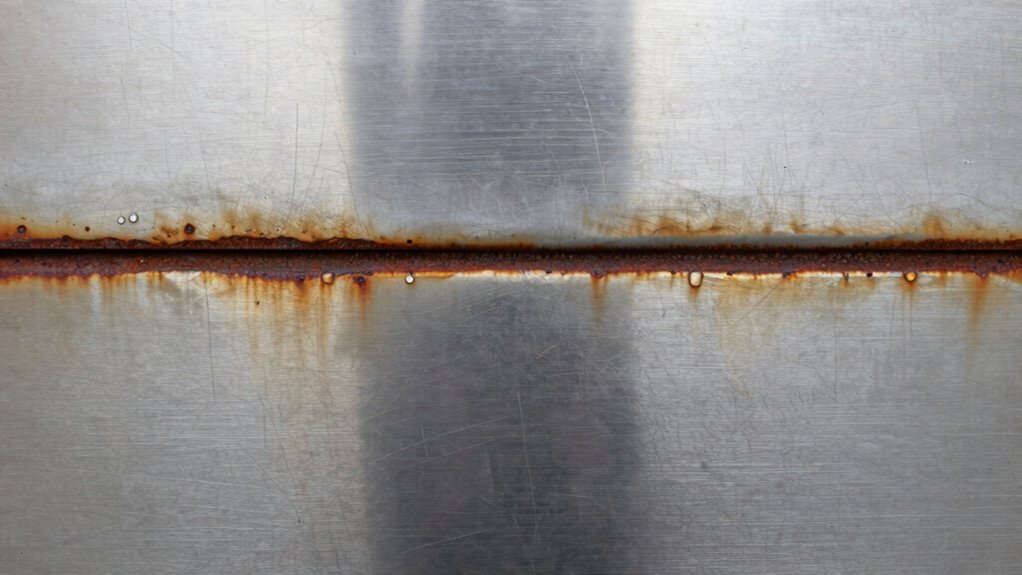
Another factor that can cause stainless steel to rust is improper maintenance. If you neglect cleaning or allow dirt, grime, or chlorides to accumulate, the protective layer can be undermined. Using harsh cleaning agents that contain chloride or abrasives can scratch or remove the chromium oxide film, exposing the metal beneath. Over time, this exposure can lead to localized corrosion or rust spots. Even stainless steel surfaces that seem pristine can develop rust if subjected to prolonged exposure to corrosive agents without proper care. Proper maintenance is essential to keep the protective layer intact and prevent rust formation. Recognizing these factors helps you understand why stainless steel can still rust and how to prevent it effectively. Ultimately, understanding the alloy composition and environmental conditions helps you grasp why stainless steel can still rust. It’s a resilient material, but not invulnerable. Proper maintenance, avoiding harsh chemicals, and choosing the right grade for your environment are essential steps to ensure your stainless steel remains rust-free for years to come. Recognizing these factors allows you to make informed decisions about how to care for your stainless steel items, extending their lifespan and maintaining their appearance.
As an affiliate, we earn on qualifying purchases.
Frequently Asked Questions
Can Stainless Steel Rust if Scratched?
Yes, stainless steel can rust if scratched. When the surface integrity is compromised by a scratch, it can expose the underlying metal, making it vulnerable to corrosion. Additionally, protective coatings may be damaged or removed, reducing their ability to prevent rust. To keep it looking its best, avoid deep scratches and consider reapplying protective coatings when needed. Proper maintenance helps preserve the stainless steel’s corrosion resistance.
How Does Salt Exposure Affect Stainless Steel?
Salt exposure can cause salt corrosion on stainless steel, especially if the protective coatings are damaged or absent. When salt contacts the metal, it accelerates oxidation, leading to rust over time. To prevent this, you should regularly clean surfaces and apply protective coatings designed to resist salt corrosion. These coatings act as a barrier, reducing the metal’s contact with salt and prolonging its corrosion resistance.
Is All Stainless Steel Equally Resistant to Rust?
Not all stainless steel is equally resistant to rust. You might think it’s all the same, but surface finishes and alloy compositions greatly influence rust resistance. For example, 304 stainless steel is more corrosion-resistant than 430, thanks to its higher nickel content. A smooth, polished surface reduces rust spots, while a rough finish traps moisture. So, choosing the right alloy and surface finish is essential for preventing rust in your stainless steel items.
Can Cleaning Products Cause Stainless Steel to Corrode?
Cleaning products can cause stainless steel to corrode if they contain harsh chemicals like chlorine or bleach. These cleaning agents can strip away the protective layer, exposing the metal to moisture and oxygen, which leads to rust. To prevent corrosion, use gentle cleaning agents and avoid abrasive scrubbers. Proper corrosion prevention involves choosing the right products and regularly maintaining your stainless steel to keep it looking its best and rust-free.
How Long Does Stainless Steel Take to Rust Under Ideal Conditions?
Under ideal conditions, stainless steel can start rusting within a few days or weeks if corrosion prevention measures aren’t maintained. Exposure to harsh elements like saltwater accelerates this process. When comparing materials, stainless steel resists corrosion better than regular steel, but it’s not entirely immune. Regular cleaning and protective coatings are essential for long-lasting durability, especially in environments prone to moisture and corrosive elements.
As an affiliate, we earn on qualifying purchases.
Conclusion
Think of stainless steel as a shiny knight—impressive and tough, but not invincible. Just like even the bravest knight can face a crack in their armor, your stainless steel can rust if it’s not properly cared for. Regular cleaning, proper maintenance, and mindful use are your best shields against corrosion. Remember, a little vigilance keeps your stainless steel armor gleaming and resilient, standing strong against the battles of everyday life.
As an affiliate, we earn on qualifying purchases.
As an affiliate, we earn on qualifying purchases.
Fall Picks
fall essentials
As an affiliate, we earn on qualifying purchases.