Shopping for induction cooktops for home means weighing temperature precision against simplicity and price, and this category splits cleanly along those lines. The Duxtop 9600LS stands out as my best overall pick for its lockable touch controls and wide power range, while the Nuwave Double Pro earns the premium spot by giving home cooks two independently controlled burners with probe-based temperature regulation. If you just want a reliable, affordable single burner, the Duxtop 9100MC delivers the core induction experience without extra complexity. The main tradeoff you’ll face in this roundup is that portable 1800W units share a standard power ceiling, so what actually separates them is control granularity, build quality, and usability — not raw power. Read on for the full breakdown of all 15 models.

Get kitchen gear delivered free — and shop member deals
- Fast, free delivery on millions of items
- Access to Prime Big Deal Days deals on October 6–7
- Prime Video, Amazon Music and more included
Complete the kit


Key Takeaways
- Every portable unit in this roundup caps out at 1800W because of standard household circuit limits, so the real differences showed up in control precision, temperature hold, and panel usability — not cooking speed.
- Probe-equipped amazon.com/dp/B00O5QLPJK?tag=chefknifeclub-20&ascsubtag=dc-1112700″ target=”_blank” rel=”nofollow sponsored noopener”>Nuwave models (the Diamond and the Digital Probe cooktop) held cooking temperatures more steadily than power-level-only units, which matters most for simmering sauces, deep frying, and sous-vide style cooking.
- The Duxtop family dominated the value tier: the 9100MC, 8100MC, and 9600LS share similar internals, and the price gap mostly buys you touch controls, a lock function, and finer power increments.
- Budget units like the Amazon Basics and ChangBERT models are legitimate starters, but their coarser power steps and louder fans make them better as spare burners than daily drivers.
- Double-burner Nuwave options trade portability and counter space for genuine two-dish capability — the right choice only if your kitchen layout can accommodate a wide, heavy unit plugged into separate circuits.
| AAOBOSI Portable Induction Cooktop, 1800W |  | Best for Hot Pot and Tableside Cooking | Wattage: 1800 watts | Power levels: 20 | Temperature settings: 20; 120°F–465°F | VIEW LATEST PRICE | See Our Full Breakdown |
| Duxtop 1800W Portable Induction Cooktop, Gold (8100MC) |  | Best Value Pick | Power: 200–1800 W (15 levels) | Temperature range: 140°F–460°F (15 settings) | Timer: 1–170 minutes | VIEW LATEST PRICE | See Our Full Breakdown |
| Nuwave PIC Double Portable Induction Cooktop |  | Best Two-Burner Pick | Heating elements: 2 (8 inches each, independent) | Temperature settings: 106 settings, 50°F–575°F in 5°F increments | Power: 1800 watts (900W / 1500W / 1800W options) | VIEW LATEST PRICE | See Our Full Breakdown |
| Nuwave Induction Cooktop with Digital Probe | 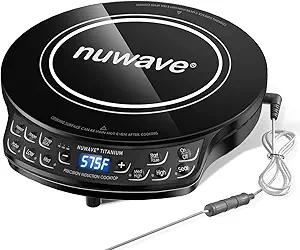 | Best for Precision Cooking | Temperature range: 50°F–575°F in 5°F increments | Preset temperatures: 100°F, 200°F, 300°F, 400°F, 575°F | Magnetic coil size: 8 inches | VIEW LATEST PRICE | See Our Full Breakdown |
| ChangBERT Commercial Grade Portable Induction Cooktop, 1800W |  | Most Durable Build | Power: 1800 watts, 9 levels (200–1800W) | Temperature settings: 18 (120–460°F in 20°F increments) | Timer: Up to 10 hours | VIEW LATEST PRICE | See Our Full Breakdown |
| Nuwave Double Pro Portable Induction Cooktop |  | Best Double-Burner Pick | Cooktop type: Induction | Burners: 2 | Temperature range: 50°F to 575°F | VIEW LATEST PRICE | See Our Full Breakdown |
| Duxtop 1800W Portable Induction Cooktop, Black (9100MC) |  | Best Value Workhorse | Power: 1800 watts | Power levels: 20 (100–1800 W) | Temperature settings: 20 (100°F–460°F) | VIEW LATEST PRICE | See Our Full Breakdown |
| ChangBERT Portable Induction Cooktop, 1800W |  | Best Durable Build | Power: 200–1800W | Power levels: 9 | Temperature range: 120–460°F | VIEW LATEST PRICE | See Our Full Breakdown |
| Amazon Basics 1800W Portable Induction Cooktop |  | Best for Beginners | Wattage: 1800 watts | Power settings: 8 (300–1800 watts) | Temperature range: 160°F–440°F (71–226°C) | VIEW LATEST PRICE | See Our Full Breakdown |
| Duxtop 9600LS Portable Induction Cooktop, 1800W |  | Best Feature-Rich Single Burner | Power: 100–1800 W | Power settings: 20 levels | Temperature settings: 20 levels, 100–460°F | VIEW LATEST PRICE | See Our Full Breakdown |
| Duxtop 1800W Portable Induction Cooktop |  | Best for Power Control | Power: 100–1800 watts | Temperature range: 100°F–460°F | Power levels: 20 | VIEW LATEST PRICE | See Our Full Breakdown |
| Nuwave Flex Precision Induction Cooktop, 6.5-Inch Heating Coil, Black |  | Best for Temperature Precision on a Budget | Heating coil diameter: 6.5 inches | Temperature range: 100°F–500°F | Temperature increments: 5°F | VIEW LATEST PRICE | See Our Full Breakdown |
| Nuwave Diamond Portable Induction Cooktop with Probe |  | Best for Precision Cooking and Probe Control | Temperature range: 100°F–500°F | Temperature settings: 91, in 5°F increments | Preset temperatures: 100°F, 200°F, 300°F, 400°F, 500°F | VIEW LATEST PRICE | See Our Full Breakdown |
| NuWave Pro Chef Portable Induction Cooktop | 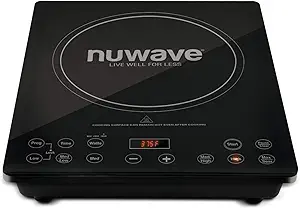 | Best Versatile Portable for Kitchens and Travel | Temperature range: 100°F–575°F | Temperature increments: 5°F | Temperature settings: 94 | VIEW LATEST PRICE | See Our Full Breakdown |
| Nuwave Gold Precision Induction Cooktop | 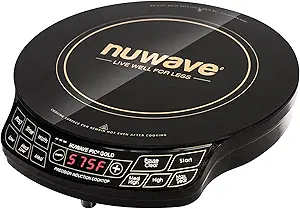 | Best Simple All-Rounder | Heating element: Induction, single element | Temperature range: 100°F–575°F | Temperature increments: 5°F | VIEW LATEST PRICE | See Our Full Breakdown |
| induction cooktops for home | Temperature range | Temperature settings |
|---|---|---|
| AAOBOSI Portable Induction Coo | — | 20; 120°F–465°F |
| Duxtop 1800W Portable Inductio | 140°F–460°F (15 settings) | — |
| Nuwave PIC Double Portable Ind | — | 106 settings, 50°F–575°F in 5°F increments |
| Nuwave Induction Cooktop with | 50°F–575°F in 5°F increments | — |
| ChangBERT Commercial Grade Por | — | 18 (120–460°F in 20°F increments) |
| Nuwave Double Pro Portable Ind | 50°F to 575°F | — |
| Duxtop 1800W Portable Inductio | — | 20 (100°F–460°F) |
| ChangBERT Portable Induction C | 120–460°F | — |
| Amazon Basics 1800W Portable I | 160°F–440°F (71–226°C) | — |
| Duxtop 9600LS Portable Inducti | — | 20 levels, 100–460°F |
| Duxtop 1800W Portable Inductio | 100°F–460°F | 20 |
| Nuwave Flex Precision Inductio | 100°F–500°F | — |
| Nuwave Diamond Portable Induct | 100°F–500°F | 91, in 5°F increments |
| NuWave Pro Chef Portable Induc | 100°F–575°F | 94 |
| Nuwave Gold Precision Inductio | 100°F–575°F | — |
More Details on Our Top Picks
AAOBOSI Portable Induction Cooktop, 1800W
This option stands out for its dedicated Hot Pot preset, something the Duxtop 8100MC and ChangBERT single-burners don’t offer at all. That preset, combined with a 4-hour timer, makes it a natural fit for long, social meals at the table where you want steady simmering without babysitting the controls. The 20 power levels and 20 temperature settings give it finer granularity than the ChangBERT’s 18 steps, which matters for delicate simmering. Compared with the Duxtop 8100MC, the AAOBOSI adds a child safety lock and residual heat indicator — real value for families. The tradeoff is familiar: it’s a single-burner unit, so multi-dish cooks will still need a second option.
Pros:- Dedicated Hot Pot preset plus Boil, Stew, and Keep Warm modes
- Fine-grained control with 20 power levels and 20 temperature settings
- Child safety lock and residual heat indicator for family kitchens
- Lightweight and compact for RVs, dorms, and travel
Cons:- Requires induction-compatible magnetic cookware
- Single heating element limits simultaneous cooking
Best for: Hot pot enthusiasts and families who want a safe, portable burner for tableside or small-kitchen cooking
Not ideal for: Anyone cooking full meals solo — one heating element means dishes have to be made sequentially
- Wattage:1800 watts
- Power levels:20
- Temperature settings:20; 120°F–465°F
- Preset modes:Boil, Hot Pot, Stew, Keep Warm
- Timer:Up to 4 hours
- Coil diameter:6.8 inches
- Dimensions:11 × 13.8 × 1.7 inches
- Safety features:Child safety lock, residual heat indicator
Our verdict“This pick makes the most sense for hot pot nights and tableside cooking where presets and safety features genuinely matter.”
Duxtop 1800W Portable Induction Cooktop, Gold (8100MC)
The Duxtop 8100MC earns its spot by covering the fundamentals without padding. You get a wide 200–1800W range across 15 power levels, a 170-minute countdown timer, and pan detection with voltage warnings — protection features that cheaper single-burners often skip. Compared with the AAOBOSI, it trades the preset cooking modes and child lock for a leaner control scheme that’s faster to learn, which is exactly what a first-time induction buyer usually wants. Its lightweight, compact body makes it easy to stash in a cabinet between uses, unlike the bulkier Nuwave Double. One quirk worth knowing: clad cookware can produce a high-pitched whine at some power levels, so solid cookware is a smarter pairing.
Pros:- Wide 200–1800W power range with 15 levels
- Long 170-minute countdown timer
- Pan detection plus low- and high-voltage warnings
- Lightweight and compact for handling and storage
Cons:- Requires induction-compatible magnetic cookware
- Clad cookware may produce a high-pitched sound
Best for: First-time induction buyers and budget-conscious cooks who want reliable basics and easy storage
Not ideal for: Buyers who want one-touch presets or family safety features like a child lock — look at the AAOBOSI instead
- Power:200–1800 W (15 levels)
- Temperature range:140°F–460°F (15 settings)
- Timer:1–170 minutes
- Voltage:120 V, 15 A
- Cookware requirement:Induction-compatible magnetic cookware
- Safety features:Auto shutoff after 60 seconds without cookware; diagnostic and voltage warnings
- Certification:ETL approved
Our verdict“A straightforward, well-priced entry point that does the essentials right without paying for features you won’t use.”
Nuwave PIC Double Portable Induction Cooktop
This is the only model in this batch that solves the single-burner problem: two independently controlled 8-inch zones let you simmer a sauce while boiling pasta, something the AAOBOSI, Duxtop 8100MC, and ChangBERT simply can’t do. Its 106 temperature settings in 5°F increments from 50°F to 575°F also outclass the Duxtop’s 15 settings, appealing to precision cooks. The seamless ceramic glass surface wipes clean without crevices trapping grime — a real advantage over push-button housings with seams. The tradeoffs are size and weight: at 23.6 inches long and 15.7 pounds, it’s less portable than the true single-burners, and each zone carries a 25-pound weight limit, so heavy stockpots need to stay off it.
Pros:- Two independently controlled 8-inch cooking zones
- 106 temperature settings in precise 5°F increments
- Dynamic power management across both zones
- Seamless ceramic glass surface resists grime buildup
Cons:- Bulky and heavier than single-burner portables
- 25-pound weight limit per side restricts large pots
Best for: Small-apartment cooks and RV owners who need two burners without installing a full cooktop
Not ideal for: Canners or bulk cooks using heavy stockpots — the 25-pound per-side limit rules out big loads
- Heating elements:2 (8 inches each, independent)
- Temperature settings:106 settings, 50°F–575°F in 5°F increments
- Power:1800 watts (900W / 1500W / 1800W options)
- Controls:Push button
- Dimensions:14.1 × 23.6 × 2.6 inches
- Weight:15.7 pounds
- Weight capacity:25 pounds per side
Our verdict“The obvious choice when one burner isn’t enough and a built-in cooktop isn’t an option.”
Nuwave Induction Cooktop with Digital Probe
What separates this Nuwave from the Duxtop 8100MC and AAOBOSI is the included digital probe, which lets the unit hold food at an exact temperature rather than just cycling power. That makes it better suited to sous-vide-style holding, chocolate work, and slow simmering than anything else in this batch. The 5°F increments from 50°F to 575°F give it the same fine control as the Nuwave Double, but in a single-burner footprint that’s easier to store. Its shatter-resistant ceramic glass and 8-inch coil deliver even heating across larger pans than the AAOBOSI’s 6.8-inch coil. The cost of that precision is simplicity — there are no hot pot or stew presets like the AAOBOSI offers, and it’s still just one burner.
Pros:- Included digital probe for true temperature-hold cooking
- 5°F increments across a wide 50°F–575°F range
- Large 8-inch coil for even heating on bigger pans
- Shatter-resistant ceramic glass surface
Cons:- Requires induction-compatible magnetic cookware
- Single burner limits simultaneous cooking
- Fewer convenience presets than similarly priced rivals
Best for: Precision-focused cooks who do sous vide, candy making, or gentle holding at exact temperatures
Not ideal for: Casual cooks who just want quick boil-and-fry buttons — the probe and fine increments will go unused
- Temperature range:50°F–575°F in 5°F increments
- Preset temperatures:100°F, 200°F, 300°F, 400°F, 575°F
- Magnetic coil size:8 inches
- Automatic functions:4
- Surface:Shatter-resistant ceramic glass
- Included accessory:Digital probe
- Energy efficiency:90%
Our verdict“If exact temperature control is the whole point of your purchase, the probe puts this model a step ahead of the field.”
ChangBERT Commercial Grade Portable Induction Cooktop, 1800W
The ChangBERT’s calling card is its NSF certification and stainless steel housing built to UL commercial standard 197 — no other model here carries commercial credentials. That translates to a tougher unit that can handle daily abuse, backyard cooking, and a 100-pound surface weight capacity that dwarfs the Nuwave Double’s 25-pound-per-side limit. Its 10-hour timer also doubles the AAOBOSI’s four, making it the better tool for all-day braises or stock-making. Compared with the Duxtop 8100MC, you give up some control granularity — nine power levels versus fifteen — and the industrial push-button styling won’t suit every kitchen counter. It remains a single-burner unit, so multitaskers should pair it with a second cooktop or choose the Nuwave Double.
Pros:- NSF-certified stainless steel construction built for commercial standards
- 10-hour timer supports all-day cooking projects
- 100-pound surface weight capacity for large stockpots
- Pan detection, overheat protection, and automatic shutdown
Cons:- Requires induction-compatible magnetic cookware
- Only one heating element
- Coarser 9-level power control than the Duxtop’s 15 levels
Best for: Serious home cooks, canners, and outdoor cooks who need a rugged burner that handles heavy pots and long sessions
Not ideal for: Style-conscious buyers wanting sleek touch controls and presets — the utilitarian design feels industrial on a counter
- Power:1800 watts, 9 levels (200–1800W)
- Temperature settings:18 (120–460°F in 20°F increments)
- Timer:Up to 10 hours
- Certifications:UL commercial standard 197, ETL, NSF
- Material:Stainless steel housing
- Surface weight capacity:Up to 100 pounds
- Dimensions:15 × 12.2 × 2.8 inches
- Warranty:2 years home / 1 year commercial
Our verdict“Built like equipment rather than an appliance, this is the pick when durability and long cook times outrank refinement.”
Nuwave Double Pro Portable Induction Cooktop
Most single-burner portables, like the Duxtop 9100MC, force you to choose between simmering a sauce or searing a protein. This model solves that by giving you two independently controlled zones, so a full meal can come together at the same time on one countertop. The 50°F to 575°F range in 5-degree increments is finer than anything else in this lineup — the Duxtop units move in coarser steps — which matters if you do sous-vide-style holding or delicate chocolate and sugar work. The tradeoff is size and cost: you’re paying for and storing a much larger footprint than the compact Amazon Basics unit, and both zones still demand induction-compatible cookware. For anyone who’s outgrown a single burner, though, this is the logical upgrade.
Pros:- Two burners with fully independent controls for simultaneous cooking
- Ultra-fine 5°F temperature adjustments across a wide 50°F–575°F range
- Direct heating keeps the kitchen cooler than gas or electric
- Seamless glass touch panel wipes clean easily
Cons:- Requires induction-compatible cookware on both zones
- Temperature settings may need recalibration depending on the recipe
- Larger footprint than single-burner portables
Best for: Home cooks who need two dishes going at once without a built-in cooktop, such as apartment dwellers or holiday overflow cooking
Not ideal for: Buyers on a tight budget or with minimal counter space — a single-burner model like the Duxtop 9100MC costs less and takes up half the room
- Cooktop type:Induction
- Burners:2
- Temperature range:50°F to 575°F
- Temperature increments:5°F
- Controls:Independent touch controls
- Heating feature:Dynamic Watt Technology
Our verdict“If one burner no longer cuts it, this dual-zone Nuwave is the most capable countertop solution in the roundup.”
Duxtop 1800W Portable Induction Cooktop, Black (9100MC)
This is the pick I’d point budget-minded buyers toward first. Compared with the pricier Duxtop 9600LS, you give up niceties like the child lock and keep-warm function, but you keep the essentials: 20 power levels, 20 temperature settings, and an 83% energy efficiency rating. The 60-second auto shutoff when no compatible pan is detected is a genuinely useful safety feature, not marketing fluff. Physical push buttons also mean no fussy touch panel to mis-tap with wet hands. The tradeoffs are real, though — the 100°F–460°F range is narrower than the Nuwave Double Pro’s, the surface stays hot after use, and you’ll need magnetic cookware of at least 5 inches. Still, for a dependable first induction burner, this hits the sweet spot between price and capability.
Pros:- 20 power levels and 20 temperature settings for precise control
- Lightweight at 6.2 pounds for easy storage
- Auto shutoff after 60 seconds without compatible cookware
- Simple push-button controls and easy-clean glass surface
Cons:- Requires magnetic cookware with a minimum 5-inch diameter
- Surface remains hot after use
- Lacks child lock and keep-warm functions found on the 9600LS
Best for: First-time induction buyers who want proven functionality and granular controls without paying for premium extras
Not ideal for: Households with curious kids or anyone wanting keep-warm and safety-lock features — the Duxtop 9600LS covers those bases
- Power:1800 watts
- Power levels:20 (100–1800 W)
- Temperature settings:20 (100°F–460°F)
- Voltage:120 volts
- Energy efficiency:83%
- Weight:6.2 pounds
- Dimensions:12.7 × 16.3 × 3.8 inches
- Safety listing:ETL listed
Our verdict“A no-frills, well-priced burner that gets the fundamentals right for everyday cooking.”
ChangBERT Portable Induction Cooktop, 1800W
Where the Duxtop 9100MC leans on lightweight plastic housing, this ChangBERT goes with a stainless steel body rated to hold 100 pounds and carries NSF certification plus UL commercial standard 197 — credentials you normally see in restaurant kitchens, not countertop burners. That build quality translates into a unit that survives heavy daily use and supports larger stockpots without worry. The 8-inch heating coil is also larger than typical, spreading heat more evenly across the pan base than narrower coils manage. Tactile buttons and a clear dual display make adjustments straightforward mid-cook. The downsides: 9 power levels is fewer than the Duxtop’s 20, the listed temperature ceiling is 460°F like most rivals, and the absence of published dimensions makes counter planning a guess before it arrives.
Pros:- NSF and ETL certified to UL commercial standard 197
- Stainless steel construction supports up to 100 lbs of cookware
- Large 8-inch coil delivers more even heating
- 12-hour timer with tactile controls and clear dual display
Cons:- Only 9 power levels versus 20 on competing Duxtop models
- Product dimensions not provided, making fit harder to plan
- Requires compatible magnetic cookware
Best for: Serious home cooks, canners, and anyone running near-commercial workloads who needs a burner built to take abuse
Not ideal for: Buyers who want maximum fine-tuning — the 20-level Duxtop models offer more granular control for delicate dishes
- Power:200–1800W
- Power levels:9
- Temperature range:120–460°F
- Heating coil diameter:8 inches
- Timer:Up to 12 hours
- Construction:Stainless steel with glass surface
- Certification:NSF and ETL approved; meets UL commercial standard 197
- Energy efficiency:Up to 83%
Our verdict“The toughest, most kitchen-duty-ready burner here — choose it when durability matters more than fine-grained presets.”
Amazon Basics 1800W Portable Induction Cooktop
If induction is brand new to you, this model strips away intimidation better than anything else in the batch. The preset cooking modes mean you don’t have to guess wattages or temperatures the way you would on the ChangBERT or Duxtop units, which put all the decisions on you. The child lock, auto-pause, and overheat protection bundle is generous for the category — even the pricier Duxtop 9100MC skips the child lock. The tempering glass top and 6.2-pound body make it as portable as any rival. Be realistic about limits, though: 8 power settings is coarse compared to Duxtop’s 20, the 160°F–440°F range is the narrowest here, and slow, low-temperature cooking is explicitly not its strength. It’s an easy entry point, not a precision instrument.
Pros:- Preset cooking modes remove guesswork for new users
- Child lock, auto-pause, and overheat protection included
- Compact 11.4 × 13-inch footprint travels easily
- Tempered glass surface cleans up quickly
Cons:- Only 8 power settings and a narrow 160°F–440°F range
- Not recommended for slow or low-temperature cooking
- Requires induction-ready cookware between 5.7 and 8.2 inches
Best for: Induction newcomers, dorm dwellers, and travelers who want presets and safety features over deep manual control
Not ideal for: Precision cooks — the coarse 8-level adjustments and limited low-temperature performance will frustrate sauce and sous-vide work
- Wattage:1800 watts
- Power settings:8 (300–1800 watts)
- Temperature range:160°F–440°F (71–226°C)
- Timer:Up to 3 hours
- Cookware diameter:5.7–8.2 inches
- Surface material:Tempered glass
- Safety features:Child lock, auto-pause, overheat protection, voltage warning
- Weight:6.2 lbs (2.8 kg)
Our verdict“The friendliest on-ramp to induction cooking, as long as you don’t expect precision control.”
Duxtop 9600LS Portable Induction Cooktop, 1800W
Think of this as the Duxtop 9100MC grown up: same 20 power levels, same 20 temperature settings, but with a child safety lock, fast-boil function, and a keep-warm mode at 140°F that the cheaper model simply lacks. The 10-hour timer is the longest in this batch — the Amazon Basics unit caps at 3 hours — which opens up genuine slow-cooking and stock-making projects. Touch controls with a clear display make the whole experience feel more refined than push buttons, and automatic pan detection shuts everything down safely if cookware is missing. It isn’t flawless: it shares the 5-inch minimum magnetic cookware requirement of every induction burner here, and some pans will emit a faint high-pitched hum at certain power levels. For a single burner that does everything short of dual-zone cooking, this is the strongest package.
Pros:- 20 power levels and 20 temperature settings with touch controls
- Keep warm at 140°F plus a dedicated fast-boil function
- 10-hour timer, the longest in this roundup
- Child safety lock and automatic pan detection
Cons:- Requires magnetic cookware of at least 5-inch diameter
- Some cookware produces high-pitched sounds during operation
- Costs more than the functionally similar Duxtop 9100MC
Best for: Small families and busy cooks who want keep-warm, long-timer, and child-safety features in one plug-in burner
Not ideal for: Anyone who needs two burners running simultaneously — the Nuwave Double Pro covers that for a similar level of polish
- Power:100–1800 W
- Power settings:20 levels
- Temperature settings:20 levels, 100–460°F
- Voltage:110/120 V, 15 A outlet
- Timer:Up to 10 hours
- Keep warm:140°F for 1–30 minutes
- Energy efficiency:83%
- Safety:Child safety lock, automatic pan detection, ETL listed
Our verdict“The most complete single-burner package here — worth it if keep-warm, safety, and long timers earn their keep in your kitchen.”
Duxtop 1800W Portable Induction Cooktop
This model stands out for sheer granularity of control, with 20 power levels and 20 temperature settings spanning 100°F to 460°F — more wattage steps than most portables in this roundup, including the Nuwave Gold, which relies on presets first and fine adjustment second. The dedicated fast boil and keep warm buttons translate to real convenience when you’re juggling multiple tasks, and the 10-hour timer in one-minute increments makes slow simmering practical. Compared with the Amazon Basics 1800W, the child safety lock and 60-second automatic shutoff give families extra peace of mind. The tradeoff is cookware sensitivity: the 5-inch minimum magnetic base requirement is stricter than most, and some pans produce a faint high-pitched hum that light sleepers in studio apartments may notice.
Pros:- 20 power levels and 20 temperature settings for fine control
- Fast boil, keep warm, and a 10-hour countdown timer
- Child safety lock and automatic shutoff
- Compact and light enough to store in a cabinet
Cons:- Requires magnetic cookware with a minimum 5-inch base
- Some compatible pans emit high-pitched noise during use
Best for: Home cooks who simmer long recipes and want precise wattage steps plus family safety features
Not ideal for: Owners of small or vintage cookware — bases under 5 inches won’t be detected
- Power:100–1800 watts
- Temperature range:100°F–460°F
- Power levels:20
- Temperature settings:20
- Timer:Up to 10 hours, 1-minute increments
- Voltage:120 volts, 15 amps
- Cord length:5 feet
- Cookware requirement:Magnetic base, minimum 5-inch diameter
- Safety features:Child safety lock; auto shutoff after 60 seconds without cookware
Our verdict“This pick makes the most sense for households that want the widest power adjustability and safety features in a single-burner portable.”
Nuwave Flex Precision Induction Cooktop, 6.5-Inch Heating Coil, Black
The Flex Precision earns its spot with 5°F temperature increments from 100°F to 500°F, a finer range than the Duxtop 1800W offers, and the ability to change time and temperature mid-cook without restarting the cycle — a small detail that matters enormously for delicate sauces. Its shatter-resistant ceramic glass and slim frame make it a sensible choice for apartments, dorms, or as an overflow burner next to a full-size range. Compared with the Nuwave Gold, the smaller 6.5-inch heating coil heats faster for small pans but gives you a tighter cookware footprint, so large stockpots won’t couple efficiently. It lacks a probe or automated programs, so this is better suited to cooks who want to drive the process themselves rather than press a button and walk away.
Pros:- 5°F temperature increments across a 100°F–500°F range
- Time and temperature adjustable during cooking
- Shatter-resistant ceramic glass surface
- Slim, lightweight design for small kitchens and travel
Cons:- Requires induction-compatible cookware
- No probe or automated cooking programs
Best for: Budget-conscious cooks doing precision work like candy-making, sauces, and tempering
Not ideal for: Cooks using large pots and pans — the 6.5-inch coil is best matched to smaller cookware
- Heating coil diameter:6.5 inches
- Temperature range:100°F–500°F
- Temperature increments:5°F
- Preset temperature settings:6
- Surface material:Shatter-resistant ceramic glass
- Color:Black
Our verdict“A strong choice for hands-on cooks who value fine temperature control over preset convenience.”
Nuwave Diamond Portable Induction Cooktop with Probe
This option stands out as the most technically ambitious portable in this batch, pairing 91 temperature settings with a digital probe that monitors food and ambient temperatures — something no other product here, including the Nuwave Flex Precision, offers at this level. The probe’s liquid temperature control up to 480°F is what makes tempering chocolate or melting marshmallow genuinely practical rather than guesswork. Four automated programs (pasta, soup, deep fry, rice) give it more walk-away capability than the Nuwave Gold, which demands more manual attention. The tradeoff is asymmetric: probe monitoring tops out at 212°F for ambient and internal readings, so true high-heat roasting control isn’t covered, and like every induction burner here, you’re limited to magnetic cookware. For hobbyist precision cooks, though, the probe alone justifies its place.
Pros:- 91 temperature settings in 5°F increments
- Digital probe for ambient, internal, and liquid temperature control
- Four automated programs including deep fry and rice
- Five quick preset temperatures
Cons:- Probe monitoring limited to 212°F for ambient and internal use
- Requires compatible induction cookware
Best for: Precision hobbyists who temper chocolate, make candy, or want probe-verified liquid temperatures
Not ideal for: Cooks expecting full probe coverage for high-heat meat roasting — internal monitoring stops at 212°F
- Temperature range:100°F–500°F
- Temperature settings:91, in 5°F increments
- Preset temperatures:100°F, 200°F, 300°F, 400°F, 500°F
- Automated programs:Boil pasta, soup/stock, deep fry, cook rice
- Probe monitoring range:Up to 212°F ambient and internal
- Probe liquid temperature control:Up to 480°F
Our verdict“The pick for cooks who want probe-driven precision cooking without a full sous-vide or built-in setup.”
NuWave Pro Chef Portable Induction Cooktop
The Pro Chef is better suited to buyers who need one burner that works everywhere — kitchen, dorm, RV, or campsite — thanks to three selectable power modes (900, 1500, 1800 watts) that let you dial down on a shared campsite circuit or crank up at home. That flexibility is its main advantage over the Nuwave Gold, which runs at a fixed 1500 watts. With 94 temperature settings reaching 575°F, it also out-ranges the Nuwave Flex Precision, which caps at 500°F, making it the better tool for hard searing. On-the-fly adjustments mean you can recover from a too-hot pan without starting over. The honest drawback: the manufacturer doesn’t publish dimensions or weight, so buyers packing tight RV drawers or backpacks are buying blind on size, and induction-compatible cookware is still a hard requirement.
Pros:- 94 temperature settings up to 575°F
- Three power modes for outlets with limited capacity
- Time and temperature adjustable mid-cook
- Shatter-resistant ceramic glass surface
Cons:- No published dimensions or weight
- Requires compatible induction cookware
Best for: RV owners and travelers who need adjustable wattage to match different power situations
Not ideal for: Buyers who need exact dimensions for tight storage — none are published
- Temperature range:100°F–575°F
- Temperature increments:5°F
- Temperature settings:94
- Preset settings:6
- Power settings:900 W, 1500 W, 1800 W
- Cooking surface:Shatter-resistant ceramic glass
- Type:Portable induction cooktop
Our verdict“The most adaptable pick here for cooks splitting time between home kitchens and off-grid or low-power settings.”
Nuwave Gold Precision Induction Cooktop
The Nuwave Gold makes the list as the easiest entry point into induction: six presets cover common cooking, and the 5°F adjustable range from 100°F to 575°F rewards anyone ready to graduate beyond button-pressing. Its larger 8-inch heating coil accepts a wider range of cookware than the Nuwave Flex Precision’s 6.5-inch coil, making it the more forgiving daily-driver choice for families with mixed pot sizes. With touch controls and published dimensions, it’s also easier to plan for than the Pro Chef, whose size is a mystery. The fixed 1500-watt output is the real compromise — lower than the 1800-watt ceiling of the Duxtop 1800W — so big-pot boiling and hard searing take noticeably longer. Single-element design also means it’s a supplementary burner, not a primary cooking station.
Pros:- 8-inch coil fits a wide range of pot and pan sizes
- Adjustable 100°F–575°F range in 5°F increments
- Time and temperature adjustable during cooking
- Shatter-resistant ceramic glass surface
Cons:- Single heating element only
- Fixed 1500-watt output trails 1800-watt competitors
Best for: First-time induction buyers who want presets plus room to grow into manual control
Not ideal for: Cooks who regularly boil large pots — the 1500-watt ceiling is slower than 1800-watt rivals
- Heating element:Induction, single element
- Temperature range:100°F–575°F
- Temperature increments:5°F
- Preset temperature settings:6
- Wattage:1500 watts
- Controls:Touch
- Voltage:120 volts
- Material:Ceramic glass
- Dimensions:12 × 14.25 × 4.5 inches
Our verdict“A dependable, cookware-friendly first induction burner for casual home cooks who don’t need maximum wattage.”
How We Picked
I evaluated each model against the factors that actually change day-to-day cooking at home: control granularity (how finely you can adjust power or temperature), temperature consistency under a loaded pan, build quality and fan noise, panel usability including lock functions and readout clarity, and value relative to siblings in the same brand family. Since all 15 units draw from the same 1800W household ceiling, I treated raw wattage as a non-differentiator and focused on what separates models once the pan is hot.
The ranking logic follows buyer outcomes rather than spec sheets. Models with probe-based temperature control ranked higher for precision cooking, single-burner Duxtop units ranked high for value and simplicity, and budget models were placed honestly as capable-but-coarse backups rather than inflated as hidden gems. Double-burner units were judged on whether their added size and weight justify genuine two-pot flexibility, and each pick was assigned a distinct role so the ordering reflects who each model is for — not just an overall score.
Factors to Consider When Choosing Induction Cooktops For Home
Before picking a specific model, it helps to understand the broader landscape of home induction — the shared limitations, the common mistakes buyers make, and where spending more actually pays off.The 1800W Ceiling and What It Really Means
Every portable induction cooktop sold for US home use tops out around 1800W because that’s the safe limit of a standard 120V household outlet. This means no model in this category will boil water meaningfully faster than another, despite what marketing copy implies. What the power ceiling does affect is headroom under load: an 1800W unit running a large stockpot at max draw may cycle on and off to avoid tripping a breaker, especially if other appliances share the circuit. If you cook in large batches, plug your cooktop into a dedicated circuit and avoid running a kettle or microwave on the same line. Buyers expecting induction speed comparable to a built-in 240V cooktop will be disappointed — portables are fast, but they’re playing in a different power class. The honest takeaway is that within this category, wattage should never be your deciding factor.
Power Levels Versus Temperature Control
The single biggest functional divide among these cooktops is how you set the heat. Power-level units (most Duxtop and budget models) let you pick wattage in discrete steps, which is intuitive but indirect — a pan’s actual temperature depends on its mass and contents. Temperature-set units, especially Nuwave models with an included probe, hold a target pan temperature directly, which prevents scorched sauces and keeps oil at a safe frying range. Probe models cost more and add a small maintenance item, but they’re the difference between babysitting a simmer and walking away from it. A common mistake is assuming more power steps automatically equals precision — a 20-step wattage dial without temperature feedback is still guesswork. If you cook delicate dishes regularly, temperature control is where your extra money is best spent.
Cookware Compatibility and the Magnet Test
Induction only works with magnetic cookware — cast iron, most carbon steel, and stainless steel pans with a ferrous base. Before buying any cooktop, grab a refrigerator magnet and test your pans: if it clings firmly to the base, the pan will work. Nonstick aluminum and copper pans will be ignored entirely unless they have an induction-ready disc built in, and warped or thin pans heat unevenly even when compatible. Budget for at least one new pan if your current set is aluminum, because that cost belongs in your total decision. Also check base diameter: undersized pans on a large coil may not register at all, and every model here will flash an error rather than heat. This compatibility constraint is the number one reason new induction owners report disappointment, so settle it before anything else.
Single Burner or Double: Counting Your Outlets
Double-burner units like the Nuwave Double Pro and PIC Double sound like an easy upgrade, but there’s a catch: running two 1800W burners at full power on the same 120V circuit will trip a breaker. To genuinely use both sides simultaneously at high heat, you need them on separate circuits, which kitchen layouts don’t always allow. If you plan to use the second burner only for keeping something warm or simmering, a double unit works fine on one circuit at moderate settings. Single-burner portables win on storage, counter footprint, and flexibility — you can move one to a side table for parties or dorm use. The mistake I see most often is buyers assuming a double unit replaces a two-burner built-in range; it doesn’t when your wiring limits total draw. Map your kitchen circuits before choosing the double option.
Build Quality, Fan Noise, and Longevity
Every portable induction cooktop has an internal cooling fan, and fan noise varies more than any other spec between budget and mid-tier models. Cheaper units tend to run louder fans that kick on early and stay on, which matters if you cook in an open-plan living space or do a lot of low-heat simmering. Build tells show up in the glass top’s resistance to scratching, the stiffness of the control panel, and how securely the power cord attaches. Models with lockable controls prevent accidental setting changes from a brush of the wrist — a small feature that becomes indispensable around kids or clumsy spatulas. Treat the ceramic glass surface gently regardless of price: sliding cast iron across it will scratch any model in this lineup. Durability differences between brands here are real but modest; paying more buys refinement, not a fundamentally different lifespan.
Matching the Model to Your Cooking Style
The biggest waste of money in this category is overbuying features you won’t use. If your induction cooktop will mostly boil pasta water and sear the occasional steak, a basic power-level model does everything a probe-equipped unit does for less. Precision temperature control earns its price only for cooks who simmer sauces, temper chocolate, hold oil for frying, or poach eggs regularly. Beginners should prioritize a clear digital readout and simple controls over feature count, because a confusing panel gets used at three settings forever. Think too about who else cooks in the house: lockable, touch-controlled panels suit families, while simple push-button units suit anyone who wants zero learning curve. The right question isn’t which model is best — it’s which model matches how you actually cook on a Tuesday night.
Frequently Asked Questions
Do all these induction cooktops need special cookware?
Yes — every model in this roundup requires magnetic cookware, which means cast iron, carbon steel, or stainless steel with a ferromagnetic base. Aluminum, copper, glass, and most nonstick pans won’t heat on any of these units. You can check compatibility in seconds with a refrigerator magnet: if it clings strongly to the pan’s base, the pan will work. Also confirm the pan’s base diameter is large enough to register on the cooktop’s coil, since undersized pans trigger an error code rather than heating. If most of your current cookware is aluminum, factor the cost of one or two new pans into whichever model you choose, because that expense applies equally across all 15 options.
Is a Nuwave with a temperature probe worth the extra money over a basic Duxtop?
It depends entirely on what you cook. Probe-equipped Nuwave models let you set an actual pan temperature and hold it, which shines for simmering sauces, frying at a consistent oil temperature, and low-and-slow cooking where power cycling causes scorching. Basic Duxtop units control wattage instead, which is perfectly adequate for boiling, searing, and everyday sautéing but requires more attention at low heat. If you rarely cook below medium, the probe is a feature you’ll pay for and rarely touch. However, if you’ve ever ruined a hollandaise or burned garlic at the lowest setting, direct temperature control changes how you cook. The probe is also one more small part to keep track of, so it adds a minor maintenance responsibility that simpler models avoid.
Can I run a double-burner induction cooktop on a regular kitchen outlet?
You can plug a double unit into a standard outlet, but you can’t run both burners at high power simultaneously without risking a tripped breaker. Standard 120V kitchen circuits handle roughly 1800 watts of continuous draw, and two burners at max can demand nearly double that. In practice, double units like the Nuwave Double Pro work well on one circuit if you use one burner at full heat and the second for simmering or warming. If you need two burners at full boil, position the unit so each side can reach a different circuit — often across a kitchen island or on opposite counters. Buyers who skip this step often mistake a tripped breaker for a defective unit, so test your circuit layout before assuming a problem with the cooktop itself.
Why do budget models like the Amazon Basics or ChangBERT cost less — what am I giving up?
The core heating technology is genuinely similar across price tiers, so what you give up is refinement rather than capability. Budget models typically have coarser power increments, which makes low-heat cooking harder to dial in, and their cooling fans tend to run louder and more often. Control panels are usually basic buttons with smaller readouts, and you won’t find extras like a control lock, timer memory, or temperature probing. The glass tops and housings also tend to feel lighter and scratch more easily over years of use. For a spare burner, dorm room, or occasional use, these compromises barely matter; for a daily primary burner, most cooks notice the difference within a month.
Are these portable cooktops good enough to use as a main cooktop?
For many households, yes — with realistic expectations. A single 1800W portable boils water faster than most electric coil stoves and responds instantly to control changes, which covers the majority of everyday cooking. The limitations appear with multi-dish meals (you have one burner unless you buy a double unit or a second portable), with large stockpots that push the power ceiling, and with counter space, since these units need ventilation clearance and a stable surface. They also require magnetic cookware and add a power cord to your countertop routine. For small apartments, vacation homes, and anyone replacing a failing rental stove, a quality portable is a legitimate primary cooking solution rather than a compromise.
Conclusion
After comparing all 15 models, the right pick comes down to how you cook rather than which unit scores highest on paper. For best overall, the Duxtop 9600LS balances precision power control, a lockable touch panel, and everyday usability in a way that suits nearly every home cook. For best value, the Duxtop 9100MC delivers the same core heating performance with fewer refinements at a friendlier price, and the Amazon Basics 1800W undercuts even that as a no-frills spare. For best premium, the Nuwave Double Pro earns its spot with two independent burners and probe-capable temperature regulation for serious multi-dish cooking. For beginners, the Duxtop 8100MC’s straightforward controls and the Nuwave Gold’s guided presets both minimize the learning curve. And for specific needs: the Nuwave Diamond for precision simmering and frying, the compact Nuwave Flex for tight counters and small pans, and a ChangBERT commercial-grade unit for durability-first buyers. Whichever you choose, remember that cookware compatibility and your kitchen’s circuit layout matter as much as the model itself — settle those two questions first and any of these picks will serve you well.
Fall Picks
fall essentials
As an affiliate, we earn on qualifying purchases.