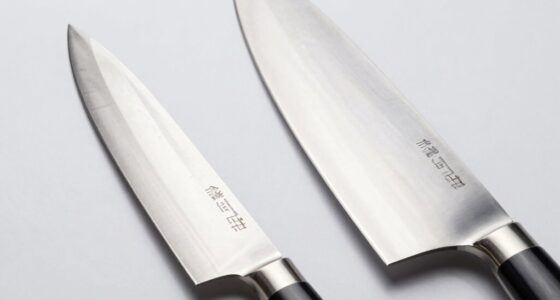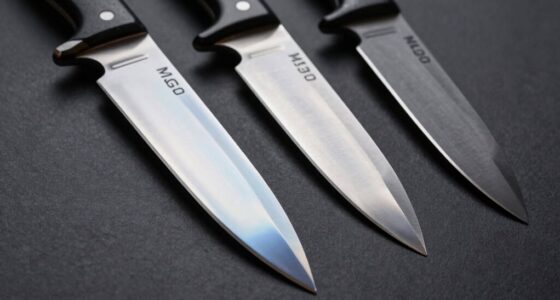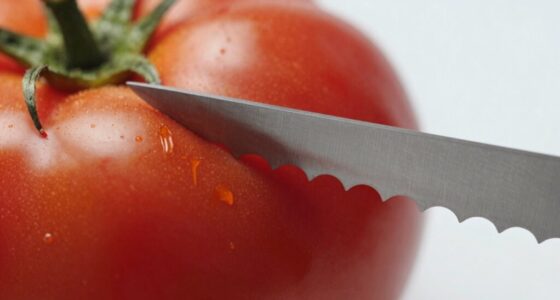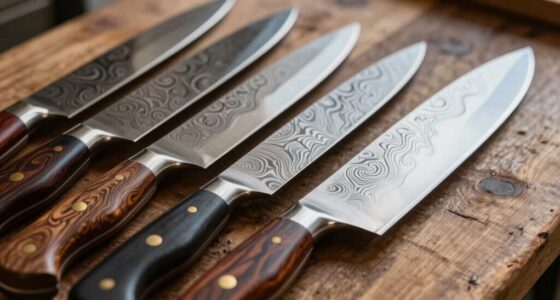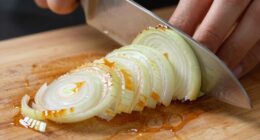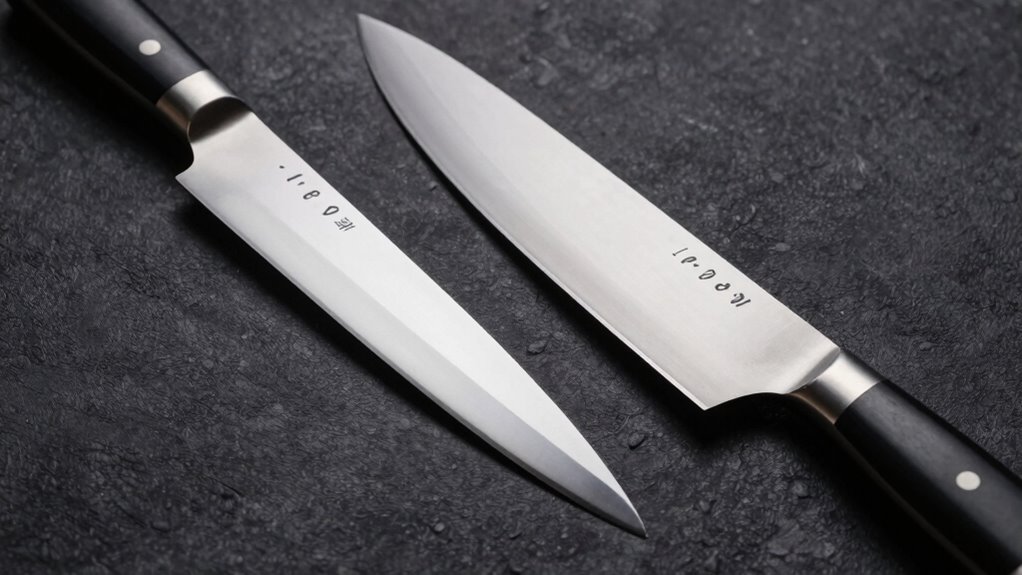

Japanese knives have thinner, lighter blades with sharper angles and straight profiles designed for precision and delicate slicing, while German knives are thicker, heavier, and more durable with broader angles and curved blades ideal for chopping and heavy-duty tasks. Their bevels also differ—single bevel versus double bevel—affecting control and versatility. Exploring these design differences helps you choose the right tool for your culinary style, and there’s much more to discover if you keep exploring.
Key Takeaways
- Japanese knives feature straight, thin blades with narrow bevel angles (~7-8°), optimized for precision slicing and delicate cuts.
- German knives have curved, thicker blades with broader bevel angles (~10-20°), designed for versatile chopping and heavy-duty tasks.
- Japanese blade profiles support straight slicing, ideal for soft ingredients, while German profiles facilitate rocking motions for chopping.
- The high hardness of Japanese steel maintains sharpness longer but reduces durability against chipping; German steel emphasizes resilience.
- Cultural craftsmanship influences blade geometry: Japanese for finesse and precision; German for robustness and versatility.

FAMCÜTE 8 Inch Japanese Knife, Hand Forged 5 Layers High Carbon 9CR18MOV Steel Rosewood Handle Chef Knife, Ultra Sharp Durable Professional Kitchen Knife, A Thoughtful Father Day Gifts for Men
Ideal Choice – Designed with an ergonomic handle for a comfortable grip, this FAMCÜTE Japanese chef knife features…
As an affiliate, we earn on qualifying purchases.
As an affiliate, we earn on qualifying purchases.
Blade Thickness and Weight Differences

When choosing between Japanese and German knives, understanding their blade thickness and weight is essential. Japanese knives have thinner, lighter blades designed for precision and delicate work. They’re crafted from harder steel, making them sharp but more fragile. German knives feature thicker, heavier blades made from softer steel, which boosts durability and resilience. The consistent thickness of Japanese blades offers a delicate, precise edge, while German blades often include a bolster that adds weight and balance. Weight distribution also differs; Japanese knives taper inside the handle, making the front heavier, which aids in controlled cuts. Conversely, German knives use full-tang construction, providing a balanced feel. These differences influence how each knife handles, affecting your grip, control, and overall cutting experience.

MOSFiATA 8" Super Sharp Professional Chef's Knife with Finger Guard and Knife Sharpener, German High Carbon Stainless Steel EN1.4116 with Micarta Handle and Gift Box
【High Carbon German Stainless Steel Laser-engraved Pattern(Not Damascus Pattern )】 MOSFiATA 8 inch pro chef's knife is made…
As an affiliate, we earn on qualifying purchases.
As an affiliate, we earn on qualifying purchases.
Sharpness and Blade Angles

Japanese knives are renowned for their sharpness, thanks to their finer blade angles and harder steel. Their edges are sharpened to about 9-16 degrees per side, typically around 10-15 degrees, creating a razor-sharp edge ideal for precise cuts. This narrow angle allows for a thinner edge that slices smoothly through delicate ingredients like fish and fruits. The high hardness of Japanese steel (60-66 Rockwell) helps the edge stay sharp longer, reducing the frequency of sharpening. Their blade geometry also contributes to a more refined cutting experience, especially for intricate culinary tasks. In contrast, German knives have wider angles, around 14-20 degrees per side, which results in a more durable but slightly less sharp edge. The softer steel (56-58 Rockwell) is less prone to chipping but requires more frequent sharpening. Your choice depends on whether you prioritize precision or durability in your cutting tasks. Additionally, the use of energy-efficient materials in blade manufacturing reflects a broader commitment to sustainable practices in European knife production, highlighting an innovative approach to both performance and environmental responsibility. Properly maintaining and sharpening your blades is essential for preserving their performance over time. Regular maintenance and proper sharpening techniques also play a crucial role in preserving the blade’s edge quality over time. Incorporating advanced manufacturing techniques can further enhance the performance and longevity of these blades.

ATUMURYOU Japanese Chef Knife, 8 Inch Damascus Kitchen Knife with VG10 Steel, Ultra Sharp Professional Cooking Knives with Resin Wood Handle, Perfect Father Day Gifts
【Premium Damascus Chef Knife with VG-10 Steel Core】Our Japanese knives feature a VG-10 steel core (60 HRC) for…
As an affiliate, we earn on qualifying purchases.
As an affiliate, we earn on qualifying purchases.
Bevel Design and Its Impact on Use

Your choice of bevel design directly influences how precisely you can cut and how easily the knife adapts to both right- and left-handed use. Single bevel Japanese knives offer exceptional control for detailed tasks, but they’re often tailored for right-handed users. Double bevel German knives provide versatility, allowing seamless use by anyone, regardless of dominant hand.
Precision Cutting Dynamics
The bevel design of a knife directly influences its cutting precision and ease of use. With a single bevel, Japanese knives focus on ultra-sharp, fine edges ideal for delicate, precise cuts. This design allows you to slice thinly through fish or produce with minimal effort and maximum control. The narrow bevel angle, often between 7-8 degrees, creates a razor-sharp edge that maintains its sharpness longer, making it perfect for finesse work. Conversely, double bevel German knives are more versatile, accommodating a wider range of cutting motions. Their broader bevel angles, around 10 degrees, provide durability and stability, allowing you to handle tougher ingredients like root vegetables and meat. The choice of bevel impacts your technique and the quality of your cuts, shaping your overall efficiency in the kitchen.
Ambidextrous Versatility
While single bevel knives are highly prized for their precision, their design can limit use for both left- and right-handed users. If you’re right-handed, you’ll appreciate the sharp, clean cuts these knives deliver. However, left-handed users often struggle because the bevel is optimized for right-handed use, making the edge less effective or even dangerous if reversed. Double bevel German knives, sharpened on both sides, offer ambidextrous versatility, making them suitable for anyone regardless of dominant hand. This balanced design ensures consistent performance and easier handling for a wider range of users. If you’re looking for flexibility and ease of use across different tasks and users, double bevel knives provide the practical advantage of true ambidextrous versatility, supporting a seamless experience in the kitchen.

PAUDIN Chef Knife, 8 Inch High Carbon Stainless Steel Sharp Kitchen Knife with Ergonomic Handle, Gift Box for Family & Restaurant
Professional Chef's Knife: This PAUDIN kitchen knife is suitable for cutting bread, vegetables, fillets or meats etc, and…
As an affiliate, we earn on qualifying purchases.
As an affiliate, we earn on qualifying purchases.
Blade Profiles and Cutting Techniques

Your choice of blade shape and curvature directly influences your cutting style. Japanese knives with straighter profiles support precise, straight cuts, while German blades with rounded curves enable a smooth rocking motion. Understanding these differences helps you select the right knife for your preferred techniques and ingredients.
Shape and Curvature
Blade shape and curvature markedly influence cutting techniques and precision. Japanese knives feature straighter, flatter profiles that support precise, straight slicing motions, allowing you to make clean, accurate cuts with the entire blade length. This design is ideal for delicate tasks like slicing sashimi or filleting fish, where control is paramount. German knives, on the other hand, have more curved blades that facilitate a rocking motion, making chopping and mincing more efficient. The curved profile lets you pivot the blade smoothly, applying force evenly across a wider area. This shape is perfect for tackling tougher ingredients such as dense vegetables or meat. Your choice of blade curvature directly impacts your technique, whether you prefer the precision of Japanese straight edges or the versatility of German curved blades.
Cutting Motion Styles
The shape and curvature of a knife directly influence how you perform cutting motions. Japanese knives, with their straight blade profiles, support an up-and-down slicing technique. You’ll find it easier to make precise, straight cuts, especially when working with delicate ingredients like fish or thin vegetables. The straight edge allows you to utilize the entire length of the blade, giving better control for fine work. In contrast, German knives feature more rounded, curved blades that facilitate a rocking motion. This design makes chopping, mincing, and crushing ingredients more efficient, especially with dense vegetables or tougher meats. The curved profile encourages a smooth, continuous motion, reducing fatigue during heavy-duty tasks. Your choice of technique depends on the blade’s geometry, shaping how you chop, slice, and mince efficiently. Additionally, the blade profile plays a crucial role in how comfortable and effective your cutting technique will be during different culinary tasks.
Material Composition and Durability Factors

Japanese knives are crafted from high-carbon steel, which allows you to maintain a sharper edge longer. This steel’s hardness, often between 60-66 Rockwell, provides superior edge retention but makes the blade more prone to chipping if you’re not careful. The steel’s composition ensures the blade stays sharp through repeated use, reducing frequent sharpening needs. In contrast, German knives use softer stainless steel, usually around 56-58 Rockwell, making them less prone to chipping or breaking. They are more resistant to rust and easier to sharpen but require more frequent maintenance to keep a keen edge. The durability of each depends on your tasks: Japanese blades excel in precision and delicate cuts, while German knives favor robustness and versatility. Both styles balance durability with specific performance advantages. Additionally, the material composition influences their overall resistance to wear and corrosion, impacting long-term performance.
Optimal Tasks for Each Style of Knife

Each knife style is best suited for specific tasks based on its design and capabilities. Japanese knives, with their thin, lightweight blades and sharp angles, excel at precision work like slicing sashimi, filleting fish, and detailed garnishing. Their straight blade profiles and high hardness make them ideal for delicate, controlled cuts on soft ingredients. In addition, their craftsmanship often emphasizes blade sharpness, which enhances cutting accuracy. In contrast, German knives, with their thicker, heavier blades and rounded profiles, are better for robust tasks such as chopping vegetables, butchering meat, and cutting through bones. Their double bevels and balanced weight provide stability and versatility for tougher, more demanding jobs. Both styles adapt well to various techniques, but understanding their strengths helps you choose the right tool for each task, ensuring efficiency and best results. Recognizing the cultural differences in knife design can enhance your culinary skills and appreciation for traditional craftsmanship.
Frequently Asked Questions
How Does Handle Design Influence Overall Knife Balance and User Comfort?
Your handle design directly impacts the knife’s balance and your comfort. A well-designed handle distributes weight evenly, reducing fatigue during extended use. For Japanese knives, the lighter, slimmer handle offers precision and agility, perfect for delicate tasks. German handles, often fuller and heavier, provide stability and control for tougher cuts. Choose based on your comfort and the tasks you perform most, ensuring better control and less strain.
Can Japanese or German Knives Be Used Effectively for Both Precision and Heavy-Duty Tasks?
You can use Japanese and German knives for both precision and heavy-duty tasks, but they excel in different areas. Japanese knives, with their thinner blades sharpened to 9-16 degrees, are perfect for detailed slicing and delicate work. German knives, with their thicker, more robust blades sharpened to around 17.5 degrees, handle tough chopping and dense meats effectively. Both styles are versatile, but choose based on the task’s delicacy or strength.
What Maintenance Practices Are Recommended for Preserving the Sharpness of Each Knife Style?
To keep your Japanese and German knives sharp, regularly hone them with a honing rod to realign the edge, and hand wash using mild soap to prevent corrosion. For Japanese knives, sharpen with a whetstone to maintain their fine edge, usually every few months. German knives benefit from periodic professional sharpening or using a quality sharpening system, as their thicker blades dull more slowly but still need upkeep for ideal performance.
How Do Different Steel Types Affect Corrosion Resistance and Long-Term Durability?
Imagine you’re choosing between a Japanese high-carbon steel knife and a German stainless steel one. High-carbon steel offers excellent edge retention but rusts easily if not cared for properly, reducing durability. In contrast, German stainless steel resists corrosion better and withstands exposure to moisture, making it more durable long-term. Your choice depends on your maintenance routine and cooking environment; stainless steel requires less upkeep for lasting performance.
Are There Specific Cutting Techniques Better Suited for Either Japanese or German Knives?
You’ll find Japanese knives excel at precise, delicate cuts like slicing sashimi or filleting fish, thanks to their sharp, straight blades. Use them with a straight, downward motion to maximize control. German knives are better for heavy-duty tasks like chopping vegetables or tough meats, where a rocking motion works well. Their curved blades facilitate efficient chopping, making them versatile for more robust, forceful cutting techniques.
Conclusion
Understanding how Japanese and German knives differ helps you select the right tool for your needs. Did you know Japanese knives typically have a blade angle of around 15°, compared to 20°-22° for German knives? This sharpness difference impacts precision and cutting ease. Whether you prefer the lightweight, delicate Japanese style or the robust German design, knowing these nuances guarantees you get the best performance for your cooking tasks. Choose wisely and sharpen your skills!