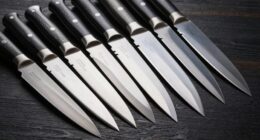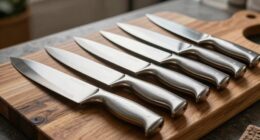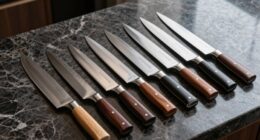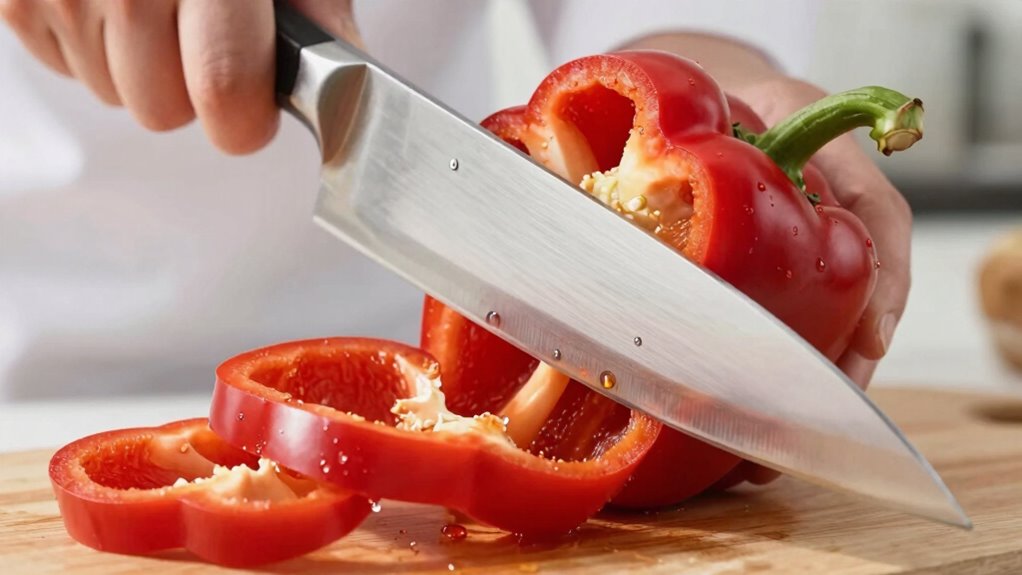
Knives steer during cuts mainly because of issues with blade angles or handle design. If your knife’s blade angle isn’t suited to the task, it can catch or veer off course. Poorly ergonomic handles can cause slipping or fatigue, making it harder to control the knife’s direction. When both blade and handle aren’t well-matched to your cutting style, maintaining a straight, steady cut becomes challenging. To understand how to improve your control, keep exploring these factors.

Get kitchen gear delivered free — and shop member deals
- Fast, free delivery on millions of items
- Access to Prime Big Deal Days deals on October 6–7
- Prime Video, Amazon Music and more included
Key Takeaways
- Uneven or inconsistent blade angles can cause the knife to veer during cutting.
- Poor handle ergonomics may lead to slipping, affecting control and steering during slicing.
- Blade angles that are too acute or too broad may reduce precision, causing the knife to steer unintentionally.
- Lack of proper grip stability increases the likelihood of veering off course during cuts.
- Incorrect knife design or misalignment between blade and handle can disrupt cutting trajectory.

Have you ever noticed your knife suddenly veering off course while you’re cutting? It can be frustrating, especially when you’re trying to make precise slices. Often, this steering isn’t due to a mistake on your part but is rooted in the design of the knife itself. Two main factors influence this: the knife blade angles and handle ergonomics. Understanding how these elements work can help you regain control during your cuts and improve your overall technique.
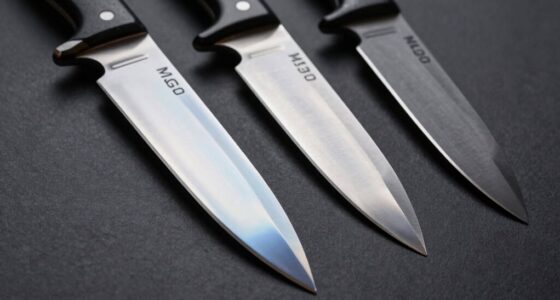
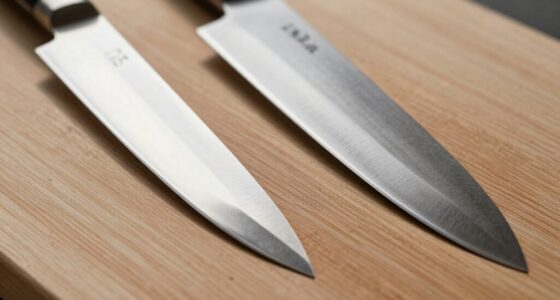
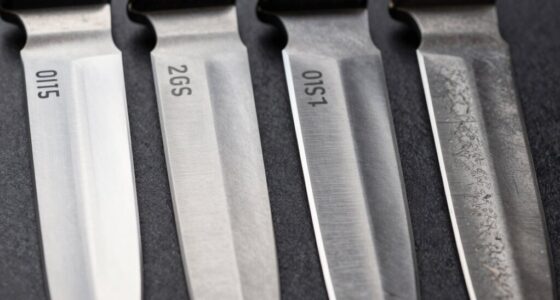
First, consider the knife blade angles. The angle at which the blade is sharpened affects how it interacts with the material you’re cutting. A more acute angle, typically found in finer kitchen knives, creates a sharper edge that can glide smoothly through ingredients, but it also makes the edge more delicate. Conversely, a broader, more obtuse angle offers durability but may cause the knife to feel less precise. If your blade’s angles aren’t well-suited for your cutting style or the task at hand, you might notice it drifting or steering unexpectedly. For example, a blade with uneven or inconsistent angles can catch or veer, especially when cutting through tougher or uneven surfaces. Ensuring your knives have consistent, appropriate blade angles can significantly improve control and reduce steering issues. Additionally, blade angles influence how the knife interacts with the food, affecting both precision and safety.
Consistent, well-suited blade angles improve control and prevent your knife from veering off course.
Handle ergonomics also play a crucial role. The shape, size, and grip comfort of your handle influence how well you can maintain control during the cut. A handle that’s too small or too large can cause your hand to slip or fatigue faster, leading to less precise movements. Similarly, handles with poor grip texture or awkward contours can make it difficult to exert the necessary pressure and maintain a straight cut. When your grip isn’t secure or comfortable, your wrist and arm may compensate by twisting or angling the blade unintentionally, causing it to veer off course. Properly ergonomic handle design can enhance your grip stability and reduce fatigue, contributing to cleaner cuts. Choosing a knife with an ergonomic handle designed for your hand size and grip style can provide better stability, allowing you to direct the blade exactly where you want.
In essence, steering during cutting often boils down to how well your knife’s design aligns with your technique. By paying attention to the blade’s angles and ensuring the handle ergonomics suit your hand, you can minimize unexpected veering. This doesn’t just make your cuts neater; it also makes cooking safer and more enjoyable. When your tools feel natural and responsive, you’ll find it easier to work efficiently and with confidence. Remember, the right knife isn’t just about sharpness; it’s about how well it fits and performs for you. Adjusting or choosing a knife with optimal blade angles and ergonomic design can make all the difference in keeping your cuts straight and steady.
As an affiliate, we earn on qualifying purchases.
Frequently Asked Questions
Can Improper Knife Sharpening Cause Steering Issues?
Yes, improper knife sharpening can cause steering issues, mainly due to increased blade vibration and reduced edge stability. When a knife isn’t sharpened correctly, the uneven edge can wobble or vibrate during cutting, making steering inevitable. To avoid this, make sure your knife is sharpened evenly, maintaining a smooth, stable edge. This improves control, reduces blade vibration, and keeps your cuts precise and effortless.
Do Different Knife Materials Affect Steering During Cuts?
Did you know that 85% of knife users notice better control with high-carbon steel? Different knife materials can definitely affect steering during cuts. When the blade material influences blade balance and handle ergonomics, it impacts your control. Lighter or unevenly balanced knives tend to steer more, making cutting less precise. Choosing a knife with proper blade balance and a comfortable handle helps you maintain steady, accurate cuts, regardless of the material.
How Does Cutting Technique Influence Knife Steering?
Your cutting technique greatly influences knife steering, especially through blade stability and cutting angle. When you maintain a consistent cutting angle, the blade stays aligned, reducing steering. Applying controlled, smooth motions helps preserve blade stability, preventing the knife from veering off course. If you jerk or press unevenly, it disrupts stability and causes steering. Focusing on steady, deliberate cuts ensures better control and minimizes unwanted steering during slicing.
Are Certain Knife Designs More Prone to Steering?
Yes, certain knife designs are more prone to steering. Knives with longer blades or less ergonomic handle designs tend to steer more during cuts because they lack stability and control. Blade length variations can make guiding the knife trickier, especially if the handle ergonomics don’t fit your hand well. Choosing a knife with a comfortable handle and appropriate blade length helps reduce steering, making your cuts more precise and controlled.
Does the Type of Food Impact Knife Steering Behavior?
Think of cutting through a ripe tomato versus a hard squash; your knife behaves differently because food texture impacts steering. Soft, slippery foods like fish or ripe fruit often cause knives to veer, especially on uneven cutting surfaces. Harder foods stay steady. So, the food type greatly influences knife steering. When you choose the right knife for each food and guarantee a stable cutting surface, you’ll cut smoothly and confidently every time.
precision chef knife with adjustable blade angle
As an affiliate, we earn on qualifying purchases.
As an affiliate, we earn on qualifying purchases.
Conclusion
So, next time your knife seems to have a mind of its own, remember it’s probably just dancing to an uneven rhythm. By paying attention to your grip, angle, and the blade’s sharpness, you can keep your cuts smooth and steady. Think of your knife as a trusted partner, not a wild stallion. With a little practice, you’ll tame that steering, turning your kitchen into a well-choreographed dance floor.
high grip comfort handle kitchen knives
As an affiliate, we earn on qualifying purchases.
As an affiliate, we earn on qualifying purchases.
professional Japanese chef knives
As an affiliate, we earn on qualifying purchases.
As an affiliate, we earn on qualifying purchases.
Halloween Picks
halloween
As an affiliate, we earn on qualifying purchases.