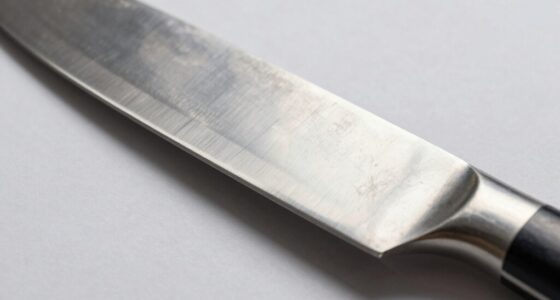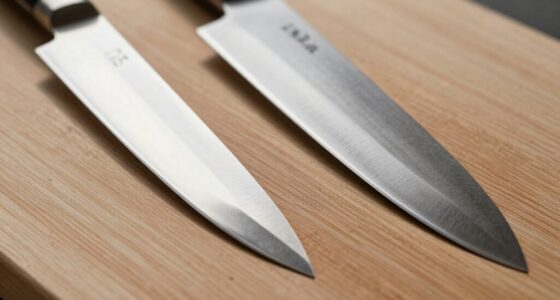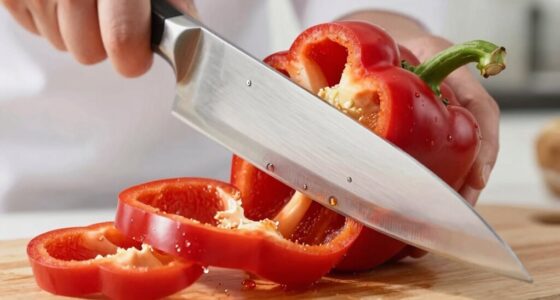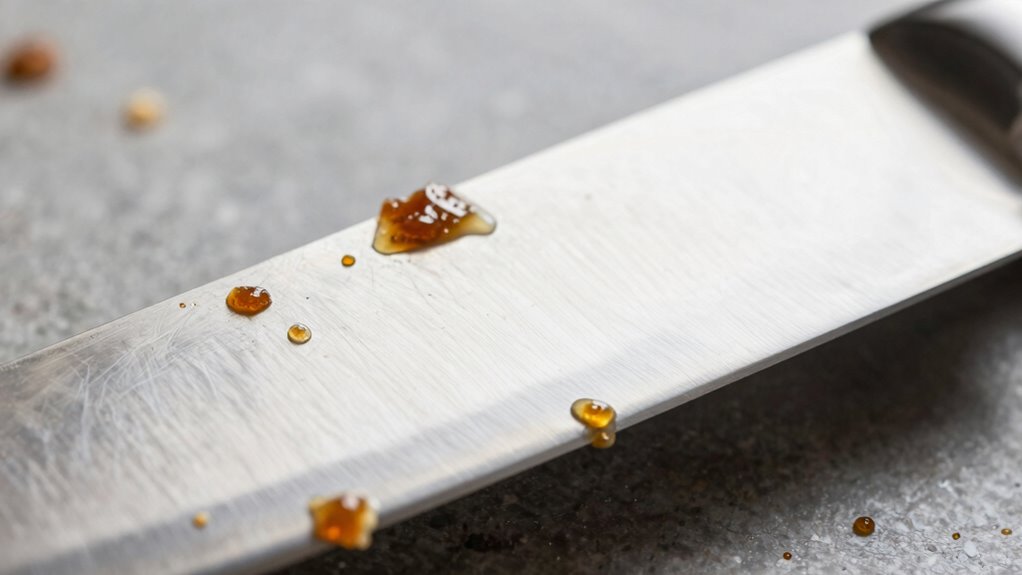
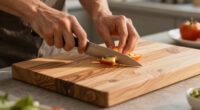
Food sticks to blades due to microscopic ridges on the surface, which trap sticky ingredients like cheese or dough. The interaction between the food’s moisture, temperature, and stickiness also promotes adhesion, especially if the blade isn’t sharp or smooth. Using techniques like applying oil or chilling ingredients can minimize sticking. The materials and coatings of the blade, such as ceramic or non-stick layers, play a significant role too. Discover how to optimize your tools for a cleaner, easier cut.

Get kitchen gear delivered free — and shop member deals
- Fast, free delivery on millions of items
- Access to Prime Big Deal Days deals on October 6–7
- Prime Video, Amazon Music and more included
Key Takeaways
- Food adhesion results from microscopic ridges on blades and the sticky or moist nature of ingredients.
- Temperature and moisture content of food influence its tendency to stick during cutting.
- Sharp, smooth blades reduce tearing and dragging, minimizing food latch points.
- Non-stick coatings and surface finishes create a slippery barrier, decreasing food sticking.
- Applying oil, water, or chilling ingredients forms a barrier or reduces stickiness for easier cutting.
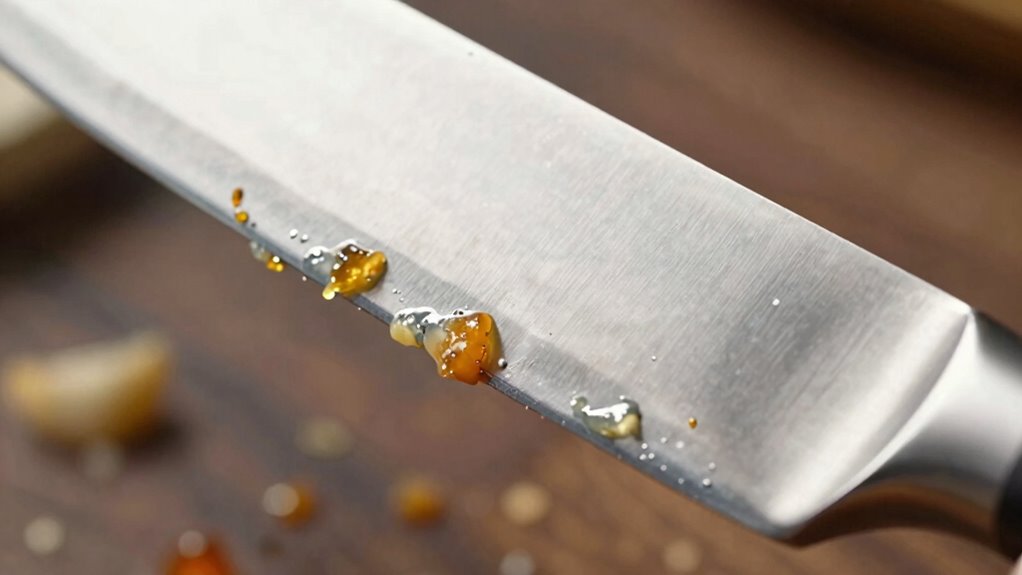
Have you ever struggled to cut through sticky ingredients because the food keeps clinging to your blades? It’s a common frustration in the kitchen, often caused by the interaction between the food’s texture and the properties of your cutting tools. Understanding the science behind food sticking to blades involves examining both cooking techniques and blade materials. When you use the right methods, you can minimize sticking and make your prep work smoother.
Cooking techniques play a significant role in reducing food adhesion. For instance, applying a little oil or water to your ingredients before cutting can create a barrier that prevents foods like cheese, dough, or sticky vegetables from clinging. Chilling ingredients before slicing also helps; cold foods tend to be less sticky and easier to cut cleanly. Furthermore, using proper cutting motions—like a gentle, sawing action—reduces the pressure on the blade, decreasing the chance of food sticking. When you cut with a sharp knife, you also lessen the tendency for food to stick, because a sharper blade minimizes tearing and dragging. This emphasizes the importance of maintaining your knives well and choosing appropriate cutting techniques for different ingredients. Additionally, selecting blades made from high-quality materials can contribute to reducing food adhesion and ease of cleaning. Using blades with a smooth surface finish** further enhances this effect by limiting microscopic ridges where food can latch on. Interestingly, some innovations in blade design incorporate non-stick coatings**, which are specifically engineered to combat sticking.
Proper techniques like oiling, chilling, and using a sharp, well-maintained knife reduce food sticking and make cutting easier.
Blade materials are equally essential in combating food adhesion. High-quality materials like stainless steel are popular because they resist corrosion and are easy to clean, but their surface finish matters too. A polished, smooth blade reduces the surface area where food can grip, helping to prevent sticking. Some blades are coated with non-stick substances, such as titanium or ceramic, which create a slippery surface that makes cutting sticky foods much easier. When you opt for blades made from these materials, you’ll notice less food clingage and easier cleanup afterward. Additionally, ceramic blades tend to be extremely smooth, with fewer microscopic ridges where food particles can latch on. The combination of a clean, sharp blade made from the right material and the appropriate cutting method can drastically improve your experience, especially when working with sticky ingredients.
In essence, understanding how cooking techniques interact with blade materials empowers you to choose the right tools and methods for your kitchen tasks. Whether you’re slicing cheese or chopping sticky vegetables, paying attention to both the way you cut and what your blades are made of helps prevent food from sticking. As you experiment with different foods and tools, you’ll develop a better sense of which techniques and materials work best for you, making your cooking more efficient and enjoyable.
As an affiliate, we earn on qualifying purchases.
Frequently Asked Questions
How Does Blade Material Affect Food Sticking?
Blade material directly impacts how food sticks to your cutting surface. A durable blade, like high-carbon steel, resists corrosion and maintains a sharp edge, reducing sticking. Non-stick coatings or ceramic blades create a smoother surface, preventing food from adhering. The cutting surface’s material also matters; softer surfaces increase sticking, while harder, well-maintained blades cut cleanly, minimizing residue. Choosing the right blade material enhances your cutting efficiency and keeps food from sticking.
Can Oil Types Influence Sticking During Cutting?
Think of oil as the silent guardian in your kitchen, preventing food from sticking to blades. Different cooking oils, like olive or vegetable oil, create a slippery barrier that reduces adhesion during cutting. Using proper kitchen techniques, such as lightly coating your blade with oil before slicing, can make a huge difference. Choosing the right oil guarantees smoother cuts and easier cleanup, turning your kitchen into a well-oiled machine.
Does Food Moisture Level Impact Sticking?
Yes, food moisture levels considerably impact sticking. When food is moist, it tends to stick more because the water creates a sticky surface and increases adhesion to the blade. Your food’s texture also plays a role; softer, wetter foods are more prone to sticking, especially if the cutting temperature isn’t ideal. To reduce sticking, keep your blades sharp, use proper oil, and adjust the temperature to maintain a smooth cutting process.
How Does Blade Sharpness Relate to Food Adhesion?
Blade sharpness boosts your cutting technique, reducing food adhesion. When you use a sharper blade with a proper blade angle, it slices smoothly through food, minimizing surface contact that causes sticking. Dull blades, on the other hand, tug and tear, increasing friction and food adherence. So, keep your blades sharp and at the right angle to cut cleanly, preventing food from clinging to the blade and making your task easier.
Are There Specific Cleaning Methods to Reduce Sticking?
To reduce sticking, you should use effective cleaning techniques that remove food residue thoroughly. After cutting, rinse your blades immediately with warm water and use a brush or sponge to scrub away any stuck food. For stubborn residue, soak the blades in warm soapy water before scrubbing. Regular cleaning prevents buildup, ensuring your blades stay sharp and food doesn’t stick, making your kitchen tasks much easier.
As an affiliate, we earn on qualifying purchases.
Conclusion
Understanding why food sticks to blades helps you improve your cooking techniques and maintain your equipment better. Did you know that improperly cleaned blades can harbor bacteria and lead to a 30% increase in cross-contamination? By applying the right cleaning methods and using appropriate lubricants, you can prevent sticking and guarantee safer, more efficient food preparation. Mastering these science-backed tips makes your kitchen safer and your meals more enjoyable.
As an affiliate, we earn on qualifying purchases.
knife sharpening and maintenance kit
As an affiliate, we earn on qualifying purchases.
As an affiliate, we earn on qualifying purchases.
Halloween Picks
halloween
As an affiliate, we earn on qualifying purchases.