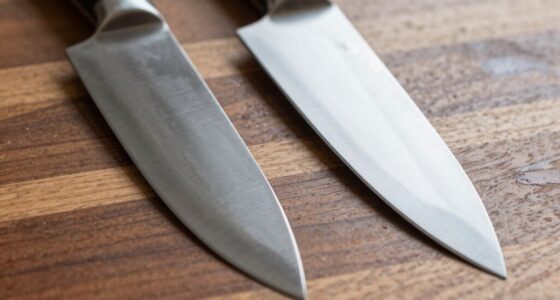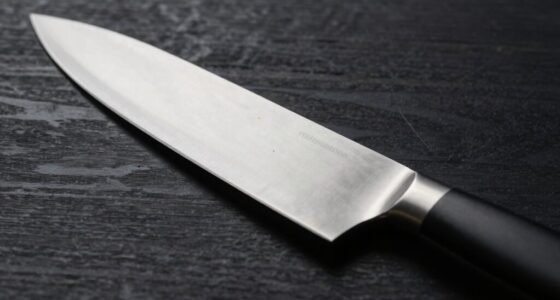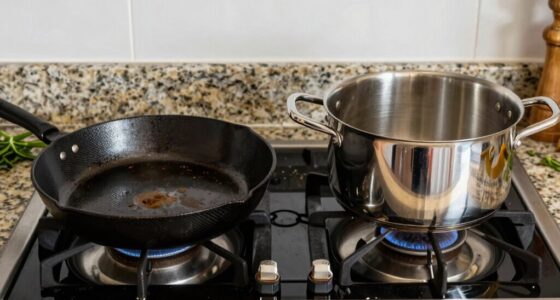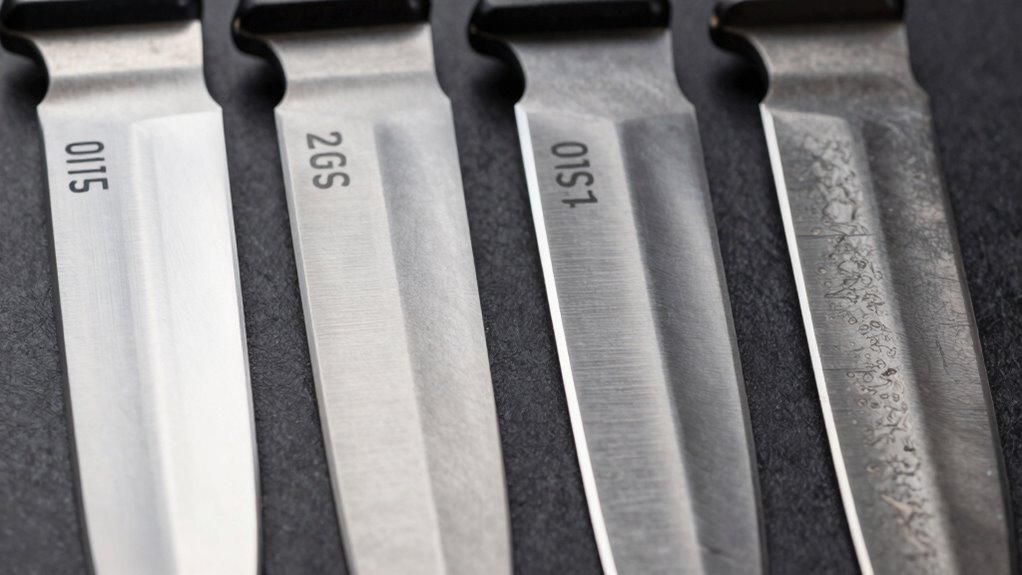

VG10 offers a great balance of hardness and corrosion resistance, making it ideal for sharp, long-lasting edges. SG2 (R2) is a high-tech powdered steel that sharpens easily but is more prone to rust, needing regular care. AUS-10 is an affordable option, good for everyday tasks and easy to maintain. Other steels like 440C and 154CM focus on a mix of durability and corrosion resistance. Keep exploring to discover how these differences fit your cutting needs.

Get kitchen gear delivered free — and shop member deals
- Fast, free delivery on millions of items
- Access to Prime Big Deal Days deals on October 6–7
- Prime Video, Amazon Music and more included
Key Takeaways
- VG10 balances hardness and corrosion resistance, ideal for professional and casual use.
- SG2 (R2) offers higher hardness and sharper edges but requires careful maintenance to prevent rust.
- AUS-10 is affordable, easy to sharpen, and suitable for everyday cooking, with moderate corrosion resistance.
- Other steels like 440C and 154CM provide reliable performance with good hardness and corrosion resistance.
- Steel choice depends on balancing hardness, corrosion resistance, sharpness, and maintenance needs.
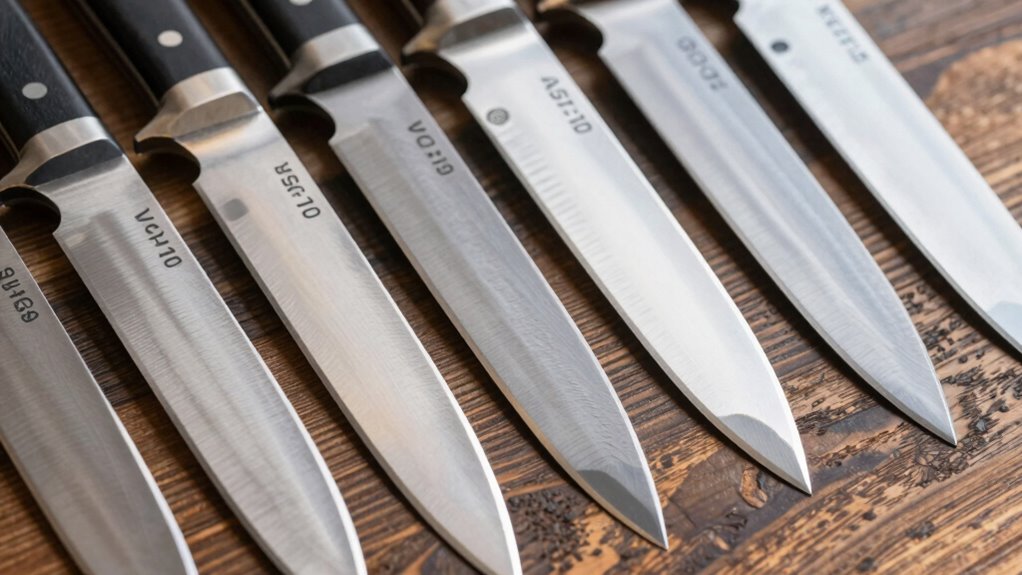
Choosing the right knife steel can seem complicated, but understanding the basics makes it much simpler. When evaluating steels like VG10, SG2, AUS-10, and others, two key factors to weigh are blade hardness and corrosion resistance. Blade hardness affects how well your knife holds its edge, while corrosion resistance determines how well it withstands moisture and other environmental factors that cause rust.
VG10 is a popular Japanese steel known for its excellent balance of blade hardness and corrosion resistance. Its high hardness allows it to retain a sharp edge for a long time, making it ideal for precise slicing. Because VG10 contains a high amount of carbon and vanadium, it’s also relatively resistant to corrosion. That means you don’t have to worry about rust forming if you keep it dry and clean, making it a favorite among professional chefs and home cooks alike. Additionally, VG10’s composition helps it resist corrosion, making it suitable for various conditions. Its versatility extends to being suitable for both professional and casual use. Understanding how the steel’s composition influences its properties can help you make a more informed choice.
VG10 offers a perfect mix of sharpness retention and rust resistance, ideal for chefs and home cooks.
SG2, often called R2 steel, takes things a step further with even higher blade hardness. It’s a powdered steel, which means its microstructure is finer, resulting in a sharper edge that stays sharper longer. The trade-off is that SG2 can be slightly more prone to corrosion if not properly cared for. Its high hardness makes it more brittle compared to softer steels, so you need to handle it with care to avoid chipping or breaking. Still, with proper maintenance—like regular cleaning and oiling—SG2 offers a superb combination of edge retention and corrosion resistance. Additionally, powder steel technology enhances its overall durability and performance. This advanced manufacturing process also contributes to its consistency in quality. Proper care, including regular honing, can further maximize its performance.
AUS-10 is another Japanese steel that’s somewhat more affordable but still offers good performance. It features a decent blade hardness and good corrosion resistance, making it a versatile option for everyday use. While it may not hold an edge as long as VG10 or SG2, AUS-10 is easier to sharpen and maintain. Its corrosion resistance is decent, but you should still dry it thoroughly after washing to prevent rust. Its affordability and performance make it popular among home cooks and beginners. Proper care can significantly extend its lifespan, especially in humid environments. Its affordability makes it a practical choice for those who want reliable performance without a high price tag.
Other common steels, like 440C or 154CM, also emphasize different balances of blade hardness and corrosion resistance. 440C, for example, offers good corrosion resistance and decent hardness, making it suitable for outdoor or camping knives. 154CM provides a similar profile but with slightly better edge retention and corrosion resistance. Both steels benefit from proper maintenance to maximize their lifespan and performance. These steels are often chosen for their balance of properties, which makes them reliable choices for various applications. Additionally, advancements in steel technology continue to improve these properties, providing more options for different needs. Recognizing these variations can help you select the most suitable steel for your specific use case.
In the end, choosing the right steel depends on your priorities. If you want a long-lasting edge with minimal rust worries, VG10 or SG2 might suit you best. If ease of sharpening and lower maintenance matter more, AUS-10 or similar steels could be better. Understanding how blade hardness and corrosion resistance work together helps you pick a steel that fits your needs and keeps your knife performing well over time.
As an affiliate, we earn on qualifying purchases.
Frequently Asked Questions
How Does Steel Hardness Affect Knife Performance?
When steel hardness increases, your knife’s edge retention improves, meaning it stays sharp longer. However, a harder blade can be less flexible, making it more prone to chipping or breaking if you apply too much force. You’ll notice that a well-balanced hardness provides a good mix of sharpness and durability, allowing you to perform tasks efficiently without sacrificing blade flexibility or risking damage.
Which Steel Type Offers the Best Corrosion Resistance?
You’ll find that AUS-10 steel offers the best corrosion resistance among common knife steels. This is due to its high chromium content, which enhances its steel alloy composition, making it more resistant to rust and staining. In fact, steels with higher chromium levels typically resist corrosion better. If you want a low-maintenance knife that withstands moisture and humidity, choosing a steel with a superior corrosion-resistant alloy composition is your best bet.
Are Higher Alloy Steels More Brittle?
Higher alloy steels can be more brittle because increased alloy content sometimes reduces steel ductility, making it less flexible and more prone to cracking under stress. However, alloy toughness varies depending on the specific composition and heat treatment, so some high-alloy steels maintain excellent toughness. It is crucial to balance alloy content to optimize both steel ductility and toughness, ensuring the steel resists brittleness while providing durability.
How Often Should I Sharpen Different Steel Knives?
Think of your knives like musical instruments—you need to tune them regularly. For most daily-use knives, sharpen every 1-2 months using proper knife sharpening techniques. Harder steel compositions, like VG10 or SG2, hold their edge longer but still need attention. Softer steels dull faster, so sharpen more often. Regular honing also keeps edges aligned, reducing the frequency of full sharpenings and prolonging your knives’ life.
What Maintenance Is Needed for High-End Steels Like SG2?
You should regularly hone your SG2 knife to maintain its sharpness and guarantee smooth cuts. Periodically, hand wash and dry it carefully to protect blade aesthetics, preventing stains and corrosion. Use a gentle stone or fine grit for sharpening when needed. This routine keeps the blade looking pristine and enhances user comfort, making your cutting experience safer and more enjoyable. Proper maintenance preserves your high-end steel’s performance and beauty over time.
As an affiliate, we earn on qualifying purchases.
Conclusion
Now that you know the basics of VG10, SG2, AUS-10, and other common steels, choosing the right knife feels less like deciphering an ancient scroll and more like wielding Excalibur itself. Remember, each steel has its quirks, but with this knowledge, you’re ready to conquer any culinary quest. So go forth, wield your blade confidently, and keep in mind—like a trusty knight’s sword, a good steel will serve you for many a feast to come.
AUS-10 stainless steel chef knife
As an affiliate, we earn on qualifying purchases.
As an affiliate, we earn on qualifying purchases.
best knife steel for professional chefs
As an affiliate, we earn on qualifying purchases.
As an affiliate, we earn on qualifying purchases.
Fall Picks
fall essentials
As an affiliate, we earn on qualifying purchases.