Your feel during sharpening reveals a lot about the steel’s behavior, such as its hardness, durability, and potential brittleness. When you sense resistance, cracking, or grit, it indicates how the steel responds to shaping and how tough or fragile it might be. This tactile feedback helps you adjust pressure, angle, and technique for ideal results. By honing this skill, you’ll better understand your knife’s properties—and if you keep paying attention, you’ll master how steel reacts to sharpening.

Get kitchen gear delivered free with Prime
- Fast, free delivery on millions of items
- Prime Video, Amazon Music and more included
- Member-only deals all year
Key Takeaways
- The resistance and response during sharpening indicate steel hardness and crystalline structure.
- Feel during sharpening reveals edge brittleness or ductility, reflecting steel’s microstructural properties.
- Variations in tactile feedback help identify if steel is hard, soft, or prone to chipping.
- Changes in grinding grit and pressure response signal differences in steel’s durability and microstructure.
- Tactile cues allow assessment of steel’s heat treatment and structural behavior without invasive testing.
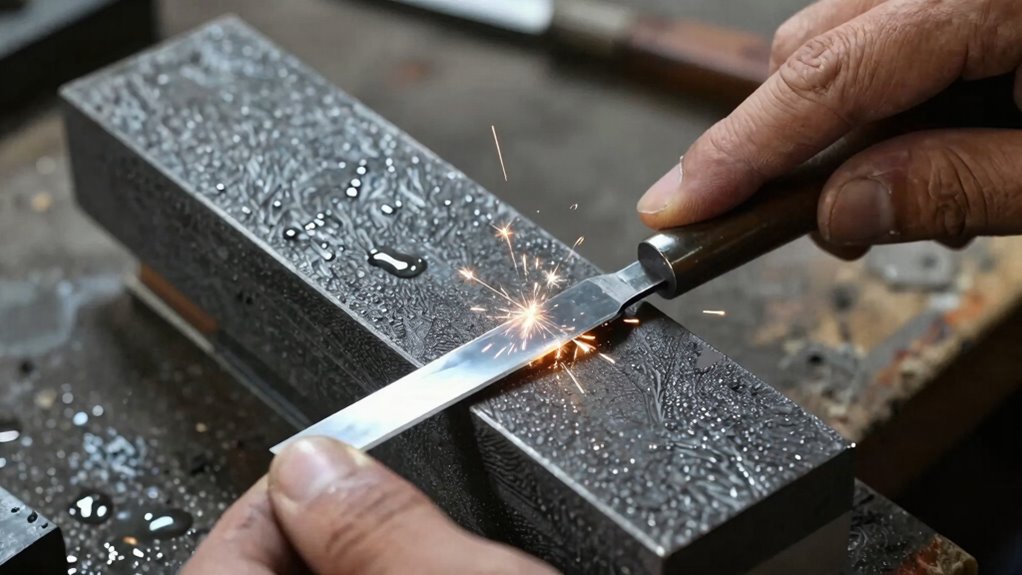
Understanding how your knife’s feel and steel behavior interact is essential for achieving ideal performance in the kitchen. When you’re sharpening your knife, the way it responds to your touch can reveal a lot about its underlying properties, especially regarding edge retention and material hardness. These factors influence how the steel behaves during sharpening and how well your knife maintains its sharpness over time. Recognizing these cues helps you refine your technique and select the right sharpening method, ultimately extending your knife’s usefulness.
When you notice that your knife feels unusually stiff or resistant during sharpening, it often indicates a high material hardness. Harder steels generally hold an edge longer because their crystalline structure resists deformation. But, this same hardness can make sharpening more challenging, requiring more deliberate strokes or specialized tools. Conversely, if your knife feels softer or more responsive, it might have a lower material hardness, making it easier to shape and sharpen but also prone to quicker dulling. By paying attention to how your knife responds, you can gauge whether it’s designed for durability or ease of sharpening, guiding your approach accordingly.
Edge retention plays a vital role in how your knife behaves after sharpening. A steel with excellent edge retention will maintain its sharpness longer, so you might notice less need for frequent honing or sharpening. When you sharpen a knife with superior edge retention, the steel’s material hardness often contributes to this durability, but it can also mean the steel is more brittle. This brittleness may cause the edge to chip if you’re not careful, especially with harder steels. Your feel during sharpening can alert you to these tendencies—if you detect cracking or a gritty resistance, it’s a sign that the steel’s material hardness is high, and you should proceed with caution to avoid damaging the edge. Developing an understanding of steel behavior can help you adapt your sharpening approach to prevent damage and prolong the life of your blade. Recognizing the steel’s crystalline structure can further inform your technique and help you make more precise adjustments. Additionally, understanding the microstructure of steel can give you insights into how it will respond under different sharpening conditions. Knowing about steel heat treatment can also help you assess how well your steel will hold an edge and respond to sharpening, further refining your technique.
Ultimately, sharpening feel acts as a tactile fingerprint for the steel’s behavior. If you develop an intuitive sense of how your knife responds—whether it’s cutting smoothly, resisting, or chipping—you can better understand its composition. This understanding allows you to tailor your sharpening technique, choosing the right angle, grit, and pressure. Recognizing the signs of steel behavior through feel not only improves your sharpening skills but also helps you preserve your knife’s edge retention, ensuring it performs optimally for years. By paying close attention to these cues, you unlock a deeper connection with your tools, making every cut more precise and satisfying.
Japanese sharpening stones for knives
As an affiliate, we earn on qualifying purchases.
As an affiliate, we earn on qualifying purchases.
Frequently Asked Questions
How Does Sharpening Feel Differ Between Various Steel Types?
You’ll notice sharpening feel varies between steel types because of microstructure differences and hardness variations. Harder steels, like high-carbon or tool steels, resist deformation, making sharpening feel firmer and more resistant. Softer steels, such as low-carbon types, feel easier to sharpen, with less resistance. These differences help you gauge the steel’s hardness and microstructure, guiding your sharpening technique and ensuring ideal results for each blade.
Can Sharpening Feel Predict a Steel’s Durability?
Sharpening feel can hint at a steel’s durability because it reflects its edge microstructure and how it responds to grinding pressure. When you notice resistance or ease during sharpening, you’re observing how the steel’s internal structure handles stress. A consistent feel suggests balanced microstructure, indicating good durability. Conversely, uneven or unpredictable feel may warn of brittle areas, implying the steel might chip or wear faster under heavy use.
What Tools Best Enhance Sharpening Feel Accuracy?
To enhance sharpening feel accuracy, use tools like guided sharpeners or honing guides that improve edge consistency. These tools help you maintain a steady angle, making it easier to gauge your progress. Additionally, choose sharpeners with ergonomic designs that reduce hand fatigue and allow precise control. When your tools fit comfortably and promote consistent edges, you’ll develop a sharper sense of steel behavior, leading to more accurate sharpening and better blade performance.
How Does Sharpening Technique Affect Steel Behavior Insights?
Your sharpening technique can dramatically influence steel behavior insights. By maintaining consistent edge and smooth surfaces, you get clearer feedback on how the steel responds, like revealing secrets hidden beneath the surface. A careful, deliberate approach uncovers subtle changes in edge consistency and surface smoothness, helping you understand the steel’s true nature. This precision reveals behavior patterns, guiding you to optimize sharpening methods for better performance and durability.
Is Sharpening Feel Reliable for Assessing Steel Quality?
Sharpening feel can be quite reliable for evaluating steel quality because it reflects edge consistency and grind smoothness. When you notice a steady, controlled resistance, it indicates good steel with uniform hardness. Conversely, inconsistent feel or snagging might suggest flaws or uneven hardness. Trust your tactile sense during sharpening, as it provides real-time feedback about the steel’s behavior, helping you gauge quality without solely relying on visual cues.
As an affiliate, we earn on qualifying purchases.
Conclusion
So, sharpen your senses and stay attentive to that subtle sharpening feel. It’s your secret signal, showcasing steel’s strength, softness, and subtle shifts. By honing your handling and heightening your awareness, you’ll uncover steel’s silent stories and subtle surprises. Remember, that delicate dance between tool and technique reveals more than meets the eye or touch. Embrace the experience, enhance your expertise, and enjoy the eloquent evolution of every edge you sharpen.
professional knife sharpening system
As an affiliate, we earn on qualifying purchases.
As an affiliate, we earn on qualifying purchases.
whetstone for high hardness steel
As an affiliate, we earn on qualifying purchases.
As an affiliate, we earn on qualifying purchases.
Fall Picks
fall essentials
As an affiliate, we earn on qualifying purchases.