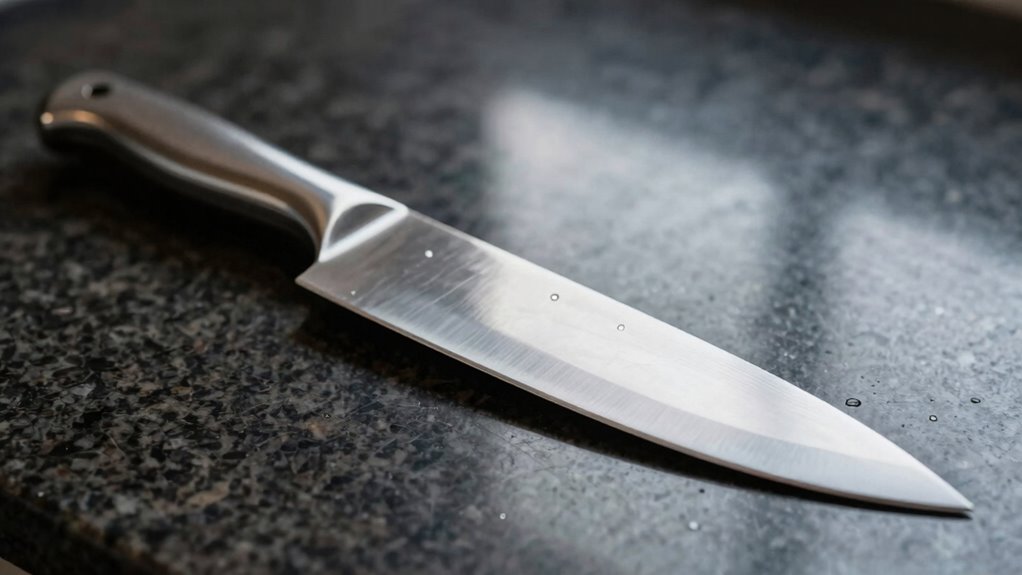

Your perception of fragility in a knife often comes from its design and materials. Thin blades, lightweight handles, or decorative coatings can make a knife feel more delicate, even if it’s durable. The shape, thickness, and handle attachment also influence how fragile it appears during use. Understanding these factors can help you see that a knife might be tougher than its looks suggest. Keep exploring to uncover the details behind how knives are really built and rated.

Get kitchen gear delivered free — and shop member deals
- Fast, free delivery on millions of items
- Access to Prime Big Deal Days deals on October 6–7
- Prime Video, Amazon Music and more included
Key Takeaways
- Thin blade profiles and coatings can create an appearance of fragility despite actual durability.
- Lightweight handle materials and designs may give the impression of being fragile or less sturdy.
- Visual cues like chipped coatings or uneven finishes can mislead perceptions of strength.
- Blade shape and thickness influence perceived flexibility and delicacy during use.
- Aesthetic features may suggest fragility, even if the knife is structurally robust.
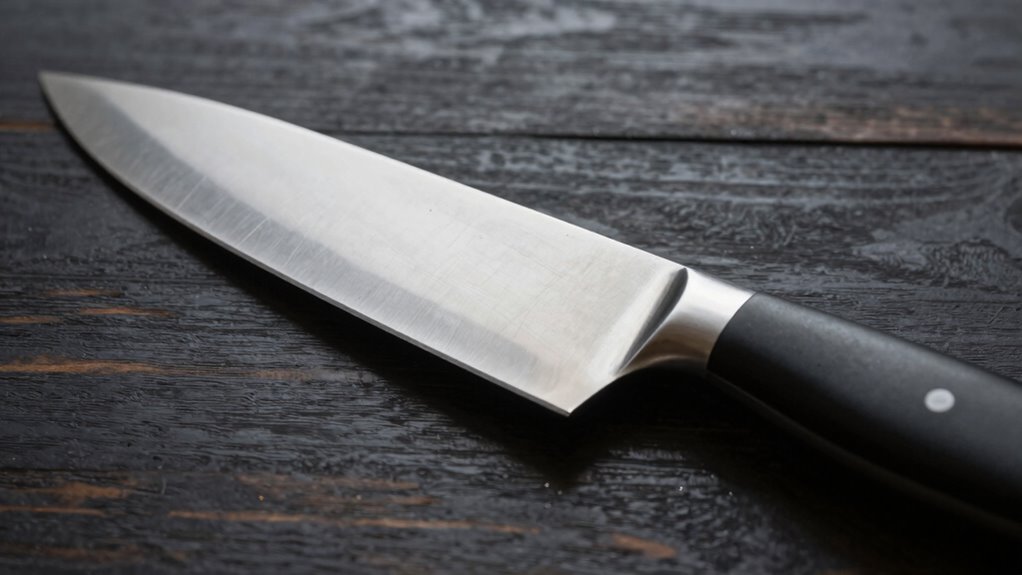
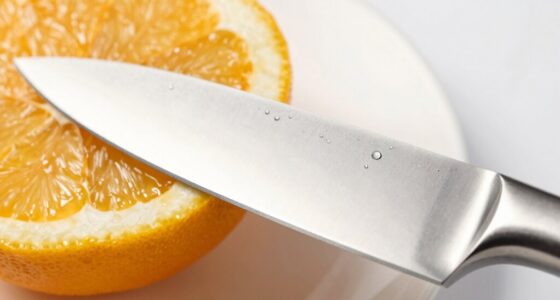
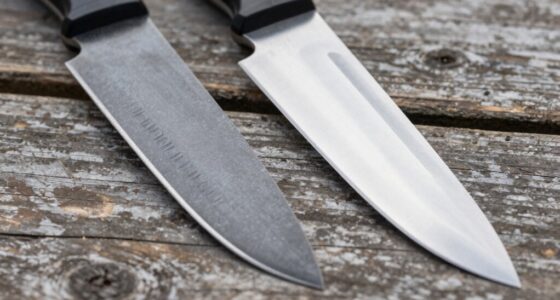
Have you ever picked up a knife that seemed surprisingly delicate despite its sturdy appearance? It’s a strange feeling, and it often leaves you questioning whether the knife can handle the task at hand. What makes some knives feel more fragile than they really are? A lot of it comes down to the nuances in blade composition and handle design, which influence not only how the knife performs but also how it’s perceived regarding durability. Sometimes, even the blade shape can affect how fragile a knife feels, as thinner profiles tend to flex more under pressure. Starting with blade composition, the materials used in making the blade are a big factor in how sturdy a knife feels. High-quality stainless steel, for example, generally offers a good balance of strength and flexibility, giving you a sense of solidity when you hold it. However, if a knife uses a softer or more brittle alloy, it might bend or chip easily, making it feel fragile. Sometimes, manufacturers coat blades with thin layers of decorative or protective finishes, which can give the impression of delicacy if they’re not applied evenly or if the coating chips away. The thickness and shape of the blade also matter. Thin blades might seem fragile because they flex more under pressure, even if they’re technically strong enough for everyday use. Conversely, a thicker, well-designed blade adds weight and confidence, making it feel more robust. Additionally, blade thickness can influence how a knife responds under stress, affecting both perception and actual durability. Furthermore, the blade material itself can impact how resistant it is to corrosion or damage, which in turn influences how resilient the knife appears over time. A proper understanding of blade flexibility can also help in choosing a knife that matches your specific cutting needs. Moreover, the handle material can significantly affect how resilient a knife appears and performs over time.
Handle design plays a vital role in how resilient a knife feels, too. A handle that’s ergonomically designed for a secure grip can make a knife seem more solid because you feel in control. Handles made from lightweight materials like plastic or certain composites can sometimes give an impression of fragility, especially if they’re thin or poorly reinforced. On the other hand, handles crafted from dense, durable materials such as full-tang metal or reinforced wood tend to increase the overall perceived sturdiness. The way the handle is attached to the blade also matters. A well-constructed joint, with rivets or secure tangs, makes a big difference in how sturdy the knife feels, even if the blade itself is delicate-looking. Ultimately, it’s easy to be deceived by appearances. A knife might look fragile, but with the right blade composition and handle design, it can be surprisingly tough. Conversely, a seemingly sturdy knife could have subtle weaknesses that aren’t immediately visible. Understanding these details helps you pick tools that match your needs, giving you confidence whether you’re slicing vegetables or preparing more demanding cuts. So next time you handle a knife that feels delicate, consider what’s behind that impression — it might just be a matter of design choices rather than actual fragility.
high-quality stainless steel chef's knife
As an affiliate, we earn on qualifying purchases.
As an affiliate, we earn on qualifying purchases.
Frequently Asked Questions
Do Knife Handle Materials Affect Perceived Fragility?
Yes, knife handle materials considerably affect perceived fragility. If the handle feels lightweight or flimsy, you might think the entire knife is fragile, even if the blade robustness is high. Handle ergonomics also play a role; a poorly designed handle can make you feel less confident in the knife’s durability. Using sturdy, well-balanced materials enhances your perception of quality, making the knife feel more resilient and less delicate.
Can Improper Sharpening Make Knives Feel More Fragile?
Improper sharpening techniques can make knives feel more fragile because uneven or overly aggressive sharpening can weaken the blade’s edge and affect its flexibility. When you sharpen incorrectly, you might create micro-cracks or dull the edge, making it seem delicate. To avoid this, use proper sharpening methods and tools, ensuring the blade retains its intended flexibility and strength. This keeps your knife feeling solid and reliable during use.
Does Knife Weight Influence How Fragile It Feels?
Think of your knife as a dancer—its weight influences how it moves and feels. Heavier knives often seem sturdier, but lighter ones can feel more fragile due to their blade flexibility. The weight affects your balance perception, making a knife feel more or less delicate in your hand. So, the right weight helps you handle the knife confidently, reducing the feeling of fragility and improving your cutting control.
Are Certain Knife Styles More Prone to Feeling Fragile?
Certain knife styles, like delicate fillet or paring knives, often feel more fragile due to their blade design and manufacturing quality. Thin, lightweight blades with intricate designs can seem more delicate, especially if made with lower-quality materials. You might notice these knives flex or chip easily. To reduce this, choose knives with sturdy blade designs and good manufacturing quality, which guarantee durability while maintaining the desired precision and feel.
How Does Storage Impact the Perceived Durability of Knives?
Sure, storing your knives carelessly makes them seem more fragile, like delicate snowflakes ready to shatter. When you neglect proper storage, blade flexibility diminishes, and material brittleness creeps in, making even sturdy knives feel like glass. Use a knife block or magnetic strip to keep blades protected and avoid knocking them around. Proper storage preserves the knife’s integrity, ensuring it feels durable and reliable every time you need it — not just in your imagination.
As an affiliate, we earn on qualifying purchases.
Conclusion
So, next time you pick up a knife that feels fragile, remember it’s not always about strength but perception. Feel its balance, see its craftsmanship, trust its design. Don’t let a delicate appearance fool you into doubt. Instead, embrace the potential, respect the skill, and understand that true durability often lies beneath the surface. When you do, you’ll handle every knife with confidence, appreciation, and a deeper respect for what makes a blade truly reliable.
durable ceramic coating kitchen knife
As an affiliate, we earn on qualifying purchases.
As an affiliate, we earn on qualifying purchases.
As an affiliate, we earn on qualifying purchases.
Fall Picks
fall essentials
As an affiliate, we earn on qualifying purchases.