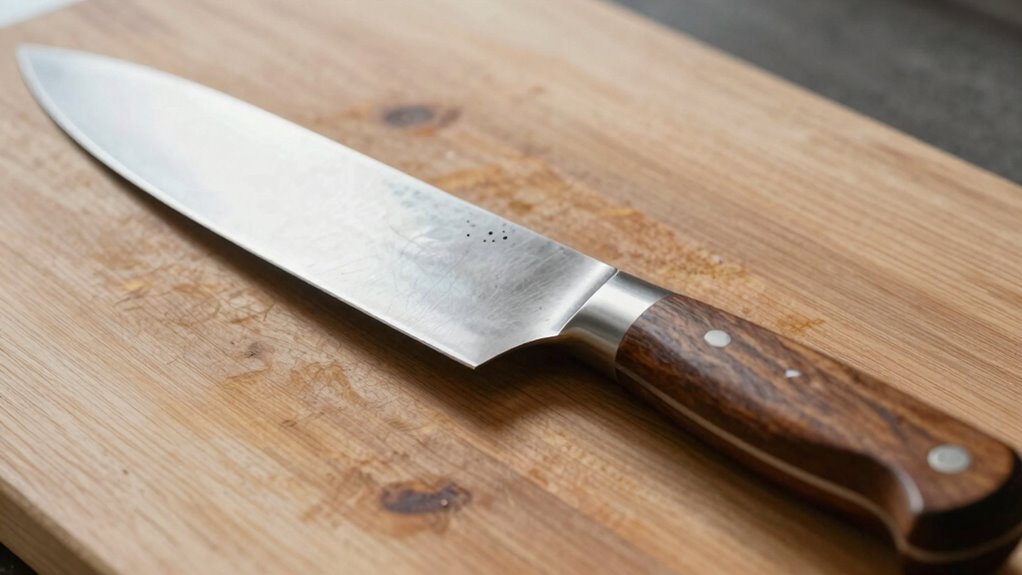

Before assuming your knife needs replacing, check its sharpness by slicing through paper or a tomato; if it struggles, sharpening might suffice. Inspect the handle for cracks, looseness, or signs of wear, and tighten or repair as needed. Also, examine the blade for rust, corrosion, or warping, which could require replacement. Proper maintenance can often restore a knife’s performance, but if issues persist, it’s time to contemplate a new one—more tips are just ahead.

Get kitchen gear delivered free with Prime
- Fast, free delivery on millions of items
- Prime Video, Amazon Music and more included
- Member-only deals all year
Key Takeaways
- Test the blade’s sharpness by slicing paper or a tomato for smoothness.
- Inspect the handle for cracks, looseness, or signs of wear.
- Examine the blade for rust, corrosion, pitting, or warping.
- Ensure proper cleaning and sharpening have been attempted.
- Confirm the knife’s overall performance after maintenance before replacing.
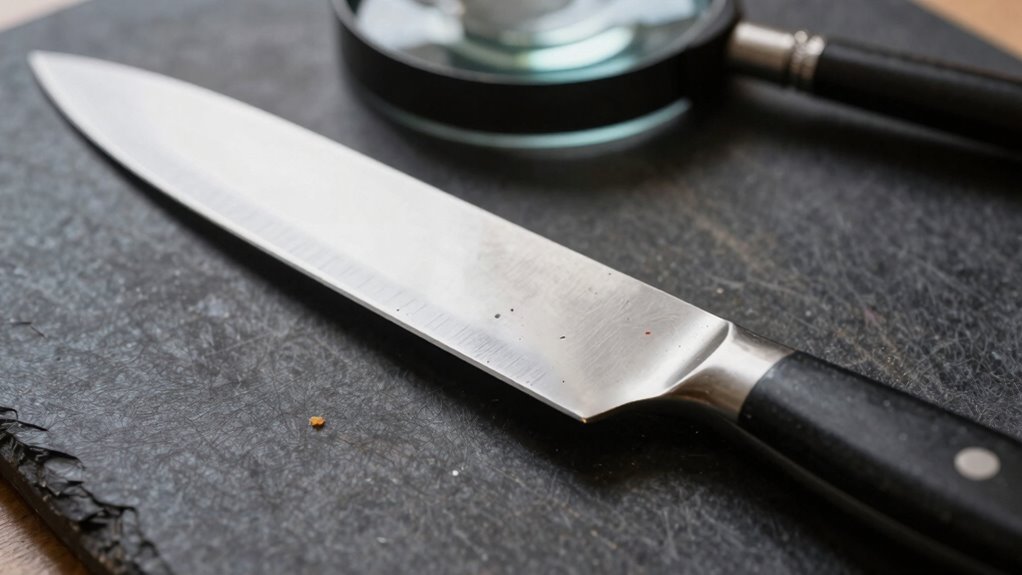
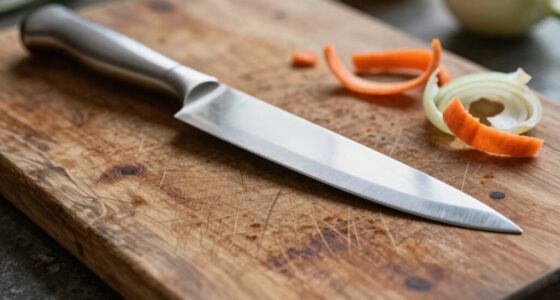
Before rushing to replace your knife, it’s important to assess whether it truly needs it. Many times, what feels like a dull or ineffective knife is simply in need of a quick sharpening or minor maintenance. Start by checking the blade sharpness. A dull blade makes cutting difficult, forcing you to apply excessive pressure, which can be unsafe and lead to accidents. To test sharpness, gently slice through a piece of paper or a tomato. If the knife struggles or tears the material instead of cleanly slicing through, it’s likely dull and needs sharpening. However, if the blade still cuts smoothly and with ease, the issue might not be the blade at all.
Check if your knife is truly dull before replacing—try slicing paper or a tomato to test sharpness first.
Next, examine the handle integrity. A stable, intact handle is crucial for safe and efficient use. Check for cracks, looseness, or any signs of wear that could compromise your grip or cause the handle to detach during use. Even if the blade is sharp, a compromised handle can make the knife dangerous or uncomfortable to use. If the handle is loose, tighten any screws or fasteners, or consider replacing the handle if repairs aren’t possible. Remember, a secure handle ensures you maintain control and prevent accidents.
Beyond the blade and handle, consider the overall structure of the knife. Look for signs of rust, corrosion, or pitting that could weaken the blade over time. If corrosion is superficial, a good cleaning and sharpening might restore its functionality. But if the blade is heavily pitted or corroded, it could be time to replace the knife altogether. Also, inspect the blade’s alignment; a bent or warped blade won’t cut properly and can be dangerous to use. Straighten or replace the knife if necessary.
Finally, evaluate how your knife performs in real use. Sometimes, a knife that feels dull might simply be hindered by improper technique or a dull cutting board. Ensure you’re using the right technique and surface. If you’ve addressed all these factors—sharpness, handle integrity, structural condition—and the knife still doesn’t perform well, then it’s probably time to consider a replacement. But often, a little maintenance goes a long way, saving you money and ensuring safer, more effective kitchen work.
As an affiliate, we earn on qualifying purchases.
Frequently Asked Questions
How Often Should I Sharpen My Kitchen Knives?
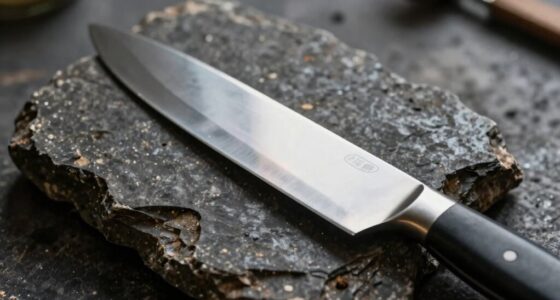
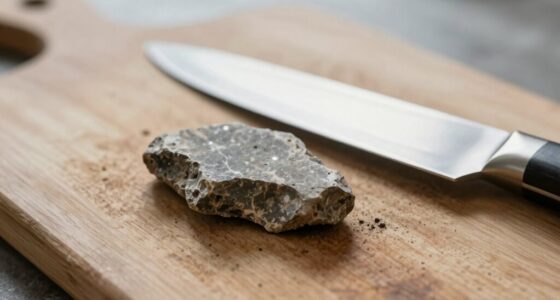
You should sharpen your kitchen knives every 1-2 months, depending on usage. Regular knife maintenance keeps blades sharp and safe, preventing accidents. Use proper sharpening techniques, like honing with a steel or using a whetstone, to maintain your knives’ edge. If you notice dullness or difficulty cutting, it’s time to hone. Consistent maintenance ensures your knives stay effective and last longer, making your cooking safer and more enjoyable.
Can a Dull Knife Be Fixed Without Replacing It?
Did you know that 90% of dull knives can be restored? Yes, a dull knife can often be fixed without replacing it through blade restoration and honing techniques. You can try honing with a steel to realign the edge or use a sharpening stone for a more thorough fix. These methods are cost-effective and extend your knife’s life, saving you from unnecessary replacement.
What Types of Knives Are Most Durable?
You’ll find that knives with stainless steel or high-carbon stainless steel blades are the most durable, resisting rust and corrosion over time. Look for knives with sturdy knife handles made from full tang construction or reinforced materials like Pakkawood or polypropylene, which enhance strength and balance. These features guarantee your knife withstands regular use, maintaining sharpness and integrity longer, making them the most durable options for your kitchen.
How Do I Properly Store My Knives to Prevent Damage?
You should store your knives safely, balancing accessibility with protection, much like handling a delicate object. Use knife blocks, magnetic strips, or protective sheaths to prevent damage and maintain sharpness. Proper storage encourages knife safety and prolongs their life. Handle them with care, following proper handling techniques, and avoid tossing them into drawers. This mindful approach ensures your knives stay sharp, safe, and ready for use whenever you need them.
When Should I Consider Professional Sharpening Services?
You should consider professional sharpening services when your knife no longer cuts smoothly despite proper knife maintenance and sharpening techniques. If you notice dullness that home sharpening can’t fix, or if your blade has nicks or chips, it’s time to seek experts. Professional sharpeners use precise tools and methods to restore your knife’s edge effectively. Trust their expertise to prolong your knife’s life and guarantee peak performance.
stainless steel chef knife handle replacement
As an affiliate, we earn on qualifying purchases.
As an affiliate, we earn on qualifying purchases.
Conclusion
Before rushing to replace your knife, take a moment to check its edge, handle, and overall condition. Sometimes, a quick sharpen or minor repair can save you money and hassle. Remember, don’t judge a book by its cover—what looks worn might still do the job if given a little love. Keep these tips in mind, and you’ll avoid throwing out a perfectly good tool just because it needs a little TLC.
As an affiliate, we earn on qualifying purchases.
professional kitchen knife sharpener
As an affiliate, we earn on qualifying purchases.
As an affiliate, we earn on qualifying purchases.
Halloween Picks
halloween
As an affiliate, we earn on qualifying purchases.