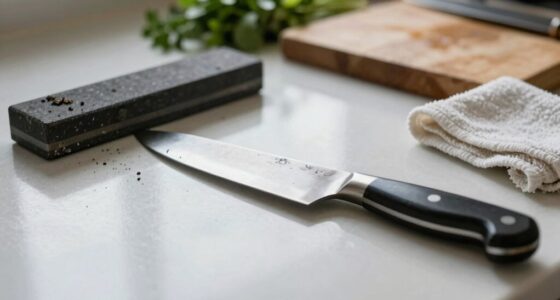
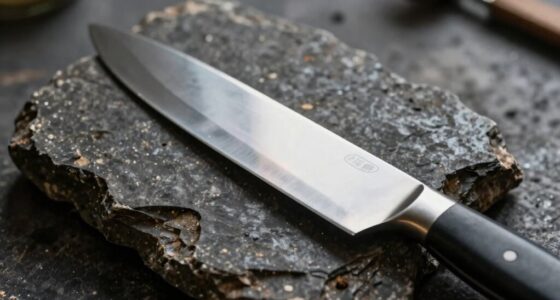
If your sharpening stone develops grooves, uneven surfaces, or wears down quickly, it’s likely causing more problems than your knife. Poor technique, excessive pressure, or using a low-quality stone can lead to micro-chipping and ineffective sharpening. When you see little to no improvement after multiple attempts or notice frequent damage to your blades, it’s time to reassess your stone’s condition. Continuing beyond these signs means risking more damage—so learn how to identify these issues to keep your knives in top shape.
Open a free Amazon Business account
Business pricing, bulk buying and tax-exempt orders.
As an affiliate, we earn on qualifying purchases.
Key Takeaways
- The stone develops grooves or uneven surfaces, leading to ineffective sharpening and potential blade damage.
- You notice increased effort and no improvement in knife sharpness after multiple sharpening attempts.
- The stone wears down quickly or exhibits visible damage, indicating reduced abrasive effectiveness.
- Micro-chipping or uneven knife edges persist despite proper technique, suggesting a worn or damaged stone.
- Sharpening becomes more difficult, and knives show no noticeable improvement, signaling it’s time to replace or resurface the stone.
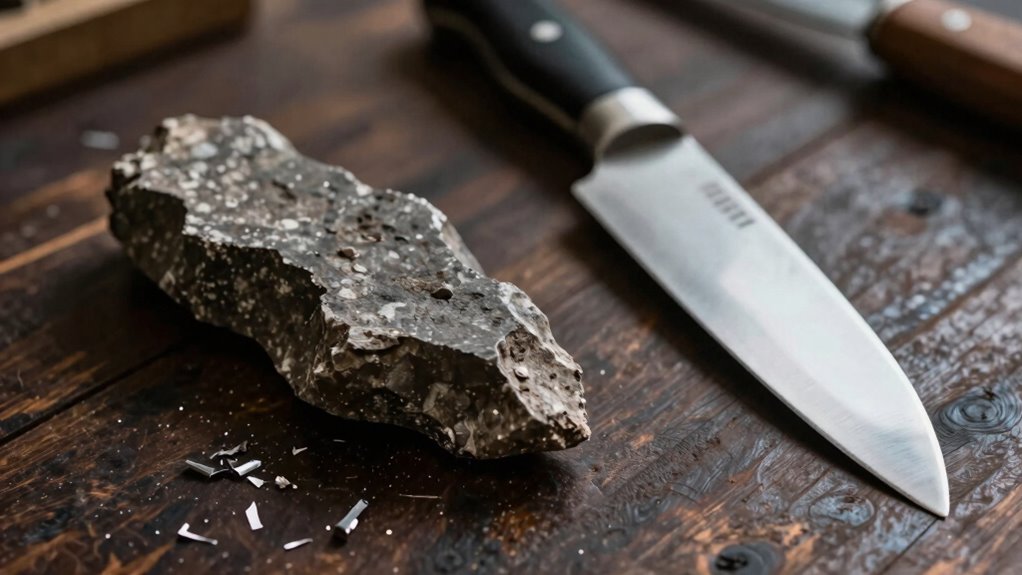
When you’re working in the kitchen, it’s easy to assume that a sharp knife will always make food prep smoother. But what happens when your sharpening stone starts causing more problems than it solves? If your stone isn’t durable enough or you’re using ineffective knife sharpening techniques, you might notice your efforts aren’t paying off. Instead of achieving a clean, precise edge, you could be creating uneven or dull blades that make your tasks more frustrating.
Stone durability plays a major role in how well your sharpening process goes. A low-quality or worn-out stone wears down quickly, losing its abrasive surface and making it difficult to hone your knives effectively. If you find that you’re frequently applying more pressure or spending extra time sharpening without seeing real improvement, it might be a sign that your stone is no longer up to the task. Over time, a deteriorating stone can develop grooves or uneven surfaces, which transfer to your knife edges and cause inconsistent sharpening results. When this happens, your knife might not reach the sharpness you desire, or worse, you could damage the blade.
A worn-out sharpening stone leads to uneven edges and damaged knives over time.
Your choice of knife sharpening techniques also impacts whether your stone is helping or hindering your progress. If you’re not maintaining the correct angle or using the right amount of pressure, you could be doing more harm than good. For example, applying too much force on a worn or soft stone can gouge its surface, leading to uneven grinding. Conversely, not using enough pressure on a dense, durable stone might result in slow progress and frustration. Knowing the proper techniques—such as maintaining a consistent angle, using smooth, controlled strokes, and regularly checking your progress—can help ensure your stone remains effective and your knives stay sharp. Additionally, understanding the importance of stone maintenance can extend the lifespan of your sharpening surface and improve results. Proper stone care practices, such as cleaning and resurfacing, are essential for maintaining optimal performance over time.
If you notice that your knives aren’t improving after multiple sharpening sessions, or if the process feels more laborious than it should, it’s probably time to evaluate your stone’s condition. A dull or damaged stone can actually dull your blades further or cause micro-chipping along the edge. When this happens, it’s a clear sign that your stone’s durability has been compromised, and it’s no longer serving its purpose. Regularly inspecting your stone and resurfacing it when needed can help prevent these issues and maintain optimal sharpening efficiency. Replacing or resurfacing your stone, along with refining your sharpening techniques, can save you frustration and extend the life of your knives.
In the end, the key is recognizing when your stone is no longer functioning as it should. Sharp knives depend on a stable, durable surface and proper techniques. If either of those elements falters, your kitchen prep will suffer, and your tools may suffer unnecessary wear. Staying attentive to your stone’s condition and sharpening methods will help you keep your knives in top shape without unnecessary hassle.
As an affiliate, we earn on qualifying purchases.
Frequently Asked Questions
Can a Stone Damage My Knife Over Time?
Yes, a stone can damage your knife over time, especially if its composition isn’t compatible with your knife’s material. Hard stones like quartz or sapphire can dull or chip your blade if they’re not suitable for your knife’s compatibility. To prevent damage, always check the stones’ composition and confirm they’re compatible with your knife. Using the right stone will prolong your knife’s sharpness and overall lifespan.
What’s the Best Way to Prevent Stone-Related Knife Damage?
To prevent stone-related knife damage, you should choose stones with appropriate hardness levels and employ proper cutting techniques. Don’t assume all stones are equally abrasive; harder stones can dull knives faster. Use gentle, controlled cuts and avoid excessive pressure. Regularly inspect your knives and avoid cutting on rough or overly hard surfaces. These steps will protect your knife’s edge and prolong its lifespan, ensuring safer, more effective cuts.
Are Some Stones Safer for Certain Knife Materials?
Yes, some stones are safer for specific knife materials because of gemstone compatibility and hardness considerations. For example, softer stones like turquoise or malachite can scratch softer metals, while harder stones like sapphire or diamond are better suited for tougher knives. Always consider the gemstone’s hardness compared to your knife’s material, and choose stones that won’t cause damage or compromise your blade’s integrity during use.
How Often Should I Inspect My Stone for Issues?
You should inspect your stone regularly for issues, ideally every few uses or weekly, depending on how often you sharpen. Consistent stone maintenance and inspection frequency help catch problems early, like cracks or uneven surfaces. Keep an eye out for dull spots or debris buildup. Proper inspection guarantees your stone remains effective and safe, preventing damage to your knives and maintaining ideal sharpening results.
Can a Damaged Stone Affect Food Safety?
A damaged stone can definitely affect food safety by promoting stone contamination and bacteria buildup. Cracks or chips create crevices where bacteria thrive, increasing the risk of cross-contamination. If your stone is damaged, it’s essential to replace or repair it promptly. Regular inspections help you catch issues early, preventing bacteria accumulation and ensuring your food prep remains safe and hygienic.
As an affiliate, we earn on qualifying purchases.
Conclusion
When your stone begins to feel like a relentless storm, tossing chaos into your craft, it’s time to listen closely. Don’t let it drown out your steady hand and sharp eye. If your stone’s rough waves threaten to sink your progress, remember, sometimes the best choice is to set it aside and find calmer waters. Trust your instincts—your skill and patience will steer you back to smooth sailing.
As an affiliate, we earn on qualifying purchases.
As an affiliate, we earn on qualifying purchases.
NFL season / tailgating Picks
team gear
As an affiliate, we earn on qualifying purchases.