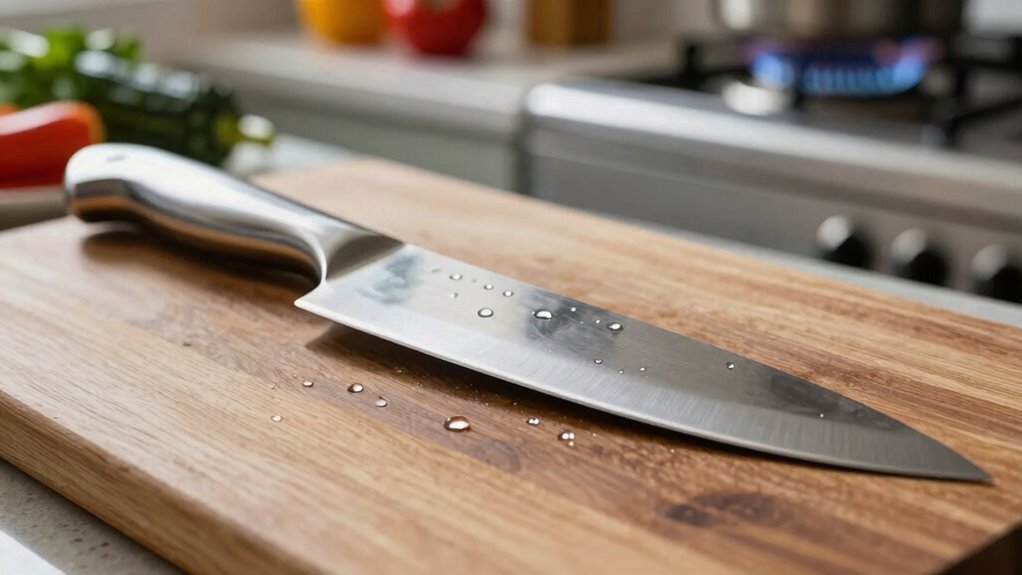

If your knife feels too reactive, start by cleaning and thoroughly drying it after each use to prevent rust and corrosion. Check for any discoloration or rust spots, and use a gentle abrasive or rust remover to restore its surface. Regularly sharpen or hone your knife to maintain a stable edge. Proper storage in a knife block or magnetic strip also helps prevent moisture buildup. Want more tips to keep your knives in top shape? Keep going!

Get kitchen gear delivered free with Prime
- Fast, free delivery on millions of items
- Prime Video, Amazon Music and more included
- Member-only deals all year
Key Takeaways
- Clean and dry the knife thoroughly to remove moisture and prevent further reactivity.
- Inspect for rust, discoloration, or damage; address issues before use.
- Apply a food-safe oil to protect the blade from corrosion.
- Sharpen or hone the knife to restore a smooth, less reactive edge.
- Store the knife properly in a dry, secure location to minimize exposure to moisture.
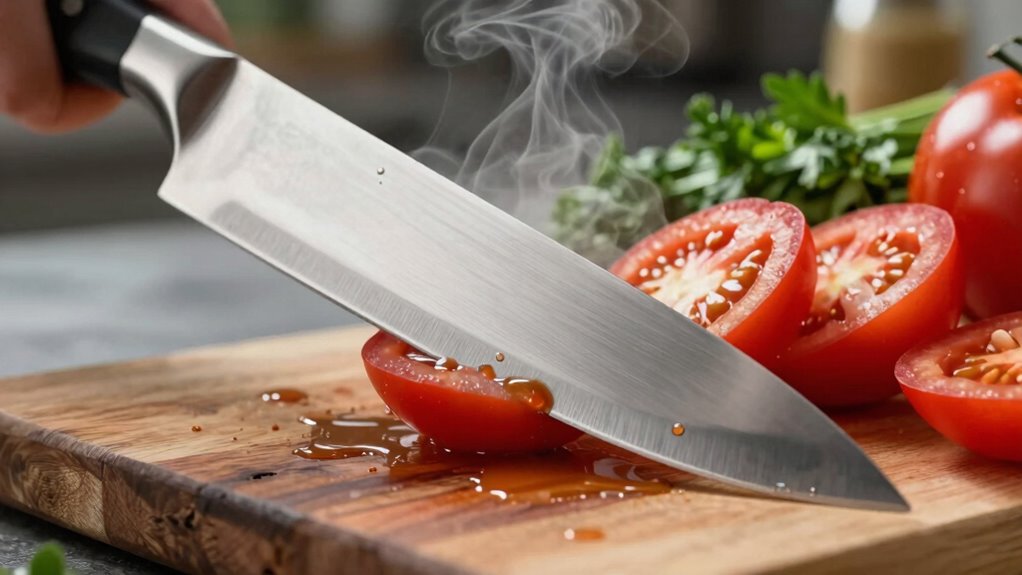
If your knife feels overly reactive, it can be frustrating and even dangerous to use. A reactive knife typically means it’s more prone to rust, corrosion, or dullness, which can compromise both your safety and your efficiency in the kitchen. The first step is to understand that proper knife maintenance is essential for controlling reactivity and ensuring your knives stay in top condition. Regularly cleaning and drying your blades after each use prevents moisture from causing rust, and applying a light coat of food-safe oil can further protect against corrosion. You should also inspect your knife’s edge—if it’s dull or chipped, it can cause uneven reactions with food or even slip during cutting, increasing the risk of injury. Sharpening or honing your knife restores its edge and reduces reactivity, making your cutting experience safer and more precise.
When dealing with a reactive knife, safety precautions must always come first. Handle the blade carefully to avoid cuts, especially if it’s dull or damaged, which can require more force to cut and increase the chances of slipping. Use a stable, non-slip cutting board and ensure your grip is secure to prevent accidents. If you notice any rust spots or corrosion, avoid using the knife until you’ve addressed these issues. Use a gentle abrasive pad or rust remover designed for knives to clean the surface, then thoroughly dry the blade. Remember, never put a rusty or damaged knife in the dishwasher, as the harsh environment can worsen corrosion. Instead, hand wash and dry immediately afterward as part of your routine knife maintenance. Proper knife care practices help prevent reactivity and extend the lifespan of your blades. Additionally, learning about metal composition can help you choose knives that are less prone to reactivity. Regular maintenance and understanding your knife’s materials can also help prevent metal reactivity, which is crucial for safe and effective kitchen use. Incorporating proper storage techniques can further shield your knives from moisture and environmental factors that accelerate reactivity.
To prevent your knife from becoming overly reactive in the future, establish a regular maintenance routine. Keep your blades sharp and clean, store them properly—preferably in a knife block or on a magnetic strip—and avoid leaving them in damp environments. If you’re unsure whether your knife is safe to use, perform a simple inspection: look for discoloration, rust, or dullness. When in doubt, sharpen or professional hone the blade. Developing knowledge about proper knife storage techniques can also significantly reduce the risk of corrosion. By taking these steps, you not only prolong the life of your knives but also ensure they perform safely and efficiently. Remember, a well-maintained, sharp knife is less reactive and safer to handle, making your cooking experience more enjoyable and less risky.
As an affiliate, we earn on qualifying purchases.
Frequently Asked Questions
Can Reactive Knives Be Safely Used for All Types of Food?
Reactive knives aren’t suitable for all foods because chemical reactions can occur, affecting flavor and safety. You should avoid using them on acidic or alkaline foods, like citrus or tomatoes, as they can cause discoloration or off-flavors. Always consider material compatibility; stainless steel is less reactive, while carbon steel or certain metals might react with specific ingredients. Using non-reactive knives guarantees food remains safe and tastes good.
How Often Should I Re-Sharpen a Reactive Knife?
Think of your reactive knife as a loyal steed needing regular care. You should re-sharpen it every 4-6 weeks, depending on use. Consistent knife maintenance keeps it sharp and responsive, preventing it from becoming dull or overly reactive. Regular sharpening frequency ensures your knife remains a precise tool, reducing the risk of accidents and maintaining peak performance. Keep up with this routine, and your knife will serve you well for years.
Are There Specific Storage Tips for Reactive Knives?
Yes, store reactive knives in designated storage containers or knife blocks to prevent contact with reactive materials like wood or certain plastics. Make sure the storage container is made from material compatible with the knife’s blade to avoid corrosion or discoloration. Keep your knives dry and avoid storing them in damp environments. Proper storage helps maintain their reactivity and ensures safety, prolonging the life of your blades.
Do Reactive Knives Require Special Cleaning Methods?
Reactive knives demand gentle, specific cleaning techniques, like tenderly wiping the blade with a soft cloth soaked in vinegar or lemon juice to neutralize corrosion. Think of blade maintenance as nurturing a delicate garden—regular cleaning prevents rust from taking root. Avoid abrasive scrubbers or dishwashers, which can damage the metal. Instead, treat your reactive knife with care, ensuring it stays sharp, shiny, and safe for your kitchen adventures.
Can Reactive Knives Cause Health Issues?
Reactive knives can cause health issues because chemical reactions between the metal and certain foods release harmful compounds. These reactions might also lead to corrosion if not properly maintained. To prevent this, you should clean your reactive knives thoroughly after each use and avoid storing acidic foods on them. Proper corrosion prevention measures help guarantee your knives stay safe and functional, reducing any risk of health problems from reactive materials.
As an affiliate, we earn on qualifying purchases.
Conclusion
So, next time your knife feels overly reactive, remember that a little maintenance can make all the difference. Sharpen, hone, or choose the right steel to restore balance and control. Don’t let a temperamental blade turn cooking into a frustrating chore. After all, isn’t a smooth, confident cut what you’re really aiming for in your kitchen? With a little care, your knife can become a trusted partner, ready to handle whatever you throw its way.
As an affiliate, we earn on qualifying purchases.
As an affiliate, we earn on qualifying purchases.
Fall Picks
fall essentials
As an affiliate, we earn on qualifying purchases.