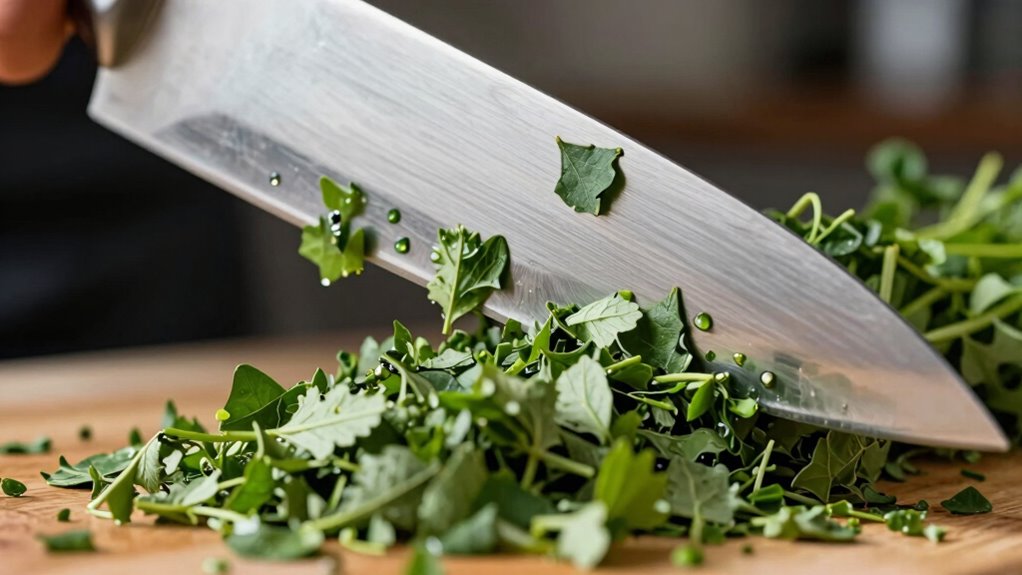
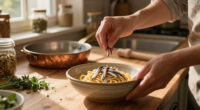
Your knife tends to grab, tear, or crack delicate herbs when the blade isn’t sharp or well-maintained, making cutting difficult and damaging the leaves. Using a dull or nicked blade causes resistance and tears, especially with herbs high in moisture like basil or cilantro. Poor technique, like pressing down hard, also worsens the problem. By keeping your knife sharp and handling herbs gently, you can achieve cleaner cuts. Keep going to discover more ways to improve your herb slicing skills.

Get kitchen gear delivered free — and shop member deals
- Fast, free delivery on millions of items
- Access to Prime Big Deal Days deals on October 6–7
- Prime Video, Amazon Music and more included
Key Takeaways
- Dull or poorly maintained blades increase resistance, causing the knife to grab and tear herbs during cutting.
- Excess moisture makes herbs slippery and more prone to tearing when cut with a dull or rough blade.
- Applying too much force or pressing down hard damages delicate herbs, leading to cracks and tears.
- Using improper cutting techniques, such as pressing instead of slicing, causes herbs to crack or shred.
- Cutting with a blunt or unsharpened knife increases friction, resulting in tearing and uneven slices of herbs.
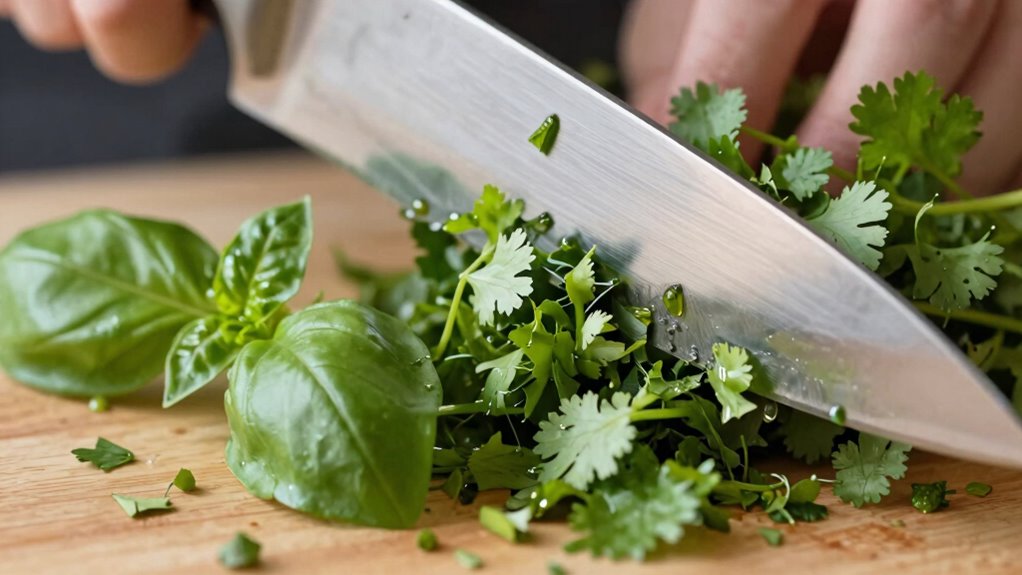
If you’ve ever noticed your delicate herbs tearing instead of slicing smoothly, the problem likely lies in how you’re using your knife. When dealing with herbs like basil, cilantro, or mint, the way you handle your knife makes all the difference. One key factor is knife blade maintenance. A dull, nicked, or poorly maintained blade doesn’t cut cleanly; instead, it drags, tears, and crushes the herbs’ fragile structure. Regularly sharpening your knife ensures that the blade remains sharp enough to glide through herbs effortlessly. Honing the edge before each use can also improve your cuts, reducing unnecessary tearing. A well-maintained blade creates a clean, precise cut, helping you preserve the delicate integrity of the herbs. Additionally, understanding knife sharpness and how it impacts your cutting performance can significantly improve your results.
A sharp, well-maintained knife ensures clean cuts and helps preserve delicate herbs’ fragile structure.
Another essential aspect is understanding herb moisture content. Fresh herbs contain varying levels of moisture, which affects how they respond to being cut. Herbs with high moisture content, like basil or cilantro, are particularly delicate and can become mushy or tear if mishandled. When herbs are overly wet, the moisture can cause the leaves to stick or tear apart more easily under pressure. To prevent this, it’s important to handle herbs gently and avoid excessive force during slicing. Gently patting herbs dry after rinsing helps prevent tearing, but keeping enough moisture is crucial to maintain their structure and avoid crumbling. To achieve this, it’s also helpful to understand herb moisture content and how it influences your cutting results. This balance allows your knife to glide smoothly through the leaves.
Using the right technique also plays an important role. Instead of pressing down hard, use a gentle, rocking motion with your knife, allowing the blade to do the work. Applying too much pressure can tear the herbs rather than cut them cleanly. It’s also helpful to gather herbs into a tight bundle or bunch before slicing, which stabilizes the leaves and reduces tearing. Pay attention to the knife’s angle; a proper 15 to 20-degree tilt can make a significant difference in how cleanly your herbs are sliced. Practicing proper cutting techniques can greatly enhance your control and results.
Ultimately, combining good knife blade maintenance with an understanding of herb moisture content will improve your slicing technique. When your knife is sharp and your herbs are at the right moisture level, you’ll notice a marked difference in the way they cut. No more tearing or cracking—just smooth, even slices that keep your herbs looking fresh and vibrant. Proper care and technique turn a frustrating experience into a simple, satisfying task, elevating your culinary skills and ensuring your dishes look as good as they taste.
Japanese chef knife sharpening kit
As an affiliate, we earn on qualifying purchases.
As an affiliate, we earn on qualifying purchases.
Frequently Asked Questions
Can the Type of Knife Blade Affect Herb Tearing?
Yes, the type of knife blade can affect herb tearing. A dull blade or one with a less precise edge causes more pressure, which can tear delicate herbs. Blade sharpness is key; a sharp blade slices cleanly, reducing damage. Additionally, your cutting surface matters—using a soft, stable surface prevents slipping and tearing. Opt for a high-quality, sharp knife and a proper cutting board to keep herbs intact and fresh.
Does the Herb’s Freshness Influence How It Tears?
Fresh herbs favor fragile tearing, while wilted, weary herbs worsen the ripping and tearing. When herbs are fresh, they preserve their pliability, promoting proper herb preservation and flavor retention. Conversely, older herbs become brittle, making them prone to tearing and cracking when cut. To keep herbs fresh and flavorful, always choose vibrant, lively herbs, and handle them gently. Freshness truly fosters finesse in your culinary creations.
How Does Cutting Technique Impact Herb Damage?
Your cutting technique greatly impacts herb damage. Using a sharp blade guarantees a clean cut, reducing tearing or cracking. Opt for a gentle, slicing motion instead of pressing down hard, which minimizes stress on delicate herbs. A proper, smooth cutting motion helps preserve the herbs’ structure, flavors, and appearance. Keep your knife sharp and use controlled, steady movements to prevent damage and make sure perfectly chopped herbs every time.
Are Some Herbs More Prone to Tearing Than Others?
Yes, some herbs are more prone to tearing, especially delicate ones like basil, cilantro, and parsley. When you store herbs improperly or allow them to dehydrate, their leaves become brittle and tear easily. To prevent this, keep herbs in airtight containers or damp paper towels in the fridge and avoid dehydration by using them promptly. Proper storage preserves their flexibility, reducing damage during chopping.
Does the Handle Material of the Knife Matter?
Yes, the handle material matters because it affects handle ergonomics and grip comfort. A handle with good ergonomics lets you control the knife better, reducing the chances of tearing herbs. Also, choose a handle made from durable material to withstand moisture and repeated use. Comfortable, non-slip handles improve precision and safety, especially when working with delicate herbs that require gentle handling.
herb cutting knife with sharp edge
As an affiliate, we earn on qualifying purchases.
As an affiliate, we earn on qualifying purchases.
Conclusion
So, when your knife tears through delicate herbs like a rogue wave crashing upon fragile shells, remember it’s not just about sharpness but respect for their tender nature. Treat your herbs like whispered secrets, and wield your knife with the gentle grace of a lullaby. With patience and care, you’ll transform your cutting board into a garden of lush, intact greenery—an artful dance between blade and leaf, where harmony reigns and beauty is preserved.
As an affiliate, we earn on qualifying purchases.
professional kitchen knife sharpener
As an affiliate, we earn on qualifying purchases.
As an affiliate, we earn on qualifying purchases.
Fall Picks
fall essentials
As an affiliate, we earn on qualifying purchases.