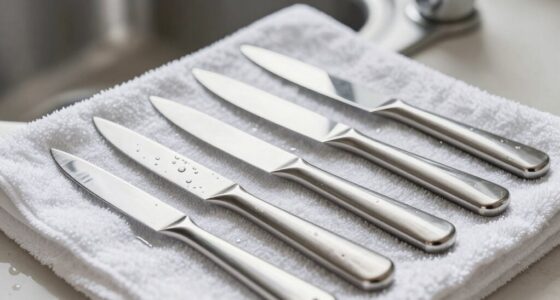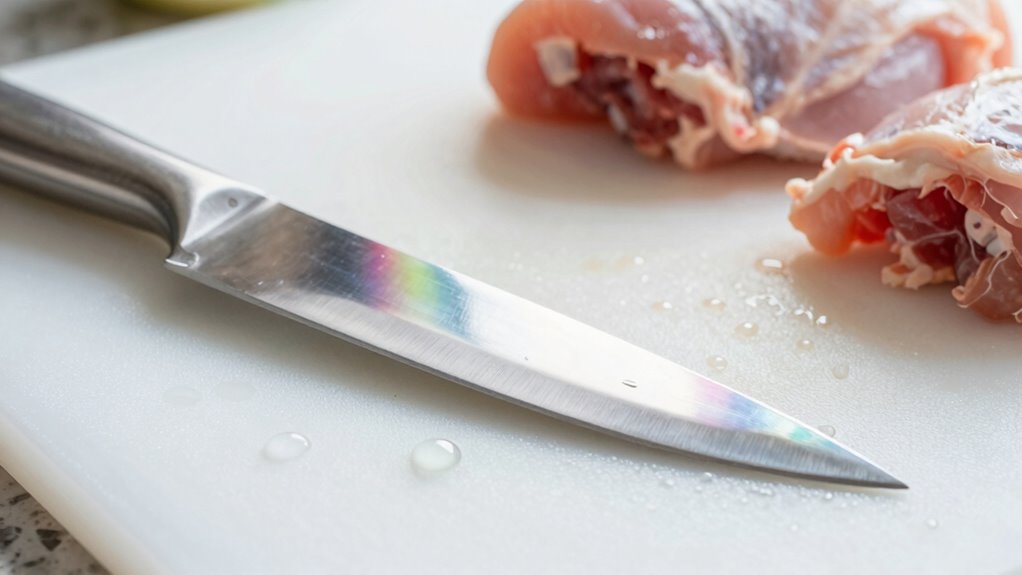
After handling raw chicken, fish, or pork, rinse your knife with hot water immediately to remove blood, fat, and juices, preventing bacteria buildup. Apply dish soap and scrub thoroughly with a soft brush, focusing on blades and handles, then rinse with hot water. Dry the knife completely with a clean towel. For extra safety, disinfect with a diluted bleach solution and store properly. Keep your knives in top shape and guarantee safety by following these steps—more tips await if you continue.

Get kitchen gear delivered free with Prime
- Fast, free delivery on millions of items
- Prime Video, Amazon Music and more included
- Member-only deals all year
Key Takeaways
- Rinse knives with hot water immediately after cutting raw chicken, fish, or pork to remove residue and reduce bacteria.
- Use a nylon or soft-bristled brush with dish soap to thoroughly scrub all blade surfaces and handle joints.
- Rinse thoroughly with hot water, then dry immediately with a clean towel to prevent rust and bacterial growth.
- Periodically disinfect knives with a diluted bleach solution (one tablespoon per gallon of water) after cleaning.
- Store knives properly in dedicated holders and inspect regularly for damage to maintain hygiene and safety.
After cutting raw meat, proper cleaning of your knives thoroughly is crucial to prevent cross-contamination. Meat preparation involves handling different types of raw meats like chicken, fish, and pork, each carrying specific bacteria that can cause foodborne illnesses. Neglecting proper knife safety and cleaning practices can lead to the spread of harmful germs to other foods or surfaces, increasing health risks.
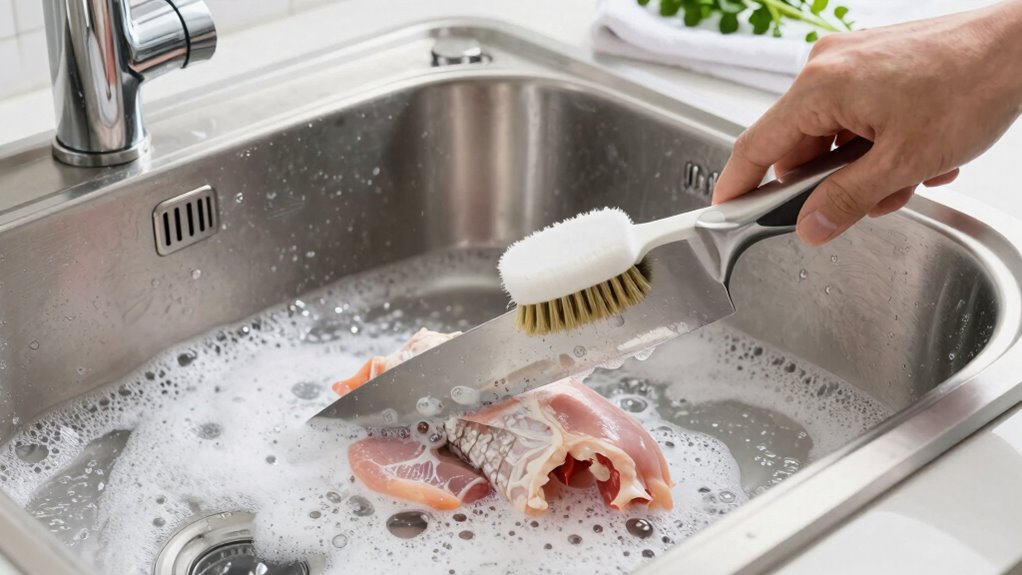
To ensure your knives are properly sanitized, start by rinsing off any visible residue with hot water immediately after use. This initial rinse prevents the buildup of blood, fat, and juices that can harbor bacteria. Next, apply a generous amount of dish soap and scrub your knife using a nylon or soft-bristled brush, paying close attention to the blade’s entire length, especially the edge and handle joints. This step helps remove any remaining meat particles and bacteria that simple rinsing might miss. Be careful to keep your fingers clear of the sharp edge, practicing knife safety at all times.
Rinse knives with hot water, then scrub with soap and a soft brush to remove bacteria and meat residues safely.
Once you’ve scrubbed the knife, rinse it thoroughly with hot water to wash away soap and loosened debris. Hot water is essential because it helps kill bacteria more effectively than cold water. After rinsing, immediately dry the knife with a clean towel or paper towel to prevent water spots and rust. Leaving knives wet can lead to corrosion and bacterial growth, especially if they aren’t stored properly afterward. Additionally, proper knife storage can help maintain hygiene and prevent accidents. Using dedicated storage solutions also minimizes the risk of cross-contamination from other utensils or surfaces. Regularly inspecting your knives for signs of damage or rust is another important hygiene practice to keep them safe and effective. Incorporating a cleaning routine for your knives after each use can further reduce the risk of bacteria transfer and prolong the lifespan of your tools. Furthermore, understanding the importance of proper sanitation in the kitchen can significantly enhance overall food safety. For added safety and cleanliness, consider disinfecting your knives periodically. You can do this by wiping the blade with a solution of diluted bleach (one tablespoon of bleach in a gallon of water) or using commercial kitchen disinfectants. Make sure to rinse the knife with hot water afterward and dry it thoroughly. This extra step is especially important if you’ve prepared raw chicken or fish, which are more likely to carry Salmonella or parasites. Proper hygiene practices are essential for maintaining a safe and clean kitchen environment.
knife cleaning brush for kitchen
As an affiliate, we earn on qualifying purchases.
As an affiliate, we earn on qualifying purchases.
Frequently Asked Questions
Can I Use the Dishwasher to Clean Raw Meat Knives?
You shouldn’t put raw meat knives in the dishwasher, as it risks cross-contamination and compromises kitchen safety. Dishwashers may not thoroughly clean or sanitize knives properly, leading to bacteria spread. For knife maintenance and safety, hand wash with hot, soapy water immediately after use, then dry thoroughly. Proper cleaning protocols help prevent illness and keep your knives in good shape, ensuring safe and effective kitchen practices.
How Long Should I Soak Knives for Proper Cleaning?
You should soak knives for about 5 to 10 minutes in warm, soapy water to loosen debris and bacteria. This helps with proper cleaning before knife sharpening or storing. Avoid soaking too long, as it can damage handles. After soaking, rinse thoroughly and dry. Proper storage prevents rust and keeps your knives sharp longer, ensuring safe, hygienic use every time.
Is It Safe to Use Bleach on Kitchen Knives?
Using bleach on kitchen knives isn’t safe, as it can damage the blade’s material and pose health risks. Think of it like trying to clean a delicate jewel with harsh chemicals—bleach safety isn’t compatible with most knife materials. Instead, opt for warm, soapy water or a vinegar solution. These methods effectively sanitize without risking corrosion or contamination, ensuring your knives stay sharp, clean, and safe for food prep.
Should I Wear Gloves When Cleaning Raw Meat Knives?
Yes, you should wear gloves when cleaning raw meat knives to protect your skin from bacteria and potential contamination. If you don’t have gloves, consider glove alternatives like using a thick dishcloth or paper towels to handle the knife safely. Prioritize knife handling safety by washing your hands thoroughly afterward, and avoid cross-contamination by cleaning all surfaces and utensils thoroughly. This keeps you and your kitchen safe.
Can I Sanitize Knives With Alcohol After Washing?
Yes, you can sanitize knives with alcohol after washing. Imagine your knife as a warrior’s blade, ready for battle against germs. Alcohol sterilization acts as a powerful shield, wiping out bacteria and viruses. Use a knife disinfectant with at least 70% alcohol, swab the blade thoroughly, and let it air dry. This quick step guarantees your knife remains safe and ready for the next culinary challenge.
As an affiliate, we earn on qualifying purchases.
Conclusion
Now that you know the best way to clean your knives after handling raw chicken, fish, or pork, you’ll never have to wonder if you’re doing it right. It’s almost funny how a simple rinse and proper sanitizing can prevent so many cross-contamination mishaps—like catching an unexpected bug just when you thought you were done cooking. So, next time, remember: a quick, thorough clean isn’t just good practice; it’s your secret weapon for safe, worry-free meals.
As an affiliate, we earn on qualifying purchases.
As an affiliate, we earn on qualifying purchases.
Columbus Day / Indigenous Peoples' Day Picks
long weekend sales
As an affiliate, we earn on qualifying purchases.