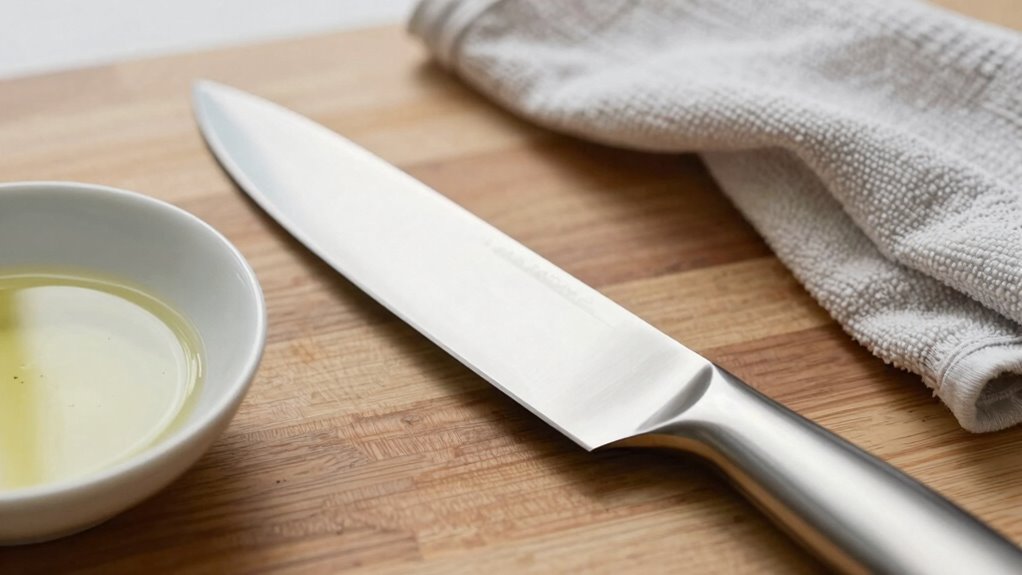
To keep your premium kitchen knives sharp and safe, regularly clean the blades with warm, soapy water and dry them thoroughly after each use. Sharpen them with a quality stone or honing steel about once a week or bi-weekly, maintaining a 20° angle. Wipe handles with mild soap, and occasionally oil wooden ones to prevent cracking. Store knives properly in a magnetic strip or block. If you want to master simple, effective care, keep going for more tips.
Key Takeaways
- Regularly clean knives with warm water and mild soap after each use to prevent corrosion and buildup.
- Sharpen knives weekly or bi-weekly using a quality sharpening stone or honing steel at a 20° angle.
- Wipe handles with warm water and mild soap; oil wooden handles with mineral oil to prevent cracking.
- Store knives properly in a knife block or magnetic strip to avoid damage and ensure safety.
- Inspect knives regularly for damage, and incorporate eco-friendly handle care to extend lifespan and reduce waste.
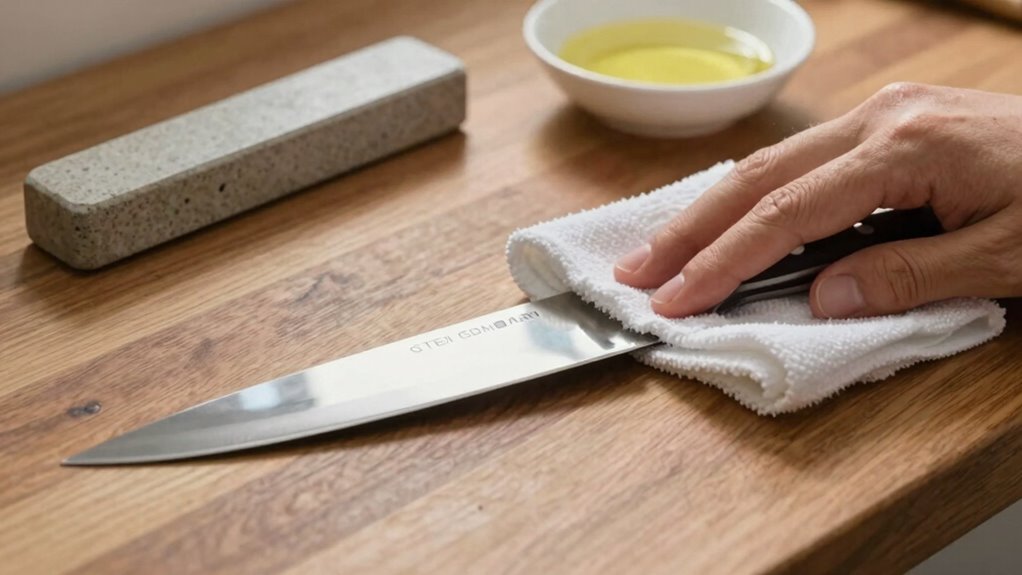
Keeping your kitchen knives in top condition is essential for safe and efficient food prep. When you take the time to maintain your knives regularly, you’ll notice they perform better, last longer, and make your cooking experience more enjoyable. A simple maintenance routine involves a few straightforward steps, primarily focusing on knife sharpening and handle cleaning, which are vital to preserving your knives’ quality.
Maintaining your kitchen knives ensures safety, performance, and longevity with simple sharpening and handle cleaning routines.
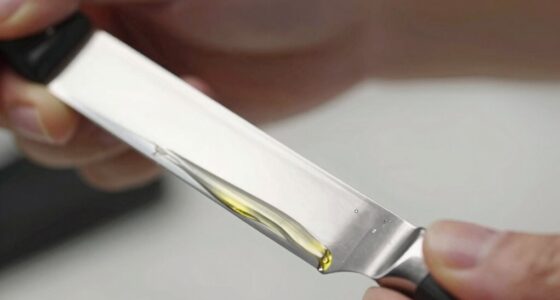
Knife sharpening is the cornerstone of maintaining a sharp, effective edge. Dull knives not only slow you down but can also be dangerous, increasing the risk of slips and injuries. You don’t need to sharpen your knives every day, but doing so weekly or bi-weekly depending on usage helps keep the edge crisp. Use a good quality sharpening stone or a honing steel to realign the blade’s edge, removing tiny bends and dull spots. When sharpening, hold the blade at the correct angle—usually around 20 degrees—and use gentle, consistent strokes. This process restores the knife’s cutting ability, making chopping and slicing easier and safer. Remember, always clean your knives thoroughly after sharpening to remove any metal residue and prevent corrosion.
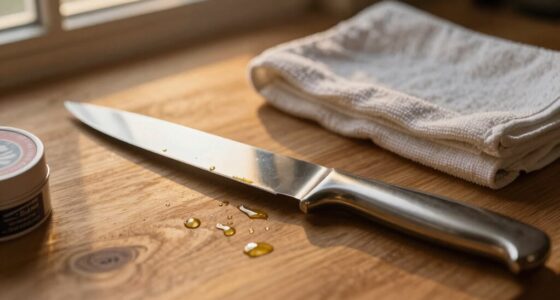
Handle cleaning is equally important and often overlooked. The handle is your grip, and keeping it clean ensures safety and comfort during use. Regularly wipe down the handle with warm water and mild soap, especially after handling sticky or greasy foods. If your knives have wooden handles, avoid soaking them; instead, wipe them dry immediately to prevent swelling or cracking. For plastic or composite handles, a more thorough cleaning using a gentle scrub brush can remove stubborn grime. Occasionally, you might want to oil wooden handles with mineral oil to maintain their moisture and prevent splintering. Proper handle care not only prolongs the lifespan of your knives but also ensures you always have a secure grip, reducing accidents. Additionally, being aware of biodiversity, such as using sustainable materials for handles, can contribute to more environmentally responsible maintenance practices. Incorporating eco-friendly or sustainable materials for handles can also help reduce waste and support conservation efforts. Furthermore, regular inspection of the handle for any signs of damage or wear can prevent accidents and extend the overall lifespan of your knives.
Integrating these steps into your routine is simple and effective. After each use, wash your knives with warm, soapy water, dry them immediately, and store them properly—preferably in a knife block or on a magnetic strip. Set aside time weekly for sharpening and handle cleaning, which helps maintain their performance and safety. Regularly inspect your knives to catch any signs of damage early, ensuring they remain in optimal condition. By doing so, you’ll enjoy the precision, safety, and longevity that come with well-maintained premium kitchen knives. This routine isn’t complicated, but it makes a significant difference in your cooking experience, allowing you to cut with confidence every time you step into the kitchen.

Sharp Pebble Whetstone Knife Sharpener – 1000/6000 Grit Sharpening Stone
- Easy to Use Angle Guide: Locks blade angle for foolproof sharpening
- Long-Lasting Flat Surface: Stays flat 3 times longer than cheap stones
- Complete Sharpening Kit: Includes dual-grit stone, bamboo base, guide, and instructions
As an affiliate, we earn on qualifying purchases.
As an affiliate, we earn on qualifying purchases.
Frequently Asked Questions
Can I Sharpen My Knives at Home or Should I Always Visit a Professional?
Yes, you can sharpen your knives at home using proper sharpening techniques, but avoid falling for kitchen knife myths that suggest only professionals can do it right. With the right tools like a whetstone or sharpening steel, you can keep your blades in great shape. However, if you’re unsure or want perfectly honed edges, visiting a professional guarantees safe, precise sharpening without risking damage to your knives.
How Often Should I Rehone or Resharpen My Premium Kitchen Knives?
You should rehone your premium kitchen knives every 1-2 weeks and resharpen them every 6-12 months, depending on usage. Knife materials like high-carbon steel stay sharp longer, but softer steels may need more frequent attention. Use proper sharpening techniques, such as a whetstone or honing rod, to maintain your blades’ edge. Regular maintenance guarantees your knives perform their best and last longer, keeping your cooking precise and safe.
Is It Safe to Put High-Quality Knives in the Dishwasher?
It’s not safe to put high-quality knives in the dishwasher because of dishwasher risks like potential damage from harsh detergents and the agitation that can dull or chip blades. The dishwasher’s high heat and movement can compromise knife durability over time, causing them to become loose or lose their sharpness. To preserve your knives, hand wash with warm, soapy water and dry immediately to maintain their edge and structure.
What Is the Best Way to Store My Premium Knives Safely?
The best way to store your premium knives is to use proper storage solutions that protect the blades and maintain their sharpness. You should avoid tossing them in drawers where they can get damaged. Instead, opt for a knife block, magnetic strip, or individual blade guards. Regular knife maintenance, like cleaning and honing, combined with these storage solutions, keeps your knives safe, sharp, and ready for use whenever you need them.
Can I Use My Knives on Hard Surfaces Like Glass or Stone?
You shouldn’t use your premium knives on hard surfaces like glass or stone, regardless of the knife type or cutting technique. Hard surfaces can chip or dull the blade quickly. Instead, use softer cutting boards like wood or plastic, and focus on proper cutting techniques to maintain your knives’ sharpness. This approach prolongs their lifespan and guarantees ideal performance, no matter the knife type you’re using.

Utopia Kitchen Knife Sharpener Rod 12 Inch Honing Rod for Sharpening
- Premium Steel Construction: Carbon steel with nickel-chrome plating
- Universal Compatibility: Suitable for all knife types
- Ergonomic Non-Slip Handle: Comfortable grip with slip-resistant base
As an affiliate, we earn on qualifying purchases.
As an affiliate, we earn on qualifying purchases.
Conclusion
By following this simple maintenance routine, you’ll find your premium kitchen knives stay sharper longer, making prep work easier and more enjoyable. It’s almost like the knives know you’re giving them the care they deserve—kind of like a little secret between you and your tools. When you treat them right, they’ll be there for every chop, slice, and dice, turning your cooking experience into something truly special. It’s a small effort that makes a big difference.

Kate Naturals Mineral Oil for Wood Cutting Board, Food Grade, Odorless, 8oz
- Food-grade mineral oil for wood: Restores and protects cutting boards and surfaces
- No greasy residue: Absorbs quickly without oily film or scent
- Safe for kitchen use: Meets food safety standards for utensils and appliances
As an affiliate, we earn on qualifying purchases.
As an affiliate, we earn on qualifying purchases.

Modern Innovations 16 Inch Stainless Steel Magnetic Knife Bar with Multi-Purpose Functionality as a Knife Holder, Knife Strip, Magnetic Tool Organizer, Art Supply Organizer & Home Organizer
- Magnetic Knife Bar Material: High-grade stainless steel with strong magnets
- Design & Finish: Elegant satin finish for modern decor
- Magnetic Strength: Fully magnetic surface securely holds knives
As an affiliate, we earn on qualifying purchases.
As an affiliate, we earn on qualifying purchases.