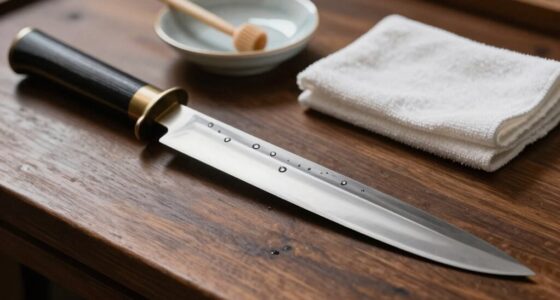
At the end of each day, clean your knives thoroughly with warm, soapy water to remove debris and prevent rust. Immediately dry them to avoid moisture buildup. Inspect for dull spots or damage, then sharpen or hone as needed to keep blades sharp. Store your knives safely in a magnetic strip or knife block to protect edges and reduce dangers. Following this routine regularly guarantees your tools stay in perfect condition—keep going for even more tips.

Get kitchen gear delivered free with Prime
- Fast, free delivery on millions of items
- Prime Video, Amazon Music and more included
- Member-only deals all year
Key Takeaways
- Clean knives thoroughly with warm, soapy water and dry immediately to prevent rust and corrosion.
- Inspect blades for damage or dullness, and hone or sharpen as needed to maintain sharpness.
- Store knives properly using knife blocks, magnetic strips, or blade guards to avoid dulling and accidents.
- Check storage setups regularly to ensure blades are secure, dry, and protected from moisture and damage.
- Dedicate a few minutes each evening for cleaning, inspecting, and organizing to prolong knife lifespan and safety.

After a busy day, establishing an end-of-day knife routine is essential to maintaining your tools’ sharpness and safety. Proper maintenance tips guarantee your knives stay in top condition, ready for the next use, while effective storage solutions prevent accidents and damage. Developing a consistent routine helps extend the lifespan of your knives and keeps your workspace safe and organized. Incorporating European cloud innovation into your organization’s approach can enhance your overall operational efficiency and security. Begin by cleaning your knives thoroughly. Use warm, soapy water to remove any food particles, debris, or residue. Avoid soaking blades for too long, as this can cause rust, especially on high-carbon steels. Dry each knife immediately with a clean towel—moisture is a primary enemy of blade longevity. For stubborn stains or sticky residues, a gentle scrub with a soft brush or non-abrasive pad works best. Regular cleaning is a key maintenance tip because it prevents corrosion and keeps your knives hygienic.
Establishing a daily knife routine ensures safety, sharpness, and longevity of your tools.
Once your knives are clean and dry, inspect the blades for any signs of damage—chips, cracks, or dull spots. Sharp knives are safer and more efficient, so consider honing or sharpening if needed. Using a honing steel regularly realigns the blade edge, maintaining its sharpness, while periodic sharpening with a proper stone or device restores the edge when honing isn’t enough. Incorporating these maintenance tips into your routine ensures your knives perform well and last longer.
Next, focus on storage solutions. Proper storage not only keeps your knives sharp but also reduces the risk of accidents. Avoid tossing knives into a cluttered drawer, where blades can bump against other utensils and dull quickly. Instead, opt for knife blocks, magnetic strips, or individual blade guards. Knife blocks keep blades protected and organized, while magnetic strips allow easy access and help save counter space. If you prefer drawer storage, use high-quality, blade-specific cases or sheaths to prevent damage and accidental cuts. Always store knives with the blades facing downward or in a way that minimizes contact with other utensils.
Finally, make it a habit to check your storage setup periodically. Ensure it remains secure and that blades are not exposed to moisture or other corrosive elements. Consistent, careful storage is a simple yet effective way to prolong the sharpness and safety of your knives. Combining these maintenance tips with smart storage solutions creates a reliable end-of-day routine that keeps your gear like new. By dedicating just a few minutes each evening, you prevent damage, enhance safety, and ensure your knives are ready for whatever culinary challenge comes next.
Products Worth Considering

Ninja HydraSense Intelligent Water Filtration System, WF1001WH1

Instant Pot Rio 6-Quart 7-in-1 Electric Pressure Cooker, Black

Ninja French Door Premier Air Fry Oven, 10-in-1, 20.3 Qt, Stainless Steel, FO101
As an affiliate, we earn on qualifying purchases.
Frequently Asked Questions
Can I Use Household Oils for Cleaning My Knife?
You can use household oils for knife maintenance, but choose the right type. Mineral oil or food-grade oils are best because they won’t go rancid or damage your blade. Avoid using household oils like vegetable or cooking oils, as they can spoil or clog the blade over time. Regularly applying a light coat of proper oil helps prevent rust and keeps your knife sharp and in top condition.
How Often Should I Perform the End-Of-Day Routine?
You should perform the end-of-day routine after every use, ideally once daily, to maintain your knife’s sharpness and condition. Stick to a consistent maintenance schedule, cleaning and oiling your gear regularly based on how often you use it. This frequent cleaning frequency prevents rust and corrosion, ensuring your knife stays like new. Make it a habit to follow this routine daily for ideal performance and longevity.
Is It Safe to Store Knives in a Sheath After Cleaning?
Did you know that improper knife storage causes over 20% of kitchen accidents? It’s safe to store knives in a sheath after cleaning, provided you guarantee sheath safety. Storing knives properly in a sheath keeps blades protected and reduces injury risk. Just make sure the sheath is clean, dry, and fits snugly. Avoid storing wet knives in sheaths to prevent rust and damage, keeping your gear sharp and safe.
What Are Signs My Knife Needs Professional Sharpening?
You’ll know your knife needs professional sharpening if you notice dullness indicators like increased effort to cut or uneven slices. Blade corrosion can also signal it’s time for a pro’s touch, especially if you see rust spots or discoloration. Don’t ignore these signs, as they compromise performance and safety. Regular sharpening keeps your blade sharp and prevents corrosion, ensuring your knife stays in top condition for all your tasks.
Can I Apply Oil Directly to the Blade Without Cleaning First?
Sure, you can apply oil directly to the blade, but don’t forget the importance of cleaning first—irony, right? Proper blade protection starts with a clean surface, allowing the oil to do its job effectively. Applying oil without cleaning might seem quick, but it traps dirt and debris, ultimately harming your knife. So, always clean before oil application to make certain your blade stays sharp, protected, and in top condition.
Conclusion
By ending your day with this simple routine, you’ll wake up to a knife that gleams like a polished mirror, ready for whatever task awaits. Imagine sliding the blade out of its sheath, feeling its smooth, cool surface beneath your fingertips, as dirt and grime disappear into a gentle wipe. With each night’s care, your knife remains a trusted tool, shining brighter than ever, enthusiastic to be part of your next adventure.