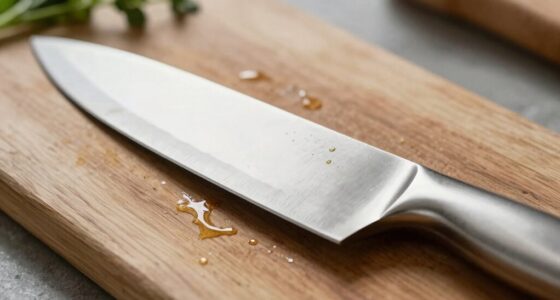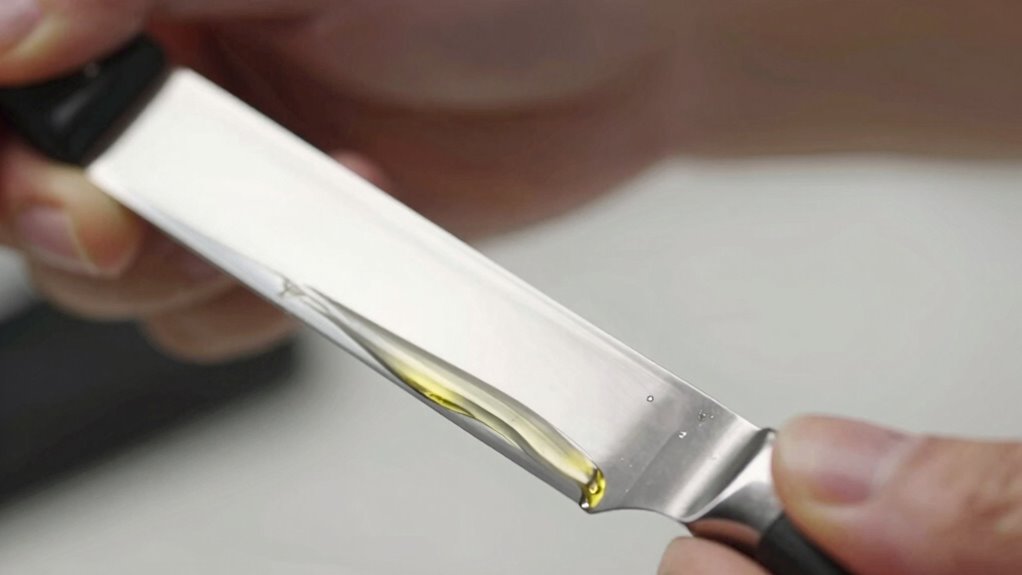

To oil a blade properly, start by cleaning it to remove dirt and debris. Use a light machine or blade oil and apply just a small drop along the entire length, including edges and crevices. Spread the oil evenly with a soft cloth or brush, aiming for a thin, uniform coating—avoid heavy layers that can cause stickiness. Wipe off any excess and inspect regularly; if you want to keep your blades in top shape without mess, there’s more to learn.

Get kitchen gear delivered free — and shop member deals
- Fast, free delivery on millions of items
- Access to Prime Big Deal Days deals on October 6–7
- Prime Video, Amazon Music and more included
Key Takeaways
- Use a small amount of light machine or blade oil; a drop or two is sufficient.
- Apply oil evenly along the entire blade surface with a soft cloth or brush.
- Spread the oil gently to form a thin, uniform layer; avoid heavy or uneven coats.
- Wipe away any excess oil promptly to prevent sticky buildup.
- Regularly inspect and reapply as needed to maintain protection without mess.
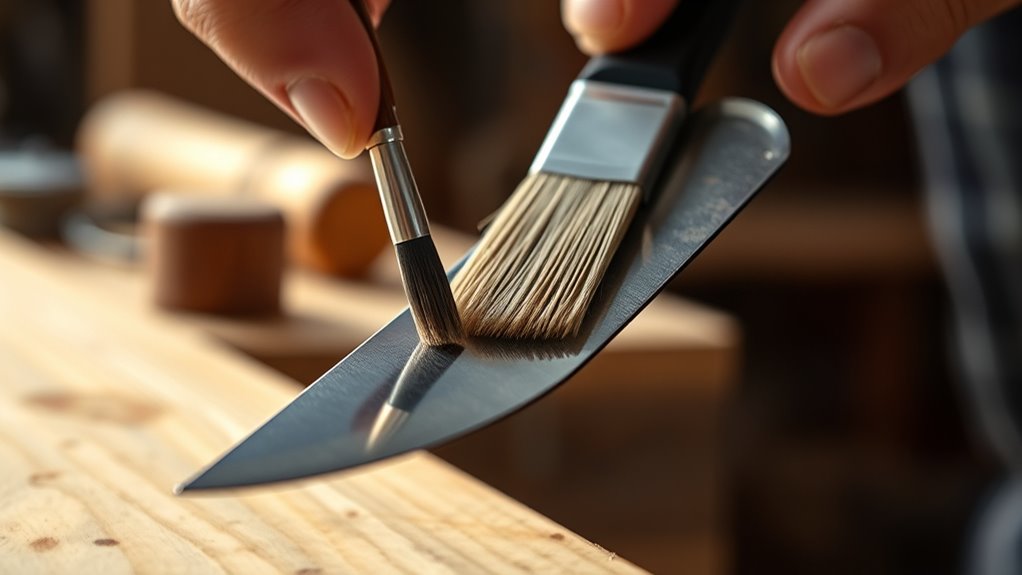
Keeping your blades sharp and well-maintained is essential for safe and effective use, and oiling them properly plays a key role in their longevity. When it comes to blade maintenance, applying a thin, even coat of oil is crucial. Not only does this help keep the blade functioning smoothly, but it also prevents rust from forming, which can compromise the integrity of your tools over time. Rust prevention is a vital part of blade care because moisture exposure and lack of lubrication accelerate corrosion. By regularly oiling your blades, you create a protective barrier that keeps moisture out and maintains their sharpness longer.
To start, choose the right oil—light machine oil or specialized blade oil works best. You don’t need to drown the blade; just a small drop or two is enough. Use a clean cloth or a soft brush to spread the oil evenly along the entire length of the blade. Make sure to cover all surfaces, including the edges and any crevices, to ensure thorough protection. The goal is to apply just enough oil to create a thin, even coating—think of it as giving your blade a gentle, protective layer rather than a heavy slick. Excess oil can lead to sticky buildup, attracting dirt and debris, which hampers blade performance and complicates cleaning.
Additionally, proper lubrication techniques help ensure the oil penetrates all necessary areas for optimal protection. After applying the oil, wipe off any excess with a clean cloth. This step is vital to avoid sticky messes that can attract dust or cause the blade to gum up during use. A thin coat ensures your blade remains slick enough to prevent rust and corrosion without creating a mess. Regular maintenance is key, especially if you store your blades in humid environments or if they’re used frequently. A quick check and reapplication of oil every few weeks can considerably extend your blade’s lifespan and keep it performing at its best.
As an affiliate, we earn on qualifying purchases.
Frequently Asked Questions
Can I Use Any Type of Oil for My Blade?
You can’t just use any type of oil for your blade; proper oil selection is key for effective blade maintenance. Stick to light machine oils or specialized blade oils designed to prevent rust and reduce friction. Avoid thick or sticky oils that can gum up the blade. Applying a thin, even coat keeps your blade in top shape, ensuring smooth cuts without mess or buildup. Always choose the right oil for ideal maintenance.
How Often Should I Oil My Blade?
You should oil your blade after every few uses or at least once a week, depending on how often you perform blade maintenance. Regular oiling helps prevent rust and keeps the blade running smoothly. If you notice any dryness or rust spots, increase your oiling frequency. Consistent maintenance ensures your blade stays sharp, protected, and in prime condition, making your cutting tasks easier and safer.
Is It Safe to Oil a Hot Blade?
You should avoid oiling a hot blade because it can compromise blade safety. When you oil a hot blade, the oil’s temperature increases, which may cause it to burn or become sticky, leading to potential residue buildup. Always let your blade cool down first, ensuring the oil applies evenly and safely. This protects your equipment and maintains ideal performance without risking damage from excessive heat.
What Are Signs of Over-Oiling?
If you over-oil, you’ll notice excess oil that doesn’t absorb, creating a sticky or greasy surface. This can attract dirt and debris, risking rust formation despite oil’s rust prevention properties. Signs include oil pooling, a messy blade, or difficulty wiping off excess. To avoid this, use a thin coat, ensuring proper oil absorption without excess, keeping your blade protected and clean.
Can I Use Household Oils Like Vegetable Oil?
Using household oils like vegetable oil for your blades is like trying to cook with kitchen lubricants—it’s not ideal. Cooking oils aren’t designed for metal protection; they can gum up or go rancid over time. Stick to proper lubricants made for blades, which form a thin, protective film without sticky messes. This keeps your blades sharp and rust-free, ensuring they perform their best every time.
As an affiliate, we earn on qualifying purchases.
Conclusion
So, after all that fuss about a thin coat and avoiding sticky messes, you’d think we’d master the art of oiling blades effortlessly. But nope, it’s always a battle to keep things perfect—until next time when you’ll probably forget and end up with a sticky, greasy mess again. Ironically, the simplest step—just a tiny bit of oil—can save you so much trouble. Maybe next time, you’ll remember that less truly is more.
As an affiliate, we earn on qualifying purchases.
As an affiliate, we earn on qualifying purchases.
Fall Picks
fall essentials
As an affiliate, we earn on qualifying purchases.