
After cutting raw chicken, fish, or pork, you should immediately remove any scraps and juices from your surfaces, knives, and utensils using disposable towels or paper towels. Wash everything thoroughly with hot, soapy water, paying attention to cracks and crevices. Disinfect all surfaces and tools with a kitchen sanitizer or bleach-water solution, allowing it to sit as directed. Remember to wash your hands well and change cleaning tools regularly. Continue with more tips to keep your kitchen safe and bacteria-free.

Get kitchen gear delivered free — and shop member deals
- Fast, free delivery on millions of items
- Access to Prime Big Deal Days deals on October 6–7
- Prime Video, Amazon Music and more included
Key Takeaways
- Immediately wipe away raw meat juices from surfaces, knives, and cutting boards with disposable cloth or paper towels.
- Wash all surfaces and utensils with hot, soapy water, scrubbing cracks and crevices thoroughly.
- Disinfect surfaces and tools with a bleach-water solution, ensuring proper contact time for bacteria elimination.
- Wash hands thoroughly with soap and warm water for at least twenty seconds before and after handling raw meat.
- Properly store raw meats separately and regularly sanitize cleaning tools to prevent cross-contamination.
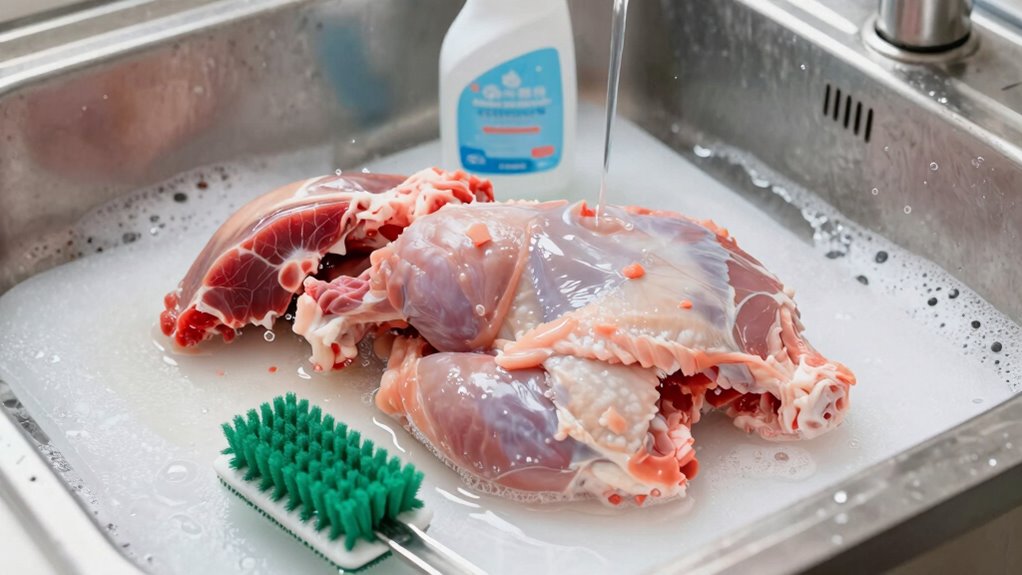
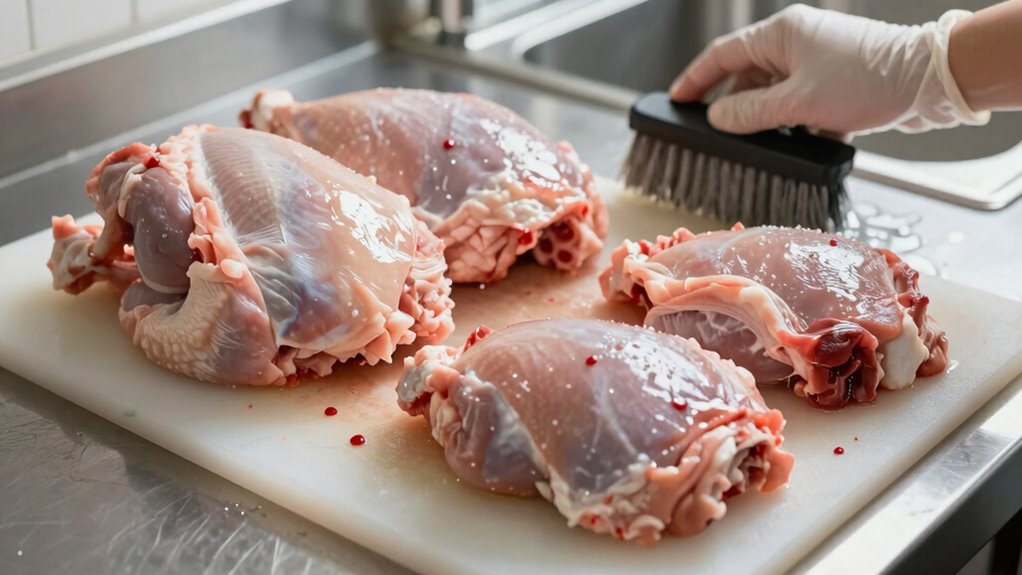
After you’ve finished cutting raw chicken, fish, or pork, it’s essential to clean your workspace thoroughly to prevent cross-contamination and foodborne illnesses. Proper kitchen sanitation is a crucial part of food safety practices, ensuring that harmful bacteria don’t spread from raw meats to other foods or surfaces. Start by removing any leftover scraps or juices from your cutting board, knives, and countertops. Use a paper towel or disposable cloth to wipe away visible residue, then discard it immediately to avoid spreading germs.
Clean your workspace thoroughly after handling raw meats to prevent cross-contamination and foodborne illnesses.
Next, wash all surfaces with hot, soapy water. Use a clean sponge or scrub brush to thoroughly clean your cutting boards, countertops, and utensils. Scrubbing helps remove any bacteria that may be lodged in cracks or crevices. Pay special attention to the areas where raw meat juices might have spilled, as these are hotspots for bacteria. After washing, rinse everything with hot water to remove soap residue. Proper food safety practices demand that you don’t skip this step, because soap and hot water together effectively lift and wash away germs.
Once the surfaces are clean, disinfect them to eliminate any remaining bacteria. You can use a commercial kitchen sanitizer or prepare a homemade solution, such as a mixture of one tablespoon of unscented bleach in a gallon of water. Apply the disinfectant generously to all cleaned surfaces and allow it to sit for a few minutes, according to the product instructions. This step is vital for maintaining kitchen sanitation, especially after handling raw poultry, fish, or pork, which can harbor harmful pathogens like Salmonella or E. coli. Ensuring proper ventilation in your kitchen can also help reduce airborne bacteria and odors associated with raw meats. Additionally, paying attention to proper storage methods can help prevent cross-contamination in the future. Regularly checking your supplies and replacing sponges or cloths can also help maintain a clean environment. Incorporating regular sanitation routines can significantly reduce the risk of bacterial spread during food preparation. Using appropriate cleaning tools can further improve the thoroughness of your sanitation efforts.
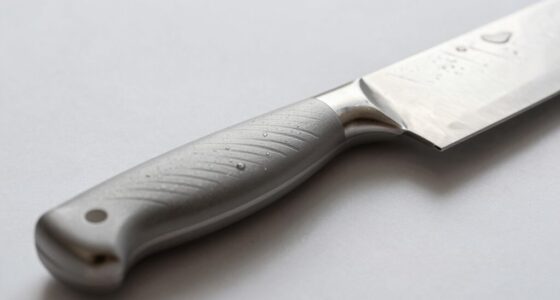
Don’t forget to clean your knives and cutting tools separately. Wash them with hot, soapy water, then disinfect with the same solution used for surfaces. Dry everything thoroughly with a clean towel or let it air dry to prevent bacterial growth. If you used a cutting board that’s made of wood, consider sanitizing it with a diluted bleach solution or running it through a hot cycle in the dishwasher if it’s dishwasher-safe.
Finally, wash your hands thoroughly with soap and warm water for at least twenty seconds. Proper hand hygiene is an essential component of food safety practices and ensures you don’t transfer bacteria to other foods or surfaces. By following these steps, you’ll maintain optimal kitchen sanitation, reducing the risk of foodborne illnesses and keeping your workspace safe for future food preparation.
As an affiliate, we earn on qualifying purchases.
Frequently Asked Questions
Can I Reuse the Cutting Board Immediately After Cleaning?
Yes, you can reuse the cutting board immediately after cleaning if you thoroughly wash it with hot, soapy water and use proper sanitizing techniques. Make certain to scrub all surfaces to remove any raw meat residues. For extra safety, disinfect the board with a vinegar or bleach solution. Allow it to air dry completely before reuse. Proper cleaning methods and sanitizing techniques guarantee your cutting board is safe for the next use.
What Disinfectant Is Safest for Kitchen Surfaces?
Think of surface sanitizers as your kitchen’s guardians—protecting your space and health. When choosing disinfectants, prioritize those labeled as safe for food contact surfaces, ensuring chemical safety. Look for products with proven efficacy, like diluted bleach or EPA-registered surface sanitizers, which are effective yet safe when used correctly. Remember, using the right disinfectant keeps your kitchen clean, safe, and ready for your next culinary adventure.
How Long Should I Wash My Hands After Handling Raw Meat?
You should wash your hands with soap and warm water for at least 20 seconds after handling raw meat. This hand hygiene practice is essential for food safety, as it prevents cross-contamination and the spread of bacteria. Make sure to scrub all surfaces of your hands, including between fingers and under nails. Proper hand washing is a simple yet effective way to protect yourself and others from foodborne illnesses.
Is It Necessary to Sterilize Knives After Cutting Raw Meat?
Think of sterilizing knives after raw meat as locking the door to prevent germs from wandering in. Yes, it’s necessary for proper meat preparation and kitchen hygiene. Even if you thoroughly wash knives, sterilizing guarantees all bacteria are wiped out, keeping your kitchen safe. Use hot, soapy water or a disinfectant to kill lingering pathogens. This extra step protects you from cross-contamination and keeps your cooking environment spotless and healthy.
Can Leftover Raw Meat Juices Contaminate Other Foods?
Yes, leftover raw meat juices can contaminate other foods through meat juice contamination, increasing the risk of foodborne illness. To prevent cross contact, you should separate raw meats from ready-to-eat foods and use different cutting boards and utensils. Properly cleaning and sanitizing surfaces and tools after handling raw meat is essential to minimize the risk of cross contact prevention and guarantee safe food preparation.
disposable kitchen cleaning cloths
As an affiliate, we earn on qualifying purchases.
As an affiliate, we earn on qualifying purchases.
Conclusion
After working with raw chicken, fish, or pork, think of your workspace as a freshly cleaned canvas, ready for the next masterpiece. By thoroughly washing your hands, utensils, and surfaces, you’re gently sweeping away any lingering traces, much like clearing away fog to reveal a clear path ahead. This simple act keeps your kitchen bright and welcoming, ensuring every meal starts on a safe, fresh note. Remember, a clean space is your silent partner in every delicious creation.
As an affiliate, we earn on qualifying purchases.
As an affiliate, we earn on qualifying purchases.
Fall Picks
fall essentials
As an affiliate, we earn on qualifying purchases.