To keep your knife performing well between sharpenings, regularly hone it with a honing steel to realign the edge and remove microscopic bends. Use proper cutting surfaces like wood or plastic, and avoid hard materials that cause dulling or chips. Clean your knife promptly after use and store it safely. Also, incorporate ceramic rods or sharpeners to refresh the edge periodically. Consistently following these steps helps maintain sharpness longer and prevents damage—learn more about fine-tuning your technique for lasting performance.

Get kitchen gear delivered free — and shop member deals
- Fast, free delivery on millions of items
- Access to Prime Big Deal Days deals on October 6–7
- Prime Video, Amazon Music and more included
Key Takeaways
- Regularly hone the blade at a 15-20° angle to realign the edge and prevent dullness.
- Use gentle, controlled cutting techniques on soft surfaces like wood or plastic.
- Refresh the edge periodically with ceramic rods or portable sharpeners to remove burrs.
- Store knives properly in a magnetic strip or knife block to avoid damage.
- Clean and dry knives immediately after use to prevent rust and maintain edge integrity.
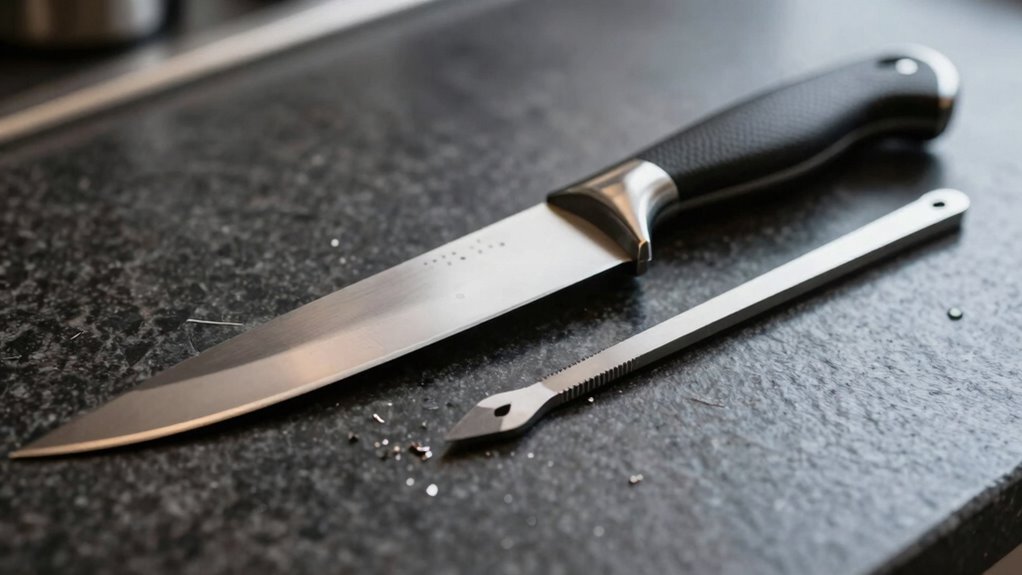
Ever wondered how to keep your knife performing like new? It all comes down to proper knife maintenance and using the right sharpening tools. Even the best knives dull over time with regular use, but you can extend their sharpness and efficiency with simple, consistent care. The goal is to minimize dulling and maintain a clean, sharp edge without the need for frequent full sharpening sessions. To achieve this, start by honing your knife regularly. Honing aligns the edge of the blade, straightening it out and removing microscopic bends. Using a honing steel, you can keep the edge aligned, which prevents it from becoming dull prematurely. Hold the steel steady and draw the blade along it at a 15-20 degree angle, applying light pressure. This process only takes a few seconds per side but makes a notably difference in maintaining cutting performance.
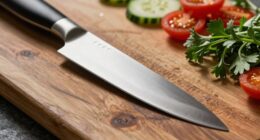
Next, pay attention to your cutting surface. A soft or uneven surface can wear down your knife’s edge faster. Always use a cutting board made of wood or plastic—avoid glass, stone, or metal surfaces that are too hard and can cause unnecessary dulling. Proper cutting technique also matters. Use a gentle, controlled motion rather than pressing down hard, which can chip or bend the blade. To further preserve your knife’s edge integrity, consider periodically using ceramic rods or portable sharpeners to refresh the blade. Using the right sharpening tools can help maintain the blade’s edge and reduce the need for more intensive sharpening. Incorporating proper storage methods can also prevent accidental damage that dulls or chips the blade, ensuring longevity. Proper storage not only protects your knives from damage but also helps maintain their sharpness over time. When you’re done, clean the knife immediately with warm, soapy water and dry it thoroughly to prevent rust and corrosion. Additionally, storing your knives properly helps prevent accidental damage that dulls or chips the blade.
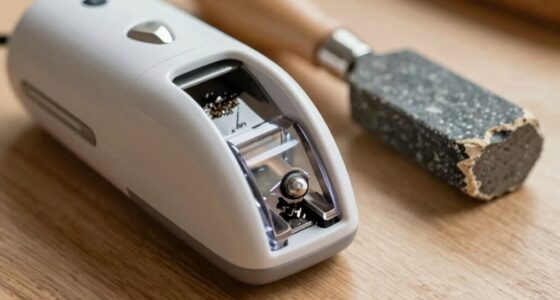
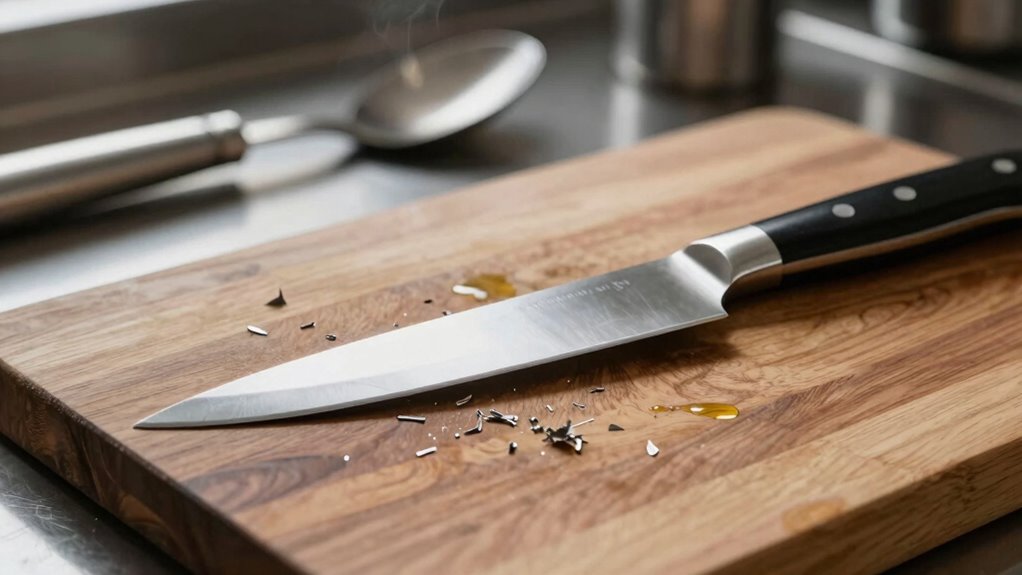
In between sharpening sessions, you can also use sharpening tools like ceramic rods or portable sharpeners to refresh the edge. These tools are designed to remove tiny burrs and keep the blade sharp without a full grind. Regular use of these tools can considerably prolong the intervals between professional sharpening or more intensive procedures. Remember, avoid using your knife on hard surfaces or for tasks it isn’t designed for, such as prying or cutting frozen foods, which can damage the edge. Also, paying attention to knife handling techniques can further extend the life of your blade.
Ultimately, maintaining your knife’s performance is about consistency. Incorporate simple routines like honing after each use and using appropriate sharpening tools when needed. Keep your knives clean, store them properly in a knife block or on a magnetic strip to prevent damage, and always use suitable cutting surfaces. With these practices, your knife will stay sharper longer, perform better in the kitchen, and last for years. Proper knife maintenance isn’t complicated, but it does require a little effort—your sharp, efficient blades will thank you every time you cook.
As an affiliate, we earn on qualifying purchases.
Frequently Asked Questions
Can You Sharpen a Knife With Household Tools at Home?
Yes, you can sharpen a knife at home using household tools, but you must prioritize kitchen safety and use proper sharpening tools. A honing rod or a sharpening stone works best, but even a ceramic mug or a fine-grit sandpaper can help realign the blade. Always handle knives carefully, keep your sharpening tools stable, and work on a secure surface to prevent accidents. Proper technique extends your knife’s sharpness and safety.
How Often Should I Hone My Knife for Optimal Performance?
You should hone your knife every 1-2 weeks for peak performance, especially if you use it regularly. Proper knife storage helps prevent dulling, so keep it in a knife block or on a magnetic strip. Using correct cutting techniques, like avoiding cutting on hard surfaces, also maintains its sharpness longer. Regular honing realigns the edge, ensuring your knife stays effective between full sharpenings.
What Are the Signs My Knife Needs Professional Sharpening?
You’ll notice your knife needs professional sharpening when it loses edge retention, making cutting feel dull or requiring more effort. Look out for signs like uneven edges or a chipped blade. Additionally, if you see blade corrosion or rust spots, it’s time for expert attention. Regular honing can help, but a professional sharpening restores the blade’s sharpness and smooths out any damage, ensuring your knife performs at its best.
Is It Better to Use Oil or Water for Sharpening?
You should use water rather than oil for sharpening because it enhances sharpening effectiveness by reducing friction and preventing metal clogging. Water’s cooling properties also help maintain the blade’s temper. Oil can work, but it tends to trap metal shavings, decreasing efficiency over time. For the best results, stick with water, especially on sharpening stones, to keep your knife sharp and prolong its performance between professional sharpenings.
How Does Blade Material Affect Maintenance Routine?
Think of your knife like a car; the material impacts how often you need maintenance. If your blade’s made from high-carbon steel, it’s more durable but prone to corrosion, so you’ll need regular oiling and cleaning. For stainless steel, maintenance is simpler—less corrosion risk, longer intervals between sharpening. Understanding your blade’s material helps you tailor your routine, ensuring it stays sharp and rust-free longer.
As an affiliate, we earn on qualifying purchases.
Conclusion
Think of your knife as a trusted steed, gliding smoothly through every cut. By honing your maintenance skills—stropping, cleaning, and proper storage—you keep it sharp and ready for action, like a blade forged in fire. With a little care, your knife will dance effortlessly through your kitchen adventures, never losing its edge or spirit. Keep it sharp, keep it lively; your culinary journey will always be a cut above the rest.
As an affiliate, we earn on qualifying purchases.
plastic cutting board for knives
As an affiliate, we earn on qualifying purchases.
As an affiliate, we earn on qualifying purchases.
Fall Picks
fall essentials
As an affiliate, we earn on qualifying purchases.