
To pick your first whetstone grit, start with a medium grit around 1000 to 2000, which balances material removal and edge refinement. Use coarse grit only if your blade is heavily dull or chipped, and reserve fine grit for polishing once the edge is established. Regularly maintain your stone for consistent results. By choosing the right grit for your task and understanding each range, you’ll sharpen effectively. Keep exploring to learn more about refining your technique and achieving perfect edges.

Get kitchen gear delivered free — and shop member deals
- Fast, free delivery on millions of items
- Access to Prime Big Deal Days deals on October 6–7
- Prime Video, Amazon Music and more included
Key Takeaways
- Start with a medium grit (1000-2000) for versatile, efficient sharpening suitable for most knives.
- Use coarse grit (below 1000) only if repairing chips or reshaping blades.
- Choose fine grit (above 4000) for polishing and achieving a razor-sharp edge.
- Match grit choice to your blade’s condition: dull, damaged, or polished.
- Maintain your whetstone regularly to ensure consistent results and ease of use.

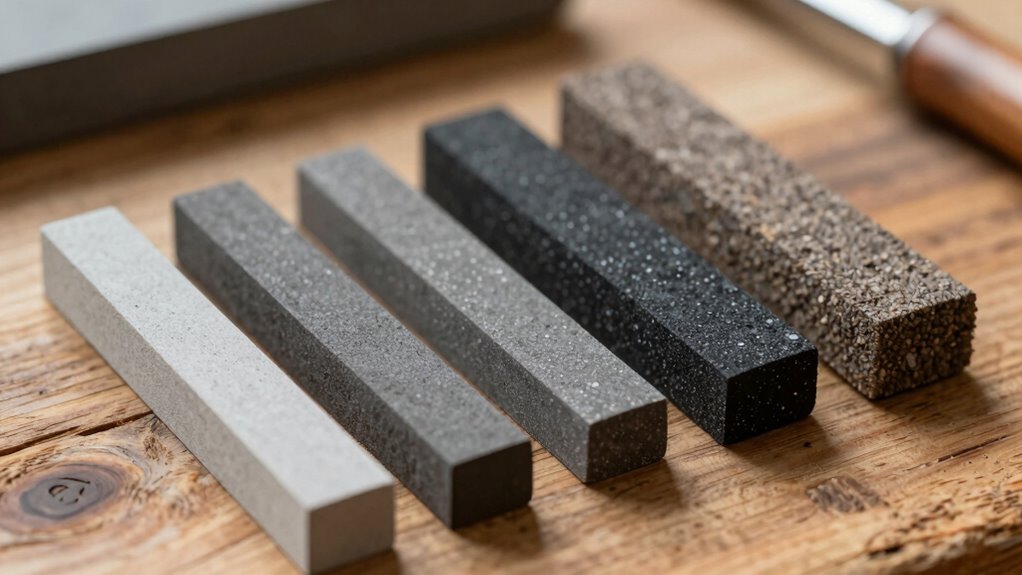
Choosing the right whetstone grit is essential when sharpening your knives, especially if you’re just starting out. The grit size determines how aggressively the stone will remove material from the blade and how smooth the edge will become. Picking the right grit can make all the difference in achieving a sharp, durable edge without damaging your knife. When you’re beginning, it’s helpful to understand that grit numbers range from coarse to fine, each suited for specific sharpening tasks. Coarse grits, usually below 1000, are ideal for repairing chips or reshaping dull blades. Medium grits, around 1000 to 3000, are great for regular sharpening, bringing a good balance between material removal and edge refinement. Fine grits, above 4000, are used for honing and polishing, creating a razor-sharp finish.
If you’re new to using whetstones, start with a medium grit, such as 1000 or 2000. This grit allows you to efficiently sharpen your knives without too much effort while still producing a smooth, sharp edge. As you gain experience, you might incorporate a coarse grit for more aggressive sharpening or a fine grit for polishing. Keep in mind that stone maintenance plays a crucial role in your sharpening success. Regularly flatten your whetstone with a lapping plate or flattening stone to prevent uneven surfaces that can hinder sharpening techniques. Proper stone maintenance ensures that you get consistent results and prolongs the lifespan of your whetstone. Additionally, understanding the grit range helps you select the appropriate stone for specific tasks, making your sharpening more effective. Knowing how to maintain your whetstone ensures optimal performance and longevity. It’s also beneficial to learn about grit progression to develop a systematic approach to sharpening, especially for complex or heavily dulled blades. Developing a clear sharpening plan can help you improve your technique and achieve better results over time.
Furthermore, considering the type of knife can influence your choice of grit, as different blades may require different levels of refinement for optimal performance. Focus on maintaining a consistent angle and even pressure during sharpening to maximize the benefits of each grit you use. Using the correct grit according to the task at hand simplifies this process and helps you achieve an optimal edge. Remember, patience and proper technique matter more than grit size alone. With time, you’ll learn how to switch between grits efficiently, progressing from coarse to fine for a polished, razor-sharp edge.
As an affiliate, we earn on qualifying purchases.
Frequently Asked Questions
Can I Use One Whetstone for All Sharpening Tasks?
You can use one whetstone for all sharpening tasks if it’s versatile enough, like a medium grit (around 1000) for general sharpening. However, different Whetstone types, such as fine or coarse, serve specific purposes, so having multiple grits helps achieve a sharper edge. Maintenance tips, like cleaning and flattening your whetstone regularly, guarantee consistent results. Using just one stone may limit your sharpening efficiency on diverse tools.
How Often Should I Sharpen My Knives With a Whetstone?
You should sharpen your knives with a whetstone every few weeks or when you notice they’re dull. Regular knife maintenance keeps your blades sharp and safe. Your whetstone selection depends on how often you cook and the type of knives you have. For daily use, a medium grit is ideal, while occasional honing might only need a fine grit. Consistent sharpening guarantees your knives perform well and last longer.
Is a Higher Grit Always Better for Sharpening?
No, a higher grit isn’t always better for sharpening. While higher grit stones offer finer edges and better polishing, they don’t necessarily boost sharpening efficiency for dull blades. Grit compatibility matters—you need the right grit for your knife’s condition. Coarser grits remove material faster for dull blades, while finer grits refine the edge. Using the appropriate grit guarantees effective sharpening without unnecessary hassle or damage.
What Safety Precautions Are Necessary When Using a Whetstone?
When using a whetstone, proper handling is crucial to prevent injuries. Always wear protective gear like cut-resistant gloves and eye protection to guard against slips and debris. Keep your fingers away from the blade’s edge, and stabilize the stone on a non-slip surface. Take your time, and focus on maintaining control. These safety precautions help guarantee a safe sharpening process, reducing the risk of cuts or accidents.
How Do I Know When My Blade Is Sharp Enough?
You’ll know your blade is sharp enough when it cuts effortlessly and leaves a clean, shiny edge. Investigations into blade maintenance reveal that a properly honed edge reflects consistent honing techniques, showing no burrs or dull spots. Test your knife on paper or a tomato—if it slices smoothly with minimal pressure, you’ve achieved a sharp edge. Regular honing keeps the blade in top condition and guarantees your cutting performance stays ideal.
knife sharpening stone medium grit
As an affiliate, we earn on qualifying purchases.
As an affiliate, we earn on qualifying purchases.
Conclusion
Now that you’ve chosen your first whetstone grit, picture yourself gently gliding your blade across its surface, sparks of confidence sparking with each stroke. As you sharpen, imagine your knife transforming from dull to razor-sharp, slicing effortlessly through your favorite ingredients. With your new whetstone by your side, you’re not just honing a blade—you’re sharpening your skills and confidence. Embrace the process, and soon, every cut will feel like a master’s touch.
As an affiliate, we earn on qualifying purchases.
best sharpening stone for kitchen knives
As an affiliate, we earn on qualifying purchases.
As an affiliate, we earn on qualifying purchases.
Fall Picks
fall essentials
As an affiliate, we earn on qualifying purchases.