To deburr a knife without guessing, start by carefully inspecting the blade for any rough edges or burrs after sharpening. Use proper tools like a leather strop, fine grit stone, or ceramic rod, maintaining a consistent angle and applying controlled, deliberate strokes. Check for burrs frequently to target specific areas, and finish with gentle polishing for safety and precision. Consistent technique and systematic inspection will help you deburr confidently—continue to explore these tips for even better results.
Key Takeaways
- Inspect the blade thoroughly to identify burrs before attempting to deburr.
- Use a fine-grit stone or leather strop for controlled, systematic finishing.
- Maintain a consistent sharpening angle to ensure even burr removal.
- Apply gentle, deliberate strokes to remove microscopic burrs safely.
- Regularly check for burrs during the process to avoid guesswork.
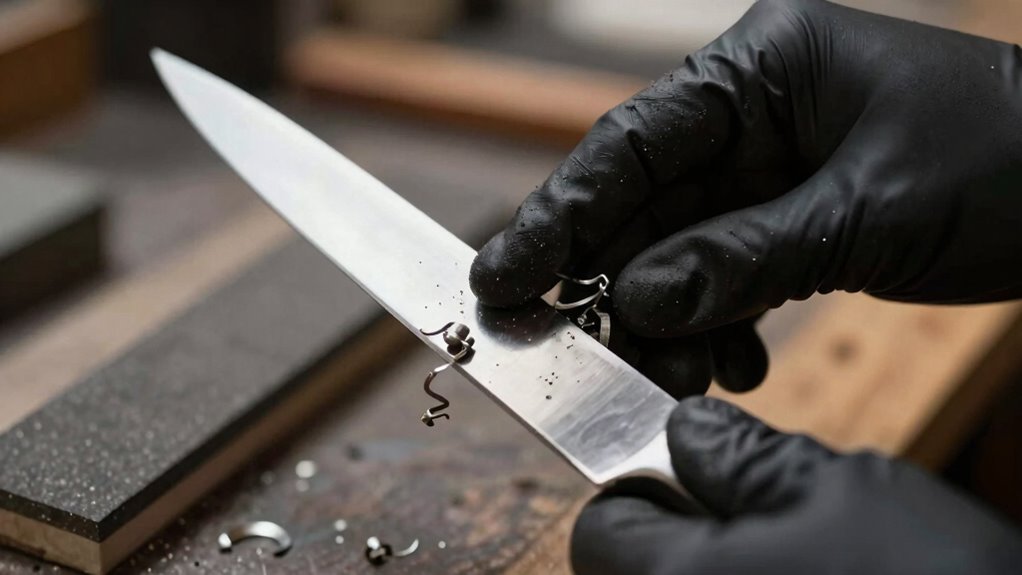
Deburring a knife properly is essential for safety and precision, but guessing isn’t the way to do it. When you’re working with blades, you want to guarantee that every cut is clean, sharp, and safe. Proper deburring removes those tiny, often unseen burrs that can cause accidents or damage your work. To achieve this, you need to understand the right sharpening techniques and how they influence blade safety. Instead of trial and error, follow a systematic approach that assures consistent results.
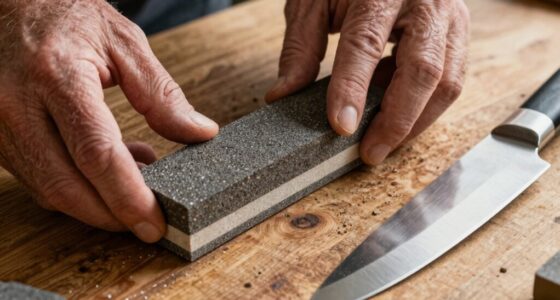
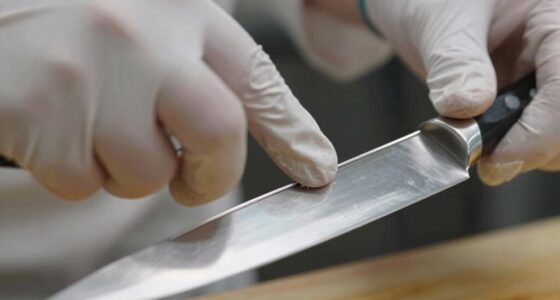
Start by inspecting your knife carefully. Look for any rough edges or burrs along the blade’s edge. Knowing where the imperfections are helps you target your efforts and avoid unnecessary abrasion on sections that are already sharp. When you sharpen, use the correct sharpening techniques—whether you’re honing with a whetstone, ceramic rod, or honing steel. Each method has its nuances, but the key is maintaining a consistent angle and applying even pressure. This consistency guarantees you sharpen uniformly, which is vital for blade safety. A dull or uneven blade increases the risk of slips and accidents, so take your time and focus on controlled, deliberate strokes. Additionally, understanding the importance of consistent technique is crucial for achieving a safe, sharp edge without guesswork. Maintaining proper technique not only results in a sharper blade but also in a safer one, reducing the risk of accidents during use. Incorporating proper maintenance routines ensures your blades stay in optimal condition over time.
Inspect your knife carefully, maintain a consistent angle, and apply even pressure for safer, more effective sharpening.
Furthermore, understanding blade geometry can influence how effectively you deburr and sharpen your knife, leading to more precise results. Applying the correct sharpening angle helps prevent excessive material removal and maintains the integrity of the edge, which is vital for safety. After sharpening, use a leather strop or fine grit stone to remove any remaining burrs. This finishing step is vital for blade safety because it smooths out microscopic imperfections. When you do this correctly, you’re not just sharpening; you’re refining the edge for safer, more precise use. Remember, a well-maintained blade isn’t just about sharpness—it’s about safety. Proper sharpening techniques and a methodical approach eliminate guesswork, giving you confidence that your knife is ready for use without risking injury. When you follow these steps carefully, you’ll find that deburring your knife becomes a straightforward, safe process that keeps your blades in top condition while protecting you every step of the way.

Intelitopia Complete Knife Sharpening Stone Set – Dual Grit Whetstone 400/1000 3000/8000 Knife Sharpener with Leather Strop, Flattening Stone, Bamboo Base, 3 Non-slip Rubber Bases & Angle Guide
- Complete Knife Sharpening Kit: Includes all essential sharpening tools
- Dual Grit Whetstone: 400/1000 and 3000/8000 grit for versatile sharpening
- Durable Corundum Material: High-quality aluminum oxide for longevity
As an affiliate, we earn on qualifying purchases.
As an affiliate, we earn on qualifying purchases.
Frequently Asked Questions
Can You Deburr a Knife With Household Items?
Yes, you can deburr a knife with household items using simple kitchen hacks and DIY tools. For example, use a spoon or a ceramic mug’s edge to gently buff out burrs. Rubbing the blade on a leather belt or a piece of fine sandpaper can also work. Just make certain you handle the knife carefully to avoid cuts, and always test on a small section first. These tricks are effective and budget-friendly.
How Often Should You Deburr a Knife?
You should deburr your knife whenever you notice rough edges or decreased cutting performance. Regular knife maintenance helps prevent accidents and keeps your blade sharp. To stay safe, follow safety tips like using a proper deburring tool or abrasive materials, and always handle the knife carefully. Deburring frequency depends on usage, but inspecting your knife after each use ensures you catch burrs early and maintain maximum safety and efficiency.
What Safety Precautions Are Necessary During Deburring?
During deburring, you should always wear personal protective gear like gloves and safety glasses to prevent cuts and debris. Make sure your workspace is properly set up with good lighting and a stable surface to avoid slips. Keep your fingers away from the blade’s edge, and use tools properly. Taking these safety precautions minimizes risks, making the process safer and more effective. Never rush, and stay attentive throughout the task.
Does Deburring Affect the Knife’s Sharpness?
Deburring can slightly impact your knife’s sharpness, especially if you remove too much material. Notably, up to 15% of edge retention can be affected if deburring isn’t done carefully. When you choose the right deburring method, you preserve material compatibility, maintaining your knife’s edge. Proper deburring smooths the edge without dulling it, ensuring your knife stays sharp longer and performs well across various materials.
Is It Better to Deburr Before or After Sharpening?
It’s better to deburr after sharpening your knife. Use effective deburring techniques to smooth out any rough edges left from sharpening, ensuring a clean, sharp edge. Deburring helps maintain your knife’s performance and prolongs tool maintenance by preventing chips and dullness. Always finish with a gentle deburring process to optimize sharpness, and regularly check your blade’s edge to keep it in top shape.

SHARPAL 205H Double-Sided Leather Strop 13.2" x 2.4" Kit
- Double-Sided Leather Surface: Smooth and suede sides for versatile stropping
- Genuine Cowhide Leather: Vegetable-tanned, fine-ground finish for sharp edges
- Ergonomic Wooden Handle: Sturdy, natural grain, comfortable grip, easy to hang
As an affiliate, we earn on qualifying purchases.
As an affiliate, we earn on qualifying purchases.
Conclusion
By following these simple steps, you’ll smoothly and safely deburr your knife without a single guess. Remember, patience and precision prevent problems and promote perfection. Practice prompts proficiency, and you’ll proudly produce a pristine, polished blade every time. So stay steady, sharpen smartly, and savor the satisfaction of a safely deburred knife. With consistent care, you’ll conquer corrosion and curb careless cuts—confidence comes from careful, consistent craftsmanship.
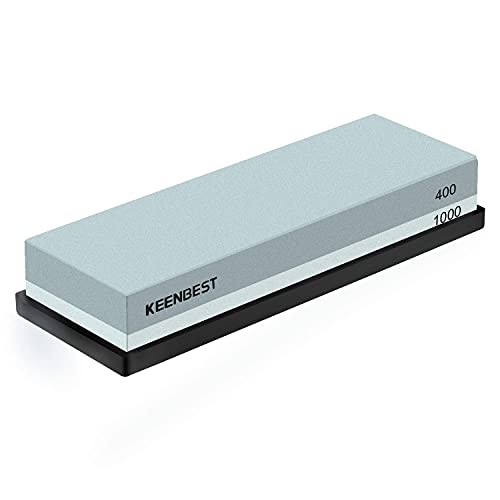
KEENBEST Actual Grit Premium Material Sharpening Stone 2 Side 400 1000 Whetstone Set Kitchen Knife Sharpener Stone Wet Stones for Sharping Knives Kit with Non-slip Rubber Base
- Premium Silicon Carbide Material: Suitable for daily sharpening and polishing
- Water-Only Use, No Oil Needed: Pre-soak 10-15 minutes for optimal use
- Universal Compatibility: Fits all types of knives and tools
As an affiliate, we earn on qualifying purchases.
As an affiliate, we earn on qualifying purchases.

Kimura Professional Ceramic Honing Rod, 10 inch Honing Steel, Ceramic Knife Sharpener, 1200 Grit Finish, Ergonomic & Balanced Polypropylene Handle, Ideal for All Chef Knives, Japanese Gift Box
- Premium Material: 10-inch ceramic honing rod with 1200 grit finish
- Ergonomic Handle: Non-slip polypropylene handle for comfort and control
- Versatile Use: Suitable for all knife sizes and shapes, with hanging loop
As an affiliate, we earn on qualifying purchases.
As an affiliate, we earn on qualifying purchases.