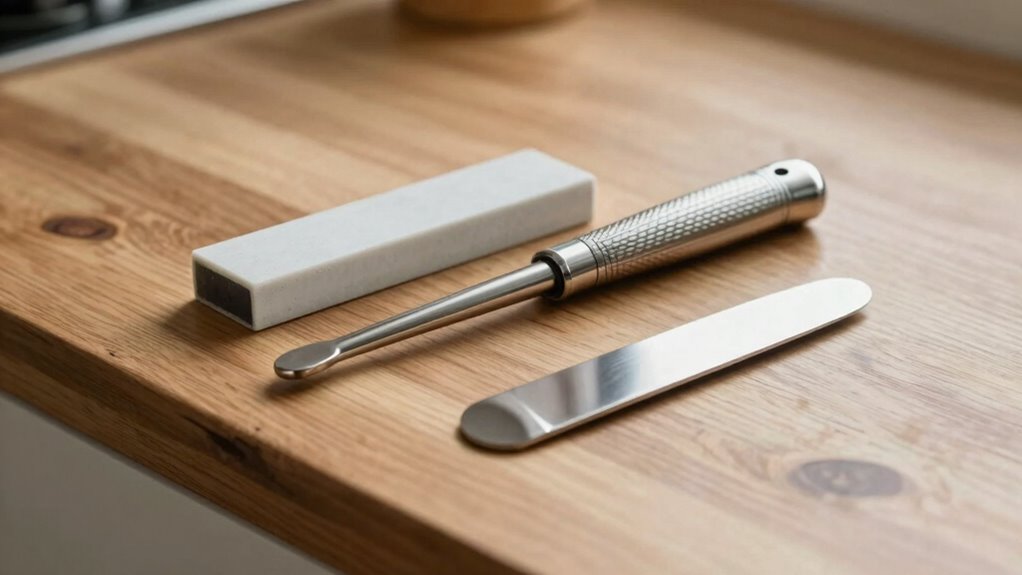

You really only need a honing rod and a whetstone to keep your knives in top shape. The honing rod helps realign the blade between sharpenings, maintaining a safe and effective edge regularly. The whetstone, especially a medium grit one, restores a dull edge and sharpens your knives thoroughly. This simple kit covers essential maintenance, prolonging your blades’ life. Keep your knives safe and sharp—soon, you’ll discover more tips to refine your technique.

Get kitchen gear delivered free with Prime
- Fast, free delivery on millions of items
- Prime Video, Amazon Music and more included
- Member-only deals all year
Key Takeaways
- A honing rod to regularly realign the blade’s edge and maintain sharpness.
- A medium grit whetstone (around 1000) for routine sharpening of dull blades.
- A finer grit whetstone (around 4000) for polishing and refining the edge.
- A sturdy cutting board to protect blades during use and maintain edge integrity.
- Basic cleaning tools like a damp cloth to keep knives free of debris and rust.
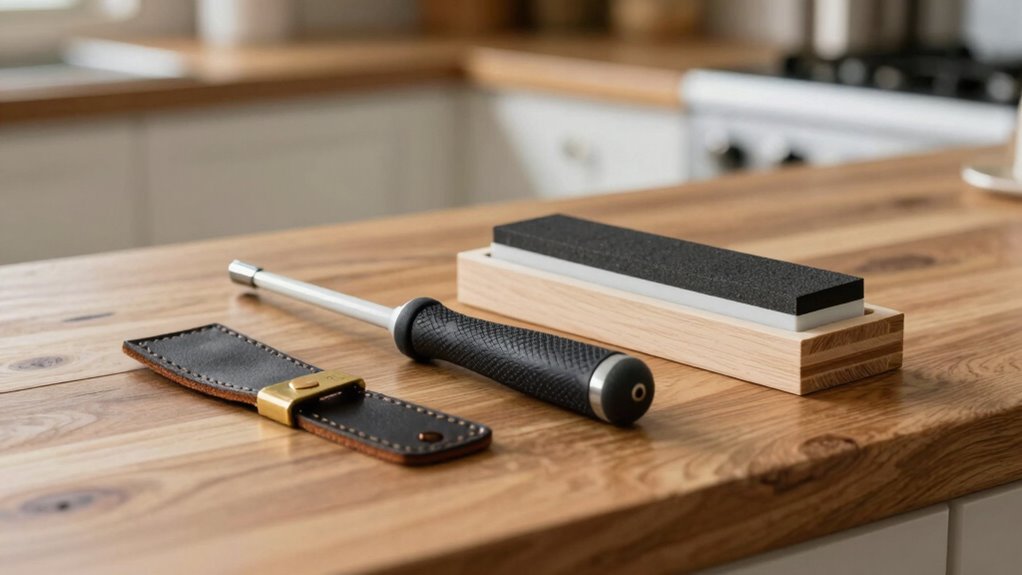
A sharp knife is one of the most essential tools in any home cook’s arsenal, but you don’t need a full arsenal of sharpening gadgets to keep your blades in top condition. Instead, focusing on a few key tools can make knife maintenance simple, effective, and safe. When your knives are sharp, you reduce the risk of accidents, since dull blades require more force and can slip easily. Proper knife maintenance isn’t just about performance; it’s about kitchen safety, ensuring you handle your tools confidently without risking cuts or injuries.
Keeping your knives sharp is key to safe, efficient, and enjoyable cooking.
The most straightforward and reliable tool for maintaining sharpness is a honing rod, often called a sharpening steel. It doesn’t actually sharpen the blade’s edge but realigns it, keeping it straight and functional between more intensive sharpenings. Using a honing rod regularly—say, after each big cooking session—helps you maintain the edge and prolong the time between full sharpenings. It’s simple to use: hold the rod vertically, place the knife at a 20-degree angle, and draw the blade down the rod from heel to tip. Doing this a few times on each side of the blade keeps it aligned and ready to cut smoothly. Regular honing can also prevent the need for more frequent sharpening, saving time and effort.
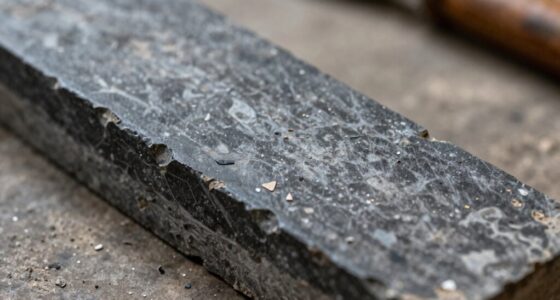
For actual sharpening, a whetstone offers excellent control and precision, but it can be intimidating at first. If you choose a whetstone, opt for a medium grit (around 1000) for regular maintenance and a finer grit (around 4000) for polishing. You’ll need to soak the stone before use and maintain a consistent angle—around 20 degrees—while sliding the blade across the surface. This process restores the cutting edge more thoroughly than honing alone. Keep in mind, proper technique is crucial here; otherwise, you risk damaging the blade or creating an uneven edge. Developing correct sharpening technique takes practice but greatly improves results and safety. Additionally, understanding the basics of sharpening can help you build confidence and achieve better results. Regular practice with the right tools can also help you develop sharpening skills that make the process easier over time.
A sharpening stone, honing rod, and a sturdy cutting board are the essentials for proper knife maintenance. With these, you can keep your knives sharp, safe, and effective for years. Remember, dull knives aren’t just frustrating—they’re dangerous. Sharp blades cut effortlessly, reducing the likelihood of slips and injuries. Regularly honing your knives ensures they stay aligned, and occasional sharpening keeps them in prime condition. Staying consistent with knife maintenance isn’t complicated, and it pays off in safer, more enjoyable cooking. Proper knife maintenance tools and techniques help preserve your blades’ longevity and performance. With just these simple tools, you’re well-equipped to preserve your knives’ edge, improve your kitchen safety, and enjoy the full potential of your culinary tools.
As an affiliate, we earn on qualifying purchases.
Frequently Asked Questions
How Often Should I Sharpen My Knives?
You should sharpen your knives every 1 to 3 months, depending on how often you cook and the knife’s usage. Regular knife maintenance, including honing, keeps your blades sharp between sharpenings. Pay attention to how your knives perform—if they start tearing or squishing food, it’s time for a sharpening. Consistent sharpening frequency guarantees safe, efficient cutting and prolongs your knives’ lifespan.
Can I Sharpen Serrated Knives at Home?
Yes, you can sharpen serrated knives at home, but it’s different from straight blades. Serrated blade maintenance involves using a special sharpening tool or ceramic rod designed for the scalloped edges. Proper upkeep helps preserve the knife’s edge longevity. Be gentle, focusing on the beveled sides of each scallop, and avoid over-sharpening, which can damage the blade. Regular maintenance guarantees your serrated knives stay effective and safe.
What’s the Difference Between Grinding and Honing?
Grinding and honing differ in purpose and process. Grinding reshapes the blade geometry by removing metal to restore a dull or damaged edge, often involving sharpening angles to achieve a new edge. Honing, on the other hand, realigns the microscopic edge of your blade without removing significant material, maintaining its sharpness. Use a grinder for heavy damage and a honing rod for regular maintenance to keep your knives performing well.
Are Electric Sharpeners Better Than Manual Stones?
Electric sharpeners are generally better for quick, consistent results, especially if you sharpen frequently. They’re easier to use and save time, making them ideal for busy home cooks. Manual stones, however, give you more control and precision, perfect for occasional sharpening or fine-tuning. If you sharpen often, an electric sharpener can keep your knives consistently sharp, while manual stones are better for detailed work and maintaining a high level of edge control.
How Do I Know When My Knife Needs Sharpening?
Imagine you’re a knight preparing for battle—your knife needs sharpening when it struggles to cut through ingredients smoothly. You’ll notice increased effort, torn or shredded produce, or a dull edge. For knife safety, don’t push through; instead, use proper sharpening tools like a honing rod or stone. Regularly check your blade’s performance, and sharpen when needed to keep your cuts safe, precise, and effortless.
As an affiliate, we earn on qualifying purchases.
Conclusion
So, there you have it—your minimalist’s guide to knife sharpness. No need for fancy gadgets or a culinary degree; just a simple stone and a little practice. With these basics, you’ll slice, dice, and julienne like a pro, all without cluttering your drawer. Who knew that sharpening could be so straightforward? Now go forth, sharpen confidently, and impress your friends with your razor-sharp, no-nonsense skills—because minimalism never looked so cutting-edge.
As an affiliate, we earn on qualifying purchases.
As an affiliate, we earn on qualifying purchases.
Fall Picks
fall essentials
As an affiliate, we earn on qualifying purchases.