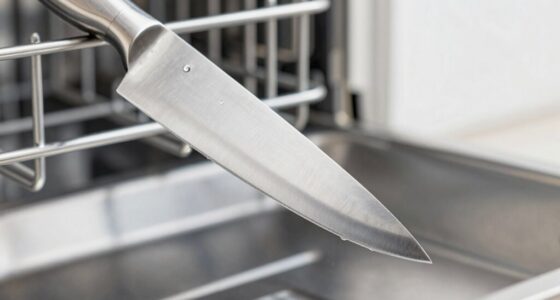

To store knives long-term without harming the edge, keep blades dry and clean, and apply a light coat of mineral oil to prevent rust. Use blade guards, knife sheaths, or magnetic strips to keep edges protected and separated. Avoid tossing knives into cluttered drawers, and make certain storage setups are stable and out of children’s reach. Proper organization and maintenance extend blade sharpness and safety—all essential tips you’ll learn to keep your knives in top condition.

Get kitchen gear delivered free with Prime
- Fast, free delivery on millions of items
- Prime Video, Amazon Music and more included
- Member-only deals all year
Key Takeaways
- Store knives in dedicated, organized spaces like knife blocks or magnetic strips to prevent contact and dulling.
- Use individual blade guards or sheaths to protect edges during long-term storage.
- Keep blades thoroughly dry and apply a light coat of mineral oil to prevent rust and corrosion.
- Avoid storing knives loosely in drawers; designate specific drawers for knives to prevent damage.
- Regularly inspect and maintain storage conditions to ensure blades remain sharp and free from moisture.
Proper long-term storage of knives is essential to keep them sharp, safe, and in good condition. When it comes to knife maintenance, how you store your blades directly impacts their longevity and performance. If you neglect proper storage, you risk dulling the edges, damaging the blades, or creating safety hazards in your kitchen or storage area. To prevent this, you need to choose storage options that protect the blade’s edge and guarantee safety.
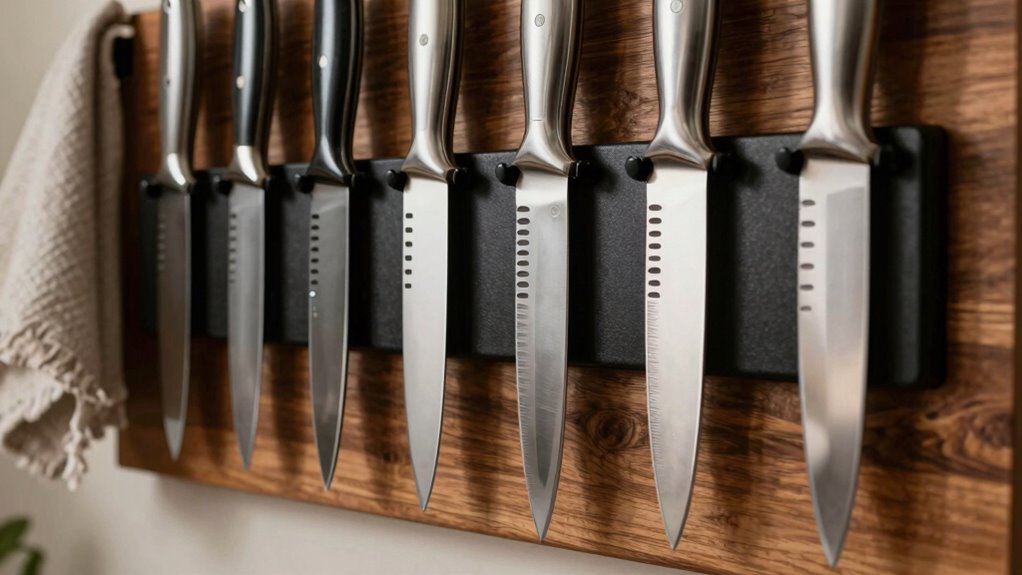
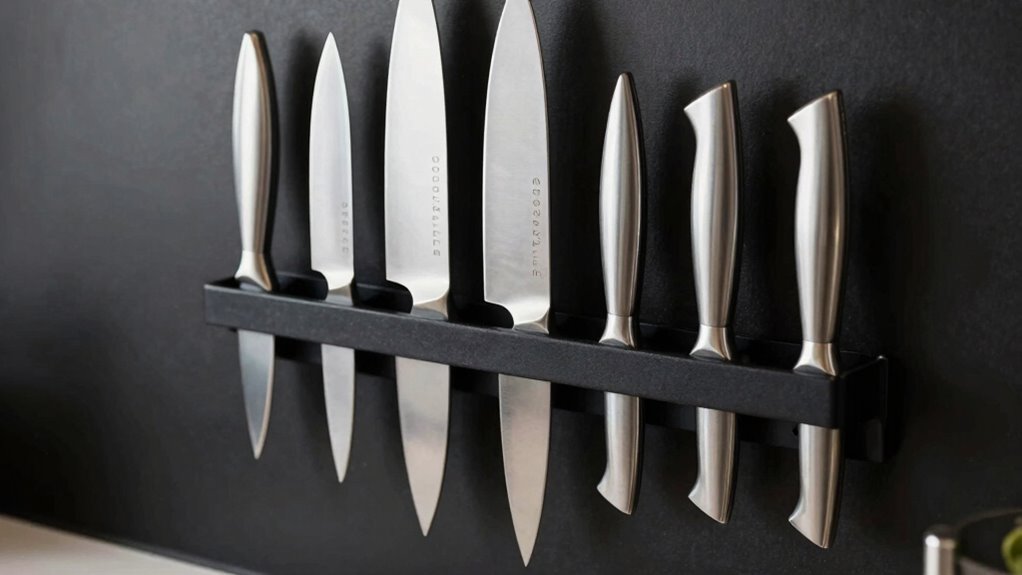
One of the most effective ways to preserve your knives is by using a knife block or a magnetic strip mounted on the wall. These methods keep the blades separated and prevent them from knocking against other utensils, which can dull or chip the edge. When you use a knife block, make sure that the slots are clean and dry to prevent corrosion. Magnetic strips are a space-efficient choice, but you should place them out of reach of children and ensure the magnets are strong enough to hold the knives securely. Both options promote good storage safety by keeping blades safely sheathed and reducing the risk of accidental cuts. Additionally, selecting a dedicated storage method can help organize your kitchen and reduce clutter, making knife access safer and more efficient. Regularly inspecting your storage setup can also help identify potential hazards before they become serious safety concerns. Proper storage also involves considering blade maintenance, which is crucial for preserving the integrity of your knives over time.
Using a knife block or magnetic strip keeps blades safe, sharp, and out of reach of children.
If you prefer drawer storage, consider investing in individual blade guards or knife sheaths. These protect the edge from contact with other utensils and prevent accidental cuts when reaching into the drawer. Avoid tossing knives into a cluttered drawer, as this can cause the blades to chip or become dull. Instead, designate a specific drawer for knives and use protective covers to maintain their condition. Moreover, keeping your knives in a well-organized drawer minimizes the chance of damage and makes it easier to locate the right blade quickly. Proper organization also helps prevent blade dulling caused by unnecessary friction with other utensils or objects.
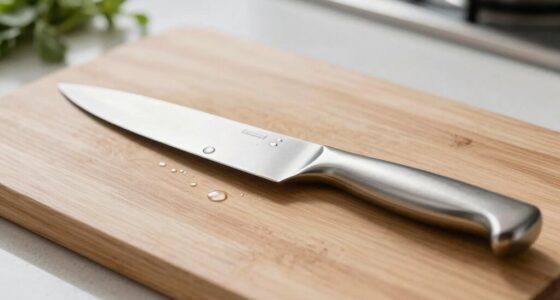
Another important aspect of knife maintenance is keeping blades dry and clean before storage. Moisture promotes rust and corrosion, especially if the knives are made of high-carbon steel. Always wipe your knives thoroughly after washing and make certain they are completely dry before placing them in their designated storage. For added protection, you can apply a light coat of mineral oil on the blades, which creates a moisture barrier and keeps the edges in top shape. Additionally, proper storage not only preserves the sharpness but also reduces the risk of accidents caused by dull or loose blades. Ensuring proper ventilation in your storage area can also help prevent moisture buildup that could lead to corrosion.
Finally, always remember that storage safety also involves keeping knives out of reach of children and making sure that blades are stored securely so they don’t fall or cause injuries. Whether you choose a wall-mounted magnetic strip or a knife block, verify the setup is stable and accessible only to responsible users. Proper knife maintenance combined with smart storage safety practices ensures your knives stay sharp longer and remain safe to handle over the years.
knife blade guards for long-term storage
As an affiliate, we earn on qualifying purchases.
As an affiliate, we earn on qualifying purchases.
Frequently Asked Questions
Can I Store Knives in the Freezer Long-Term?
Storing knives in the freezer long-term isn’t recommended, as extreme cold can damage the blade and handle. Instead, use knife sheathes or dedicated storage containers to protect the edges and prevent accidents. If you must store knives temporarily in the freezer, wrap them carefully in a soft cloth or plastic wrap before placing them in a storage container. Always prioritize proper storage methods to keep your knives sharp and safe.
Is It Safe to Use a Magnet Strip for All Knife Types?
Using a magnet strip for all knife types? Sure, if you enjoy the thrill of potential damage and chaos. Magnet safety depends on knife compatibility—some knives, especially those with delicate or magnetic-sensitive blades, might get nicked or dulled. So, check your knife’s material and design before hanging it up. Otherwise, you’re risking a magnetic showdown that could turn your pristine blades into a rusty, scratched mess.
Should I Oil My Knives Before Long-Term Storage?
Yes, you should oil your knives before long-term storage. Proper knife maintenance includes applying a light coat of food-safe mineral oil or knife oil to prevent rust and corrosion, especially if your knives are carbon steel. Use storage techniques like a knife block, sheaths, or magnetic strips to protect the edges. Oiling helps keep blades in top condition, ensuring they stay sharp and ready for use whenever you need them.
How Often Should I Check Stored Knives for Damage?
You should check your stored knives every 3 to 6 months to guarantee knife safety and storage organization. Regular inspections help you spot any signs of damage like rust or dullness early, preventing accidents and preserving the knives’ condition. Keep an eye on the edges and handles, and make sure storage is secure and well-organized to avoid unnecessary wear or mishaps. Consistent checks keep your knives safe and in top shape.
Can Storing Knives in Humid Environments Cause Rust?
Storing knives in humid environments can definitely cause rust, like a forgotten letter corroding away in a drawer. To prevent this, focus on rust prevention by controlling humidity levels and keeping your knives dry. Use silica gel packs or a dehumidifier in storage areas. Proper humidity control ensures your blades stay sharp and rust-free, preserving their beauty and functionality for years to come.
As an affiliate, we earn on qualifying purchases.
Conclusion
By storing your knives properly, you’re giving them a gentle gust of fresh air after a long day in the kitchen. Think of it as tucking your blades into a cozy bed, where they can rest and stay sharp for years to come. With a little care, your knives will continue to dance through your culinary adventures, forever ready to cut through anything like a hot knife through butter. Keep them safe, and they’ll serve you well for a lifetime.
As an affiliate, we earn on qualifying purchases.
As an affiliate, we earn on qualifying purchases.
Fall Picks
fall essentials
As an affiliate, we earn on qualifying purchases.