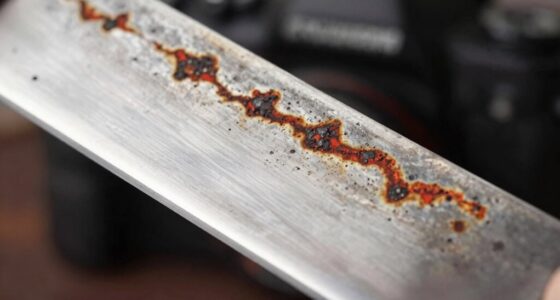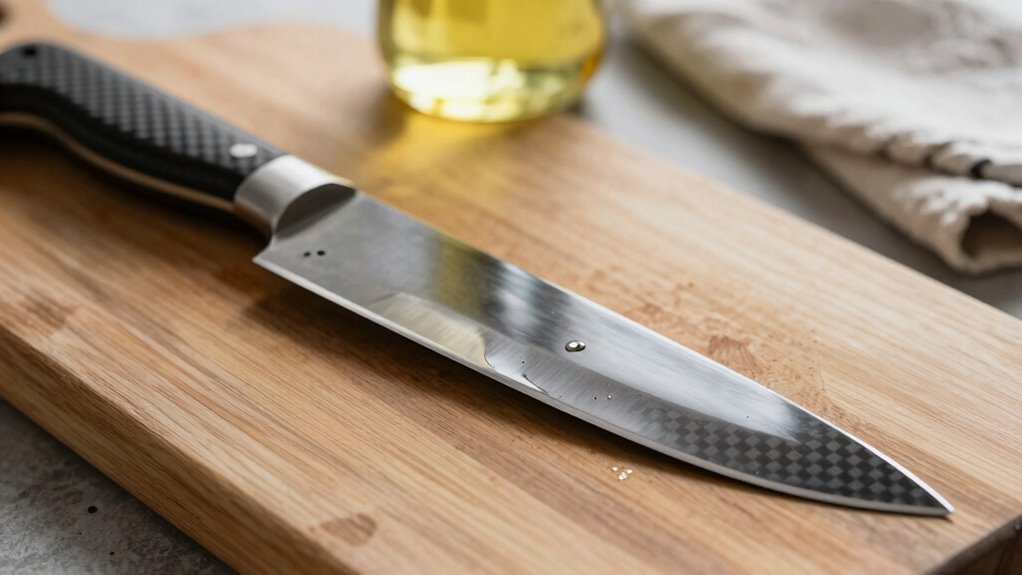

You should oil your carbon steel knives after each use, especially if they’ve been washed or exposed to humidity. Oiling helps create a protective barrier against moisture and rust, and it’s important before storing knives long-term or in damp environments. However, you don’t need to oil them if they’re clean, dry, and stored in a dry place. If you want to keep your knives in top shape, understanding when and when not to oil is key—there’s more to discover.

Get kitchen gear delivered free with Prime
- Fast, free delivery on millions of items
- Prime Video, Amazon Music and more included
- Member-only deals all year
Key Takeaways
- Oil carbon steel knives after each use, especially if washed or exposed to moisture.
- Avoid oiling if knives are clean, dry, and stored in a dry environment.
- Oil before long-term storage or when humidity levels are high to prevent rust.
- Do not oil right before cooking if the knife will contact food, to avoid residue.
- Refrain from over-oiling to prevent sticky surfaces and dirt attraction.
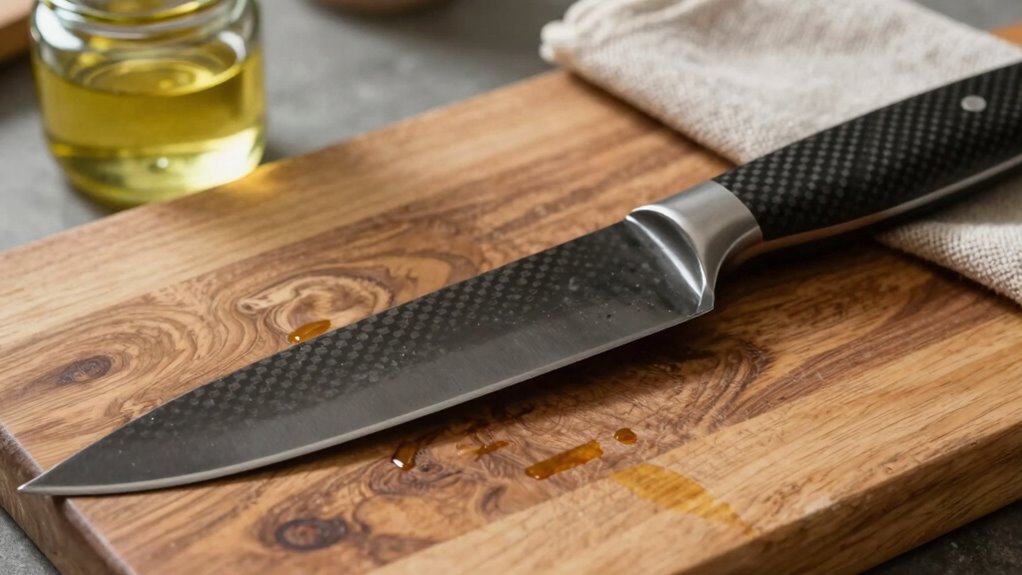
Carbon steel knives are prized for their sharpness and ease of sharpening, but they require regular oiling to prevent rust and corrosion. If you want your knives to stay in top shape, understanding when to oil them is key. Proper knife maintenance involves more than just honing the blade; it’s about creating a barrier that shields the metal from moisture and air, which are the main culprits behind rust. You should oil your carbon steel knives after each use, especially if they’ve been washed or exposed to humid environments. This routine helps keep the blade’s surface coated, preventing moisture from settling in and causing rust.
Oil your carbon steel knives after each use to prevent rust and keep them in top condition.
You’ll also want to oil your knives before storing them for an extended period. Even if you don’t use your knives daily, moisture in the air can gradually corrode unprotected steel. Applying a light coat of food-safe mineral oil or knife oil creates an invisible shield, making rust prevention easier. Keep in mind that the frequency of oil application depends on your environment. If you live in a humid climate or your kitchen tends to be moist, more frequent oiling is necessary. Conversely, if your space is dry and well-ventilated, you might get away with oiling less often, perhaps once every few weeks or after heavy use.
There are times when you shouldn’t oil your carbon steel knives. For example, if your knives are visibly clean, dry, and stored in a dry place, additional oiling may not be immediately necessary. Over-oiling can sometimes lead to a sticky residue that attracts dirt and debris, complicating cleaning and knife maintenance. Also, avoid applying oil right before cooking or cutting, as excess oil can transfer to food and affect flavor or presentation. Instead, let the oil settle and wipe off any excess with a clean cloth before using the knife.
Remember that proper knife maintenance isn’t just about applying oil — it’s also about regular cleaning, drying, and careful storage. Ensuring your knives are dry before oil application maximizes rust prevention. Using proper cleaning techniques and thorough drying are essential steps in this process. If you notice any signs of rust or corrosion, you should address it immediately with gentle scrubbing and re-oiling. This proactive approach keeps your carbon steel knives sharp, functional, and looking great for years to come. Regular oiling, combined with good maintenance habits, is the best way to protect your investment and enjoy a reliable, high-performing tool in your kitchen. Proper air quality and ventilation in your kitchen can also help reduce moisture levels, further safeguarding your knives from rust. Additionally, storing your knives in a dry, protected environment is crucial to maintaining their condition over time.
food-safe mineral oil for knives
As an affiliate, we earn on qualifying purchases.
As an affiliate, we earn on qualifying purchases.
Frequently Asked Questions
Can I Use Any Type of Oil on My Carbon Steel Knife?
You can’t just use any oil on your carbon steel knife. Look for oils with good oil absorption and oil compatibility, like mineral oil or food-grade mineral oil, which won’t go rancid or stain. Avoid vegetable or vegetable-based oils that can spoil or turn rancid over time. Using the right oil guarantees your knife stays protected without damage, keeping it sharp and rust-free longer.
How Often Should I Oil My Carbon Steel Knife?
You should oil your carbon steel knife after each use or at least once a week as part of your knife maintenance routine. Regular oil application helps prevent rust and corrosion, especially if the knife isn’t used daily. Keep an eye on the blade’s condition and oil more often if you notice dullness or moisture. Consistent oiling guarantees your knife stays sharp, protected, and in top shape.
Is It Necessary to Oil Carbon Steel Knives After Every Use?
Think of your knife as a trusted ally—yes, you should oil it after every use to keep it sharp and rust-free. Regular oiling is key to proper knife maintenance and rust prevention, especially if you handle it frequently or store in humid conditions. Skipping this step can expose your blade to moisture and corrosion, so a quick oiling after each use guarantees your carbon steel knife stays in prime condition for years.
What Are the Best Oils to Prevent Rust on Carbon Steel?
For blade maintenance and rust prevention, you should choose lightweight oils like mineral oil, camellia oil, or food-grade mineral oil. These oils form a protective barrier against moisture without affecting your knife’s performance. Avoid thicker or scented oils that can attract dirt or go rancid over time. Regularly applying a thin layer of these oils after cleaning keeps your carbon steel blade rust-free and in top condition.
Can Oiling Damage the Blade’s Edge or Performance?
Oiling your carbon steel knife won’t damage the blade’s edge or performance if you use the right oil and apply it properly. In fact, oil helps prevent blade corrosion by creating a protective barrier, reducing oil absorption that could otherwise lead to rust. Just avoid over-oiling or using thick, sticky oils, which might attract debris or affect cutting. Regular, light oiling keeps your knife in top shape without risking damage.
As an affiliate, we earn on qualifying purchases.
Conclusion
Think of oiling your carbon steel knives like tending to a garden; it keeps them healthy and sharp for years to come. By oiling only when needed—after use or during long storage—you protect your blades from rust and corrosion. Skip the oil when your knives are clean, dry, and in regular use. With a little care, your knives will stay as reliable as a trusted friend, ready to cut through anything with ease.
As an affiliate, we earn on qualifying purchases.
best oil for carbon steel knives
As an affiliate, we earn on qualifying purchases.
As an affiliate, we earn on qualifying purchases.
Halloween Picks
halloween
As an affiliate, we earn on qualifying purchases.