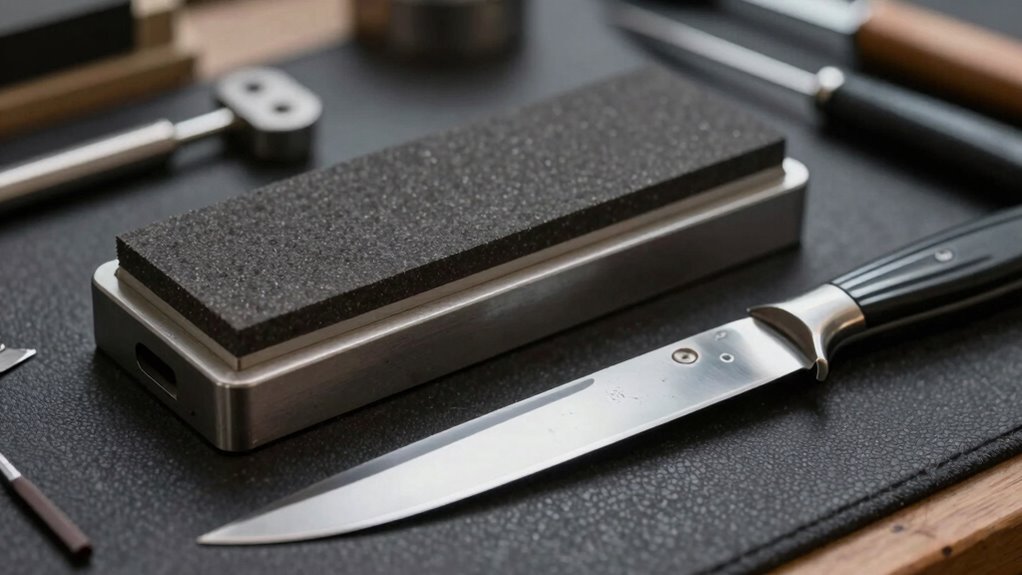

To match your sharpening gear to your knife’s steel and geometry, first consider the steel’s hardness and composition. Harder steels benefit from diamond or ceramic stones, which cut faster and last longer. Match the grit to the steel’s condition—coarse for repairs, fine for finishing. Pay attention to your knife’s geometry; thinner edges need precise, controlled sharpening, while thicker blades can handle coarser stones initially. Keep these principles in mind to optimize your sharpening approach, and you’ll uncover more tips for perfect edges.

Get kitchen gear delivered free with Prime
- Fast, free delivery on millions of items
- Prime Video, Amazon Music and more included
- Member-only deals all year
Key Takeaways
- Match steel hardness with appropriate grit: harder steels need finer abrasives like ceramic or diamond stones.
- Consider knife geometry: thin, acute edges require precise, controlled sharpening techniques to avoid damage.
- Use coarser stones for initial grinding of damaged or thick edges, then refine with finer grit for a polished edge.
- Select sharpening tools that preserve the original bevel and edge angle to maintain the knife’s performance.
- Adjust sharpening pressure and technique based on steel wear resistance and corrosion properties for optimal results.
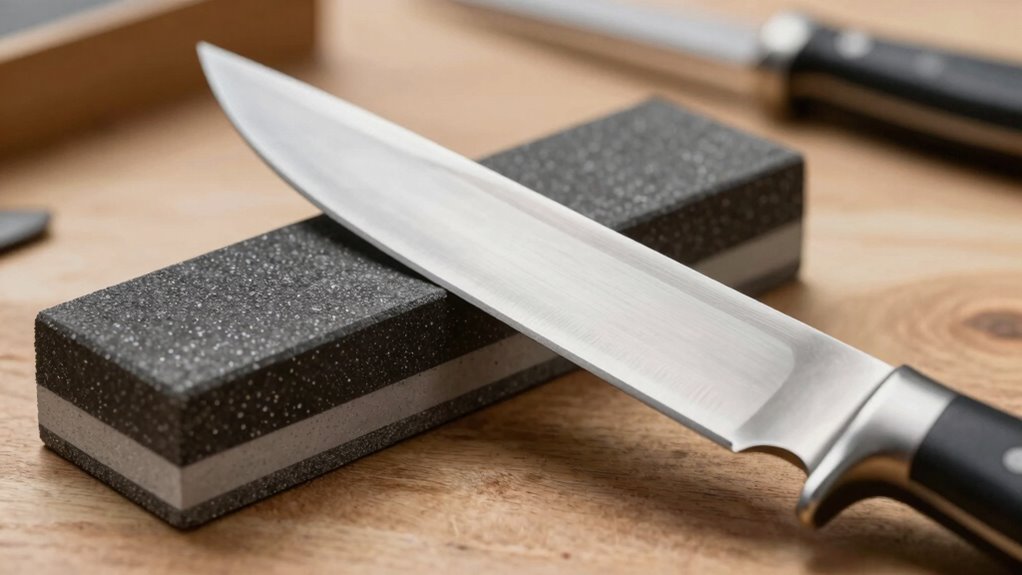
Have you ever wondered why some sharpening stones work better with certain knives? The answer lies in understanding the relationship between your knife’s steel and its geometry, along with the grinding techniques you use. When you select the right sharpening gear, you can improve edge retention and make your knives perform at their best. Different steels have varying hardness levels and compositions, which influence how they respond to sharpening tools. For example, high-carbon steels tend to be harder, meaning they can hold an edge longer but may require more careful grinding techniques to avoid chipping. Softer steels, on the other hand, sharpen more easily but might need more frequent honing to maintain their edge.
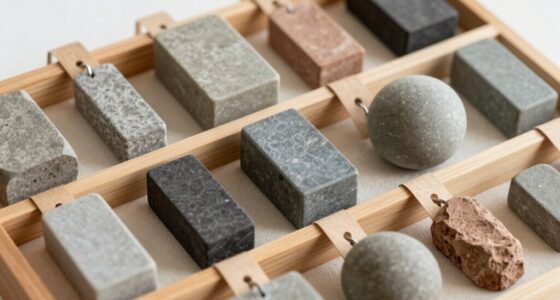
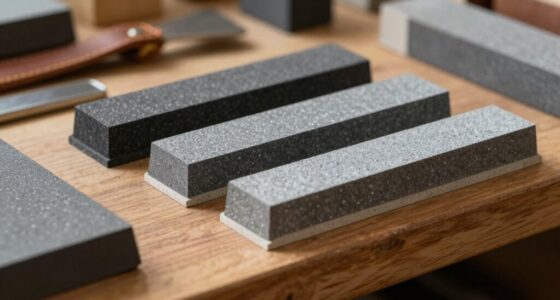
Matching your sharpening stone or system to the steel involves considering the grit and material of the stone. A finer grit, such as a 1000 or higher, helps refine the edge and enhances edge retention, especially for harder steels. Coarser stones are useful for initial grinding or repairing damaged edges but can remove more material quickly. When working with very hard steels, you might find that diamond stones or ceramic sharpeners are more effective because they cut faster and maintain their abrasiveness longer. These tools help you apply precise grinding techniques, guaranteeing you don’t remove excessive material, which could weaken the edge or alter its geometry. Recognizing the properties of different steels can help you choose the most appropriate sharpening method. Additionally, understanding the relationship between steel composition and hardness can guide your selection of sharpening tools and techniques. Knowing the wear resistance of various steels can also influence your sharpening approach, especially when aiming for long-term durability. It’s also important to consider the corrosion resistance of your steel, as it can impact how often you need to sharpen or hone your knife. A good understanding of steel properties allows for more tailored sharpening strategies that preserve the steel’s integrity over time.
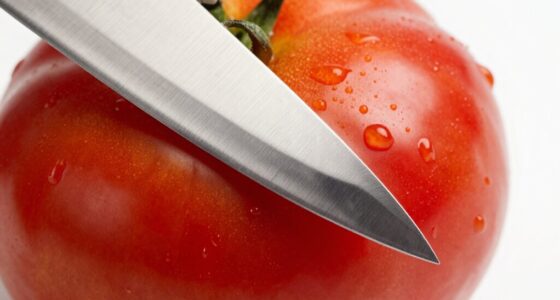
Your knife’s geometry also plays a vital role. A thin, acute edge requires different grinding techniques than a more robust, thicker edge. For delicate slicing knives, you want to maintain a fine, sharp bevel, which means choosing a sharpening stone that allows for controlled, precise grinding. Conversely, a heavier-duty chef’s knife with a thicker edge might benefit from a coarser stone initially, followed by a fine stone to refine the edge. Properly matching the gear to your knife’s geometry ensures you don’t over-grind or under-sharpen, which can compromise edge retention.
Ultimately, mastering the correct grinding techniques in conjunction with the right sharpening gear allows you to maximize your knife’s edge retention. It’s about understanding your steel’s properties and adjusting your approach accordingly. When you match your sharpening method to the steel’s hardness and your knife’s geometry, you preserve the integrity of the edge longer, making your knives safer, more efficient, and more enjoyable to use. Proper matching and technique guarantee that every sharpening session enhances your knife’s performance rather than diminishing it.
diamond sharpening stones for knives
As an affiliate, we earn on qualifying purchases.
As an affiliate, we earn on qualifying purchases.
Frequently Asked Questions
Can Different Sharpening Stones Be Used Interchangeably for Various Steels?
Yes, you can use different sharpening stones interchangeably for various steels, but it’s important to take into account steel compatibility and stone versatility. Some steels, like high-carbon or exotic alloys, may require specific abrasive types, while others are more forgiving. By choosing versatile stones like diamond or ceramic, you guarantee better steel compatibility. Always match your stone’s grit and material to your knife’s steel type to achieve the best results without damaging the blade.
How Often Should I Recalibrate My Sharpening Gear for Different Steels?
You should recalibrate your sharpening gear based on sharpening frequency and the type of steel you’re working with. For frequent use or when switching between steels with different hardness levels, check your gear regularly—every few uses or after a handful of knives. Proper gear maintenance includes cleaning and inspecting stones or guides to guarantee consistent results. Adjust calibration as needed to maintain sharpness and avoid damaging your knives or gear.
Are Ceramic Stones Suitable for All Types of Knife Steels?
Ceramic stones are like the sturdy giants of sharpening tools, but they aren’t suitable for all steels. Their durability is high, making them excellent for tough, hard steels, yet softer steels can wear them down faster or get damaged. Think of ceramic durability and steel compatibility as a dance—when paired correctly, they glide smoothly; when mismatched, the dance falters. Always consider your knife’s steel type before choosing a ceramic stone.
What Are the Signs That My Sharpening Gear Is Incompatible With My Steel?
You’ll notice signs of incompatibility when your sharpening gear struggles to refine your blade or causes inconsistent edges. If you see uneven scratches, a dull finish, or prolonged sharpening times, it’s a red flag. Poor sharpening grit consistency or using gear not suited for your steel’s hardness considerations can be the cause. Always match your gear to your steel’s hardness and maintain grit consistency for best results.
How Does Sharpening Angle Affect Gear Choice for Different Steels?
Imagine your knife’s edge as a delicate dance, where sharpening angle is the rhythm. A steeper angle (around 20°) suits softer steel, emphasizing quick edge retention but risking dullness faster. For harder steels, a shallower angle (15° or less) preserves sharpness longer, but demands finer, precise gear. Your choice of sharpening gear depends on this balance, aligning with steel hardness and desired edge retention to keep your blade performing at its best.
As an affiliate, we earn on qualifying purchases.
Conclusion
By choosing the right sharpening gear for your knife’s steel and geometry, you craft a symphony of precision and performance. Think of your knife as a finely tuned instrument—each steel type and bevel angle demands its own unique tuning fork. When you match them perfectly, your blade slices through the culinary world like a whispering breeze through a forest. Master this harmony, and your knife will perform with the grace of a seasoned dancer on the grand stage.
fine grit sharpening stones for high-carbon steel
As an affiliate, we earn on qualifying purchases.
As an affiliate, we earn on qualifying purchases.
knife sharpening kit for different steel types
As an affiliate, we earn on qualifying purchases.
As an affiliate, we earn on qualifying purchases.
Halloween Picks
halloween
As an affiliate, we earn on qualifying purchases.