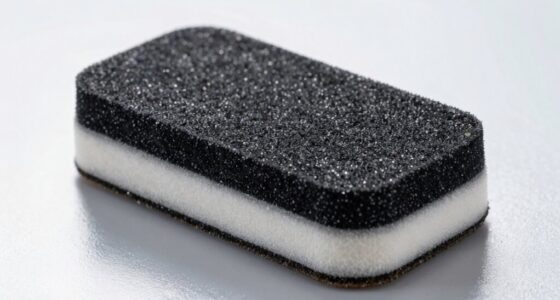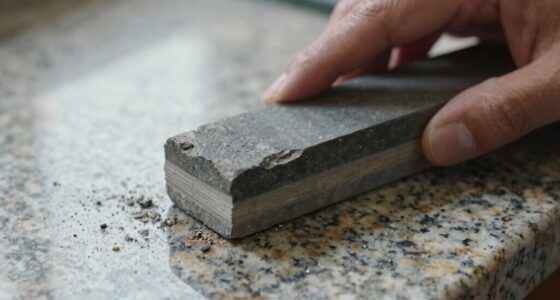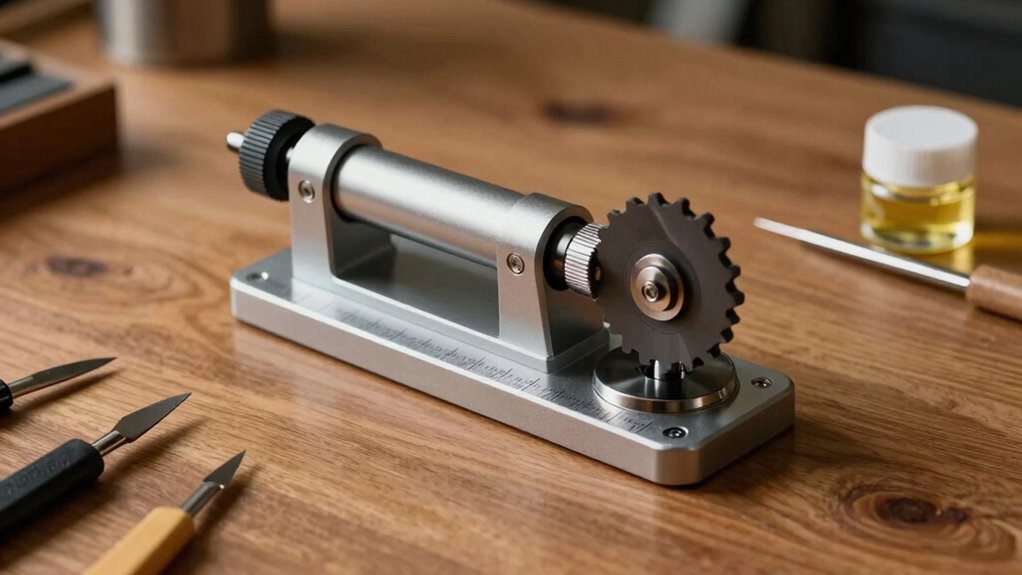
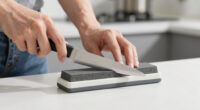
To choose a fixed-angle sharpening system, consider how often you sharpen and your skill level. Manual systems are budget-friendly and give you tactile control, ideal for casual use. If you want quick, consistent results and have more experience, motorized systems with preset angles might be better. Think about your workflow and how much precision you need. For a clearer picture of which system suits you best, keep exploring the options available.

Get kitchen gear delivered free — and shop member deals
- Fast, free delivery on millions of items
- Access to Prime Big Deal Days deals on October 6–7
- Prime Video, Amazon Music and more included
Key Takeaways
- Assess your skill level and whether you prefer manual control or automated precision.
- Consider the frequency of use to determine if a manual or motorized system is more practical.
- Prioritize accuracy and consistency if you require professional-grade sharpening results.
- Set a budget that aligns with your needs, as manual systems are generally more affordable.
- Ensure the system fits seamlessly into your workflow and meets your specific sharpening requirements.
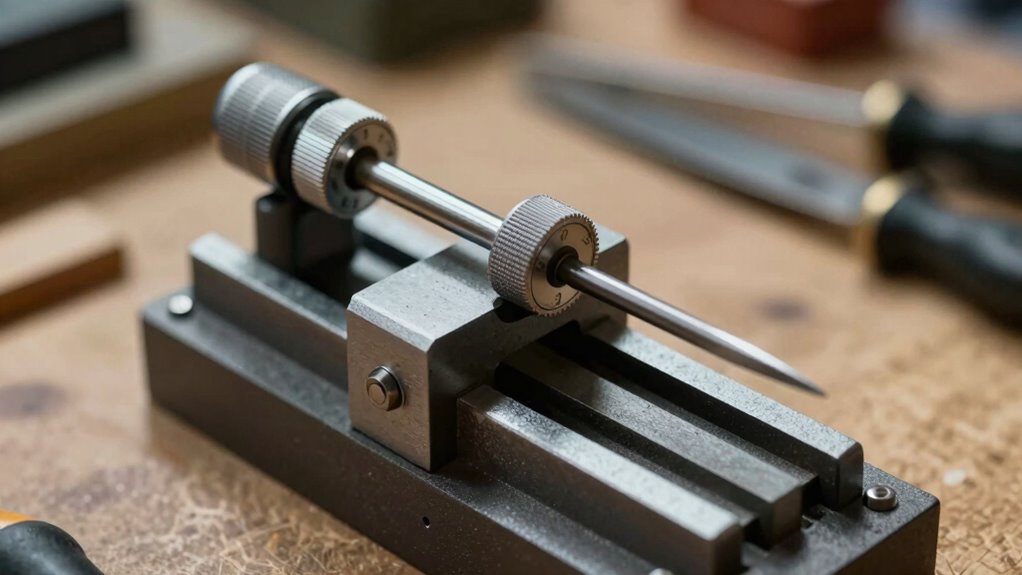
Have you ever wondered how to choose the right fixed-angle sharpening system for your needs? The decision largely depends on how you plan to use it, your skill level, and your preferences for precision and convenience. Fixed-angle sharpening systems are designed to hold your tool at a consistent angle, ensuring that your edges are sharp and uniform. When selecting one, you’ll find options that feature manual operation or motorized adjustment, each offering distinct advantages.
Manual operation systems give you direct control over the sharpening process. You turn the tool or adjust the clamp manually, which allows for a hands-on experience. This type of system is often more affordable and simpler to use, making it perfect for hobbyists or those who prefer a more tactile approach. With manual systems, you develop a feel for the angle and the pressure required, which can lead to a more personalized sharpening experience. However, manual adjustment requires patience and a steady hand, especially if you’re aiming for consistency across multiple tools. If you’re comfortable with a hands-on approach and want more control, a manual operation system might be the right choice.
Manual systems offer hands-on control, affordability, and a personalized sharpening experience, perfect for hobbyists and those seeking tactile adjustments.
On the other hand, motorized adjustment systems take the effort out of maintaining a consistent angle. These systems use electric motors to set and hold the sharpening angle, allowing you to focus on guiding the tool rather than adjusting the device. Motorized systems typically come with preset angles or digital controls, making it easier to replicate the same angle every time. This consistency is especially valuable for professionals or serious enthusiasts who need quick, reliable results. Additionally, motorized adjustment systems tend to be more precise, reducing the chance of human error. They often feature adjustable settings, so you can switch between different tools or sharpening angles with ease. If convenience and precision are your priorities, investing in a motorized adjustment system will likely serve you better.
Ultimately, the right fixed-angle sharpening system depends on your specific needs. If you prefer a straightforward, budget-friendly option and don’t mind some manual effort, a manual operation system will serve you well. But if you’re seeking accuracy, speed, and ease of use, a system with motorized adjustment will be more suitable. Consider how often you’ll sharpen tools, your comfort with manual control, and whether you value consistency over time. Investing in a high-quality fixed-angle system can also improve your overall sharpening results and save you time in the long run. Additionally, understanding the benefits of fixed-angle systems can help you make a more informed decision. For example, precision in sharpening is crucial for achieving optimal edge retention and cutting performance. Whichever you choose, ensuring it fits your workflow will help you achieve the sharpest edges with less frustration, making your sharpening routine more efficient and satisfying.
fixed-angle knife sharpening system
As an affiliate, we earn on qualifying purchases.
As an affiliate, we earn on qualifying purchases.
Frequently Asked Questions
Can Fixed-Angle Sharpeners Handle All Types of Knives?
Fixed-angle sharpeners excel at providing sharpening precision for specific blade types, but they don’t handle all knives equally well. Blade compatibility varies, especially with serrated or thicker blades, which might not fit the fixed angle. To get the best results, check if your knives match the system’s designed angles. While they work great for consistent edge maintenance, some knives may require different sharpening tools for ideal performance.
Are Fixed-Angle Systems Suitable for Professional Use?
A fixed-angle system is a game-changer for professional chefs, offering unmatched sharpening consistency that can elevate your kitchen skills to legendary status. While they excel in maintaining ideal blade durability and precision, some may find them limiting for diverse knives. If you prioritize consistent results and durability, these systems are perfect, but for versatility, you might need additional tools. Overall, they’re highly suitable for professional use, ensuring sharp, reliable blades every time.
How Easy Are Fixed-Angle Sharpeners to Maintain?
Fixed-angle sharpeners are generally easy to maintain because they require minimal blade alignment adjustments. You’ll want to check the blade alignment periodically to guarantee consistent sharpening results, but maintenance frequency is low. Regularly cleaning the system and inspecting for debris keeps it in top shape. Overall, these sharpeners are durable and straightforward, making them suitable for those who prefer low-maintenance equipment without sacrificing performance.
Do Fixed-Angle Sharpeners Require Electricity?
Fixed-angle sharpeners generally don’t require electricity, so they’re not electricity-dependent. Instead, they operate through manual operation, meaning you turn a handle or apply pressure yourself. This makes them ideal if you want a simple, reliable tool without needing a power source. Since they don’t rely on electricity, you can use them anywhere, making them convenient for quick, consistent sharpening without worrying about batteries or cords.
What Safety Features Should I Look For?
You should look for safety mechanisms like blade guards and slip-resistant bases to prevent accidents. Guarantee the system has compatibility with various blade types, so it suits your needs. A locking feature can also help keep the sharpener stable during use. These safety features protect you while ensuring the sharpener operates effectively. Prioritize models with these elements to keep your sharpening safe and efficient.
manual sharpening system for knives
As an affiliate, we earn on qualifying purchases.
As an affiliate, we earn on qualifying purchases.
Conclusion
So, armed with your perfect fixed-angle sharpening system, you’re all set to turn dull blades into razor-sharp wonders. Ironically, all that precision might just make you obsess over every tiny nick or imperfection, transforming your kitchen into a miniature workshop. But hey, isn’t that the true art of sharpening? After all, in the quest for the perfect edge, sometimes the dullest thing is your patience — and that’s the real sharpening challenge.
motorized sharpening system with preset angles
As an affiliate, we earn on qualifying purchases.
As an affiliate, we earn on qualifying purchases.
professional fixed-angle sharpening kit
As an affiliate, we earn on qualifying purchases.
As an affiliate, we earn on qualifying purchases.
Evergreen bestsellers Picks
bestsellers
As an affiliate, we earn on qualifying purchases.