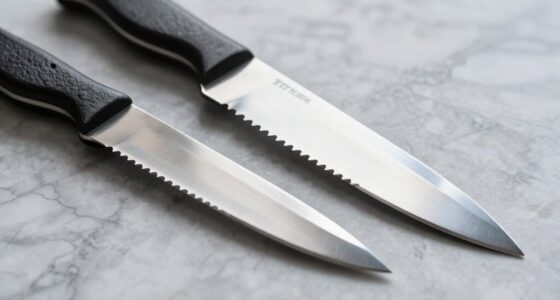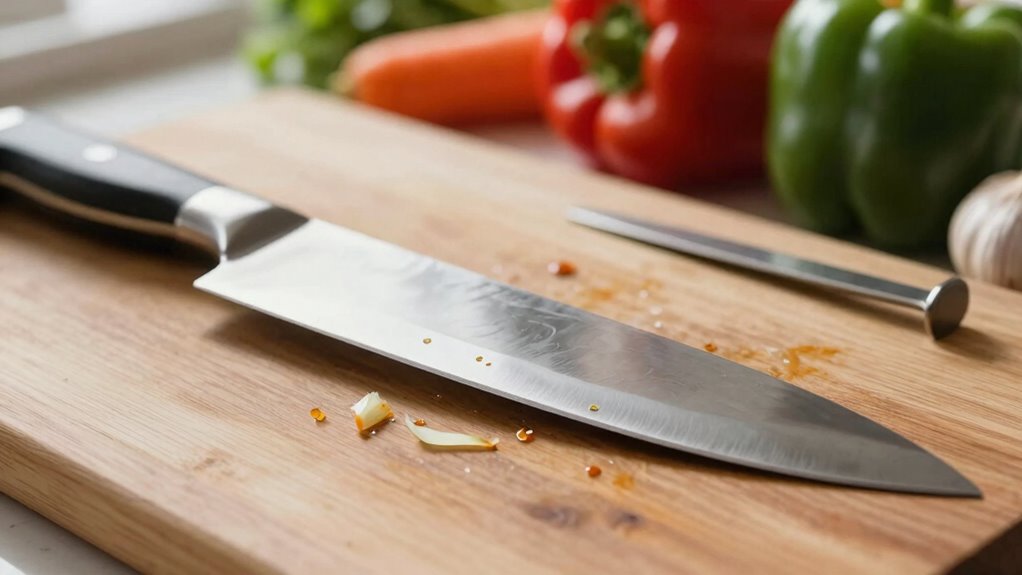
Your knife gets duller mid-meal prep because you’re likely pressing too hard, using rough surfaces, or making uneven, aggressive cuts that wear down the edge faster. Heavy pressure and rough cutting surfaces increase friction and microscopic serration damage, causing dullness. To fix this quickly, focus on gentle, controlled slicing, use smooth cutting boards, and sharpen or hone your knife regularly. Keep going to discover simple tips to keep your blades sharp longer.

Get kitchen gear delivered free — and shop member deals
- Fast, free delivery on millions of items
- Access to Prime Big Deal Days deals on October 6–7
- Prime Video, Amazon Music and more included
Key Takeaways
- Excessive pressure during chopping accelerates blade dulling by increasing friction.
- Using rough or uneven cutting surfaces causes faster blade wear mid-prep.
- Improper cutting techniques, like heavy rocking or inconsistent strokes, wear down the blade quickly.
- Not maintaining the knife properly through regular honing and sharpening leads to dulling during use.
- Frequent repositioning or unnecessary handling increases friction, reducing blade sharpness mid-meal prep.
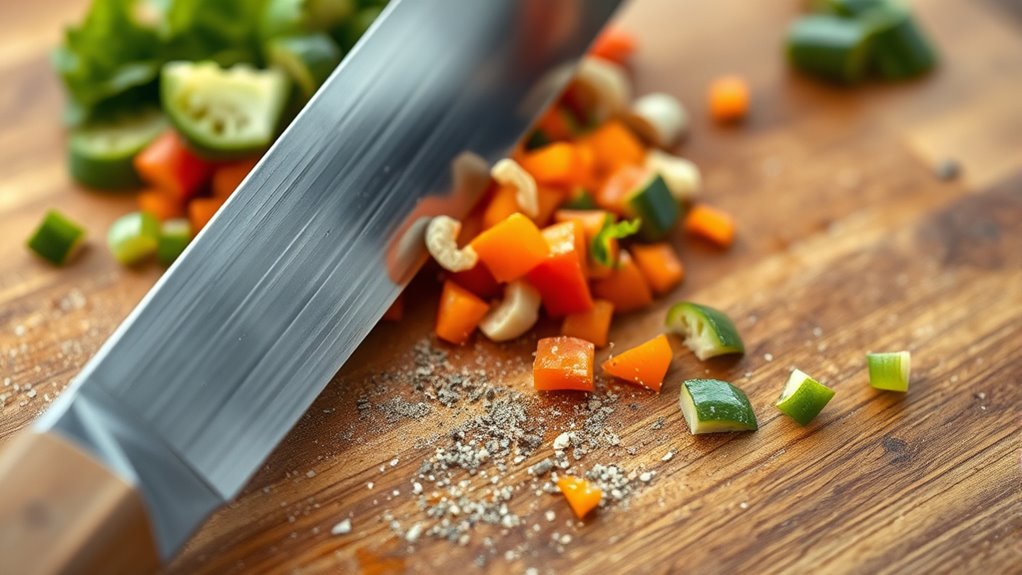
Have you ever noticed your knife becoming less sharp halfway through chopping vegetables or slicing meat? It’s a common frustration that can disrupt your flow in the kitchen. This dulling often happens because of blade friction — the resistance your knife encounters as it cuts through food. When you apply too much pressure or use improper cutting techniques, it increases this friction, which not only dulls the blade faster but also makes cutting more laborious. To keep your knife sharp longer, you need to be mindful of your cutting technique. Instead of pressing down hard, let the weight of the knife do the work, and use a smooth, controlled motion. When you cut with a proper technique, you reduce unnecessary blade friction, which minimizes wear on your edge.
One of the key factors that accelerate dulling is how you handle your knife during prep. If you’re using a chopping style that involves heavy downward pressure or rocking the blade aggressively, you’re creating more friction than necessary. This friction wears down the microscopic serrations on your blade’s edge, causing it to become dull sooner. Instead, focus on a slicing or push-cut technique where you draw the blade through the food with a gentle, consistent motion. This method produces less friction and preserves the integrity of your blade longer. It also improves your control and accuracy, making your prep work safer and more efficient.
Use gentle slicing techniques to reduce friction and keep your knife sharper longer.
Another point to contemplate is how often you lift and reposition the knife. Excessive back-and-forth motion can increase blade friction and cause uneven wear. Instead, try to make clean, deliberate cuts with each pass. Keep your knife sharp by maintaining a steady, fluid motion and avoiding unnecessary sawing or choppy movements. Additionally, ensure your cutting surface is stable and smooth. A rough or uneven cutting board can increase resistance and lead to quicker dulling. Using a proper cutting board material, like wood or plastic, can help reduce blade friction and extend the life of your knife edge. Regular maintenance, including proper sharpening and honing, is also essential for minimizing blade friction and maintaining a sharp edge over time.
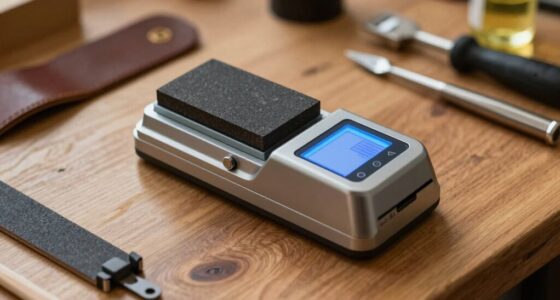
Finally, regular maintenance is vital. Sharpen your knife regularly using a whetstone or honing rod to keep the edge aligned and sharp. A well-maintained blade with a clean edge produces less friction during cutting, making your work smoother and less tiring. By paying attention to your cutting technique and minimizing blade friction, you’ll find your knives stay sharper longer, making meal prep faster, safer, and more enjoyable.
Frequently Asked Questions
Can Sharpening a Knife During Meal Prep Damage the Blade?
Sharpening your knife during meal prep can be safe if you use proper sharpening techniques, but it does carry some safety concerns. If you’re not careful, you might cut yourself or damage the blade. To avoid this, stabilize the knife securely and use a consistent angle. Regular, gentle sharpening helps keep the edge sharp without risking damage, ensuring safer, more efficient prep.
How Often Should I Sharpen My Kitchen Knives?
You should sharpen your kitchen knives every 8 to 12 weeks, depending on use. Surprisingly, 80% of home cooks neglect proper maintenance, leading to dull blades. Regular professional sharpening keeps your knives in top shape, but DIY honing between sessions can extend their sharpness. By sharpening too often, you risk damaging the blade, so strike a balance—sharpen when needed and hone regularly for best results.
What’s the Best Way to Store Knives to Prevent Dulling?
To prevent dulling, you should store your knives properly in knife storage solutions like a magnetic strip, knife block, or blade guard. These options keep blades protected from contact with other utensils, preventing nicks and dulling. Avoid tossing knives loose in drawers, as this exposes the blades to damage. Proper knife storage guarantees blade protection, prolongs sharpness, and keeps your knives in top condition for longer.
Do Different Knife Materials Dull at Different Rates?
Yes, different knife materials dull at different rates. Ceramic blades stay sharper longer because they resist corrosion and don’t develop burrs as quickly, but they’re more brittle and chip easily. Stainless steel knives dull faster, especially if they have softer steel, but are more durable and easier to sharpen. So, if you want longevity, ceramic is great, but if you need toughness, stainless steel is the way to go.
Is Using a Honing Rod as Effective as Sharpening?
Did you know that 80% of home cooks rely solely on honing rods? Honing rods are effective for realigning your knife’s edge, but they don’t sharpen it. Honing vs sharpening, honing rods improve your knife’s performance temporarily, while sharpening actually removes metal to restore a dull blade. For a truly sharp edge, you need to sharpen, but honing rod effectiveness keeps your knife performing well between sharpenings.
Conclusion
Now that you know why your knife dulls mid-meal prep, you can take simple steps to keep it sharp. Remember, a dull knife can increase prep time by up to 50% and raise the risk of accidents. Did you know that sharpening your knife just once a week can make a huge difference? So, invest a few minutes regularly—your fingers and your food will thank you for it!
Halloween Picks
halloween
As an affiliate, we earn on qualifying purchases.