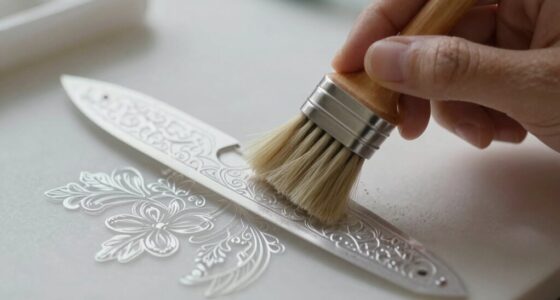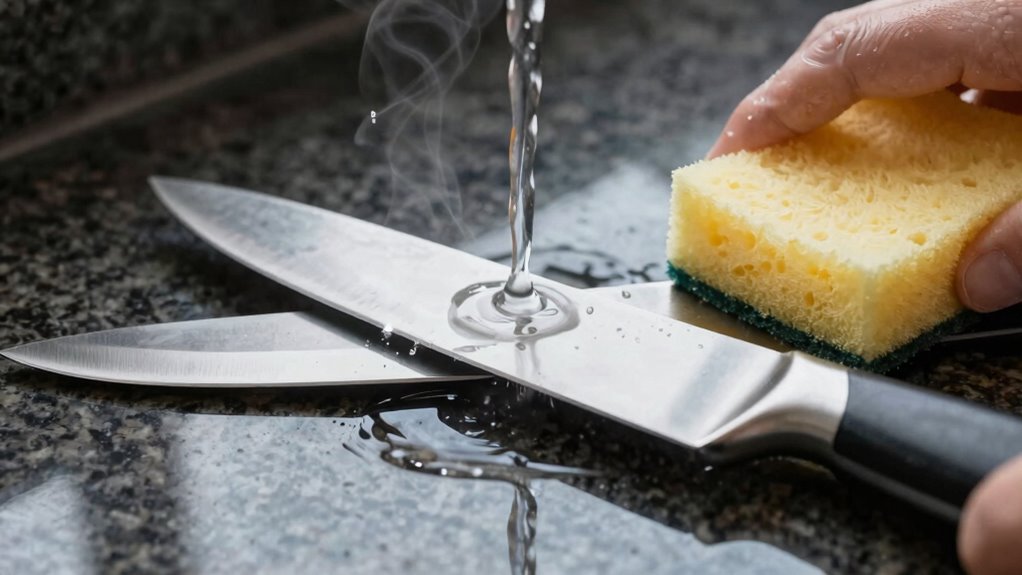

To wash sharp knives safely without nicking sponges or cutting your fingers, always use a soft sponge or microfiber cloth that’s gentle on the blade. Hold the knife by the handle securely while wiping from the spine to the edge to avoid contact with the sharp side. Rinse thoroughly with warm, soapy water and dry immediately with a soft towel, supporting the handle. Want to discover more tips to keep your knives pristine and safe?

Get kitchen gear delivered free with Prime
- Fast, free delivery on millions of items
- Prime Video, Amazon Music and more included
- Member-only deals all year
Key Takeaways
- Use a soft, non-abrasive sponge or microfiber cloth to gently clean the blade, avoiding rough scrubbers.
- Always wash knives with the blade pointed away from your fingers and hands for safety.
- Support the handle firmly with one hand while cleaning with the other to prevent slips.
- Clean from the spine to the edge to minimize contact with the sharp cutting surface.
- Rinse thoroughly and dry immediately with a soft towel, keeping fingers clear of the blade.
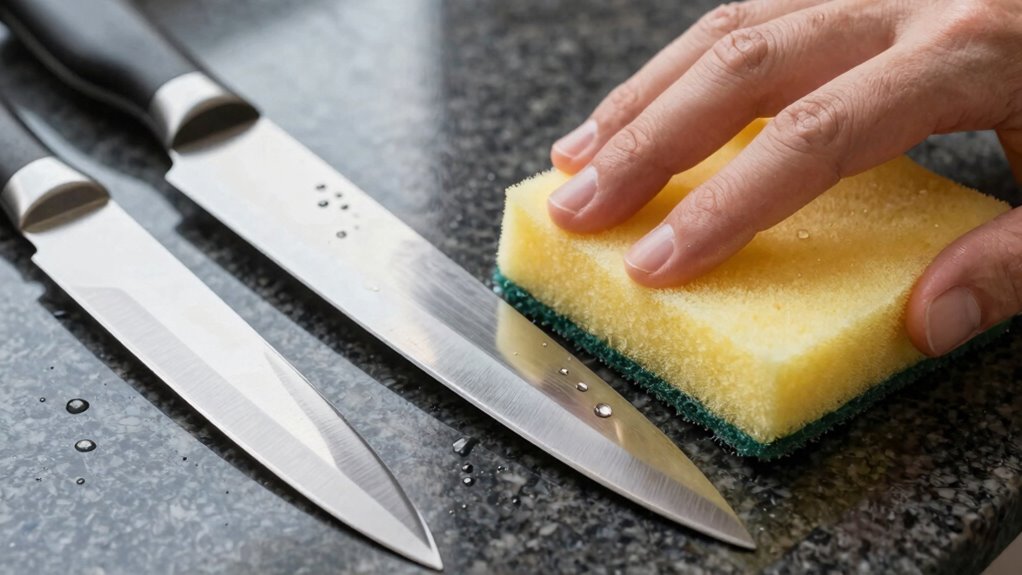
Keeping your sharp knives clean is essential for safety and performance. When you handle knives regularly, you want to guarantee you’re doing it in a way that minimizes the risk of injury and keeps your blades in top shape. The first step is understanding the safety precautions you should take. Always handle your knives carefully, making sure the blade is pointed away from your body and other hand. Use a stable, non-slip surface to support the knife during cleaning. Never leave a sharp knife submerged in soapy water where it’s hard to see; this can lead to accidental nicks or cuts. Instead, wash each blade individually, paying close attention, and avoid rushing through the process.
Using the right cleaning tools makes a big difference. Soft sponges or microfiber cloths are ideal because they’re gentle on the blade and help prevent scratching or dulling the edge. Avoid abrasive scrubbers or steel wool, which can damage the fine edge of your knife. When washing, opt for warm water and a small amount of mild dish soap. Hold the knife by the handle firmly, and gently wipe the blade from the spine to the edge, never against the edge itself. Rinsing thoroughly afterward ensures no soap residue remains, which could cause corrosion over time. Additionally, using appropriate cleaning tools helps maintain the integrity of the blade and prevents accidental damage. Employing proper cleaning techniques can further safeguard your knives and extend their lifespan.
Use soft sponges and warm water with mild soap, wiping from spine to edge for safe, gentle cleaning.
To prevent nicking your sponge or cutting your fingers, consider using a dedicated knife brush or a cleaning glove with a textured surface for extra grip. Some people prefer using a dishcloth or a soft scrubber that’s specifically designed for knife care. When drying, avoid air-drying the blade, as water spots and rust can form. Instead, dry the knife immediately with a clean, dry towel, holding the handle securely. This step not only keeps your knife in good condition but also adds an additional layer of safety by avoiding accidental slips. Proper blade maintenance ensures your knives stay sharp and safe to use over time. Regularly inspecting and honing your blades can also prevent the need for frequent replacements.
If you’re cleaning multiple knives, handle each one carefully and keep them separated to avoid accidental contact. Never use your hand to hold the blade when cleaning or drying; always support the handle. Paying attention to these safety precautions and employing the right cleaning tools helps you avoid nicks, cuts, and blade damage. Regular, careful cleaning will maintain your knives’ sharpness and prolong their life, ensuring you get the best performance every time you cook.
As an affiliate, we earn on qualifying purchases.
Frequently Asked Questions
Can I Wash Sharp Knives in the Dishwasher Safely?
You can wash sharp knives in the dishwasher, but it’s not the safest choice. Dishwasher risks include dulling the blade and potential accidents during unloading. For knife safety, hand washing is better—use a sponge or brush carefully, keeping your fingers clear of the sharp edge. This approach preserves the blade’s sharpness and minimizes the chance of cuts, ensuring your knives stay in top condition and your hands stay safe.
What’s the Best Way to Dry a Sharp Knife?
To dry a sharp knife safely, you should use a clean, dry towel immediately after washing. Focus on knife safety by gripping the handle firmly and avoiding the blade edge. Use gentle, patting drying techniques to prevent slipping. Never air dry a sharp knife, as it increases the risk of accidents. Proper drying preserves the blade’s edge and keeps you safe during cleanup.
Should I Use a Specific Type of Soap for Knives?
Think of soap selection for knife maintenance as choosing the right dress for a special occasion—simplicity and care matter. Use a mild dish soap without harsh chemicals or abrasives, as these can dull your blades over time. Avoid scented or colored soaps that might leave residues. Gentle, unscented dish soap keeps your knives clean and sharp, ensuring they stay in top shape without damage or dullness.
How Often Should I Sharpen My Knives After Washing?
You should sharpen your knives after about 5 to 10 uses or once a month, depending on how often you cook. Proper knife storage and cutting board selection help maintain the edge longer. Always dry your knives thoroughly after washing to prevent corrosion. When sharpening, use a quality honing steel or professional sharpener to keep your blades in top condition, ensuring they perform well and last longer.
Can I Use a Regular Sponge for Cleaning Sharp Knives?
You shouldn’t use a regular sponge for cleaning sharp knives because it can cause nicks or accidental cuts, risking your safety. Instead, opt for sponge alternatives like a soft brush or a microfiber cloth, which are gentler on blades and promote knife safety. These options help you clean thoroughly without damaging the edge or risking injury, keeping your knives sharp and safe for everyday use.
As an affiliate, we earn on qualifying purchases.
Conclusion
Remember, safety is key when washing sharp knives. Always handle them carefully, using a sponge or cloth rather than your fingers, and avoid rushing the process. A gentle, deliberate approach prevents nicks in your sponge and cuts on your skin. As the saying goes, “A stitch in time saves nine,” so taking a moment to wash your knives properly now keeps accidents at bay later. Stay cautious and your knives will serve you well for years to come.
knife sharpening and maintenance kit
As an affiliate, we earn on qualifying purchases.
As an affiliate, we earn on qualifying purchases.
As an affiliate, we earn on qualifying purchases.
Halloween Picks
halloween
As an affiliate, we earn on qualifying purchases.