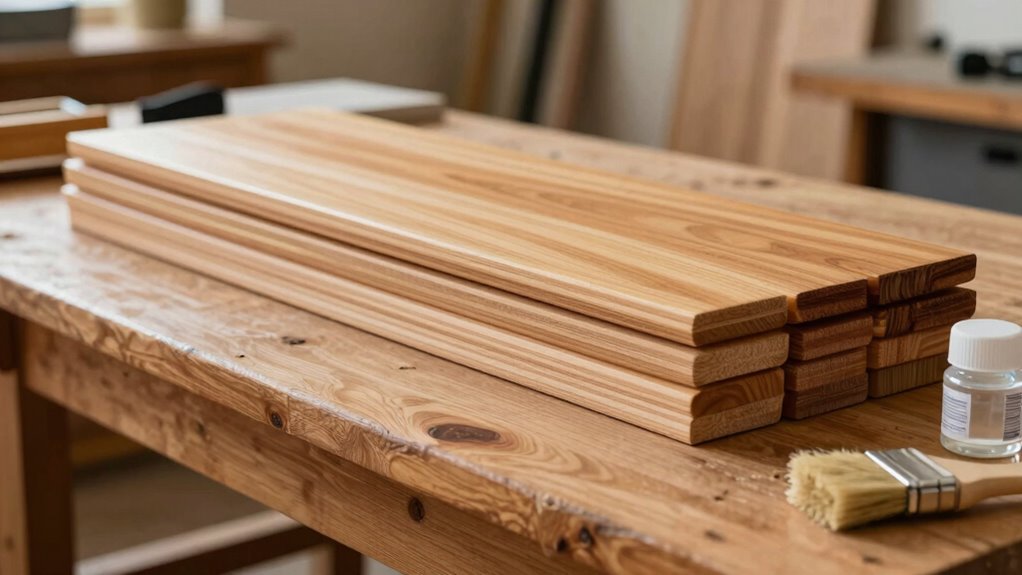

To prevent wood boards from smelling or staining easily, make sure to properly finish and seal them using suitable coatings like lacquer or polyurethane, depending on their use. Sand the surface smooth and apply multiple thin coats, allowing each to dry thoroughly. Keep your wood in a dry, cool environment and clean it regularly with a damp cloth. Maintaining proper drying and storage practices will help preserve their appearance and prevent odors—discover more ways to keep your wood looking great.

Get kitchen gear delivered free — and shop member deals
- Fast, free delivery on millions of items
- Access to Prime Big Deal Days deals on October 6–7
- Prime Video, Amazon Music and more included
Key Takeaways
- Apply a suitable protective finish, such as sealer or polyurethane, to create a barrier against odors and stains.
- Sand the surface smoothly and remove all dust before applying any finish for better adhesion.
- Reapply protective coatings regularly, especially when signs of wear or scratches appear.
- Store wood in a cool, dry environment to prevent moisture absorption and odor development.
- Clean the surface with a damp cloth and avoid harsh chemicals to maintain a fresh, stain-free appearance.
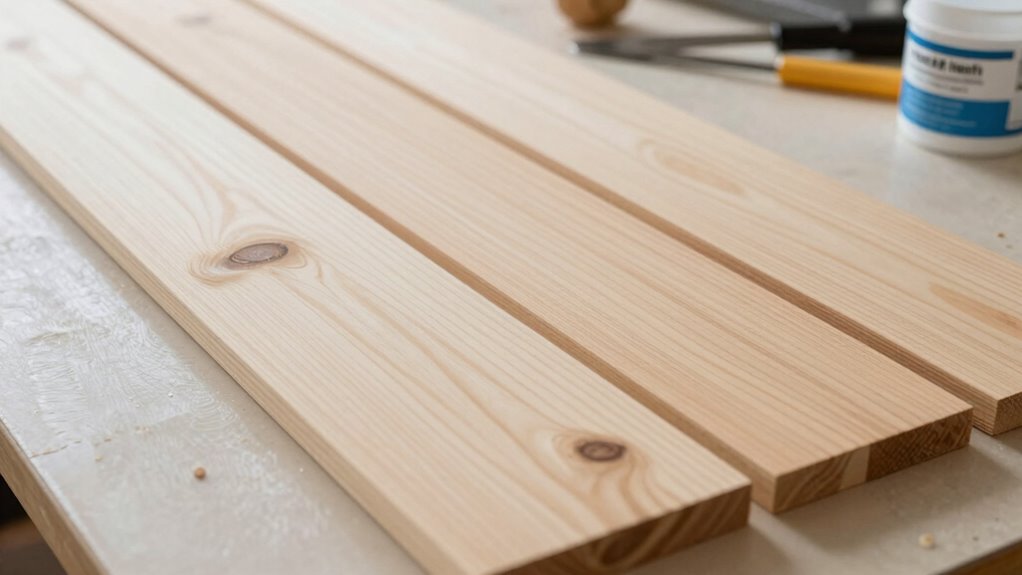
Wood boards can easily absorb odors and stains, especially if not properly treated or maintained. The natural wood grain, with its intricate patterns and porous surface, makes it susceptible to trapping liquids, smells, and dirt. To prevent this, understanding the importance of finishing techniques is essential. These techniques create a protective barrier that shields the wood from moisture and airborne particles, helping it stay cleaner and smelling fresher longer.
Proper finishing techniques protect wood boards from odors, stains, and moisture, keeping them cleaner and fresher longer.
One of the most effective ways to safeguard your wood boards is by applying a proper finish. Sealers, varnishes, or polyurethane coatings serve as a transparent shield, locking out odors and stains while highlighting the wood’s natural grain. When choosing a finish, consider the type of wood and its intended use. For instance, a food-grade mineral oil or beeswax works well for cutting boards, offering both protection and a natural look, while lacquer or polyurethane is better suited for furniture that needs a durable, glossy surface.
The key to a successful finish lies in proper application. Start by sanding the wood surface smoothly, following the direction of the wood grain to avoid scratches. Clean off all dust before applying any finishing product, as debris can mar the final appearance and compromise the protective layer. When applying the finish, use a brush or cloth to spread it evenly, following the wood grain to ensure a seamless coat. Multiple thin layers tend to adhere better than one thick layer, so allow sufficient drying time between coats. Additionally, proper finishing techniques can significantly extend the lifespan of your wood boards by providing enhanced protection against environmental factors. Regularly inspecting and maintaining the finish helps prevent early wear and keeps the surface looking fresh. Using appropriate maintenance methods can further improve the durability and appearance of your wood surfaces over time. Incorporating correct drying techniques ensures that the finish cures properly, resulting in a more durable and long-lasting protective layer.
Beyond applying a finish, regular maintenance plays a significant role in preventing odors and stains. Reapply the protective coating periodically, especially if you notice signs of wear or surface scratches. Keep your wood boards clean by wiping them with a damp cloth and avoiding prolonged exposure to water or harsh chemicals, which can weaken the finish and promote staining. In addition, consider storing your wood boards in a cool, dry place to minimize moisture absorption, which can lead to odors and warping. Proper wood care practices ensure your boards remain in optimal condition over time.
As an affiliate, we earn on qualifying purchases.
Frequently Asked Questions
Can Using Natural Oils Prevent Wood Stains?
Using natural oils can help prevent wood stains by creating a protective barrier that repels moisture and dirt. Natural oils, like tung or linseed oil, penetrate the wood and enhance its durability, contributing to better wood preservation. Regular application keeps the wood hydrated and less prone to staining from spills or environmental factors. So, yes, natural oils are an effective way to safeguard your wood boards and maintain their appearance longer.
How Often Should Wood Boards Be Resealed?
You should reseal your wood boards every 1 to 3 years, depending on use and exposure. Think of sealing techniques as armor for your wood—constant reinforcement keeps it protected. Regular wood treatment guarantees durability and prevents odors or stains from sneaking in. Keep an eye on the finish; if it looks dull or chips, it’s time to reseal. This routine keeps your wood looking fresh and resilient, no matter what life throws at it.
Are There Specific Woods Less Prone to Staining?
Some woods are naturally less prone to staining because of their wood grain and stain resistance. Hardwoods like maple, cherry, and oak tend to resist stains better than softer woods like pine or cedar. Their tighter wood grain helps prevent liquids from seeping in and staining easily. Choosing these woods for your projects can help maintain their appearance longer, reducing the need for frequent cleaning or resealing.
Does Humidity Affect Wood Board Odors?
Did you know that high humidity levels can increase wood board odors by up to 50%? Humidity definitely affects smells, as moisture encourages mold, mildew, and bacteria growth. To prevent this, you should focus on proper wood treatment and humidity control. Ventilate your space well, use dehumidifiers if needed, and seal the wood properly. These steps help keep odors at bay and protect your wood boards from staining or unpleasant smells.
Can I Use Vinegar to Remove Existing Stains?
Yes, you can use vinegar to help remove existing stains from wood boards. It acts as a natural cleaner that breaks down stain residues. After applying vinegar, you should consider using chemical treatments or sealant options to protect your wood and prevent future stains. These sealants create a barrier, making it harder for stains and odors to penetrate, ensuring your wood stays cleaner and fresher longer.
As an affiliate, we earn on qualifying purchases.
Conclusion
So, there you have it—your foolproof plan to keep wood boards smelling fresh and stain-free. Just slap on some oil, seal those pores, and give them a little love (and maybe a bit of humor). Because, let’s face it, who needs their beautiful wood turning into a stinky, stained mess? With these tips, your boards will stay pristine, and you’ll keep your sanity intact—at least until the next inevitable spill. Cheers to worry-free woodworking!
As an affiliate, we earn on qualifying purchases.
As an affiliate, we earn on qualifying purchases.
Fall Picks
fall essentials
As an affiliate, we earn on qualifying purchases.