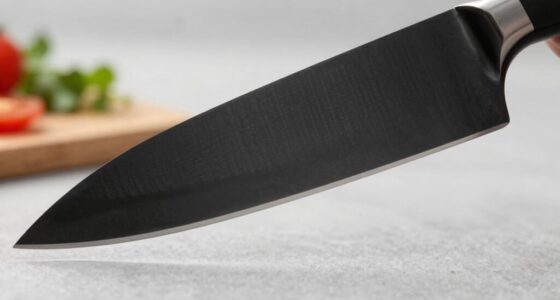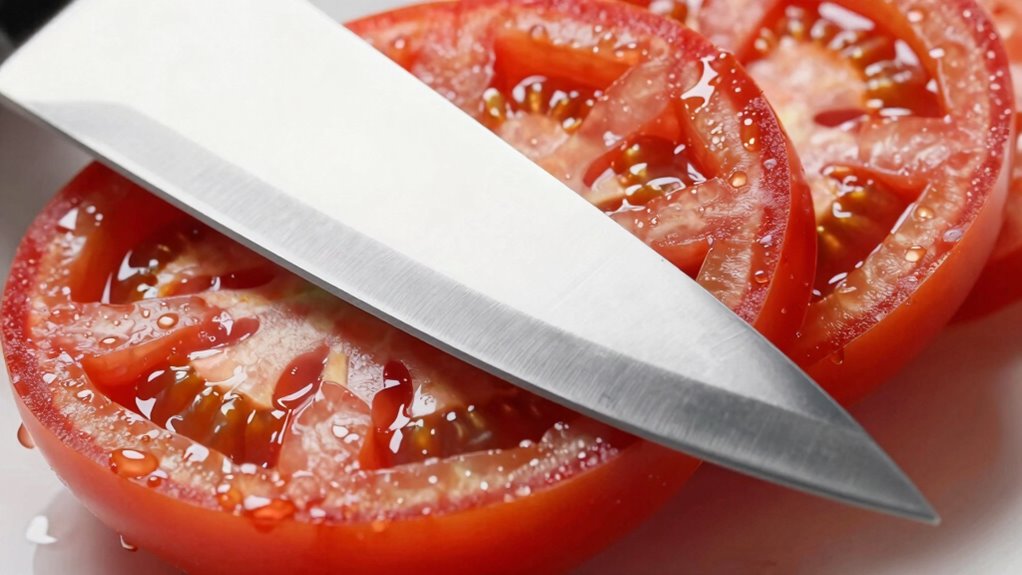

A knife feels “glassy” on food when it has a smooth, polished surface that lets it glide effortlessly through ingredients, minimizing sticking and resistance. The handle design also plays a role, offering a comfortable and secure grip that reduces unnecessary friction. Materials like polished stainless steel or ceramic blades combined with a sleek finish create this slick sensation. If you want to discover how to enhance this feel even further, there’s more to explore below.

Get kitchen gear delivered free — and shop member deals
- Fast, free delivery on millions of items
- Access to Prime Big Deal Days deals on October 6–7
- Prime Video, Amazon Music and more included
Key Takeaways
- A smooth, polished blade surface reduces friction, allowing effortless slicing through food.
- Handle design with ergonomic, contoured shapes enhances grip and minimizes resistance during use.
- Blade materials like stainless steel or ceramic, especially with mirror or satin finishes, create a slick, non-stick surface.
- Proper finishing and polishing of the blade surface decrease sticking and facilitate a “glassy” glide.
- Overall craftsmanship and alignment optimize control, comfort, and smoothness during cutting.
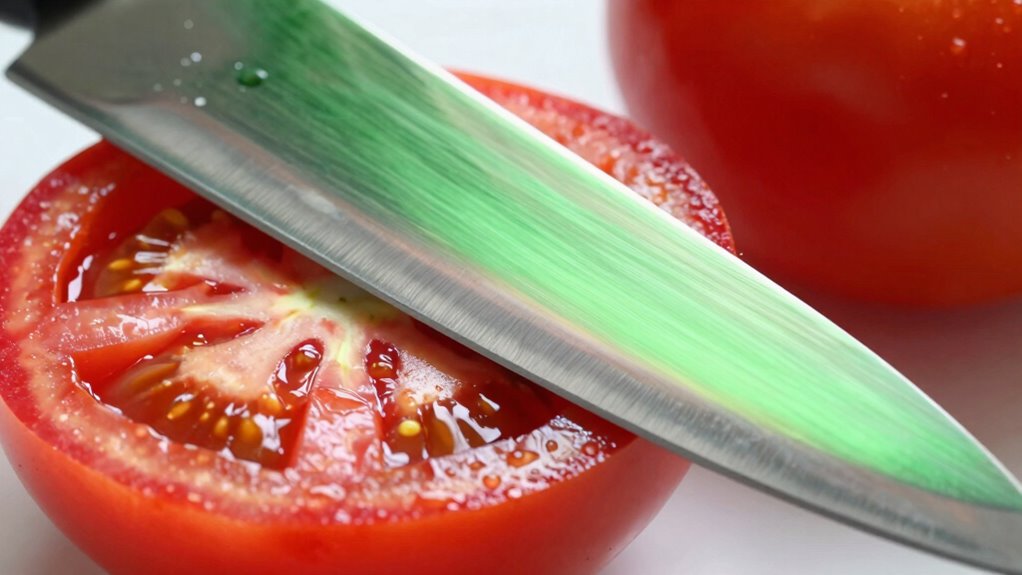
When a knife feels “glassy” on food, it often indicates a smooth, almost slick surface that causes the blade to glide effortlessly without sticking. This sensation results from a combination of factors, primarily the knife’s handle design and the properties of its blade material. If your knife offers this slick feel, it’s likely engineered to minimize friction and maximize precision, making cutting feel almost like slicing through butter.
A slick, glassy feel indicates a well-crafted knife designed for effortless, precise cutting through smooth, minimal resistance.
The knife handle design plays a critical role in this experience. Handles that are ergonomically shaped with smooth, contoured surfaces tend to reduce unnecessary resistance and provide a comfortable, secure grip. When the handle fits perfectly in your hand, you apply steady pressure without squeezing tightly, allowing the blade to move more smoothly across the food. Some knives feature handle materials like polished wood, Bakelite, or synthetic composites, which contribute to the overall slick feel by resisting moisture and decreasing friction during use. A well-designed handle balances the knife’s weight and guarantees control, so you don’t have to fight the blade or struggle with awkward movements. The finish and texture of the handle, whether matte or polished, also influence the sensation, with smoother finishes often feeling more “glassy” against your hand and the food.
Blade material properties are equally essential in creating that effortlessly sliding sensation. High-quality blades are typically made from stainless steel, high-carbon steel, or ceramic, each offering distinct characteristics. Stainless steel blades, especially those with a fine polish, tend to have a smooth surface that reduces sticking and drag. High-carbon steel blades are known for their sharpness and durability, and when properly polished, they produce a sleek, slick surface that enhances glide. Ceramic blades, with their ultra-smooth and non-porous surface, are naturally resistant to sticking and create that glassy feel because they don’t absorb food juices or residue. The finish of the blade—whether mirror-polished or satin—also impacts how smoothly it moves through food, with mirror-polished blades offering the most effortless glide. Additionally, the blade finish plays a role in how smoothly the knife cuts, with polished surfaces providing less friction.
In essence, the “glassy” sensation is a result of carefully crafted blade surface properties combined with handle design that encourages ideal control and comfort. When these elements align, your knife can slice through ingredients with minimal resistance, giving you that satisfying, effortless cutting experience. So, if you notice that your knife feels especially slick and smooth, it’s likely a well-made tool designed to enhance your precision and ease in the kitchen.
glassy stainless steel chef knife
As an affiliate, we earn on qualifying purchases.
As an affiliate, we earn on qualifying purchases.
Frequently Asked Questions
Can a Knife’s Material Affect Its “Glassy” Feel?
Yes, a knife’s material can affect its “glassy” feel, especially depending on the surface finish. For example, knives made from high-quality stainless steel or ceramic often have a smoother, more polished surface, giving that glass-like sensation on food. The surface finish, whether matte or polished, also influences this feel. A well-finished, smooth knife enhances this “glassy” sensation, making cutting feel more precise and slick.
Does the Knife’s Age Influence Its Glassy Sensation?
Yes, the knife’s age can influence its glassy sensation. Over time, surface coatings may wear down, and the blade’s edge can become dull, affecting how smoothly it glides. Regular knife sharpening restores that sleek, glassy feel on food, while worn coatings can diminish it. So, as your knife ages, maintaining it with proper sharpening and considering surface coatings can keep that satisfying, glassy touch intact.
How Do Different Cutting Techniques Impact This Feel?
Your cutting technique directly impacts how a knife feels on food. When you use less cutting pressure and maintain blade sharpness, the knife glides smoothly, creating that glassy sensation. Pressing too hard or dulling the blade causes more resistance, making the surface feel less silky. To keep that glassy feel, focus on gentle, controlled cuts and keep your knife sharpened, ensuring ideal blade sharpness and minimal pressure.
Is a Glassy Knife Feel Safe for Food Contact?
A glassy knife feel can seem mesmerizing, but safety matters. Yes, it’s safe for food contact if the knife is made from food-grade, non-toxic materials. Still, you must prioritize knife safety to prevent food contamination. Regularly inspect your knife for chips or cracks, and clean it properly after use. A safe, well-maintained knife keeps your food pristine and your mind at ease, turning prep into a pleasurable dance rather than a risky chore.
Can Cleaning Methods Change the Knife’s Surface Texture?
Yes, cleaning methods can change your knife’s surface texture. Using abrasive cleaners or scrubbing too hard during cleaning, especially after knife sharpening, can create tiny scratches or a glassy feel on the blade. Food residue left on the knife can also cause a slick or glassy sensation. To maintain its surface, use gentle cleaning techniques, avoiding harsh abrasives, and thoroughly remove food residue to keep your knife in ideal condition.
ceramic kitchen knife with smooth finish
As an affiliate, we earn on qualifying purchases.
As an affiliate, we earn on qualifying purchases.
Conclusion
When your knife glides smoothly through food, feeling almost like glass, it’s a sign of a perfectly honed edge and a well-maintained blade. That silky, effortless cut makes you feel like you’re slicing through butter, the blade whispering against ingredients with a gentle, satisfying hum. It’s a dance of precision and care, turning cooking into an art. When your knife feels this glassy, you’ve truly mastered the craft—ready to create culinary magic with ease.
As an affiliate, we earn on qualifying purchases.
As an affiliate, we earn on qualifying purchases.
Halloween Picks
halloween
As an affiliate, we earn on qualifying purchases.