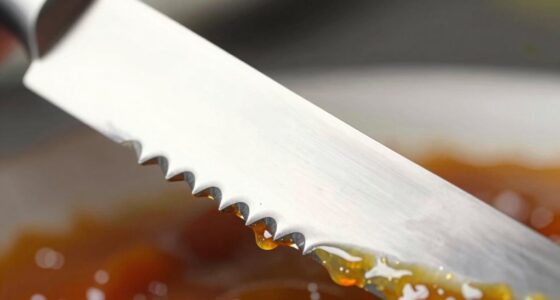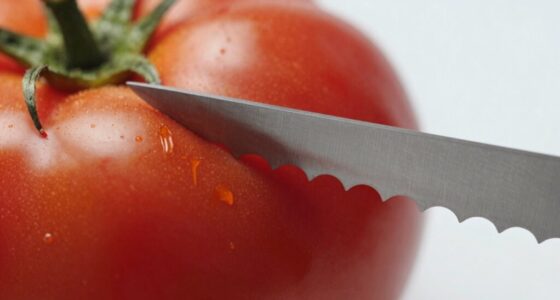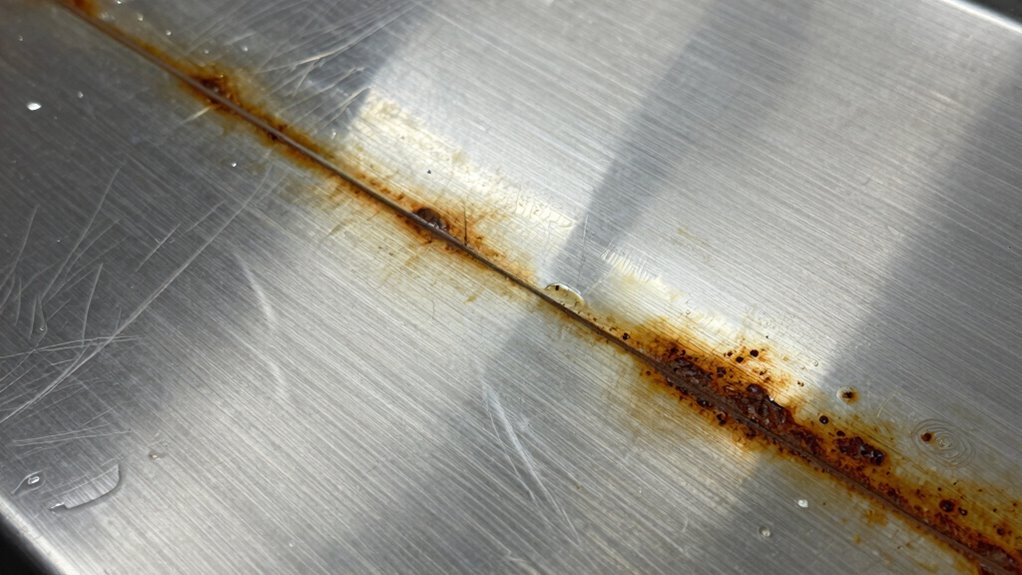
Stainless steel is called “stainless” because it resists corrosion thanks to its chromium content, which forms a protective oxide layer. However, it’s not completely immune to rust—damage to this layer from scratches, exposure to harsh environments, or neglect can cause corrosion to form. Understanding what makes stainless steel resistant and what can break down this protection can help you prevent rust. If you’re curious, there’s more to discover about how these metals truly perform.

Get kitchen gear delivered free — and shop member deals
- Fast, free delivery on millions of items
- Access to Prime Big Deal Days deals on October 6–7
- Prime Video, Amazon Music and more included
Key Takeaways
- “Stainless” indicates a tendency to resist rust, not an absolute guarantee of rust-proof performance.
- Resistance depends on alloy composition, primarily chromium content, which forms a protective oxide layer.
- Environmental factors like salt, acids, or high temperatures can damage the oxide film, leading to rust.
- Surface damage such as scratches exposes the underlying metal, increasing corrosion risk.
- Proper maintenance and avoiding surface damage help preserve stainless steel’s rust resistance.
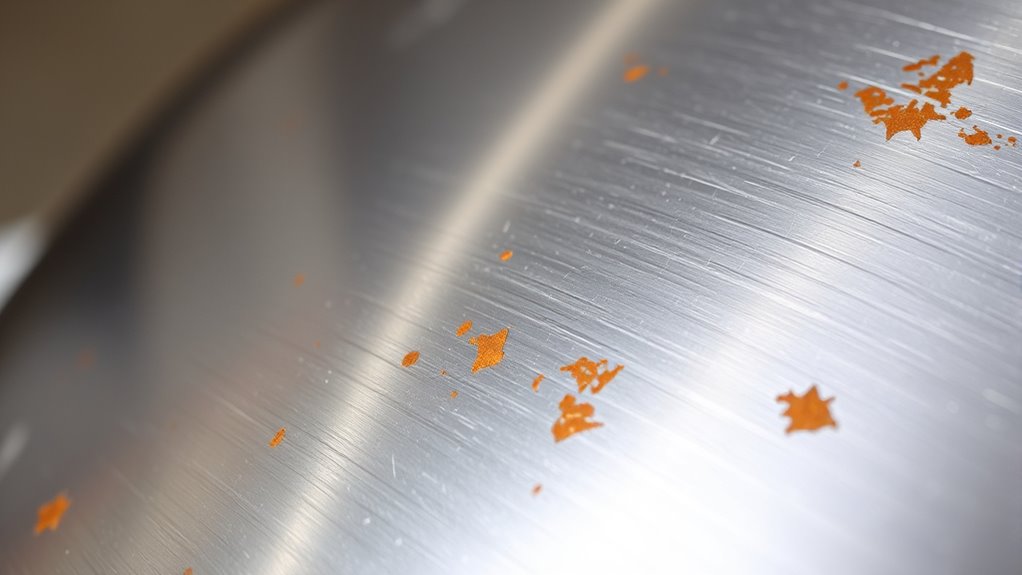
Stainless steel is widely admired for its durability and resistance to corrosion, but many people are surprised to learn that it can still rust under certain conditions. The key to understanding this lies in its corrosion resistance, which isn’t absolute but depends heavily on its alloy composition. When you hear “stainless,” it suggests that the steel resists rust, but that resistance isn’t guaranteed in every environment. Instead, it’s a result of specific elements added during manufacturing that form a protective oxide layer on the surface. This layer acts as a shield, preventing moisture and oxygen from reaching the iron core. However, if that layer gets damaged or compromised, the steel becomes vulnerable to rust.
The alloy composition of stainless steel is what primarily determines its corrosion resistance. Most stainless steels contain chromium, typically at least 10.5%, which is essential for forming that protective oxide film. Without enough chromium, the steel loses its “stainless” quality. Other elements, like nickel, molybdenum, and nitrogen, are added to enhance properties such as strength, formability, and resistance to specific types of corrosion. For example, adding molybdenum improves resistance to pitting and crevice corrosion in chloride-rich environments like seawater. But if the alloy composition isn’t tailored for a particular application or environment, the steel’s ability to resist rust diminishes.
Environmental factors such as exposure to salty air, acidic substances, or high temperatures can accelerate rust formation, especially if maintenance is neglected. Even a small scratch or surface damage can break the protective oxide layer, exposing the underlying metal to corrosive elements. Once this happens, rust can form, especially if the environment is conducive to corrosion. That’s why proper cleaning and maintenance are vital — removing corrosive agents and avoiding abrasive scrubbing that might damage the surface. Additionally, understanding corrosion mechanisms is crucial for selecting the right stainless steel grade for specific conditions.
stainless steel cleaning and maintenance kit
As an affiliate, we earn on qualifying purchases.
As an affiliate, we earn on qualifying purchases.
Frequently Asked Questions
Can Stainless Steel Rust Under Extreme Conditions?
Yes, stainless steel can rust under extreme conditions. When exposed to harsh environments, chemical reactions may occur, especially if the alloy composition lacks enough chromium or other protective elements. These elements form a passive layer that prevents rust, but if this layer is damaged or compromised, you’ll see corrosion. So, in intense conditions like salty or acidic environments, stainless steel’s resistance isn’t foolproof, and rust can still develop.
How Can I Prevent Stainless Steel From Rusting?
To prevent stainless steel from rusting, you should regularly clean its surface to remove dirt and corrosive substances. Avoid exposing it to harsh environments that cause pitting corrosion or surface tarnishing. Applying a protective coating or passivation treatment helps maintain its resistance. Also, dry the steel thoroughly after cleaning or exposure to moisture. These steps reduce the risk of rust, keeping your stainless steel looking new and corrosion-free.
Is All Stainless Steel Equally Resistant to Rust?
Not all stainless steel is equally resistant to rust. You should look for superior alloys, like 316 or 904L, which contain higher levels of chromium and nickel for better corrosion resistance. Surface treatments, such as passivation or coatings, can also enhance durability. By choosing the right alloy and applying appropriate surface treatments, you’ll guarantee your stainless steel stays rust-free longer and performs better in harsh environments.
Does Cleaning Affect Stainless Steel’s Rust Resistance?
Cleaning can impact stainless steel’s rust resistance by affecting its passivation process. When you clean with harsh chemicals or abrasive scrubbers, you might strip away the protective oxide layer, making it more prone to rust. The alloy composition also matters; higher chromium content enhances rust resistance. To preserve its durability, use gentle cleaning methods and maintain the passivation layer, ensuring your stainless steel stays resistant over time.
Can Stainless Steel Corrode With Saltwater Exposure?
Yes, stainless steel can corrode with saltwater exposure. Marine corrosion occurs because saltwater accelerates oxidation, breaking down the protective chromium oxide layer that keeps stainless steel rust-resistant. The saltwater effects weaken this barrier, leading to pitting and rust over time. To prevent damage, you should rinse stainless steel with freshwater after exposure to saltwater and choose grades specifically designed for marine environments, like 316 stainless steel.
As an affiliate, we earn on qualifying purchases.
Conclusion
So, now you know that “stainless” doesn’t mean completely rust-proof—it’s more like a superhero with a tiny kryptonite weakness. While it resists rust better than regular steel, it’s not invincible. Keep it clean and dry, and you’ll enjoy its shiny, durable surface for years. Remember, even the mightiest warriors can falter if neglected—don’t let your stainless steel be the one that falls to rust’s sneaky attack. Stay vigilant, and it’ll stay stunning.
stainless steel scratch repair kit
As an affiliate, we earn on qualifying purchases.
As an affiliate, we earn on qualifying purchases.
marine grade stainless steel cookware
As an affiliate, we earn on qualifying purchases.
As an affiliate, we earn on qualifying purchases.
Halloween Picks
halloween
As an affiliate, we earn on qualifying purchases.