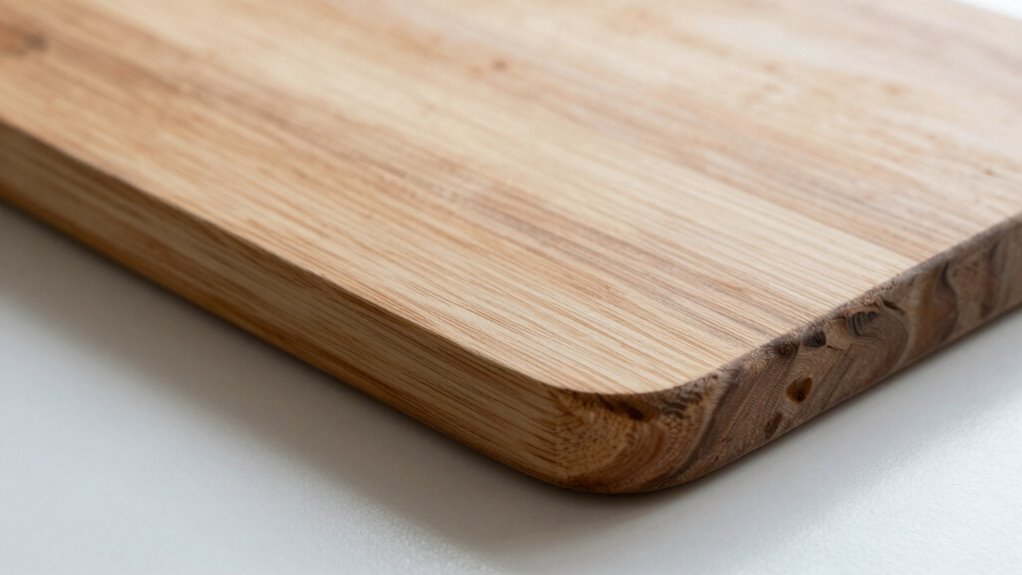

To identify a warped or uneven cutting board, check its edges and surface for warping, bulges, or dips. Place it on a flat surface and see if it wobbles or shifts. Press down on different spots to feel for flexing or bouncing, and look for cracks, gouges, or irregularities that could harbor bacteria. If it moves or feels unstable, it’s time to contemplate replacing it—continue exploring how to spot damage more effectively.

Get kitchen gear delivered free with Prime
- Fast, free delivery on millions of items
- Prime Video, Amazon Music and more included
- Member-only deals all year
Key Takeaways
- Place the board on a flat surface and check for rocking or wobbling.
- Visually inspect edges and surface for gentle curves, dips, or bulges.
- Press firmly on different areas to test for excessive flexing or instability.
- Look for cracks, splits, or gouges that may cause unevenness.
- Observe if the board shifts or tilts during use or chopping.
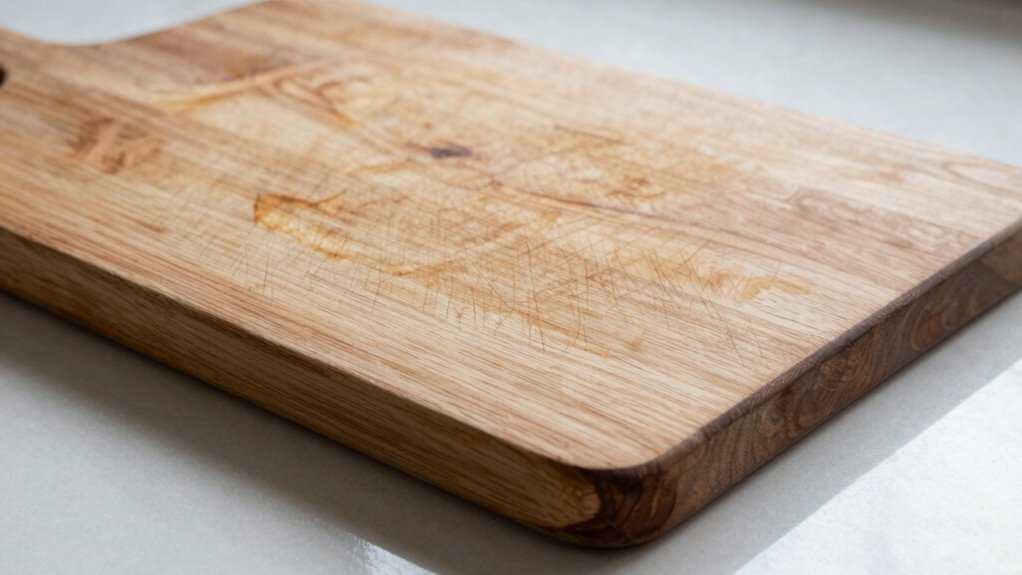
A warped or uneven cutting board can compromise your food prep, making it harder to work safely and efficiently. When your board isn’t flat, you risk slips, uneven cuts, and potential contamination. Recognizing a warped or uneven surface isn’t always obvious at first glance, but paying attention to a few key signs can save you trouble down the line. Your priority should be maintaining kitchen safety, and that starts with evaluating the material’s durability and how it holds up over time. An understanding of the material helps you anticipate when a board might be nearing the end of its useful life or needs replacement.
Start by placing your cutting board on a flat countertop and observing whether it wobbles or rocks. If it shifts noticeably or doesn’t sit flush, it’s likely warped. A stable, flat surface is essential for safe chopping, as an uneven board can cause knives to slip, increasing the risk of injury. You can also perform a simple visual check by inspecting the edges and surface for any warping, bulges, or dips. Sometimes, warping manifests as a gentle curve along the edges or a slight bow in the middle. These irregularities may be subtle but are enough to interfere with precise cutting and food safety.
Press down firmly on different points of the board to see if it flexes or bounces more than it should. An overly flexible or uneven surface indicates compromised material durability, which means the board might be deteriorating or has been exposed to excessive moisture, heat, or wear. A material’s ability to withstand daily use is crucial for determining its longevity. If the surface has developed cracks, splits, or deep gouges, these can also contribute to unevenness, and such damage often signals that the board’s integrity is compromised. These imperfections not only hinder your kitchen safety but also create crevices where bacteria can harbor, increasing the risk of cross-contamination.
Additionally, pay attention to how your cutting board feels during use. If you notice it shifts or tilts when you’re chopping, or if your cuts aren’t straight despite your best effort, it’s time to evaluate whether the board is warped. Remember, a durable material is designed to withstand regular use without warping or deforming over time. Wood, bamboo, plastic, and composite boards all have different durability profiles, but all can warp if not properly cared for or if they’re past their prime. Proper maintenance can often prolong the life of your cutting board and prevent premature warping.
warped cutting board replacement
As an affiliate, we earn on qualifying purchases.
As an affiliate, we earn on qualifying purchases.
Frequently Asked Questions
Can a Warped Cutting Board Be Fixed Permanently?
Yes, a warped cutting board can often be fixed permanently with proper restoration techniques like flattening with heat and weight or using a damp cloth and pressing. To prevent future warping, you should follow preventative measures such as oiling your board regularly, avoiding soaking it in water, and storing it upright. These steps help maintain your board’s shape and extend its lifespan, ensuring it stays flat and functional.
What Materials Are Most Prone to Warping?
Wooden, bamboo, and soft plastics are most prone to warping. These materials often lack the durability needed to resist moisture and temperature changes, making them vulnerable. To prevent warping, prioritize durable materials and practice proper storage, cleaning, and drying. Constant exposure to water, heat, or humidity weakens these materials over time, leading to warping. So, choose sturdy, moisture-resistant options and follow warping prevention tips to keep your cutting board flat and functional.
How Often Should I Check My Cutting Board for Warping?
You should check your cutting board for warping monthly, especially if you use it frequently. During cleaning, look for uneven surfaces or gaps, and inspect storage practices—avoid stacking heavy objects on top or storing it in damp areas. Regularly cleaning with proper techniques and ensuring it’s stored in a dry, stable place helps prevent warping, making it easier to spot any issues early and maintain its longevity.
Does Dishwasher Use Cause Cutting Board Warping?
Dishwasher use can cause dishwasher damage, leading to plastic deformation in your cutting board. Think of it as a silent sculptor, slowly warping your board beyond recognition. The high heat and moisture in dishwashers weaken the material, making warping inevitable over time. To preserve your cutting board’s integrity, avoid dishwasher cleaning, and opt for hand washing instead, ensuring it stays flat and functional longer.
Are There Specific Signs of Hidden Warping?
Yes, hidden warping can be tricky to spot. You might notice surface irregularities like subtle dips or ridges that aren’t obvious at first glance. To identify hidden warping, run your hand over the board’s surface or place a straightedge to check for uneven spots. If you see inconsistencies in flatness or feel slight bumps, it’s a sign of underlying warping that could affect your cutting surface.
As an affiliate, we earn on qualifying purchases.
Conclusion
By checking for wobbling, feeling for unevenness, and inspecting for cracks, you can confidently spot a warped or uneven cutting board. These simple tests help you see the warps, feel the inconsistencies, and catch the cracks before they become bigger problems. Keep your workspace safe and your food prep smooth by staying vigilant. With these quick checks, you’ll keep your kitchen tools in top shape, ready to serve, ready to slice, and ready for your next culinary creation.
wood cutting board with juice groove
As an affiliate, we earn on qualifying purchases.
As an affiliate, we earn on qualifying purchases.
As an affiliate, we earn on qualifying purchases.
Halloween Picks
halloween
As an affiliate, we earn on qualifying purchases.