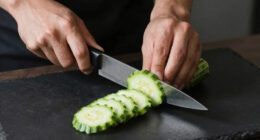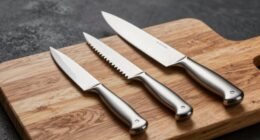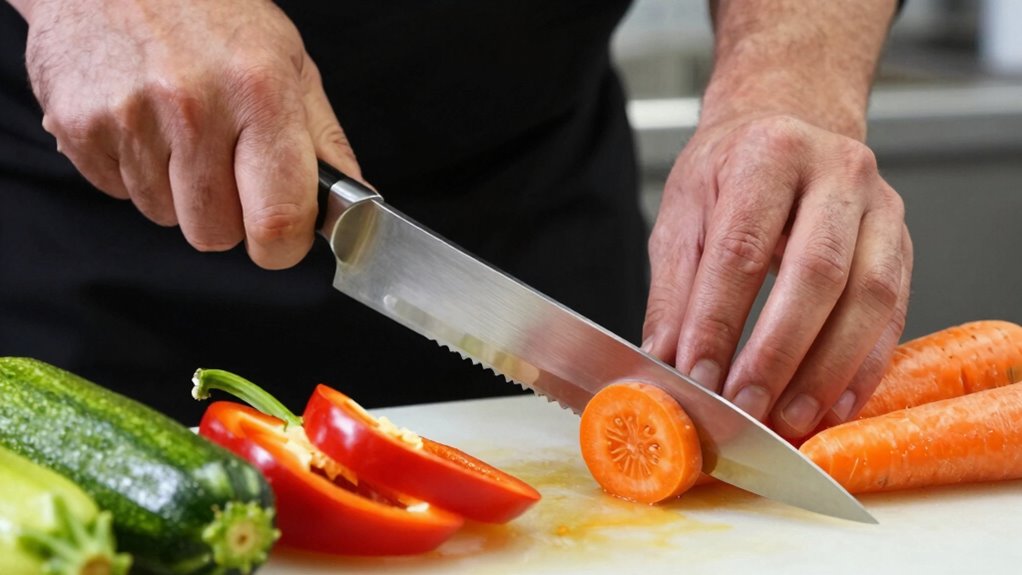
To match your knife edge ‘tooth’ to what you cook most, consider your typical food textures. Use a serrated knife for tough exteriors like bread, tomatoes, or citrus, as its teeth grip and glide through soft insides easily. For vegetables, meats, or tasks requiring precision, opt for a straight-edged knife that provides clean, controlled slices. Understanding these differences helps you cut more effortlessly; keep exploring to find the best match for your kitchen needs.
Key Takeaways
- Match serrated knives to foods with tough exteriors and soft insides, like bread or tomatoes.
- Use straight-edged knives for precise slicing of meats, herbs, and vegetables requiring clean cuts.
- Consider hybrid knives for versatile tasks, combining serrated and straight edges for different ingredients.
- Ensure blade sharpness and handle comfort align with your typical cooking tasks to maximize efficiency.
- Understand blade design features to select knives that match your specific culinary needs and reduce effort.
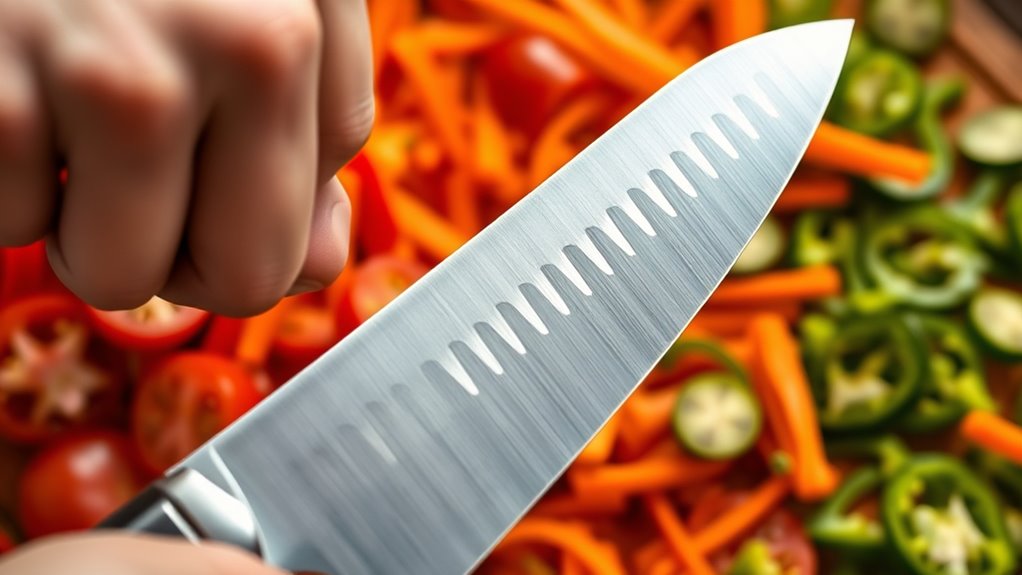
Choosing the right edge ‘tooth’ for your knife can make a significant difference in your cooking experience. The type of edge you select directly impacts how effectively you prepare your ingredients and how comfortable the process feels. When considering the edge ‘tooth,’ think about blade sharpness and handle comfort, as these factors determine how well your knife performs and how enjoyable it is to use.
Choosing the right edge ‘tooth’ enhances comfort, efficiency, and precision in your cooking.
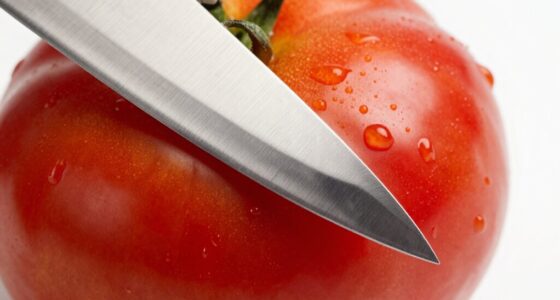
A serrated edge, with its small, saw-like teeth, excels at cutting through foods with tough exteriors and soft interiors, like bread, tomatoes, or citrus. The serrations grip the surface and glide through without excessive pressure, reducing strain on your hand and wrist. This is especially beneficial if you find yourself working with items that require a gentle sawing motion. The blade sharpness of a serrated knife isn’t just about a sharp edge but about the teeth’s ability to grip and cut smoothly. Over time, serrated edges tend to stay sharp longer because the teeth do the work, saving you from frequent sharpening. When it comes to handle comfort, serrated knives often feature ergonomic grips designed to provide a secure hold, minimizing fatigue during extended use.
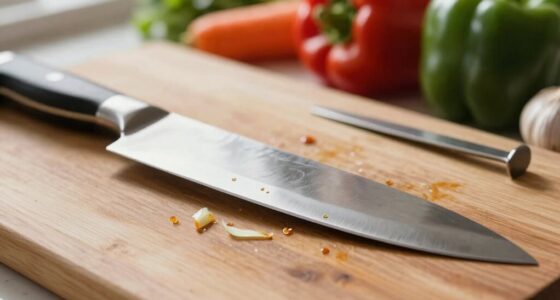
On the other hand, straight-edged knives with a fine, sharp blade are ideal for tasks that demand precision, like slicing meat or chopping herbs. These blades offer cleaner cuts, especially when they are exceptionally sharp, which is critical for presentation and flavor retention. The blade sharpness in these knives allows you to exert less force, making your cuts more controlled and reducing hand fatigue. Handle comfort is equally important here; a well-balanced, ergonomic handle will help you maintain control and reduce strain during delicate or repetitive tasks. If you cook a lot of vegetables or need to make thin, precise slices, a straight-edged knife with a keen edge is your best choice.
Additionally, consider that a hybrid approach might be best if your cooking involves diverse tasks. For example, a serrated bread knife for baked goods and a straight-edged chef’s knife for vegetables and meats. Matching the right edge ‘tooth’ to what you cook most ensures you leverage the strengths of each type, making your prep work smoother and more efficient. Understanding the importance of blade design can help you select the most suitable knives for your specific needs. Ultimately, the ideal knife setup depends on understanding the balance between blade sharpness and handle comfort, aligning them with your cooking habits. When you choose wisely, your knives will feel like natural extensions of your hand, transforming mundane prep into an effortless, even enjoyable, part of your culinary routine.

Orblue Serrated Bread Knife with Upgraded Stainless Steel Razor Sharp Wavy Edge – Bread Cutter Ideal for Slicing Homemade Bagels, Cake (8-Inch Blade with 5-Inch Handle)
ULTRA-SHARP, CUTS EFFORTLESSLY: The Orblue Serrated Bread Knife blade has an ultra-sharp serrated edge that grips and effortlessly…
As an affiliate, we earn on qualifying purchases.
As an affiliate, we earn on qualifying purchases.
Frequently Asked Questions
Can I Change the Edge ‘Tooth’ on My Knife Easily?
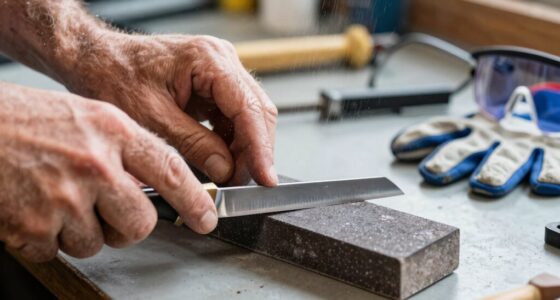
Yes, you can change the edge ‘tooth’ on your knife easily with proper knife maintenance. To do this, you’ll need to perform an edge replacement, which involves removing the old, dull edge and sharpening or regrinding it. Use a sharpening stone or a professional sharpener to carefully reshape the edge. Regular maintenance guarantees your knife stays sharp, and replacing the edge when needed keeps it performing at its best.
What Is the Best Edge ‘Tooth’ for Slicing Bread?
For slicing bread, a serrated edge is your best choice. Its tooth pattern helps you cut through crusty exteriors without crushing the soft interior. Look for a knife with evenly spaced, sharp teeth designed specifically for bread slicing. This serrated edge allows for smooth, controlled cuts, making your bread look perfect and saving you effort. Keep the blade sharp for the best results and easier slicing every time.
How Often Should I Sharpen or Sharpen My Knives?
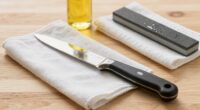
You should sharpen your knives every 1 to 3 months, depending on use, to maintain ideal knife maintenance. Regular sharpening keeps your blades sharp and prevents dullness, making cutting safer and easier. If you notice the knife dragging or requiring more force, it’s time to sharpen again. Use a sharpening stone or professional service for best results, and always follow manufacturer recommendations for your specific knife type.
Does the Edge ‘Tooth’ Affect Food Presentation?
Think of your knife’s edge as the brushstroke that shapes your food’s story. Yes, the edge ‘tooth’ affects food presentation by influencing cuts’ precision and clean lines. Sharp, well-maintained edges enhance food aesthetics, making dishes look more appealing. When plating techniques are paired with the right edge tooth, your presentation becomes art. A smooth, clean cut elevates the visual allure, turning simple ingredients into a stunning culinary masterpiece.
Are There Safety Tips for Handling Different Edge ‘Tooth’ Types?
Yes, there are safety tips for handling different edge ‘tooth’ types. Always pay attention to blade safety by keeping your fingers clear of the cutting edge and using proper handling precautions. When switching blades, make sure they are securely attached to prevent accidents. Wear cut-resistant gloves if needed, and handle blades with care, especially when cleaning or changing them. Staying alert and practicing good handling precautions helps prevent injuries.
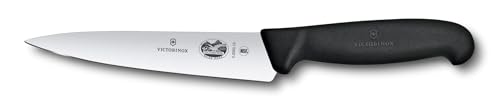
Victorinox Fibrox 6 Inch Straight Edge Chef's Knife, Kitchen Knife with Stainless Steel Blade, Non-Slip Handle, Dishwasher Safe, Black
An all-purpose chef’s knife provides ultimate control to mince your way through any culinary challenge
As an affiliate, we earn on qualifying purchases.
As an affiliate, we earn on qualifying purchases.
Conclusion
So, next time you pick a knife edge, remember that matching the tooth to your cooking isn’t just a myth—it’s backed by the idea that different teeth cut better with specific foods. For example, serrated edges excel with bread and tomatoes, while straight edges handle meats and vegetables smoothly. Experimenting with this theory can actually elevate your prep game, making tasks easier and safer. Trust the science behind the design, and you’ll enjoy more precise, enjoyable cooking every time.

Huusk Japanese Knife Set 3 PCS – Stainless Chef Knife Set with Sheath & Ergonomic Resin Handle, Hand Sharpened Full Tang Professional Kitchen Knives for All Purpose, Gifts Idea for Men Women
Elegant 3-Piece Knife Set: This Huusk knife set includes a chef knife, santoku knife, and utility knife, making…
As an affiliate, we earn on qualifying purchases.
As an affiliate, we earn on qualifying purchases.

Home Hero 2 Pcs Santoku Knife with Sheath – High Carbon Stainless Steel Chopping Knife with Ergonomic Handle – Razor-Sharp Multi-Purpose Kitchen Knife for Chopping Vegetable and Cooking (Black)
Ultra Sharp Knife with Protective Sheath – Made from high-quality 3Cr13 stainless steel, our ultra-sharp Santoku knife is…
As an affiliate, we earn on qualifying purchases.
As an affiliate, we earn on qualifying purchases.