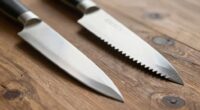
Your blade may look sharp but still slide on tomato skin because its edge has become micro-dull or lost its micro-serrations, which are essential for gripping soft surfaces. Over time, tiny nicks and worn micro-teeth can develop, reducing cutting performance despite the blade feeling sharp. Regular honing and proper sharpening help realign and restore these micro-serrations, improving grip and slicing ability. Want to know how to maintain your blade for perfect tomato cuts? Keep going to learn more.

Get kitchen gear delivered free with Prime
- Fast, free delivery on millions of items
- Prime Video, Amazon Music and more included
- Member-only deals all year
Key Takeaways
- Micro-dents and tiny nicks weaken the blade’s micro-serrations, reducing its grip on soft, slippery surfaces like tomato skin.
- Regular honing realigns the edge, restoring the micro-serrations necessary for effective slicing of tender foods.
- Feeling sharp isn’t enough; an unmaintained edge can slide on tomato skin due to loss of micro-serrations.
- The quality of steel and proper sharpening angle influence how well the blade grips and cuts soft, elastic surfaces.
- Proper maintenance ensures the edge’s micro-structures are intact, allowing the blade to grip and slice tomatoes cleanly.

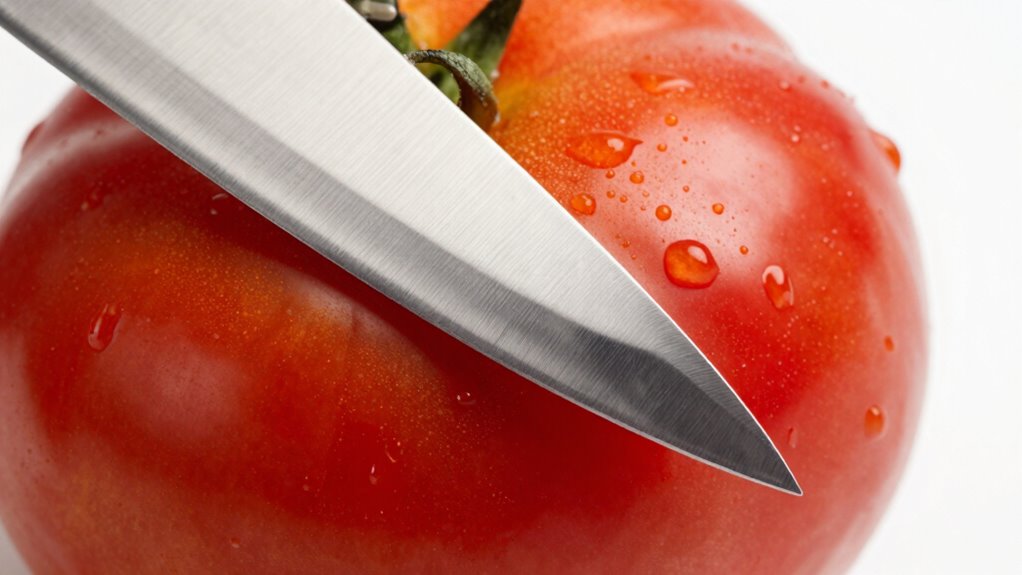
Even though your knife’s edge feels incredibly sharp, it can still slide effortlessly on tomato skin without cutting through. This frustrating experience often leaves you wondering why a supposedly sharp blade doesn’t perform as expected. The answer usually lies in blade maintenance and understanding the delicate tomato skin texture. Tomato skins are thin, slightly elastic, and prone to slipping if your blade isn’t properly maintained or if its edge isn’t optimized for such tender surfaces.
Your blade’s sharpness isn’t solely about how it looks or feels—it’s about its actual cutting ability. Over time, even a sharp knife can develop micro-dents, tiny nicks, or a subtle dullness that you might not notice just by feeling the edge. These imperfections compromise the blade’s ability to grip and cut through a surface like tomato skin effectively. Proper blade maintenance is vital here; regular honing and occasional sharpening help keep the edge aligned and crisp. When you neglect these steps, your knife may feel sharp to the touch but actually lack the necessary micro-serrations that bite into soft, slippery textures like tomato skin.
Even a sharp knife can lose micro-serrations that grip soft surfaces like tomato skin.
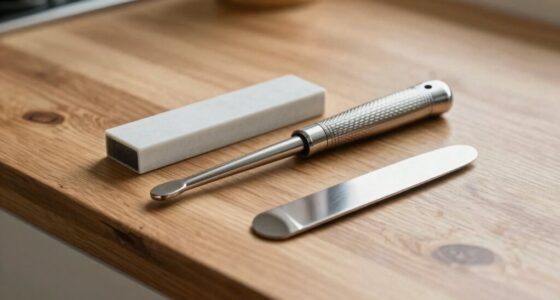
The texture of tomato skin presents a unique challenge. It’s not just thin; it’s slightly tacky and elastic, which requires a blade that can grip rather than slide. When the edge isn’t properly maintained, the micro-serrations that help grip slippery surfaces diminish. As a result, the blade glides over the surface without slicing cleanly, making you think the knife isn’t sharp enough. In reality, the problem is that the edge has lost its ability to ‘catch’ on the delicate surface. To fix this, focus on blade maintenance—use a honing steel regularly to realign the edge and ensure it remains fine-tuned for slicing soft fruits and vegetables.
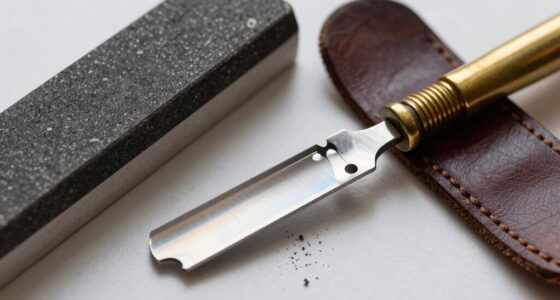
Additionally, the type of steel and sharpening technique play a role. Some steels hold an edge longer but may require specific sharpening angles to perform well on tomato skins. A finer edge, maintained with proper tools, will better penetrate and cut through the skin without slipping. If your knife feels sharp but slides on tomato skin, it’s time to revisit your blade maintenance routine. Sharpen, hone, and recheck the angle to restore the edge’s ability to grip softer textures. Only then can you achieve that effortless, clean slice you’re after, ensuring your knife doesn’t just feel sharp but truly cuts. Proper blade geometry can make a significant difference in how well your knife performs on delicate surfaces like tomato skin.
Japanese honing steel for kitchen knives
As an affiliate, we earn on qualifying purchases.
As an affiliate, we earn on qualifying purchases.
Frequently Asked Questions
Can Knife Maintenance Affect Cutting Performance on Different Foods?
Yes, knife maintenance greatly affects cutting performance on various foods. If you ignore blade corrosion, your knife’s sharpness diminishes, making slicing more difficult. Proper care also includes checking handle ergonomics; a comfortable, secure grip helps you control the knife better and prevents slipping. Regular sharpening and cleaning keep your blade in top condition, ensuring precise cuts whether you’re slicing tomatoes or tougher foods.
Does the Type of Tomato Skin Impact How a Knife Slides?
Think of tomato skin as a slippery dance floor, and your knife as a skilled dancer. The texture of the tomato, whether smooth or slightly waxy, influences how easily your knife glides. A firm grip is essential; if your knife isn’t held steady, it’ll slip. Softer, more delicate skins demand a gentle touch. Adjust your knife grip and consider the tomato’s texture to guarantee a smooth cut every time.
How Does Humidity Influence Knife Grip and Cutting Accuracy?
Humidity effects can substantially impact your grip stability, making it harder to control your knife. When humidity is high, your hands may become sweaty, reducing friction and increasing the chances of slipping. This can decrease your cutting accuracy, especially on delicate tasks. To maintain ideal grip, keep your hands dry, use a damp towel to wipe the handle, and consider grip-enhancing gloves if needed.
Are Certain Knife Materials Better for Slicing Tomatoes?
You’ll find ceramic blades excel at slicing tomatoes because they’re incredibly sharp and maintain their edge longer, making clean cuts without crushing the fruit. Stainless steel knives are also good, offering durability and versatility, but they may require more frequent sharpening. For the best results, choose a ceramic blade for precision and gentle slicing, especially if you want a smooth, effortless cut through the delicate skin of a tomato.
Can Sharpening Angle Alter a Knife’s Ability to Cut Soft Skins?
Think of your knife’s sharpening angle as the tune of a musical instrument—change it, and everything sounds different. Yes, adjusting the sharpening angle alters the blade geometry, which directly impacts its ability to cut soft skins. A more acute angle creates a finer edge, ideal for delicate tasks like slicing tomatoes. Conversely, a wider angle offers durability but may struggle with soft skins. So, tweak your sharpening angle to optimize performance.
professional knife sharpener for fine edges
As an affiliate, we earn on qualifying purchases.
As an affiliate, we earn on qualifying purchases.
Conclusion
So now, when your knife feels sharp but slides on tomato skin, you know it’s not just about the edge’s sharpness. It’s about the blade’s angle, the blade’s edge, and your technique. It’s about understanding the balance between sharpness and friction, between control and glide. Keep these in mind, adjust your approach, and turn that slipping slide into a smooth slice. Sharpen your skills, sharpen your blade, and master the art of effortless cutting.
As an affiliate, we earn on qualifying purchases.
best sharpening stone for soft foods
As an affiliate, we earn on qualifying purchases.
As an affiliate, we earn on qualifying purchases.
Halloween Picks
halloween
As an affiliate, we earn on qualifying purchases.