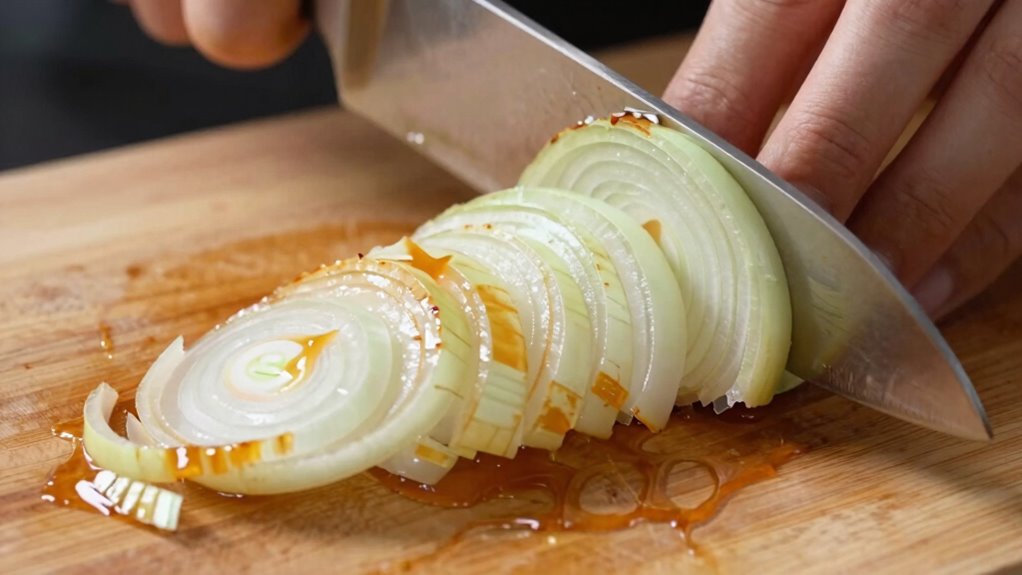

For caramelizing onions, slice them vertically into thin, even rings or slices to guarantee they cook slowly and develop a sweet, rich flavor. For sautéing, cut the onion in half from root to tip, then slice into half-moons or strips, using slightly thicker cuts for faster cooking. Proper slicing helps achieve the right texture and flavor. To master these techniques and open the door to perfect results, keep exploring for more tips.

Get kitchen gear delivered free with Prime
- Fast, free delivery on millions of items
- Prime Video, Amazon Music and more included
- Member-only deals all year
Key Takeaways
- Slice onions into thin, even rings or half-moons for caramelizing, ensuring uniform heat distribution during slow cooking.
- For sautéing, cut onions into slightly thicker slices or strips to suit faster cooking and desired texture.
- Use a sharp knife to achieve clean, precise cuts, which promote even cooking and better flavor development.
- Lay onions flat on the cutting board to maintain stability and consistency in slicing thickness.
- Store sliced onions properly to prevent spoilage and ensure freshness before cooking.
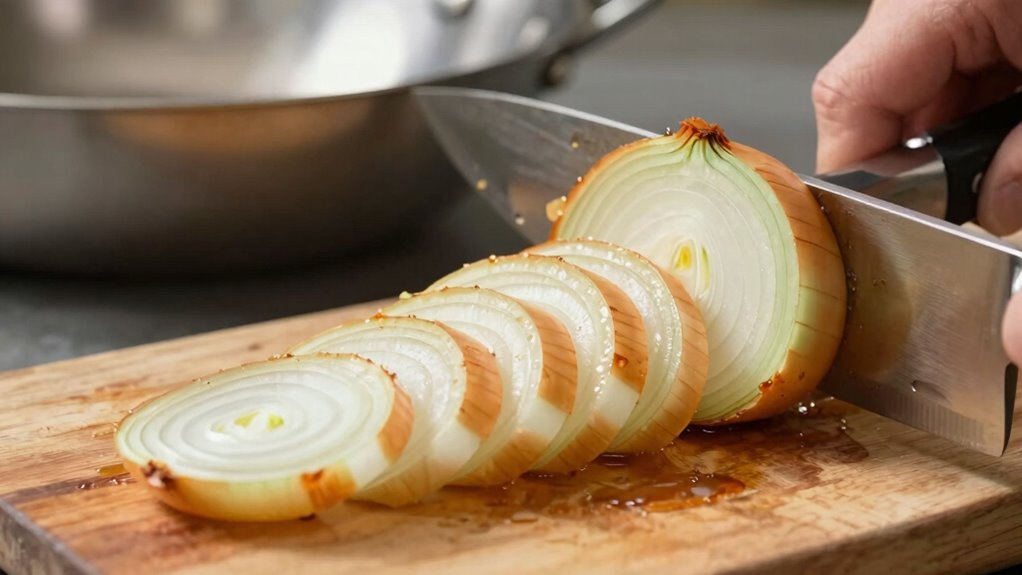
Slicing onions correctly is essential for achieving the best flavor and texture whether you’re caramelizing or sautéing. The way you prepare your onions can make a big difference in the outcome of your dish. Before you start slicing, make sure you’ve stored your onions properly. Onion storage is crucial; keep them in a cool, dry, well-ventilated area away from direct sunlight. Proper storage prevents mold and sprouting, ensuring your onions stay fresh for longer. When it’s time to use them, good onion peeling techniques come into play. Use a sharp knife to cut off the root and stem ends, then peel away the papery outer layers. Removing the outer skin cleanly helps achieve uniform slices and prevents bits of skin from slipping into your cuts.
Once peeled, your onion’s shape determines how you slice it. For caramelizing, you want consistent, thin slices. Lay the onion on its side and slice it vertically into thin, even rings. These thin slices will cook slowly and evenly, allowing the sugars to caramelize beautifully. For sautéing, you might prefer slightly thicker slices or strips, depending on the texture you want. Cut the onion in half from root to tip, then lay each half flat on the cutting board. Slice into half-moons or strips, ensuring your cuts are even for uniform cooking. Thinner slices or strips cook faster and develop a sweeter flavor, which is ideal for quick sautéing.
Pay attention to your onion storage even before slicing. If your onions are stored in a humid environment or have started sprouting, they might not peel as easily or could spoil faster. Always choose firm, unblemished onions for slicing. When peeling, use your fingers or a small paring knife to gently remove the outer layers, being careful not to take off too much of the flesh. This helps maintain the shape and integrity of the slices during cooking. Proper onion storage can also help prevent unnecessary spoilage and make peeling easier.
sharp chef's knife for slicing onions
As an affiliate, we earn on qualifying purchases.
As an affiliate, we earn on qualifying purchases.
Frequently Asked Questions
Can I Use Red Onions Instead of Yellow for Caramelizing?
Yes, you can use red onions instead of yellow for caramelizing, but be aware of the differences. Red onions have a milder, sweeter flavor and tend to become more vibrant rather than golden brown. This substitution affects the caramelizing process, as red onions caramelize less deeply and may add a slightly different color and taste to your dish. Adjust your expectations accordingly to achieve the flavor profile you want.
How Does Onion Thickness Affect Cooking Time?
Thicker onion slices take longer to cook because they have more texture and mass, increasing the overall cooking duration. Thinner slices soften and caramelize faster, giving a more delicate texture. If you want a tender, evenly cooked onion, slice thinner, especially for sautéing. For caramelizing, thicker slices can develop richer flavors but require extra time to break down, so adjust your cooking duration accordingly.
Should Onions Be Rinsed Before Slicing?
You should skip rinsing onions before slicing, as excess water can cause sogginess and hinder caramelization. Instead, peel the onion carefully, removing the papery layers, and store leftovers in an airtight container to keep freshness. When preparing, dry the onion thoroughly if needed. Proper peeling prevents dirt and bacteria from sneaking in, and good storage tips keep your onions flavorful and ready for slicing, sautéing, or caramelizing whenever you need.
What’s the Best Way to Store Sliced Onions?
For sliced onion preservation, store them in an airtight container or resealable plastic bag in the refrigerator. Keep them cold and use within 1-2 days for maximum freshness. Onion storage tips include keeping them away from strong-smelling foods to prevent odor absorption. If you have a large amount, consider freezing sliced onions in a single layer on a baking sheet first, then transferring to a freezer bag for longer-term storage.
Can I Prepare Onions Ahead of Time for Cooking?
You can prep onions ahead of time using simple prepping techniques, making cooking smoother later. After slicing, store them in an airtight container or resealable bag, and keep them in the fridge to retain freshness. Use storage tips like adding a splash of water or vinegar to prevent browning. This way, you save time, and your onions stay fresh, ready for your next delicious dish, whether caramelized or sautéed.
As an affiliate, we earn on qualifying purchases.
Conclusion
Now that you know the difference in slicing for caramelizing and sautéing, you’re ready to master both techniques. Think of it like painting with onions—thick slices for rich, sweet caramelization, and thin for quick sautéing. With a little practice, your onions will turn out perfectly every time, adding depth and flavor to your dishes. So grab your knife and get slicing—your taste buds will thank you for it!
As an affiliate, we earn on qualifying purchases.
ceramic or stainless steel slicing board
As an affiliate, we earn on qualifying purchases.
As an affiliate, we earn on qualifying purchases.
Halloween Picks
halloween
As an affiliate, we earn on qualifying purchases.