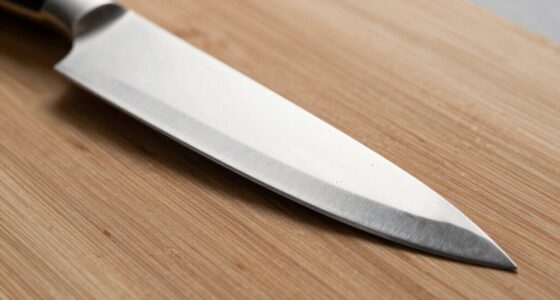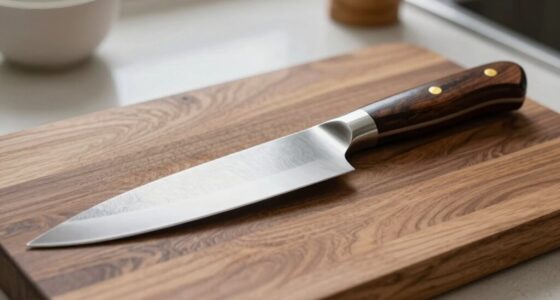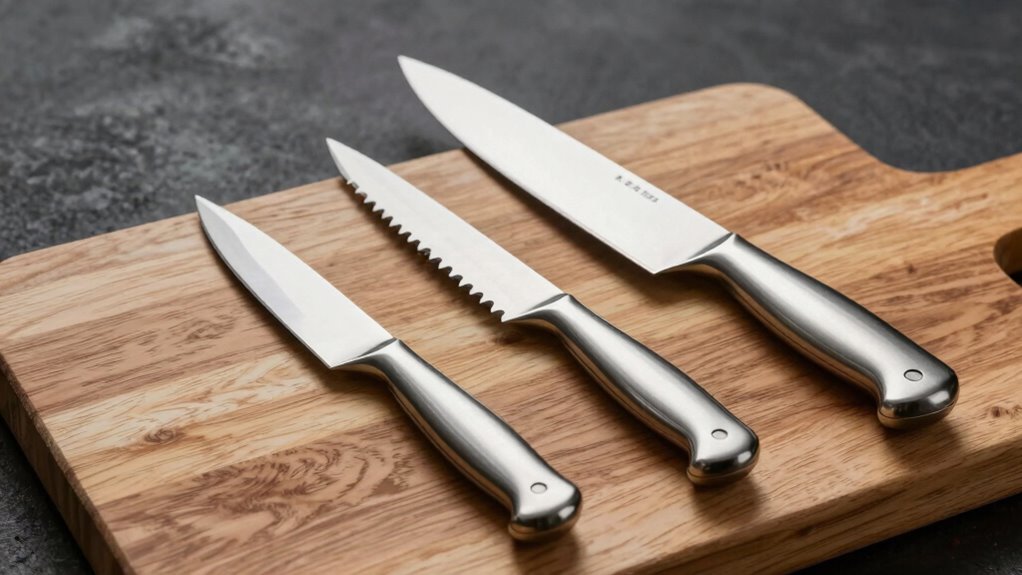
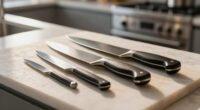
Start by choosing three essential knives: a chef’s knife, a paring knife, and a serrated bread knife, to cover your basic prep needs. Keep your knives sharp with regular honing, and store them safely in a knife block or on a magnetic strip to prevent damage and guarantee easy access. Establish a routine for cleaning and maintenance, and set up a dedicated space for knife care. Keep going to discover how to build a practical, efficient setup that will elevate your cooking game.

Get kitchen gear delivered free — and shop member deals
- Fast, free delivery on millions of items
- Access to Prime Big Deal Days deals on October 6–7
- Prime Video, Amazon Music and more included
Key Takeaways
- Select a high-quality chef’s knife, paring knife, and serrated bread knife tailored to your cooking needs.
- Invest in a dedicated storage solution like a knife block or magnetic strip for safety and blade preservation.
- Establish a routine for regular sharpening and honing using appropriate tools to maintain optimal blade performance.
- Create a designated workspace for knife maintenance, including sharpening, inspecting, and cleaning.
- Keep knives clean, dry, and properly stored after each use to ensure durability and safety.
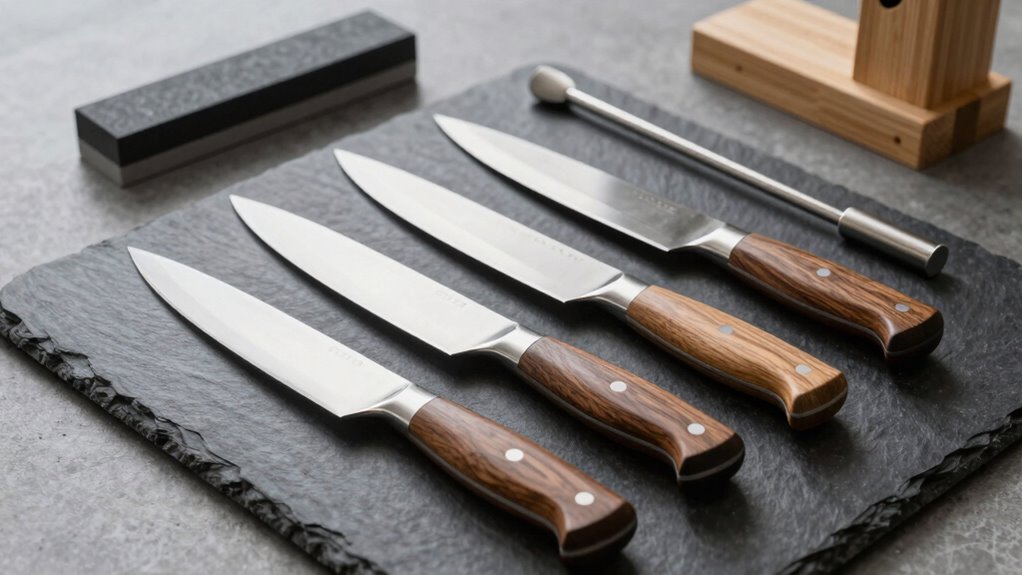
Starting a three-knife setup can seem intimidating at first, but with the right approach, it becomes straightforward and rewarding. Your goal is to select knives that serve different purposes—typically a chef’s knife, a paring knife, and a serrated bread knife—each essential for serious cooking. Once you’ve chosen your knives, you’ll want to focus on maintaining them properly, and that’s where knife sharpening comes into play. Regular sharpening ensures your blades stay effective and safe, making your prep work smoother. Invest in a good sharpening stone or a honing rod, and learn how to use them correctly. Keeping your knives sharp isn’t just about performance; it also extends the lifespan of your blades. As you sharpen, pay attention to the angle and consistency, so each knife maintains a precise edge. Over time, you’ll notice how a well-sharpened knife reduces effort and enhances precision.
Next, consider your storage solutions carefully. Proper storage keeps your knives safe, maintains their sharpness, and prevents accidents. A knife block with individual slots is a popular choice, as it prevents blades from knocking against each other. Alternatively, magnetic strips mounted on the wall offer easy access and help keep your knives in prime condition by avoiding moisture buildup inside a traditional block. For added safety, ensure your storage solution is stable and secure, especially if you have children around. Storing knives properly also means cleaning and drying them thoroughly after each use to prevent rust and corrosion, which can dull blades and compromise safety. Additionally, regular maintenance of your knives, including honing and proper cleaning, is essential for long-term performance. Establishing a knife care routine can help you stay consistent and keep your blades in optimal condition. Incorporating proper storage practices not only protects your investment but also creates a more organized and safe kitchen environment.
Your setup should also include a dedicated space for knife maintenance. Set aside a small area where you can sharpen, hone, and inspect your knives regularly. This makes knife care routine and accessible, so you’re less likely to neglect it. Additionally, you might want to keep a small, designated cloth or towel nearby for wiping blades clean after sharpening and cleaning. By establishing a consistent routine for knife sharpening and storage, you keep your tools in top shape, making your entire cooking process more efficient and enjoyable. Remember, building a three-knife starter setup isn’t just about buying the right tools; it’s about creating a system that promotes proper care and easy access. That way, every meal becomes a pleasure, and your knives serve you well for years to come.
As an affiliate, we earn on qualifying purchases.
Frequently Asked Questions
What Is the Best Material for Knife Blades?
Stainless steel is your best choice for knife blades, thanks to its excellent blade durability and cutting edge retention. It resists rust and staining, making it low maintenance. High-carbon steels offer even sharper edges and better edge retention but require more care to prevent rust. For everyday cooking, stainless steel balances durability and ease of maintenance, ensuring your knives stay sharp and reliable through countless meal preparations.
How Often Should I Sharpen My Knives?
You should sharpen your knives every few weeks if you use them regularly, but it depends on your knife maintenance and cutting habits. Use proper sharpening techniques, like honing before sharpening, to extend blade life. Pay attention to how your knives perform—if they start to drag or require more effort, it’s time to sharpen. Regular sharpening keeps your knives effective, ensuring safe, precise cuts during your serious cooking sessions.
Can I Use the Same Honing Rod for All Knives?
Yes, you can use the same honing rod for all your knives, but make sure it’s in good condition by regularly maintaining it. Keep your honing rod clean and check its alignment, as proper honing enhances your knife’s edge. Also, consider knife storage solutions that prevent dulling, like knife blocks or magnetic strips, to keep your knives sharp longer and guarantee your honing rod remains effective for a longer time.
What Safety Precautions Should I Follow When Handling Knives?
Handling knives safely is like walking on a tightrope—you need focus and care. Always store your knives properly, like in a knife block or protective sheath, to prevent accidents. Use correct cutting techniques, such as curling your fingers, to avoid cuts. Keep your knives sharp, as dull blades require more force and can slip. Never try to catch a falling knife or grab it from the blade; focus on safety first.
How Do I Choose the Right Knife Handle for Comfort?
To choose the right knife handle for comfort, look for an ergonomic grip that fits your hand size and grip style. You should feel secure and comfortable during prolonged use. Consider handle materials like wood or composite, which are easy to maintain with regular handle maintenance, cleaning, and occasional conditioning. Test different handles if possible, so you can find one that reduces fatigue and provides maximum control during your kitchen tasks.
As an affiliate, we earn on qualifying purchases.
Conclusion
Now that you’ve assembled your three-knife starter setup, think of it as planting a small garden. Just as each plant needs the right soil, water, and care, your knives require proper handling and maintenance to flourish. I once watched a chef transform a cluttered drawer into a sleek, efficient space—turning chaos into harmony. With your new knives, you’ll access a world of confident, joyful cooking, turning everyday meals into culinary adventures. Happy slicing!
As an affiliate, we earn on qualifying purchases.
As an affiliate, we earn on qualifying purchases.
Fall Picks
fall essentials
As an affiliate, we earn on qualifying purchases.