You’ll find some knives feel more “accurate” because they have a sharp, well-maintained edge that allows for precise control and clean cuts. Proper technique, like using a pinch grip and guiding with knuckles, also enhances your control and accuracy. Dull blades or poor storage lead to uneven slices and less confidence. When your tools are sharp, well-cared for, and used correctly, your cuts become more precise and effortless—exploring these details reveals even more.

Get kitchen gear delivered free — and shop member deals
- Fast, free delivery on millions of items
- Access to Prime Big Deal Days deals on October 6–7
- Prime Video, Amazon Music and more included
Key Takeaways
- Sharp blades reduce resistance, allowing smoother, more controlled cuts that feel more precise.
- Proper cutting technique, such as using a pinch grip and guiding with knuckles, enhances accuracy.
- Well-maintained, honed blades maintain a consistent edge, leading to more predictable and accurate cuts.
- Correct storage prevents dulling, ensuring the knife remains responsive and true to its edge.
- A balanced knife with a comfortable handle provides better control, increasing the feeling of accuracy during use.
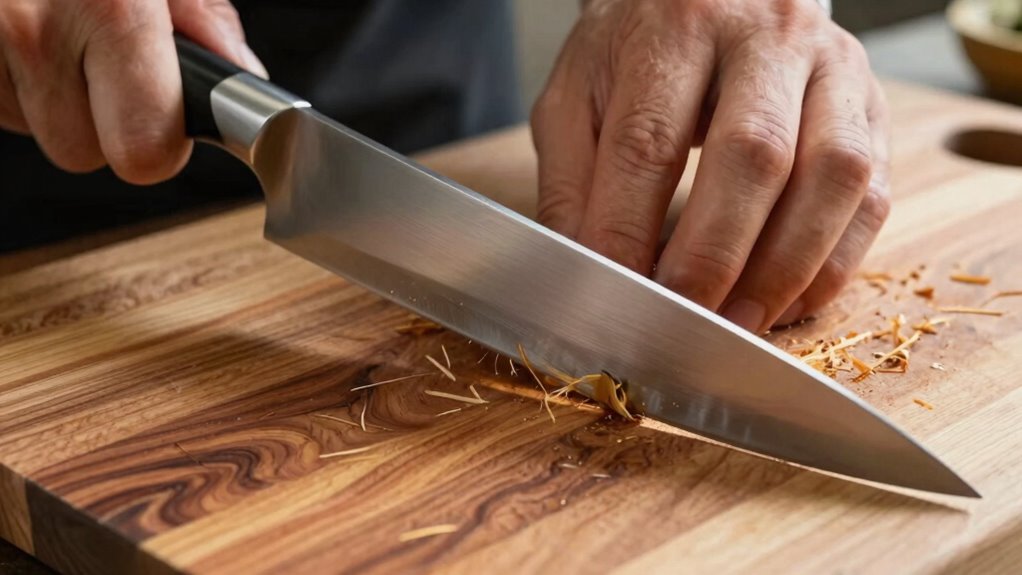
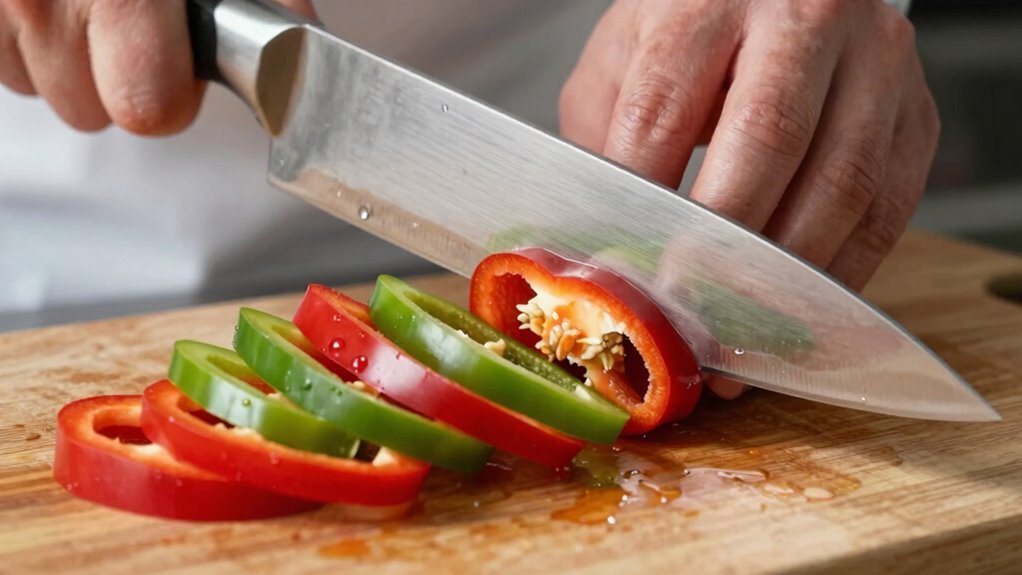
Have you ever noticed that some knives feel more “accurate” when you’re chopping or slicing? It’s not just in your head. The truth is, the way a knife performs on the board depends heavily on its blade sharpness and your cutting technique. When a knife is razor-sharp, it glides cleanly through ingredients, giving you better control and confidence with each cut. You’ll find that with a sharp blade, your slices are more uniform and precise, making food prep smoother and more enjoyable. Dull knives, on the other hand, require more pressure and often cause your cuts to wander or become uneven, which can make you feel like you’re fighting the knife rather than working with it.
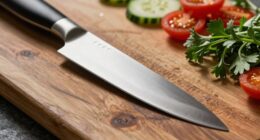
Blade sharpness is a crucial factor in determining how “accurate” a knife feels. When the edge is finely honed, it cuts through food effortlessly, reducing the need for excessive force. This minimal resistance allows you to focus on your technique rather than battling the knife’s dullness. A sharp blade also minimizes the risk of slipping, which is essential for safety and precision. Over time, blades can dull due to use or improper storage, but maintaining a sharp edge through regular honing or sharpening keeps your knife performing at its best. When your blade is sharp, you’re more likely to develop a consistent cutting rhythm, which leads to more accurate and controlled slices. Additionally, blade maintenance is essential to ensure your knife remains in optimal condition for precise cuts. Proper storage practices also play a vital role in preserving blade sharpness and preventing unnecessary dulling. Regular honing and proper storage help maintain the integrity of the blade and avoid premature dulling caused by improper handling.
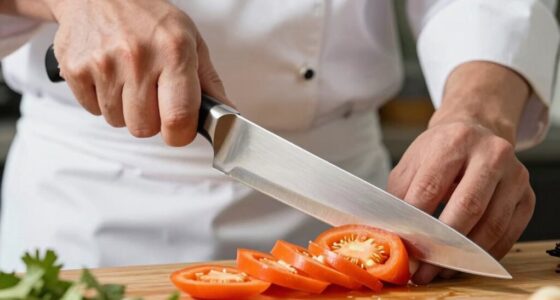
Your cutting technique plays an equally essential role. Proper handling involves using a pinch grip on the blade and guiding the knife with your knuckles, rather than your fingertips. This technique offers better control and stability, helping you make precise cuts. When you combine a sharp blade with an effective cutting technique, you’ll notice that your movements become more deliberate and accurate. Instead of sawing or forcing the knife through food, you’ll be able to make smooth, clean cuts in one fluid motion. This not only improves accuracy but also reduces fatigue and enhances safety.
professional chef knife sharpening kit
As an affiliate, we earn on qualifying purchases.
As an affiliate, we earn on qualifying purchases.
Frequently Asked Questions
How Does Knife Weight Affect Cutting Precision?
Knife weight directly impacts cutting precision by influencing stability and control. A heavier knife offers better stability, helping you maintain accuracy with less effort. Proper weight distribution ensures the blade feels balanced in your hand, reducing fatigue and improving control. When your knife has ideal weight and balance, you’ll find it easier to make precise cuts, especially through tougher ingredients, leading to cleaner, more accurate results on the cutting board.
Do Handle Materials Influence Perceived Accuracy?
Handle materials definitely influence perceived accuracy, as they affect how comfortably and securely you grip the knife. Good handle ergonomics give you better control, making your cuts feel more precise. Durable materials like G10 or stabilized wood guarantee the handle maintains its shape and grip over time, preventing slips. When your grip feels natural and steady, you’re more confident, and that’s when your cuts really hit the mark, like hitting two birds with one stone.
What Role Does Blade Balance Play in Cutting Control?
Blade balance greatly affects your cutting control by enhancing blade stability, allowing smoother, more precise cuts. When a knife is well-balanced, you’ll find it easier to maintain a consistent grip, boosting grip comfort and reducing fatigue. This stability helps you feel more confident with each chop or slice. Ultimately, a balanced blade makes controlling your cuts more intuitive, so you can focus on technique without fighting the knife’s natural feel.
Can Sharpening Angle Improve Cutting Accuracy?
Sharpening angle can definitely improve your cutting accuracy by enhancing blade stability and edge retention. When you maintain a consistent angle, your knife becomes more predictable, cutting through ingredients smoothly without wobbling. A sharper, more stable edge helps you make precise cuts, reducing slips and uneven slices. Regularly honing to the right angle keeps the edge sharp longer, giving you better control and confidence during every chop.
How Does Cutting Technique Impact Perceived Knife Precision?
Your cutting technique impacts perceived knife precision considerably. When you maintain a steady grip stability, you control the knife better, reducing slips and uneven cuts. A consistent cutting rhythm helps you develop muscle memory, making your cuts more accurate and smooth. By focusing on these elements, you’ll notice improved precision, as your technique guarantees cleaner, more consistent slices, regardless of your knife’s sharpness or type.
As an affiliate, we earn on qualifying purchases.
Conclusion
Think of your knife as a trusted compass, guiding your hand through each cut with purpose and confidence. When it feels right, it’s like striking a chord in perfect harmony—each slice sings true. The more you understand your knife’s feel, the more it becomes an extension of you, dancing smoothly across the board. Embrace this connection, and your kitchen will transform into a stage where precision and intuition lead the way.
As an affiliate, we earn on qualifying purchases.
ergonomic kitchen knife with balanced handle
As an affiliate, we earn on qualifying purchases.
As an affiliate, we earn on qualifying purchases.
Fall Picks
fall essentials
As an affiliate, we earn on qualifying purchases.