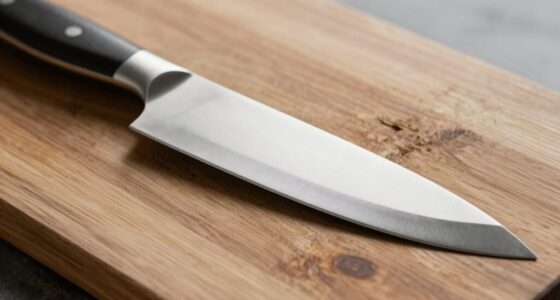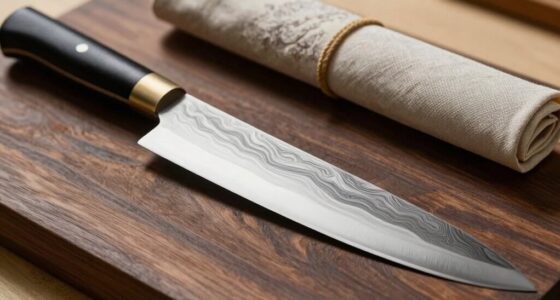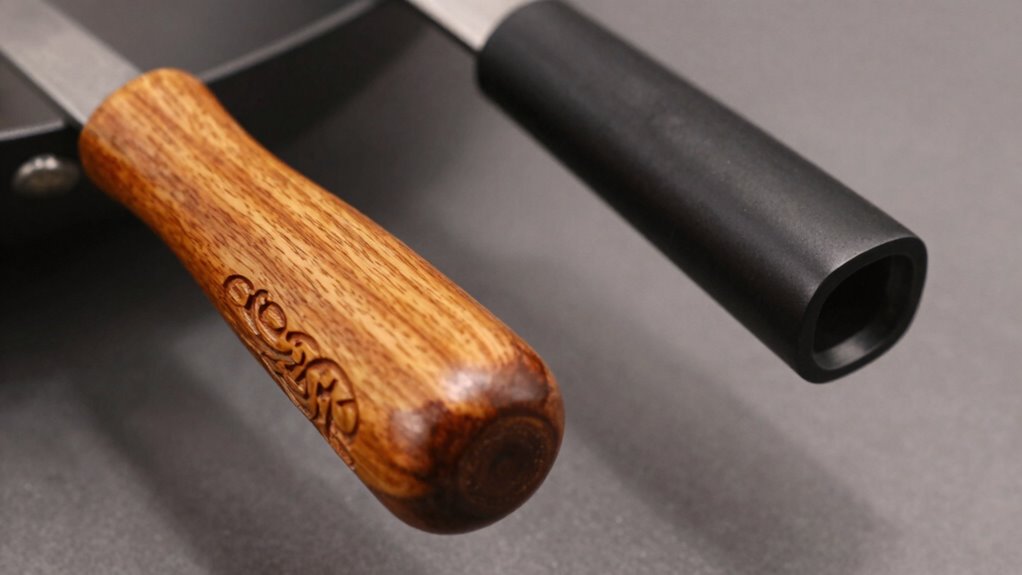

Choosing between Wa handles and Western handles affects your cooking by influencing control, comfort, and style. Wa handles, with their natural materials and traditional shapes, offer a closer connection to craftsmanship and reduce strain during extended use. Western handles, built for durability and a secure grip, are better suited for heavy-duty tasks and diverse kitchen environments. Understanding these differences helps you tailor your tools to your cooking style—stay tuned to learn more about what fits best for you.

Get kitchen gear delivered free — and shop member deals
- Fast, free delivery on millions of items
- Access to Prime Big Deal Days deals on October 6–7
- Prime Video, Amazon Music and more included
Key Takeaways
- Wa handles provide a natural grip and tactile feedback, enhancing precision in traditional Japanese knife techniques.
- Western handles offer a secure, heavy-duty grip suitable for demanding, high-force cutting tasks.
- Wa handles promote ergonomic comfort during delicate, extended slicing, reducing fatigue.
- Western handles are durable and resistant to heavy use, ideal for versatile, multi-purpose kitchen environments.
- The handle style influences knife balance and control, impacting overall cooking efficiency and technique.
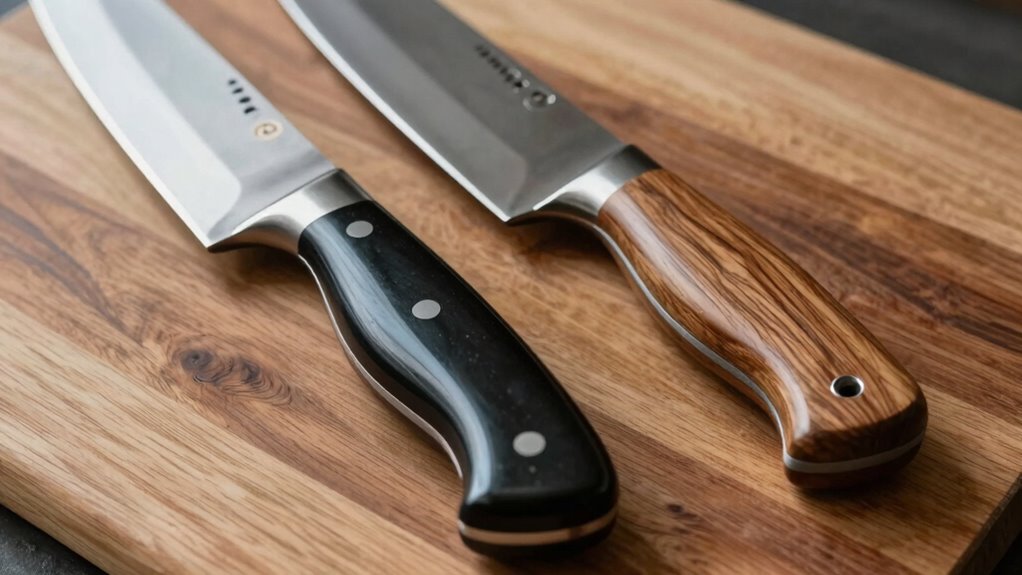
When choosing a handle for your knife or tool, understanding the differences between Wa handle and Western handle can substantially impact your comfort and performance. These two styles reflect distinct cultural influences and ergonomic principles that shape how you use your tools in real cooking situations. Wa handles, originating from Japan, are often crafted with a focus on simplicity, balance, and a close connection to traditional craftsmanship. They typically feature a rounded, octagonal or cylindrical shape, which fits naturally into your hand, providing a comfortable grip during extended use. The cultural influences behind Wa handles emphasize minimalism and harmony, aiming to create a tool that feels like an extension of your hand. Their design often uses natural materials like wood or resin, which can enhance tactile feedback and provide a warm, familiar feel. This focus on cultural heritage and craftsmanship makes Wa handles particularly popular among chefs who value tradition and subtlety in their tools. Additionally, the materials used in Wa handles are chosen for their natural qualities, contributing to the overall aesthetic and tactile experience. The ergonomic design of Wa handles aims to promote a natural hand position, reducing strain during prolonged use. Moreover, the craftsmanship involved often results in a high level of precision and attention to detail that complements the overall quality of traditional Japanese knives. The aesthetic appeal of Wa handles also plays a significant role in their popularity among enthusiasts of Japanese cutlery.
On the other hand, Western handles are influenced by a different set of ergonomic and practical considerations. They tend to be larger, with thicker, more contoured designs that prioritize strength, durability, and ease of handling. Western handles often feature riveted or full tang constructions, which reinforce stability and resilience, especially for heavy-duty tasks. The ergonomic design of Western handles emphasizes a secure grip and control, making them suitable for a variety of kitchen activities that require force or precision. Materials like pakkawood, plastic, or composite are common, chosen for their durability and resistance to moisture and wear. The cultural influences behind Western handle design stem from a focus on functionality and efficiency, aligning with Western culinary traditions that often involve vigorous chopping, pounding, or heavy use. These handles are also typically designed to accommodate different hand sizes, ensuring a comfortable grip across a diverse range of users. The choice of handle style can significantly influence your cooking efficiency and overall experience in the kitchen. Overall, Western handles are designed to meet the demands of diverse kitchen environments, making them a versatile option for many cooks.
Japanese Wa handle kitchen knives
As an affiliate, we earn on qualifying purchases.
As an affiliate, we earn on qualifying purchases.
Frequently Asked Questions
How Do Wa and Western Handles Affect Cooking Safety?
Wa and Western handles influence cooking safety mainly through their ergonomic grip and aesthetic appeal. A well-designed handle offers a secure, comfortable hold, reducing the risk of slips and accidents. Wa handles, with their smooth curves, often provide better control, while Western handles might be more straightforward but less ergonomic. Both can enhance safety if they’re sturdy, but the ergonomic design of Wa handles generally promotes safer, more confident cooking.
Are Wa Handles Suitable for All Types of Cookware?
Wa handles aren’t suitable for all cookware types—they’re like the perfect fit for specific styles. You’ll find they excel in enhancing ergonomics, making your grip feel like an extension of your hand, and they add a striking aesthetic appeal that elevates your kitchen’s look. But for heavy-duty pots or certain materials, Western handles might be better, offering durability and safety where delicate design isn’t enough.
Do Handle Materials Influence Heat Retention?
Yes, handle materials influence heat retention, affecting your cooking experience. Materials like silicone or wood don’t conduct heat well, ensuring your hands stay cool and comfortable, improving ergonomics and comfort. Metal handles, on the other hand, can get hot, requiring caution. Besides functionality, handle materials also add aesthetic appeal, allowing you to choose cookware that matches your kitchen style. So, consider both heat retention and design when selecting cookware handles.
Which Handle Design Offers Better Durability?
You’ll find that Western handles generally offer better durability due to their sturdy construction, often made from metals or durable plastics that withstand daily use. An ergonomic grip enhances comfort, making handling easier and safer during cooking. Additionally, Western handles often feature aesthetic appeal, adding a modern look to your cookware. Overall, if durability and comfort are priorities, Western handles typically outperform Wa handles, especially with their robust design and stylish finishes.
How Do Cleaning and Maintenance Differ Between Handle Types?
Did you know that 65% of users find Western handles easier to clean? With Western handles, you’ll notice simpler cleaning due to their smooth, rounded design that minimizes dirt buildup. Wa handles, however, often feature handle ergonomics focused on grip comfort, which might require more careful maintenance. When considering aesthetic appeal, Western handles tend to be sleeker, making cleaning less of a chore, whereas Wa handles emphasize traditional charm.
As an affiliate, we earn on qualifying purchases.
Conclusion
Ultimately, choosing between a Wa handle and a Western handle is like selecting a trusted companion for your culinary journey. The Wa handle, with its tradition and subtle grace, symbolizes a connection to centuries of craftsmanship, guiding you with quiet strength. The Western handle, bold and practical, embodies innovation and adaptability. Whichever you hold, remember—they’re not just tools but extensions of your passion, shaping each meal into a story woven with history, skill, and heart.
As an affiliate, we earn on qualifying purchases.
As an affiliate, we earn on qualifying purchases.
Halloween Picks
halloween
As an affiliate, we earn on qualifying purchases.